
Close Menu
New York Examiner News

    Subscribe to Updates

    Get the latest creative news from FooBar about art, design and business.

    What's Hot

    Sorry Share New Songs “Billy Elliot” and “Alone In Cologne”

    February 5, 2026

    Nevada legislator to push for independent audit of altered record in OSHA Boring Co. inspection 

    February 5, 2026

    Trump Goes Into Hiding As His Approval Rating Crashes

    February 5, 2026
    Facebook X (Twitter) Instagram
    New York Examiner News
    • Home
    • US News
    • Politics
    • Business
    • Science
    • Technology
    • Lifestyle
    • Music
    • Television
    • Film
    • Books
    • Contact
      • About
      • Amazon Disclaimer
      • DMCA / Copyrights Disclaimer
      • Terms and Conditions
      • Privacy Policy
    New York Examiner News
    Home»Science»New, Stronger Rules for Truck Pollution Still Would Not Meet Air Quality Goals
    Science

    New, Stronger Rules for Truck Pollution Still Would Not Meet Air Quality Goals

    By AdminMay 26, 2022
    Facebook Twitter Pinterest LinkedIn WhatsApp Email Reddit Telegram
    New, Stronger Rules for Truck Pollution Still Would Not Meet Air Quality Goals


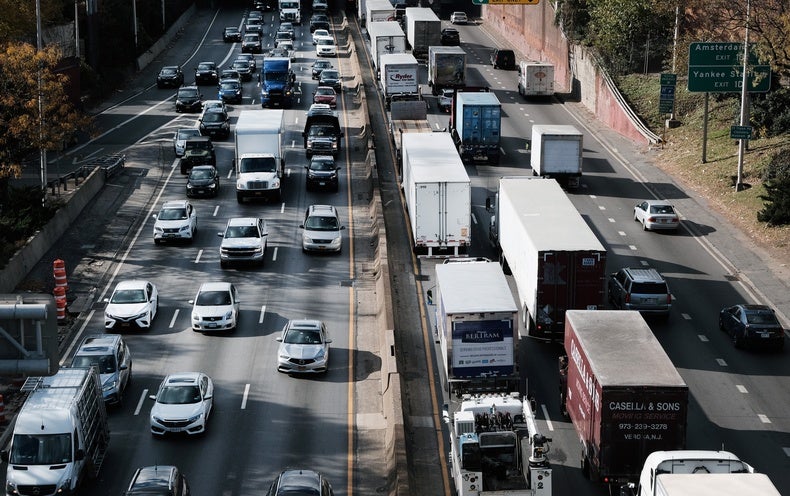
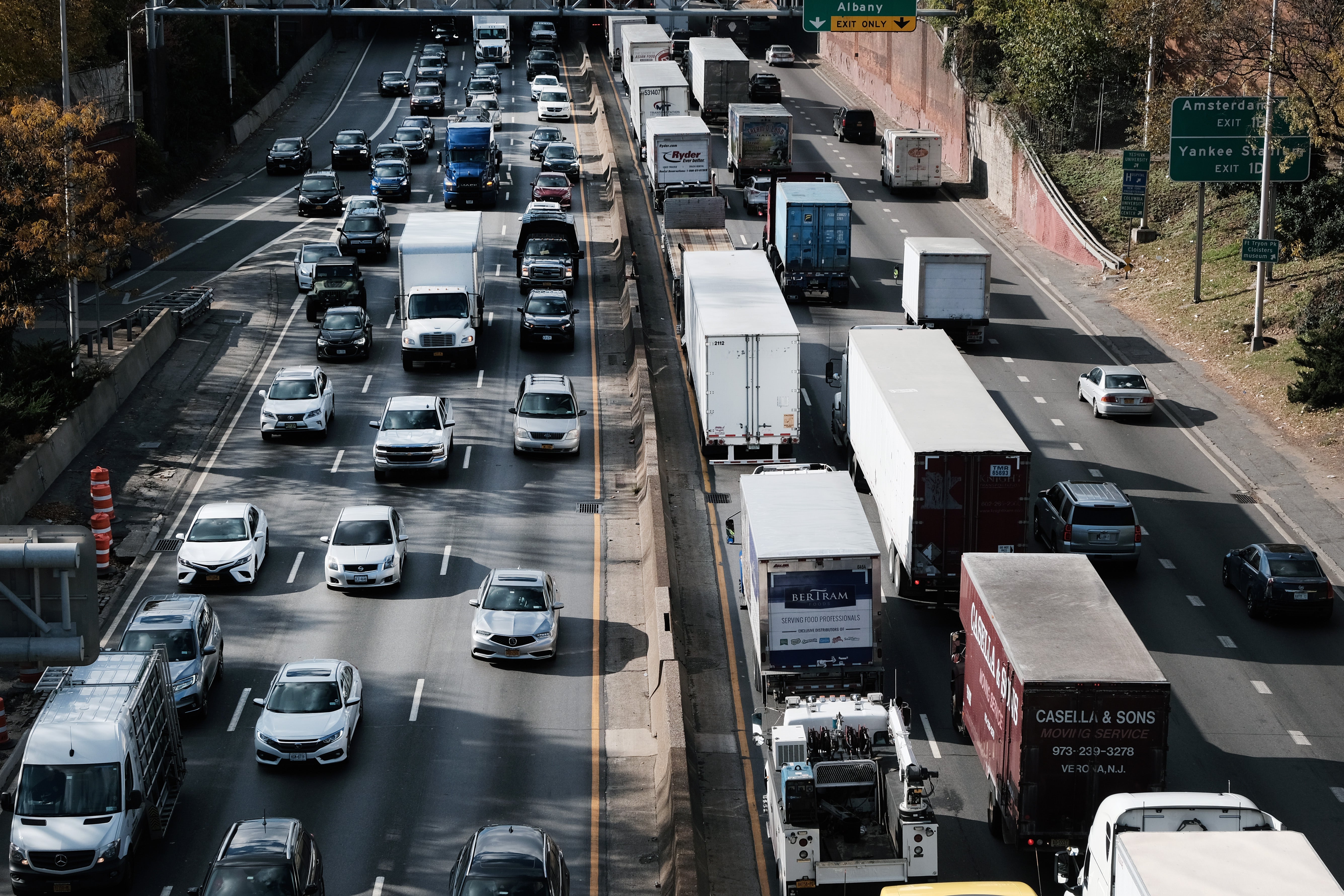
    CLIMATEWIRE | EPA’s proposal to limit toxic pollution from heavy-duty trucks is stronger than anything that has come before it. But state and local air quality agencies say it’s not aggressive enough to meet the federal regulator’s own clean air standards.

    The National Association of Clean Air Agencies — which represents 115 local air pollution control agencies across 41 states, four territories and the District of Columbia — estimates that more than a third of the U.S. population lives in an area that does not meet federal air quality standards. One of the reasons: truck traffic.

    Now, as EPA moves to limit heavy-duty truck emissions, it is also creating stricter standards for particle air pollution. But the NACAA says the draft truck rule is too weak to help states meet current air quality standards, let alone the new ones.

    “EPA is ratcheting up the number of areas that aren’t meeting health-based air quality standards at the same time they’re proposing a rule that isn’t protective enough for the most important source of that exact pollution,” said Miles Keogh, NACAA executive director.

    Heavy-duty trucks are the largest mobile source of nitrogen oxides, which can react in the atmosphere to form toxic pollutants like ozone and particulate matter. While states can reduce emissions from stationary sources like power plants and factories, they largely lack the authority to regulate emissions from cars and trucks, which fall under the purview of the federal government.

    That means without a federal rule to sufficiently curb NOx emissions from 18-wheelers, delivery vans and dump trucks, states are running out of ways to come into compliance with air quality standards, analysts say.

    “In the 1970s there were more opportunities for emissions reductions because we had not yet started to reduce emissions,” said Julian Marshall, a civil and environmental engineering professor at the University of Washington. “But the easy stuff has already been addressed, so the number of [pollution] sources they can control is getting smaller and smaller.”

    EPA last updated its federal standards for NOx emissions from heavy-duty trucks 20 years ago, during which time the public’s health suffered. Exposure to toxic air pollution is linked to a host of ailments, including heightened risk of early death and poor lung development in children. Transportation is also the single-largest source of greenhouse gas emissions in the country.

    Communities of color and low-income neighborhoods have borne the brunt of that pollution, as they are disproportionately located near highways, freight corridors, rail yards and warehouses, according to EPA.

    President Joe Biden has pledged to address these disparities, in part by updating emission standards for heavy-duty trucks. But EPA’s proposed rule, which was released in March, came as a disappointment to environmental and public health experts who had hoped for a stronger regulation (Climatewire, April 14).

    Along with advocates living and working in these heavily polluted areas, the experts urged EPA to issue a truck rule in line with California’s recently enacted Heavy-Duty Omnibus program, which requires a 90 percent reduction in NOx emissions by 2027 compared to 2010 standards.

    EPA’s proposal outlined two approaches. The first option mirrors California’s rule, but is not as strong. The second, less stringent option is more in line with what truck- and engine-makers have pushed for (Greenwire, March 8).

    “This administration has put addressing racial inequities as a priority,” said Ray Minjares, who heads the International Council on Clean Transportation’s heavy-duty vehicles program. “And we’re just not seeing that in this rule.”

    Community members have continued to meet with EPA staffers at least once a month, but say they feel overlooked (Climatewire, May 16).

    Meanwhile, EPA is slated to propose stronger particulate matter limits this summer, after an advisory panel delivered a pivotal review recommending the agency tighten both annual and daily exposure limits (Greenwire, March 22). While EPA has no plans to tighten NOx limits in their own right, those criteria pollutants are one of the major contributors to particulate matter as well as ozone.

    “EPA’s rule as proposed really leaves people up the river as far as getting those NOx reductions,” Keogh said. “Our agencies can’t squeeze it out of the sources we’ve got, and we need the feds to set a sufficiently protective standard for these trucks.”

    In Phoenix, Ariz., for example, smoke stacks are few and far between, Keogh said.

    “That haze over the mountains is coming from mobile sources,” he said. “It’s coming from cars and trucks.”

    Another example can be found in Wisconsin, where there are several areas that do not meet federal air quality standards. The largest contributor of NOx emissions in Wisconsin comes from vehicles traveling in and through the state. And nearly half of those emissions come from heavy-duty trucks, according to the 2017 National Emissions Inventory.

    EPA spokesperson Taylor Gillespie pointed out that the agency’s truck rule is a proposal, not a final regulation.

    “We had an extended comment period for people to weigh in and provide feedback which just closed last week,” she said in an email. “We are currently reviewing those comments and look forward to addressing concerns in the coming months.”

    Gillespie also noted the rule is the first phase of the agency’s broader plan to address pollution from trucks.

    Cleaner air, but ‘disparities remain’

    While researchers and those affected have long understood the health consequences of living and working in the shadow of the heavy-duty trucking industry, new research has increasingly laid bare the systemic nature of the disparities.

    A study published this year in the journal Environmental Science & Technology Letters found a correlation between redlining — a discriminatory mortgage appraisal practice from the 1930s — and air pollution levels in Black neighborhoods.

    “This is what many communities have been saying for decades, that the risks from air pollution are not felt equally across members of our society,” said Marshall, who co-authored the study. “And ethically, that’s almost its own separate reason to care about air pollution. There’s this fairness aspect to it.”

    Marshall said one reason for the disparity is because in the 1960s the federal government routed freeways directly, and often intentionally, through Black and low-income neighborhoods — a historical wrong the Biden administration has said it wants to help remedy (Climatewire, Dec. 8, 2021).

    Another study published last year in the journal Proceedings of the National Academy of Sciences found that early in the Covid-19 pandemic, overall levels of toxic pollution decreased the most in Black, Latino and low-income neighborhoods as people stopped driving to work.

    But those communities still experienced higher levels of pollution compared to the levels majority white and affluent areas faced even prior to the pandemic. That’s in part because while passenger vehicle traffic decreased during the pandemic, heavy-duty trucking did not.

    Similarly, in a draft policy assessment for its particulate matter rulemaking, EPA staff found that Black communities would experience proportionally greater benefits from stricter particulate matter air quality standards, but they would still face higher rates of premature mortality risks from toxic pollution compared to other groups.

    “Over time, the air has gotten cleaner, yet the disparities remain,” Marshall said. “So we really need to look for opportunities, like with diesel emissions, to find the sources that lead to some groups being more exposed than others and address those sources.”

    EPA is slated to release its final truck emissions rule before the end of the year.

    Reprinted from E&E News with permission from POLITICO, LLC. Copyright 2022. E&E News provides essential news for energy and environment professionals.


    Original Source Link

    Share. Facebook Twitter Pinterest LinkedIn WhatsApp Email Reddit Telegram
    Previous ArticleRay Liotta’s 10 Best Movies, Ranked (According To IMDb)
    Next Article LG UltraGear 48GQ900 48-inch OLED 4K Gaming Monitor Boasts 0.1ms Response Time

    RELATED POSTS

    Nasal spray could prevent infections from any flu strain

    February 5, 2026

    Why Are Some Women Training for Pregnancy Like It’s a Marathon?

    February 4, 2026

    NASA’s Artemis II moon mission engulfed by debate over its controversial heat shield

    February 4, 2026

    Dutch air force reads pilots’ brainwaves to make training harder

    February 3, 2026

    HHS Is Using AI Tools From Palantir to Target ‘DEI’ and ‘Gender Ideology’ in Grants

    February 3, 2026

    The sun just unleashed its most powerful solar flare in years

    February 2, 2026
    latest posts

    Sorry Share New Songs “Billy Elliot” and “Alone In Cologne”

    London band Sorry dropped two new songs today, “Billy Elliot” and “Alone In Cologne.” The…

    Nevada legislator to push for independent audit of altered record in OSHA Boring Co. inspection 

    February 5, 2026

    Trump Goes Into Hiding As His Approval Rating Crashes

    February 5, 2026

    NYPD officer shoots mentally ill man with knife in Queens apartment

    February 5, 2026

    Sam Altman got exceptionally testy over Claude Super Bowl ads

    February 5, 2026

    Nasal spray could prevent infections from any flu strain

    February 5, 2026

    How gaming YouTuber Markiplier became an…

    February 5, 2026
    Categories
    • Books (1,044)
    • Business (5,948)
    • Events (30)
    • Film (5,885)
    • Lifestyle (3,995)
    • Music (5,987)
    • Politics (5,950)
    • Science (5,300)
    • Technology (5,879)
    • Television (5,563)
    • Uncategorized (6)
    • US News (5,937)
    popular posts

    Custom Deli Paper: The Perfect Blend Of Functionality And Branding

    In the food service world, presentation matters just as much as taste. Whether you run…

    Why the Parkland School Shooter Avoided the Death Penalty After Killing 17

    October 14, 2022

    Charlie Munger reportedly warns of trouble for the U.S. commercial property market

    April 30, 2023

    Adam Kinzinger Blasts Republicans And The Media For Reinforcing Trump’s Cult

    July 10, 2022
    Archives
    Browse By Category
    • Books (1,044)
    • Business (5,948)
    • Events (30)
    • Film (5,885)
    • Lifestyle (3,995)
    • Music (5,987)
    • Politics (5,950)
    • Science (5,300)
    • Technology (5,879)
    • Television (5,563)
    • Uncategorized (6)
    • US News (5,937)
    About Us

    We are a creativity led international team with a digital soul. Our work is a custom built by the storytellers and strategists with a flair for exploiting the latest advancements in media and technology.

    Most of all, we stand behind our ideas and believe in creativity as the most powerful force in business.

    What makes us Different

    We care. We collaborate. We do great work. And we do it with a smile, because we’re pretty damn excited to do what we do. If you would like details on what else we can do visit out Contact page.

    Our Picks

    Nasal spray could prevent infections from any flu strain

    February 5, 2026

    How gaming YouTuber Markiplier became an…

    February 5, 2026

    Savannah Guthrie Pleads For Mother’s Safe Return, Video

    February 5, 2026
    © 2026 New York Examiner News. All rights reserved. All articles, images, product names, logos, and brands are property of their respective owners. All company, product and service names used in this website are for identification purposes only. Use of these names, logos, and brands does not imply endorsement unless specified. By using this site, you agree to the Terms & Conditions and Privacy Policy.

    Type above and press Enter to search. Press Esc to cancel.

    We use cookies on our website to give you the most relevant experience by remembering your preferences and repeat visits. By clicking “Accept All”, you consent to the use of ALL the cookies. However, you may visit "Cookie Settings" to provide a controlled consent.
    Cookie SettingsAccept All
    Manage consent

    Privacy Overview

    This website uses cookies to improve your experience while you navigate through the website. Out of these, the cookies that are categorized as necessary are stored on your browser as they are essential for the working of basic functionalities of the website. We also use third-party cookies that help us analyze and understand how you use this website. These cookies will be stored in your browser only with your consent. You also have the option to opt-out of these cookies. But opting out of some of these cookies may affect your browsing experience.
    Necessary
    Always Enabled
    Necessary cookies are absolutely essential for the website to function properly. These cookies ensure basic functionalities and security features of the website, anonymously.
    CookieDurationDescription
    cookielawinfo-checkbox-analytics11 monthsThis cookie is set by GDPR Cookie Consent plugin. The cookie is used to store the user consent for the cookies in the category "Analytics".
    cookielawinfo-checkbox-functional11 monthsThe cookie is set by GDPR cookie consent to record the user consent for the cookies in the category "Functional".
    cookielawinfo-checkbox-necessary11 monthsThis cookie is set by GDPR Cookie Consent plugin. The cookies is used to store the user consent for the cookies in the category "Necessary".
    cookielawinfo-checkbox-others11 monthsThis cookie is set by GDPR Cookie Consent plugin. The cookie is used to store the user consent for the cookies in the category "Other.
    cookielawinfo-checkbox-performance11 monthsThis cookie is set by GDPR Cookie Consent plugin. The cookie is used to store the user consent for the cookies in the category "Performance".
    viewed_cookie_policy11 monthsThe cookie is set by the GDPR Cookie Consent plugin and is used to store whether or not user has consented to the use of cookies. It does not store any personal data.
    Functional
    Functional cookies help to perform certain functionalities like sharing the content of the website on social media platforms, collect feedbacks, and other third-party features.
    Performance
    Performance cookies are used to understand and analyze the key performance indexes of the website which helps in delivering a better user experience for the visitors.
    Analytics
    Analytical cookies are used to understand how visitors interact with the website. These cookies help provide information on metrics the number of visitors, bounce rate, traffic source, etc.
    Advertisement
    Advertisement cookies are used to provide visitors with relevant ads and marketing campaigns. These cookies track visitors across websites and collect information to provide customized ads.
    Others
    Other uncategorized cookies are those that are being analyzed and have not been classified into a category as yet.
    SAVE & ACCEPT