
Close Menu
New York Examiner News

    Subscribe to Updates

    Get the latest creative news from FooBar about art, design and business.

    What's Hot

    Twisted Sister Cancel Reunion Tour Plans Due to Snider’s Health

    February 6, 2026

    Top analyst Tom Lee on gold’s black swan risk: Elon Musk becoming ‘the new central bank’

    February 6, 2026

    Trump Level Of Core Support Has Cratered To An Astonishing New Low

    February 6, 2026
    Facebook X (Twitter) Instagram
    New York Examiner News
    • Home
    • US News
    • Politics
    • Business
    • Science
    • Technology
    • Lifestyle
    • Music
    • Television
    • Film
    • Books
    • Contact
      • About
      • Amazon Disclaimer
      • DMCA / Copyrights Disclaimer
      • Terms and Conditions
      • Privacy Policy
    New York Examiner News
    Home»Books»Natalie Bergman on the Cost of Inheritance in “Pearl Bound”
    Books

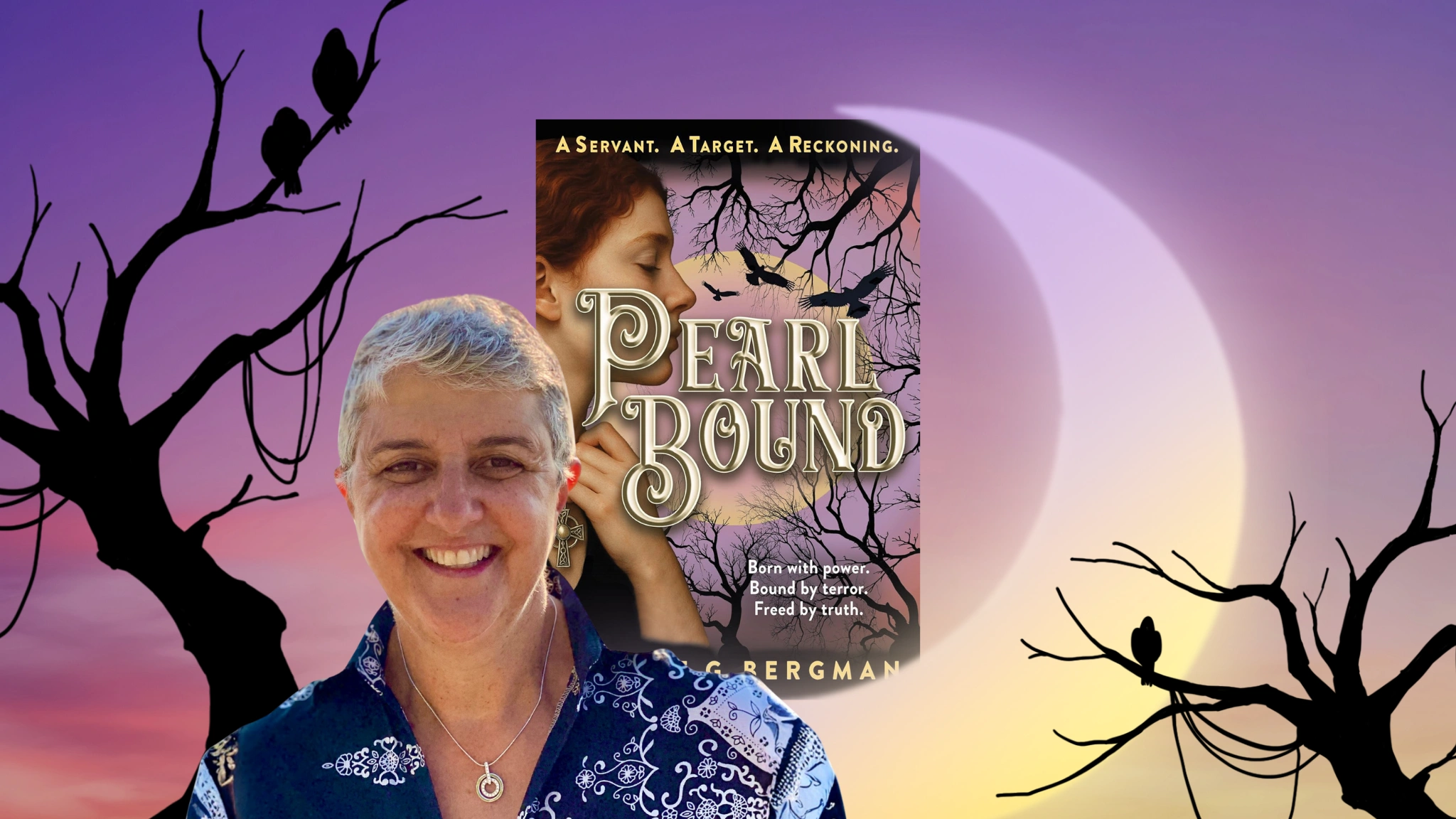
    Natalie Bergman on the Cost of Inheritance in “Pearl Bound”

    By AdminDecember 19, 2025
    Facebook Twitter Pinterest LinkedIn WhatsApp Email Reddit Telegram
    Natalie Bergman on the Cost of Inheritance in “Pearl Bound”


    Set against the unforgiving landscape of late–19th-century upstate New York, Pearl Bound is a novel where history presses as heavily as fate and love is inseparable from survival. In this conversation, author Natalie Bergman discusses how the Gilded Age’s stark inequalities shaped her story, why the supernatural functions as a form of inheritance rather than escape, and how family bonds can both sustain and suffocate. Drawing on her background in screenwriting and her own lived experience, Bergman explores the cost of autonomy, the legacy of trauma, and what it means for women to claim power in a world determined to deny it.

    1. What inspired you to set Pearl Bound in late winter 1883 in Upstate New York, and how does the historical context influence the story?

    I chose late winter 1883 and then 1899 in upstate New York because the Gilded Age mirrors our own moment in unsettling ways—extreme income inequality, unchecked power concentrated in the hands of a few and a social order that rewards cruelty behind a veneer of refinement. That tension felt dramatically fertile.

    Setting the story in this period allowed me to explore what life looked like for a working-class woman—an immigrant, no less—trying to survive inside a system designed to exploit her. The lack of laws, the labor conditions, the social hierarchies were overt then, but the constraints on women’s autonomy, safety and economic power are not as distant as we like to believe. The historical context isn’t decorative; it’s the engine of the story. The wealth of the robber barons of that era, and the rigid class and gender boundaries all intensify the danger and underscore how little protection society offered women regardless of whether they were considered respectable or not.

    2. Eve demonstrates unusual abilities that unsettle her mother. How do you approach the theme of the supernatural in the context of family dynamics in the novel?

    I approached the supernatural in Pearl Bound less as spectacle and more as inheritance. Eve’s abilities aren’t an external disruption to the family—they’re an extension of it. Families pass down far more than genetics: they transmit fear, silence, survival strategies and unresolved trauma. In that sense, the supernatural becomes a language for what can’t be safely spoken.

    Her mother’s unease isn’t just fear of the unknown; it’s fear of recognition. Eve’s abilities threaten to surface buried histories and truths that have been suppressed for generations. That tension—between protection and control, love and terror—felt truer to real family dynamics than a simple embrace or rejection of the uncanny.

    By framing the supernatural through lineage and maternal anxiety, I wanted to explore how inherited trauma doesn’t disappear—it mutates. What one generation learns to hide, the next may be forced to confront, often at great cost.

    3. The characters experience significant emotional turmoil throughout the story. Can you discuss how you developed the complex relationships between Eve, her mother and Sean?

    In the opening chapters, I was focused on establishing isolation as a lived condition, not a mood. Eve, her mother and Sean are immigrants in a new country with limited resources, little social protection and no margin for error. That pressure shapes every interaction between them. Love exists, but it’s constrained by fear, exhaustion and the constant threat of displacement.

    I built their relationships around what each character needs versus what they are capable of giving. Eve’s mother operates from survival and containment; Sean from loyalty and obligation; Eve from longing and a desire to be seen. Those competing impulses create emotional fault lines that deepen as the story progresses.

    The turmoil comes from intimacy under strain. When people have only each other and no safety net, affection can easily turn into control, silence or sacrifice. Rather than smoothing those edges, I leaned into them—because for families living on the margins, emotional complexity isn’t a luxury, it’s a consequence of survival.

    4. Your book intertwines elements of realism and mystery. What challenges did you face in blending these genres, and how did you overcome them?

    The central challenge was escalation—how to let the magical elements evolve without breaking the internal logic of the world. I wasn’t interested in magic as a sudden rupture from reality; I wanted it to feel unsettling precisely because it obeys rules, even if the characters don’t fully understand them at first.

    To manage that balance, I treated the mystery and the supernatural as systems with consequences. Each new development raises the stakes in a concrete way—socially, emotionally or physically—rather than existing for atmosphere alone. The question was never “What can the magic do?” but “What does it cost, and who pays for it?”

    Grounding those moments in realism—class constraints, bodily danger, social fallout—helped keep the story coherent as it grew darker. If the logic held, the mystery could deepen without tipping into abstraction, and the horror could emerge from inevitability rather than spectacle.

    5. The portrayal of women’s roles and power dynamics plays a crucial part in Pearl Bound. How do you feel this reflects your own experiences or views on gender and independence?

    The power dynamics in Pearl Bound are inseparable from my own lived experience. I’m a woman, an immigrant to the United States, Jewish and a lesbian—identities that carry a long history of being scrutinized, constrained or legislated against. That awareness shapes how I write women navigating systems that were never designed to protect them.

    I’m interested in independence not as a triumphal arc, but as something hard-won and often punished. The women in this novel are judged not just for what they do, but for what they desire, what they refuse and what they survive. That mirrors the reality of being “othered,” where autonomy is frequently mistaken for threat.

    Rather than writing power as something granted, I wanted to show it as something claimed—sometimes quietly, sometimes at great personal cost. The historical setting sharpens that truth, but the dynamics themselves remain painfully contemporary.

    6. Given your background in screenwriting, how does this influence your writing style and storytelling approach?

    My screenwriting background deeply shaped how I approached the novel. In screenwriting, the fundamental rule is show, don’t tell, and that discipline carried over directly. I think in sequences, momentum and visual logic, so many scenes in Pearl Bound began as fully realized cinematic moments that naturally translated into chapters.

    What the novel form gave me was access to interiority. The external architecture—the pacing, the reveals, the physical movement through space—was already there. Writing prose allowed me to layer in the inner lives of the characters: their fears, desires, rationalizations and contradictions. That interior voice adds psychological depth without sacrificing forward motion.

    The result is a story that moves visually and structurally like a film, but with the emotional density and interior complexity that only a novel can sustain.

    7. What messages or themes do you hope readers take away, particularly regarding personal destiny and the bonds of family?

    At its core, Pearl Bound argues that destiny is not something bestowed—it’s something negotiated, often under duress. I wanted to explore the idea that women can take a stand and make choices, even deeply unpopular ones, in order to live truthfully. Those choices don’t come without cost, and the novel doesn’t pretend otherwise.

    Family bonds are central because they’re where love and obligation collide most fiercely. Loyalty can protect, but it can also imprison. The story asks whether preserving those bonds is always the highest good, or whether breaking from them is sometimes the only way to survive.

    If there’s a takeaway, it’s that autonomy isn’t rebellion for its own sake—it’s an act of moral clarity. Choosing oneself, especially in a world determined to deny that right, is both a risk and a form of inheritance in its own right.


    Original Source Link

    Share. Facebook Twitter Pinterest LinkedIn WhatsApp Email Reddit Telegram
    Previous ArticleLaneway Teams With Chappell Roan to Back Australian LGBTQ+ Groups
    Next Article 10 Best Bootcut Jeans for Men And How To Style Them in 2025

    RELATED POSTS

    The Finalists for a Literary Prize Judged By Librarians

    February 6, 2026

    Stories of Weather, Warnings and the Cost of Waiting

    February 5, 2026

    Interview with Zemo Trevathan, Author of The Adventures of Casey, Kendall and The Stucco Beings

    February 5, 2026

    Book Riot’s Deals of the Day for February 4, 2026

    February 4, 2026

    Writers, Ink Podcast: If you’re not using Scrivener, you’re doing it all wrong

    February 4, 2026

    New Mystery and Thriller Books to Read | February 3

    February 3, 2026
    latest posts

    Twisted Sister Cancel Reunion Tour Plans Due to Snider’s Health

    Twisted Sister have canceled their plans for a 2026 50th anniversary reunion tour due to…

    Top analyst Tom Lee on gold’s black swan risk: Elon Musk becoming ‘the new central bank’

    February 6, 2026

    Trump Level Of Core Support Has Cratered To An Astonishing New Low

    February 6, 2026

    U.S. forces strike kills 2 suspected narco-terrorists in Eastern Pacific

    February 6, 2026

    Sapiom raises $15M to help AI agents buy their own tech tools

    February 6, 2026

    Two Titanic Structures Hidden Deep Within the Earth Have Altered the Magnetic Field for Millions of Years

    February 6, 2026

    Badlands Dan Trachtenberg First-Look Deal Paramount

    February 6, 2026
    Categories
    • Books (1,046)
    • Business (5,950)
    • Events (31)
    • Film (5,887)
    • Lifestyle (3,997)
    • Music (5,990)
    • Politics (5,952)
    • Science (5,302)
    • Technology (5,881)
    • Television (5,565)
    • Uncategorized (6)
    • US News (5,939)
    popular posts

    Researchers unveil a secret of stronger metals

    Forming metal into the shapes needed for various purposes can be done in many ways,…

    North Korea fires ballistic missile towards sea, South Korea says

    June 5, 2022

    From The Wildcats To The NFL: The Most Notable Former Kentucky Stars Playing In The Pros This Season

    November 14, 2023

    Everything in Our 2023 Wellness Summit Gift Bags

    November 26, 2023
    Archives
    Browse By Category
    • Books (1,046)
    • Business (5,950)
    • Events (31)
    • Film (5,887)
    • Lifestyle (3,997)
    • Music (5,990)
    • Politics (5,952)
    • Science (5,302)
    • Technology (5,881)
    • Television (5,565)
    • Uncategorized (6)
    • US News (5,939)
    About Us

    We are a creativity led international team with a digital soul. Our work is a custom built by the storytellers and strategists with a flair for exploiting the latest advancements in media and technology.

    Most of all, we stand behind our ideas and believe in creativity as the most powerful force in business.

    What makes us Different

    We care. We collaborate. We do great work. And we do it with a smile, because we’re pretty damn excited to do what we do. If you would like details on what else we can do visit out Contact page.

    Our Picks

    Two Titanic Structures Hidden Deep Within the Earth Have Altered the Magnetic Field for Millions of Years

    February 6, 2026

    Badlands Dan Trachtenberg First-Look Deal Paramount

    February 6, 2026

    ‘Today’ Host Craig Melvin Loses Big Opportunity

    February 6, 2026
    © 2026 New York Examiner News. All rights reserved. All articles, images, product names, logos, and brands are property of their respective owners. All company, product and service names used in this website are for identification purposes only. Use of these names, logos, and brands does not imply endorsement unless specified. By using this site, you agree to the Terms & Conditions and Privacy Policy.

    Type above and press Enter to search. Press Esc to cancel.

    We use cookies on our website to give you the most relevant experience by remembering your preferences and repeat visits. By clicking “Accept All”, you consent to the use of ALL the cookies. However, you may visit "Cookie Settings" to provide a controlled consent.
    Cookie SettingsAccept All
    Manage consent

    Privacy Overview

    This website uses cookies to improve your experience while you navigate through the website. Out of these, the cookies that are categorized as necessary are stored on your browser as they are essential for the working of basic functionalities of the website. We also use third-party cookies that help us analyze and understand how you use this website. These cookies will be stored in your browser only with your consent. You also have the option to opt-out of these cookies. But opting out of some of these cookies may affect your browsing experience.
    Necessary
    Always Enabled
    Necessary cookies are absolutely essential for the website to function properly. These cookies ensure basic functionalities and security features of the website, anonymously.
    CookieDurationDescription
    cookielawinfo-checkbox-analytics11 monthsThis cookie is set by GDPR Cookie Consent plugin. The cookie is used to store the user consent for the cookies in the category "Analytics".
    cookielawinfo-checkbox-functional11 monthsThe cookie is set by GDPR cookie consent to record the user consent for the cookies in the category "Functional".
    cookielawinfo-checkbox-necessary11 monthsThis cookie is set by GDPR Cookie Consent plugin. The cookies is used to store the user consent for the cookies in the category "Necessary".
    cookielawinfo-checkbox-others11 monthsThis cookie is set by GDPR Cookie Consent plugin. The cookie is used to store the user consent for the cookies in the category "Other.
    cookielawinfo-checkbox-performance11 monthsThis cookie is set by GDPR Cookie Consent plugin. The cookie is used to store the user consent for the cookies in the category "Performance".
    viewed_cookie_policy11 monthsThe cookie is set by the GDPR Cookie Consent plugin and is used to store whether or not user has consented to the use of cookies. It does not store any personal data.
    Functional
    Functional cookies help to perform certain functionalities like sharing the content of the website on social media platforms, collect feedbacks, and other third-party features.
    Performance
    Performance cookies are used to understand and analyze the key performance indexes of the website which helps in delivering a better user experience for the visitors.
    Analytics
    Analytical cookies are used to understand how visitors interact with the website. These cookies help provide information on metrics the number of visitors, bounce rate, traffic source, etc.
    Advertisement
    Advertisement cookies are used to provide visitors with relevant ads and marketing campaigns. These cookies track visitors across websites and collect information to provide customized ads.
    Others
    Other uncategorized cookies are those that are being analyzed and have not been classified into a category as yet.
    SAVE & ACCEPT