
Close Menu
New York Examiner News

    Subscribe to Updates

    Get the latest creative news from FooBar about art, design and business.

    What's Hot

    How Trump became a death knell for the 85-year relationship between farmers and the federal government

    January 16, 2026

    LIVE NOW: First Lady Melania Trump Delivers Opening Remarks at National AI

    January 16, 2026

    Darren Waller said he was booted from exit meeting right before Mike McDaniel’s firing

    January 16, 2026
    Facebook X (Twitter) Instagram
    New York Examiner News
    • Home
    • US News
    • Politics
    • Business
    • Science
    • Technology
    • Lifestyle
    • Music
    • Television
    • Film
    • Books
    • Contact
      • About
      • Amazon Disclaimer
      • DMCA / Copyrights Disclaimer
      • Terms and Conditions
      • Privacy Policy
    New York Examiner News
    Home»Business»How Trump became a death knell for the 85-year relationship between farmers and the federal government
    Business

    How Trump became a death knell for the 85-year relationship between farmers and the federal government

    By AdminJanuary 16, 2026
    Facebook Twitter Pinterest LinkedIn WhatsApp Email Reddit Telegram
    How Trump became a death knell for the 85-year relationship between farmers and the federal government


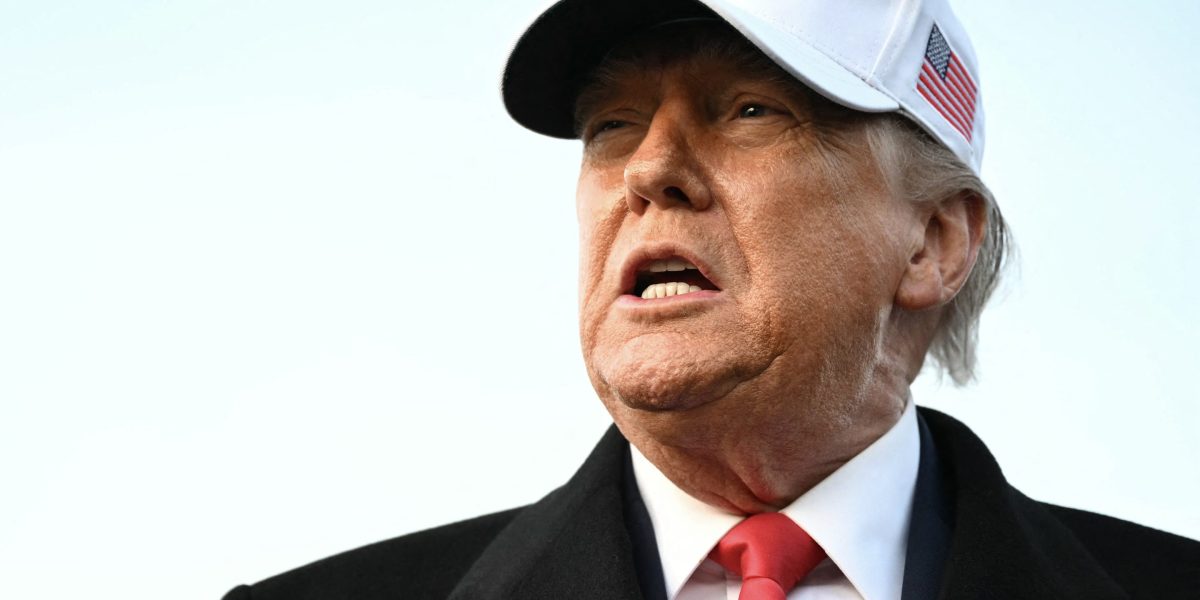
    President Donald Trump appears to have upended an 85-year relationship between American farmers and the United States’ global exercise of power. But that link has been fraying since the end of the Cold War, and Trump’s moves are just another big step.

    During World War II, the U.S. government tied agriculture to foreign policy by using taxpayer dollars to buy food from American farmers and send it to hungry allies abroad. This agricultural diplomacy continued into the Cold War through programs such as the Marshall Plan to rebuild European agriculture, Food for Peace to send surplus U.S. food to hungry allies, and the U.S. Agency for International Development, which aimed to make food aid and agricultural development permanent components of U.S. foreign policy.

    During that period, the United States also participated in multinational partnerships to set global production goals and trade guidelines to promote the international movement of food – including the U.N.’s Food and Agriculture Organization, the International Wheat Agreement and the General Agreement on Tariffs and Trade.

    When U.S. farmers faced labor shortfalls, the federal government created guest-worker programs that provided critical hands in the fields, most often from Mexico and the Caribbean.

    At the end of World War II, the U.S. government recognized that farmers could not just rely on domestic agricultural subsidies, including production limits, price supports and crop insurance, for prosperity. American farmers’ well-being instead depended on the rest of the world.

    Since returning to office in January 2025, Trump has dismantled the U.S. Agency for International Development. His administration has also aggressively detained and deported suspected noncitizens living and working in the U.S., including farmworkers. And he has imposed tariffs that caused U.S. trading partners to retaliate, slashing international demand for U.S. agricultural products.

    Trump’s actions follow diplomatic and agricultural transformations that I research, and which began with the fall of the Soviet Union in 1991.

    Feed the world, save the farm

    Even before the nation’s founding, farmers in what would become the United States staked their livelihood on international networks of labor, plants and animals, and trade.

    Cotton was the most prominent early example of these relationships, and by the 19th century wheat farmers depended on expanding transportation networks to move their goods within the country and overseas.

    A drawing of people on foot and on horseback gathering cattle into a wooden pen.

    Workers load cattle on a train for shipment to market in the late 19th century. Bettmann via Getty Images

    But fears that international trade could create economic uncertainty limited American farmers’ interest in overseas markets. The Great Depression in the 1930s reinforced skepticism of international markets, which many farmers and policymakers saw as the principal cause of the economic downturn.

    World War II forced them to change their view. The Lend-Lease Act, passed in March 1941, aimed to keep the United States out of the war by providing supplies, weapons and equipment to Britain and its allies. Importantly for farmers, the act created a surge in demand for food.

    And after Congress declared war in December 1941, the need to feed U.S. and allied troops abroad pushed demand for farm products ever higher. Food took on a significance beyond satisfying a wartime need: The Soviet Union, for example, made special requests for butter. U.S. soldiers wrote about the special bond created by seeing milk and eggs from a hometown dairy, and Europeans who received food under the Lend-Lease Act embraced large cans of condensed milk with sky-blue labels as if they were talismans.

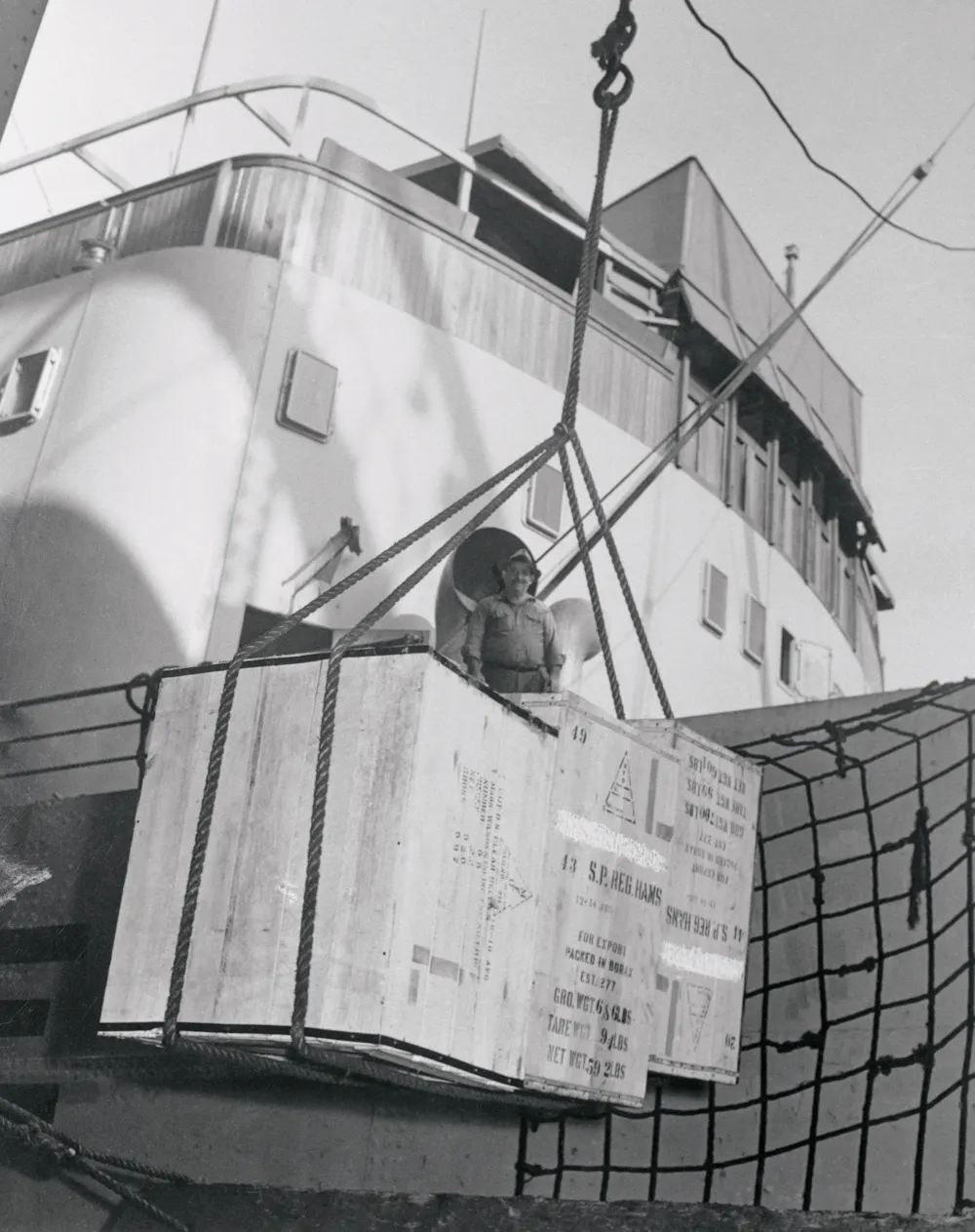
    Ropes hoist large boxes aboard a ship.

    Crates of American hams, supplied through the Lend-Lease Act, are loaded on a ship bound for Britain in 1941. Bettmann via Getty Images

    Another war ends

    But despite their critical contribution to the war, American farmers worried that the familiar pattern of postwar recession would repeat once Germany and Japan had surrendered.

    Congress fulfilled farmers’ fears of an economic collapse by sharply reducing its food purchases as soon as the war ended in the summer of 1945. In 1946, Congress responded weakly to mounting overseas food needs.

    Large bags are stacked in a pile, each with a tag on it saying it came from the U.S. to help Europe.

    Bags of Marshall Plan flour wait in New York for shipment to Austria in 1948. Ann Ronan Picture Library/Photo12/Universal Images Group via Getty Images

    More action waited until 1948, when Congress recognized communism’s growing appeal in Europe amid an underfunded postwar reconstruction effort. The Marshall Plan’s more robust promise of food and other resources was intended to counter Soviet influence.

    Sending American food overseas through postwar rehabilitation and development programs caused farm revenue to surge. It proved that foreign markets could create prosperity for American farmers, while food and agriculture’s importance to postwar reconstruction in Europe and Asia cemented their importance in U.S. foreign policy.

    Farmers in the modern world

    Farmers’ contribution to the Cold War shored up their cultural and political importance in a rapidly industrializing and urbanizing United States. The Midwestern farm became an aspirational symbol used by the State Department to encourage European refugees to emigrate to the U.S. after World War II.

    American farmers volunteered to be amateur diplomats, sharing methods and technologies with their agricultural counterparts around the world.

    By the 1950s, delegations of Soviet officials were traveling to the Midwest, including Soviet premier Nikita Khrushchev’s excursion to Iowa in 1959. U.S. farmers reciprocated with tours of the Soviet Union. Young Americans who had grown up on farms moved abroad to live with host families, working their properties and informally sharing U.S. agricultural methods. Certain that their land and techniques were superior to those of their overseas peers, U.S. farmers felt obligated to share their wisdom with the rest of the world.

    The collapse of the Soviet Union undermined the central purpose for the United States’ agricultural diplomacy. But a growing global appetite for meat in the 1990s helped make up some of the difference.

    U.S. farmers shifted crops from wheat to corn and soybeans to feed growing numbers of livestock around the world. They used newly available genetically engineered seeds that promised unprecedented yields.

    Expecting these transformations to financially benefit American farmers and seeing little need to preserve Cold War-era international cooperation, the U.S. government changed its trade policy from collaborating on global trade to making it more of a competition.

    In a large auditorium, people sit at a long table on a stage and sign papers.

    World leaders sign the Marrakesh Agreement, creating the World Trade Organization, in 1994. Jacques Langevin/Sygma/Sygma via Getty Images

    The George H.W. Bush and Clinton administrations crafted the North American Free Trade Agreement and the World Trade Organization to replace the general agreement on trade and tariffs. They assumed American farmers’ past preeminence would continue to increase farm revenues even as global economic forces shifted.

    But U.S. farmers have faced higher costs for seeds and fertilizer, as well as new international competitors such as Brazil. With a diminished competitive advantage and the loss of the Cold War’s cooperative infrastructure, U.S. farmers now face a more volatile global market that will likely require greater government support through subsidies rather than offering prosperity through commerce.

    That includes the Trump administration’s December 2025 announcement of a US$12 billion farmer bailout. As Trump’s trade wars continue, they show that the U.S. government is no longer fostering a global agricultural market in which U.S. farmers enjoy a trade advantage or government protection – even if they retain some cultural and political significance in the 21st century.

    Peter Simons, Lecturer in History, Hamilton College

    This article is republished from The Conversation under a Creative Commons license. Read the original article.
    The Conversation


    Original Source Link

    Share. Facebook Twitter Pinterest LinkedIn WhatsApp Email Reddit Telegram
    Previous ArticleLIVE NOW: First Lady Melania Trump Delivers Opening Remarks at National AI

    RELATED POSTS

    Protect your agentic AI before you wreck your agentic AI

    January 16, 2026

    Customers lament Tesla’s move toward monthly fees for self-driving cars

    January 15, 2026

    AI ‘godfather’ Yoshua Bengio believes he’s found a technical fix for AI’s biggest risks 

    January 15, 2026

    Citigroup CEO Jane Fraser warns of job cuts and says it’s time to raise the bar in memo to staff

    January 14, 2026

    What Apple’s AI deal with Google means for the two tech giants, and for $500 billion ‘upstart’ OpenAI

    January 14, 2026

    Delta sees wealthy high fliers leading to another record year—but the main cabin is ‘struggling’

    January 13, 2026
    latest posts

    How Trump became a death knell for the 85-year relationship between farmers and the federal government

    President Donald Trump appears to have upended an 85-year relationship between American farmers and the…

    LIVE NOW: First Lady Melania Trump Delivers Opening Remarks at National AI

    January 16, 2026

    Darren Waller said he was booted from exit meeting right before Mike McDaniel’s firing

    January 16, 2026

    Ads Are Coming to ChatGPT. Here’s How They’ll Work

    January 16, 2026

    Meat may play an unexpected role in helping people reach 100

    January 16, 2026

    PlayStation Plus Gamers Praise 90-Hour RPG That’ll Kick Your Butt

    January 16, 2026

    HGTV’s Jasmine Roth Shares Before & After of Daughter Darla’s Nursery Makeover

    January 16, 2026
    Categories
    • Books (1,005)
    • Business (5,910)
    • Events (29)
    • Film (5,846)
    • Lifestyle (3,956)
    • Music (5,946)
    • Politics (5,911)
    • Science (5,261)
    • Technology (5,840)
    • Television (5,524)
    • Uncategorized (6)
    • US News (5,898)
    popular posts

    New H.E.R. Music Featured on ESPN During 2023 NBA Playoffs – Billboard

    H.E.R. is teaming up with ESPN during the 2023 NBA Playoffs. “The Journey,” a new,…

    Meta Ditches Fact-Checkers Ahead of Trump’s Second Term

    January 7, 2025

    Conversation is More Than Nodding Your Head – Chasing Life

    June 15, 2022

    Anderson: Now The Left Is Erasing Native American History

    January 30, 2024
    Archives
    Browse By Category
    • Books (1,005)
    • Business (5,910)
    • Events (29)
    • Film (5,846)
    • Lifestyle (3,956)
    • Music (5,946)
    • Politics (5,911)
    • Science (5,261)
    • Technology (5,840)
    • Television (5,524)
    • Uncategorized (6)
    • US News (5,898)
    About Us

    We are a creativity led international team with a digital soul. Our work is a custom built by the storytellers and strategists with a flair for exploiting the latest advancements in media and technology.

    Most of all, we stand behind our ideas and believe in creativity as the most powerful force in business.

    What makes us Different

    We care. We collaborate. We do great work. And we do it with a smile, because we’re pretty damn excited to do what we do. If you would like details on what else we can do visit out Contact page.

    Our Picks

    PlayStation Plus Gamers Praise 90-Hour RPG That’ll Kick Your Butt

    January 16, 2026

    HGTV’s Jasmine Roth Shares Before & After of Daughter Darla’s Nursery Makeover

    January 16, 2026

    Edit & Upgrade Your Closet

    January 16, 2026
    © 2026 New York Examiner News. All rights reserved. All articles, images, product names, logos, and brands are property of their respective owners. All company, product and service names used in this website are for identification purposes only. Use of these names, logos, and brands does not imply endorsement unless specified. By using this site, you agree to the Terms & Conditions and Privacy Policy.

    Type above and press Enter to search. Press Esc to cancel.

    We use cookies on our website to give you the most relevant experience by remembering your preferences and repeat visits. By clicking “Accept All”, you consent to the use of ALL the cookies. However, you may visit "Cookie Settings" to provide a controlled consent.
    Cookie SettingsAccept All
    Manage consent

    Privacy Overview

    This website uses cookies to improve your experience while you navigate through the website. Out of these, the cookies that are categorized as necessary are stored on your browser as they are essential for the working of basic functionalities of the website. We also use third-party cookies that help us analyze and understand how you use this website. These cookies will be stored in your browser only with your consent. You also have the option to opt-out of these cookies. But opting out of some of these cookies may affect your browsing experience.
    Necessary
    Always Enabled
    Necessary cookies are absolutely essential for the website to function properly. These cookies ensure basic functionalities and security features of the website, anonymously.
    CookieDurationDescription
    cookielawinfo-checkbox-analytics11 monthsThis cookie is set by GDPR Cookie Consent plugin. The cookie is used to store the user consent for the cookies in the category "Analytics".
    cookielawinfo-checkbox-functional11 monthsThe cookie is set by GDPR cookie consent to record the user consent for the cookies in the category "Functional".
    cookielawinfo-checkbox-necessary11 monthsThis cookie is set by GDPR Cookie Consent plugin. The cookies is used to store the user consent for the cookies in the category "Necessary".
    cookielawinfo-checkbox-others11 monthsThis cookie is set by GDPR Cookie Consent plugin. The cookie is used to store the user consent for the cookies in the category "Other.
    cookielawinfo-checkbox-performance11 monthsThis cookie is set by GDPR Cookie Consent plugin. The cookie is used to store the user consent for the cookies in the category "Performance".
    viewed_cookie_policy11 monthsThe cookie is set by the GDPR Cookie Consent plugin and is used to store whether or not user has consented to the use of cookies. It does not store any personal data.
    Functional
    Functional cookies help to perform certain functionalities like sharing the content of the website on social media platforms, collect feedbacks, and other third-party features.
    Performance
    Performance cookies are used to understand and analyze the key performance indexes of the website which helps in delivering a better user experience for the visitors.
    Analytics
    Analytical cookies are used to understand how visitors interact with the website. These cookies help provide information on metrics the number of visitors, bounce rate, traffic source, etc.
    Advertisement
    Advertisement cookies are used to provide visitors with relevant ads and marketing campaigns. These cookies track visitors across websites and collect information to provide customized ads.
    Others
    Other uncategorized cookies are those that are being analyzed and have not been classified into a category as yet.
    SAVE & ACCEPT