
Close Menu
New York Examiner News

    Subscribe to Updates

    Get the latest creative news from FooBar about art, design and business.

    What's Hot

    Tom Hardy Revives His Bane Voice on New Rap Album

    August 30, 2026

    Singapore has overhauled its baby bonus scheme. Will it work to boost birth rates this time?

    August 30, 2026

    Trump Mentally Collapses Over Report He Refuses To Go To Ground Zero On 9/11

    August 30, 2026
    Facebook X (Twitter) Instagram
    New York Examiner News
    • Home
    • US News
    • Politics
    • Business
    • Science
    • Technology
    • Lifestyle
    • Music
    • Television
    • Film
    • Books
    • Contact
      • About
      • Amazon Disclaimer
      • DMCA / Copyrights Disclaimer
      • Terms and Conditions
      • Privacy Policy
    New York Examiner News
    Home»Science»Russia Launches First Moon Mission after Half-Century Hiatus
    Science

    Russia Launches First Moon Mission after Half-Century Hiatus

    By AdminAugust 14, 2023
    Facebook Twitter Pinterest LinkedIn WhatsApp Email Reddit Telegram
    Russia Launches First Moon Mission after Half-Century Hiatus


    Russia Launches First Moon Mission after Half-Century Hiatus

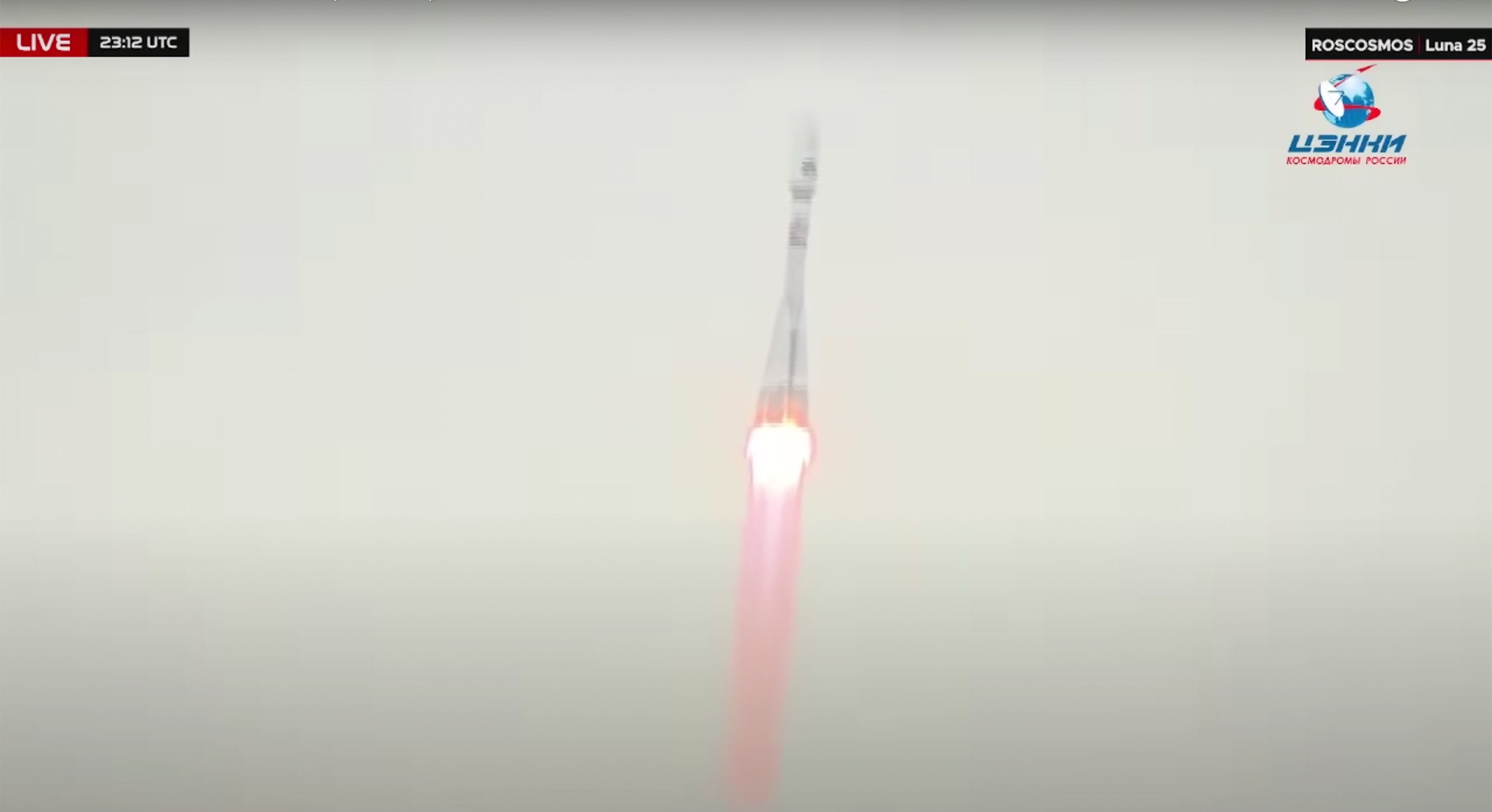
    Russia has launched uncrewed spacecraft to the Moon’s south pole — its first lunar mission in 47 years. If successful, the mission would be the first to land in the region, and could mark the start of considerable activity there from multiple countries and private companies.

    “It’s an area where we might expect to see increased concentrations of water ice,” says Simeon Barber, a planetary scientist at the Open University in Milton Keynes, UK. “As you go further towards the pole, it gets colder and the potential for water ice increases.”

    Luna 25 launched at 11.11 p.m. UTC on a Soyuz rocket on 10 August from the Vostochny Cosmodrome in eastern Russia — marking a move away from Russia’s dependence on Kazakhstan, which hosts its main launch site, the Baikonur Cosmodrome. It will take around five days for the spacecraft to reach a 100-kilometre orbit around the Moon. The landing attempt is scheduled for 21 August at the 100-kilometre-wide Boguslawsky crater, about 500 kilometres from the Moon’s south pole.

    This is the first of many missions planned for the south pole. India’s Chandrayaan-3 will attempt to land in the region on 23 August. China plans to send a rover there in 2026, and NASA’s Artemis programme, which will attempt to return humans to the Moon for the first time since Apollo 17 in 1972, is also focusing on the south pole. As part of Artemis, several US companies are set to attempt landings there in the coming years.

    Luna 25 is “an opportunity to steal the march on other people get some positive publicity,” says Roger Launius, NASA’s former chief historian.

    Search for ice

    Orbital data since the 1990s suggests the Moon’s poles contain sizeable quantities of water ice, which, if accessible, could be a valuable resource for future human missions. “You can generate hydrogen and oxygen from it which could be used to produce either drinking water, breathable air, or even to produce rocket fuel,” says Nico Dettman, Lunar Exploration Group Leader at the European Space Agency. That could make the Moon “a stepping stone for further destinations” in the Solar System.

    In June, Yuri Borisov, head of Russia’s space agency Roscosmos, described the Luna 25 mission as “high risk” with a 70% chance of success. NASA chief Senator Bill Nelson said on 8 August that the agency “wished them well”, noting that NASA saw any space race to return humans to the Moon as being between the United States and China.

    Two decades in the making, Luna 25 is a stationary lander that weighs about 1,750 kilograms and is Russia’s first attempt to land on the Moon since the Luna 24 mission in 1976, which returned lunar rocks to Earth. Luna 25 by comparison is “fairly modest”, says Scott Pace, former executive secretary of the US National Space Council, carrying just 30 kilograms of scientific instruments.

    The mission’s purpose might be grander than its scientific return, says Pace. “Politically they probably feel they have to [go back],” he says, given activity from other nations. “I think it’s more of a statement that they’re still here and they still have ambitions.” The country is already working with China to build a lunar research station, with China also hoping to send astronauts to the Moon by 2030.

    Digging down

    Luna 25’s main instrument is a robotic arm that will attempt to dig up to 50 centimetres into the floor of the Boguslawsky crater to look for signs of water ice. Barber had been part of a European team that would have collaborated with Russia on these activities and a planned follow-up mission, Luna 27, but the collaboration ended last year following Russia’s invasion of Ukraine.

    Water ice, if discovered, would be useful scientifically. “By understanding how the Moon has collected water over time, we could start to piece together the history of water in the Solar System,” says Barber. “We can start asking questions about the local conditions near Earth as it was evolving.”

    But the Russian mission striking ice at Boguslawsky is “pretty unlikely”, because temperatures in the crater are too high, says Margaret Landis, a planetary scientist at the University of Colorado, Boulder. More promising might be a smaller and more deeply shadowed crater within Boguslawsky, but it’s unclear if Russia could attempt a landing here. (Roscosmos declined Nature’s request for interview.)

    “A null result is potentially just as interesting as a positive detection,” says Landis. Next year, a NASA rover called VIPER and a separate hopping spacecraft called Micro-Nova from the US firm Intuitive Machines will also look for ice inside lunar craters at the south pole. Results from this variety of surface missions could “help us narrow down where the water could be”, says Landis.

    Luna 25 will also image the surface, study the interaction between the solar wind and the Moon, and deploy a laser reflector to precisely measure the Earth–Moon distance. Providing the landing goes smoothly, the craft is expected to operate for one year.

    If Luna 25 lands, Russia will succeed where many others have failed recently. Since 1976, only China has successfully landed on the Moon, with a lander and rover in 2013 and 2018, and a sample-return mission in 2020. In 2019, India’s Chandrayaan-2 mission and Israel’s Beresheet lander crashed on the surface, and Japan’s Hakuto lander suffered the same fate in April.

    “It’d be good to see somebody stick the landing,” says Landis.

    This article is reproduced with permission and was first published on August 11, 2023.


    Original Source Link

    Share. Facebook Twitter Pinterest LinkedIn WhatsApp Email Reddit Telegram
    Previous Article‘Between female desire and gratification lies a space full of possibilities’
    Next Article India, the world’s largest smartwatch market, is getting new smart rings

    RELATED POSTS

    NASA’s Roman Space Telescope could find alien Earths—but not like you think

    August 30, 2026

    NASA’s Nancy Grace Roman Space Telescope Has a Hidden Technological Leap

    August 29, 2026

    Where are all the aliens? A new book explores possible answers

    August 29, 2026

    There Are So Many Conspiracy Theories About Dolly Parton and Vaccines

    August 28, 2026

    Tropical Storm Dolly forms in the Atlantic

    August 28, 2026

    Submit Your Questions: The Great Data Center Backlash

    August 27, 2026
    latest posts

    Tom Hardy Revives His Bane Voice on New Rap Album

    Under his Frankie Pulitzer alias, Tom Hardy has teamed with Czarface — the underground rap…

    Singapore has overhauled its baby bonus scheme. Will it work to boost birth rates this time?

    August 30, 2026

    Trump Mentally Collapses Over Report He Refuses To Go To Ground Zero On 9/11

    August 30, 2026

    North Carolina issues rabies warning after petting zoo goats test positive

    August 30, 2026

    Soundcore Liberty 5 Pro Review: Master of Phone Calls

    August 30, 2026

    NASA’s Roman Space Telescope could find alien Earths—but not like you think

    August 30, 2026

    Pedro Almodóvar: ‘Everyone that surrounds a…

    August 30, 2026
    Categories
    • Books (1,459)
    • Business (6,362)
    • Events (70)
    • Film (6,297)
    • Lifestyle (4,370)
    • Music (6,424)
    • Politics (6,347)
    • Science (5,714)
    • Technology (6,295)
    • Television (5,985)
    • Uncategorized (9)
    • US News (6,350)
    popular posts

    Law & Order: Anthony Anderson Departs

    When Law & Order returns for Season 22 in the fall, it will be…

    Uniqlo x JW Anderson SS26 | Prep Goes Playful

    February 25, 2026

    Nike’s earnings exceeded Wall Street’s expectations, but CEO Elliott Hill’s test is the World Cup

    July 1, 2026

    Elizabeth Warren Tells America Exactly What It Means If Trump Returns To The White House

    June 24, 2024
    Archives
    Browse By Category
    • Books (1,459)
    • Business (6,362)
    • Events (70)
    • Film (6,297)
    • Lifestyle (4,370)
    • Music (6,424)
    • Politics (6,347)
    • Science (5,714)
    • Technology (6,295)
    • Television (5,985)
    • Uncategorized (9)
    • US News (6,350)
    About Us

    We are a creativity led international team with a digital soul. Our work is a custom built by the storytellers and strategists with a flair for exploiting the latest advancements in media and technology.

    Most of all, we stand behind our ideas and believe in creativity as the most powerful force in business.

    What makes us Different

    We care. We collaborate. We do great work. And we do it with a smile, because we’re pretty damn excited to do what we do. If you would like details on what else we can do visit out Contact page.

    Our Picks

    NASA’s Roman Space Telescope could find alien Earths—but not like you think

    August 30, 2026

    Pedro Almodóvar: ‘Everyone that surrounds a…

    August 30, 2026

    ‘America’s Got Talent’ Reveals Simon Cowell’s Replacement

    August 30, 2026
    © 2026 New York Examiner News. All rights reserved. All articles, images, product names, logos, and brands are property of their respective owners. All company, product and service names used in this website are for identification purposes only. Use of these names, logos, and brands does not imply endorsement unless specified. By using this site, you agree to the Terms & Conditions and Privacy Policy.

    Type above and press Enter to search. Press Esc to cancel.

    We use cookies on our website to give you the most relevant experience by remembering your preferences and repeat visits. By clicking “Accept All”, you consent to the use of ALL the cookies. However, you may visit "Cookie Settings" to provide a controlled consent.
    Cookie SettingsAccept All
    Manage consent

    Privacy Overview

    This website uses cookies to improve your experience while you navigate through the website. Out of these, the cookies that are categorized as necessary are stored on your browser as they are essential for the working of basic functionalities of the website. We also use third-party cookies that help us analyze and understand how you use this website. These cookies will be stored in your browser only with your consent. You also have the option to opt-out of these cookies. But opting out of some of these cookies may affect your browsing experience.
    Necessary
    Always Enabled
    Necessary cookies are absolutely essential for the website to function properly. These cookies ensure basic functionalities and security features of the website, anonymously.
    CookieDurationDescription
    cookielawinfo-checkbox-analytics11 monthsThis cookie is set by GDPR Cookie Consent plugin. The cookie is used to store the user consent for the cookies in the category "Analytics".
    cookielawinfo-checkbox-functional11 monthsThe cookie is set by GDPR cookie consent to record the user consent for the cookies in the category "Functional".
    cookielawinfo-checkbox-necessary11 monthsThis cookie is set by GDPR Cookie Consent plugin. The cookies is used to store the user consent for the cookies in the category "Necessary".
    cookielawinfo-checkbox-others11 monthsThis cookie is set by GDPR Cookie Consent plugin. The cookie is used to store the user consent for the cookies in the category "Other.
    cookielawinfo-checkbox-performance11 monthsThis cookie is set by GDPR Cookie Consent plugin. The cookie is used to store the user consent for the cookies in the category "Performance".
    viewed_cookie_policy11 monthsThe cookie is set by the GDPR Cookie Consent plugin and is used to store whether or not user has consented to the use of cookies. It does not store any personal data.
    Functional
    Functional cookies help to perform certain functionalities like sharing the content of the website on social media platforms, collect feedbacks, and other third-party features.
    Performance
    Performance cookies are used to understand and analyze the key performance indexes of the website which helps in delivering a better user experience for the visitors.
    Analytics
    Analytical cookies are used to understand how visitors interact with the website. These cookies help provide information on metrics the number of visitors, bounce rate, traffic source, etc.
    Advertisement
    Advertisement cookies are used to provide visitors with relevant ads and marketing campaigns. These cookies track visitors across websites and collect information to provide customized ads.
    Others
    Other uncategorized cookies are those that are being analyzed and have not been classified into a category as yet.
    SAVE & ACCEPT