
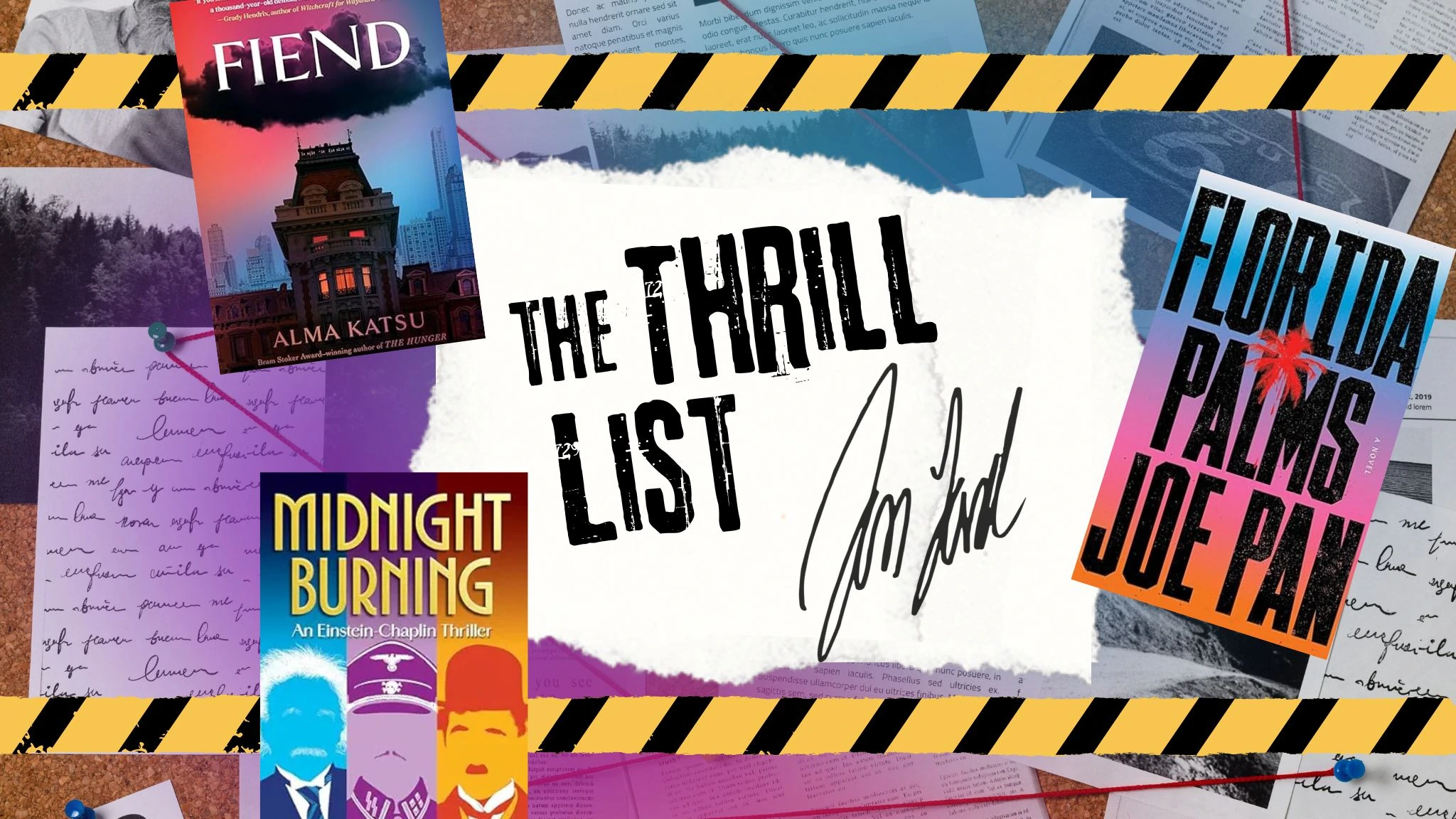
Jon Land’s The Thrill List delivers September’s smartest, most suspenseful reads: from cunning spies and wartime intrigue to twisted psychological thrillers and chilling horror. Every page packs a punch, every story lingers. This is where the best of the genre comes to play.
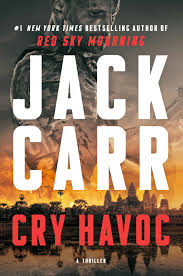
Cry Havoc by Jack Carr
Jack Carr’s Cry Havoc is a terrific political thriller for a whole bunch of reasons, namely the fact that it’s a period piece in which Navy SEAL Tom Reece takes center stage in place of his son James Reece.
The period in question encompasses the Vietnam War, specifically the especially bloody period around the Tet Offensive. The capture of an American spy ship unearths a treasure trove of intelligence that threatens the balance of power not only in the region but also in the world. The stakes couldn’t be higher thanks to Tom Reece’s counterparts in the Soviet KGB, and Reece stages a one-man mission to set things right before it’s too late. The stage he operates on, of course, is far different than the one in which his son cut his teeth. Simply stated, Tom Reece doesn’t have anywhere near the tech or intelligence routinely at this son’s disposal, forcing him to rely more on his wits and guile.
Military, political and action thriller aficionados all will devour Carr’s latest. His fourth book in the Terminal List series breaks new ground as Carr stretches his wings and his talents. This is easily his most ambitious and best realized book yet, a scintillatingly seminal tale with echoes of Le Carre, Forsythe and Ludlum thrown in for good measure.

The Grave Artist by Jeffrey Deaver and Isabella Maldonado
Jeffrey Deaver and Isabella Maldonado make big promises in The Grave Artist and deliver on every one.
Deaver, long the master of the serial killer-based thriller, has come up with a doozy of one that would make the likes of Hannibal Lecter proud. Carmen Sanchez and Jack Heron’s quarry this time out is labeled the “Honeymoon Killer” for his penchant of claiming the lives of freshly minted brides and grooms. Call him a grief junky but, like Lecter, he gets special pleasure in toying with his hunters. In this case, toying means targeting, meaning Sanchez and Heron find themselves in a race to save their own lives.
The Grave Artist features Deaver at the top of his game, likely the closest he’s come to The Bone Collector since he practically redefined this sub-genre. His teaming with Maldonado has proven a stroke of genius, their latest being a classic cat-and-mouse game in which the only losers are those who don’t read it.

The Fairest by Jenny Milchman
Jenny Milchman is back with a stunningly effective tale in The Fairest, a psychological thriller that’s like an old-fashioned puzzle box.
Milchman’s doppelganger, author Kara Parsons, is in the midst of a book tour when one of the books she signs contains a cryptic, hand-scrawled message by a young girl claiming to be on the missing child watchlist. Parsons feels drawn to dig deeper, enlisting the help of her own former therapist, Arles Shepherd, who’s dealing with his own demons thanks to his nightmarish experiences related in The Usual Silence. In that sense, the recurring Shepherd proves reminiscent of Will Graham in Thomas Harris’ Red Dragon, the prequel to The Silence of the Lambs. Not surprisingly, the pieces he puts together to reveal a picture far different than what we may have been expecting.
Milchman is always good, but with The Fairest, she takes her considerable storytelling skills to a whole new level. Her latest is a mind-numbing tale as riveting as it is relentless.
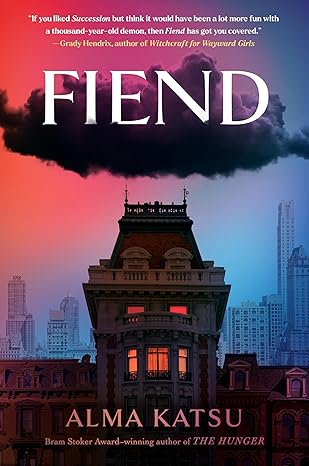
Fiend by Alma Katsu
Alma Katsu’s fantastic Fiend is one of those rare horror tales that’s as thoughtful as it is terrifying, jumping off the brilliant premise of a super wealthy, all-powerful family clan who have an ancient evil under their control to credit with their success.
In this case, that’s the Berisha family which take their cues from real families like the Murdochs and Gettys, as well as fictional ones like the Roys from the sensational “Succession.” As Stephen King and H.P. Lovecraft before him have taught us, though, making deals with demonic entities comes with a price. That’s what happens to Zef Berisha’s three children, once the bill comes due, embroiling them in a desperate battle to survive their family’s cursed legacy, even if it means turning on each other.
Fiend reads like a contemporary version of the Ira Levin classic Rosemary’s Baby mixed with a hefty dose of Edgar Allan Poe in stories like The Fall of the House of Usher. Spine-tingling stuff you’ll definitely want to leave all the lights on while feverishly flipping the pages.
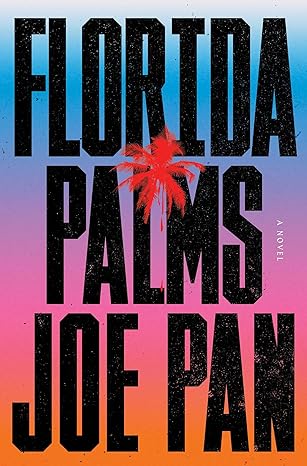
Florida Palms by Joe Pan
Joe Pan’s debut Florida Palms features the deliciously depraved denizens of downscale Florida, featuring a trio of recent high school grads who are kind of a noir version of the characters from S.E. Hinton’s YA classic “The Outsiders.”
What is it about Florida, anyway, that makes it the epicenter of crime fiction? Something in the water, maybe? All that humidity? For Eddy, Cueball, and Jesse, it’s a recession-based dark future living along the state’s Space Coast in 2009. Out of employment options, they take jobs working for Cueball’s biker father moving furniture. Seems innocent enough until it turns out what they’re really moving are drugs in what becomes a coming-of-age story gone to hell as the boys find themselves negotiating Florida’s dangerous criminal underbelly.
Florida Palms reads like a magnificent mash-up of Elmore Leonard’s wit and fellow crime writer Jim Thompson’s grit, with just enough of the brilliant TV show “Breaking Bad” thrown in for good measure. A story of society’s underbelly, the down and out trying to climb their way from the barrel they were born in. Pan writes wondrously about them in much the same way Updike did about a different underbelly in classics like The Grapes of Wrath and Cannery Row. He’s that good and his debut is not to be missed.
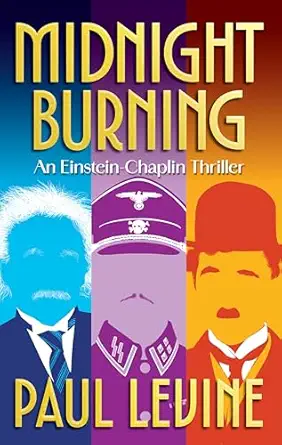
Midnight Burning by Paul Levine
I absolutely loved Paul Levine’s Midnight Burning. Not only is it the most original thriller I’ve read this year, especially for a history buff, but it also features a brilliant pairing rooted in actual fact.
That pairing teams none other than Albert Einstein with Charlie Chaplin against villainous Nazis in 1937 Los Angeles. Remember, at that point, a large percentage of Americans were supporting Hitler, and America was in the throes of a not-so-subtle near-insurrection at the hands of far-right reactionaries. That mindset spurs an American-Nazi plot to murder dozens of celebrities as a flashpoint to ignite the very insurrection they crave. And it’s left to this unique crime-fighting partnership to use their own celebrity and contacts to foil the plan when no one else seems up to the task.
I really liked Levine’s Jake Lassiter series, but “Midnight Burning” is one of those books that will remain etched in my memory for years, the standard by which I’ll judge other historical thrillers. Levine has never been better and the clear allusions to the United States of today make his latest a cautionary tale on top of that. Eerily resonant, exquisitely entertaining, and blisteringly brilliant in all respects.

A Beacon in the Night, by David Lewis
Speaking of historical thrillers, look no further also than David Lewis’ A Beacon in the Night, his second book in The Secret Churchill Files series.
It’s similar in theme to Levine’s “Midnight Burning,” except the targets are British cultural icons instead of people aimed at breaking the country’s spirit after the 1941 aerial Blitz failed to do that. The secret agent assigned to stop the nefarious plot is Caitrin Colline, a super spy lacking only the double-0 designation and theme song. As in any great World War II spy thriller, subterfuge, double agents and double crosses abound. Good thing Caitrin is masterful at telling the good guys from the bad guys, as she manages to stay a step ahead of them in preventing the maelstrom.
A Beacon in the Night is a must-read for historical thriller fans, particularly those with a fascination for all things World War II. It reminded me of Jack Higgins and Alistair McClean at their level best in books like The Eagle has Landed and Where Eagles Dare. Lewis flies just as high.

The Witch’s Orchard by Archer Sullivan
An interesting thriller sub-genre has sprouted in recent years, joining the gritty-urban and domestic-suburban entries. Call it rural, small-town noir of which The Witch’s Orchard by Archer Sullivan is a prime example.
Similarly typical for rural noir, former Air Force special investigator Annie Gore is the more or less typical broken-down figure seeking peace and reclamation as far off the beaten path as she can find. In Sullivan’s latest, that turns out to be an Appalachian “holler” where Annie sets up shop as a private investigator. Unfortunately for her, laying down new routes means uncovering old mysteries, specifically about the disappearance of three girls a decade earlier. Drawn to the case by haunting memories of her own childhood experiences in a comparable town, Annie‘s quest turns into one that might cost her life.
These rural noirs are like neo-westerns and The Witch’s Orchard matches the likes of Craig Johnston’s terrific Longmire series, as well as Samantha Jayne Allen’s Annie McIntyre books, in both form and function. Sullivan’s present-tense, staccato prose lends an immediacy and vibrance to Annie’s plight, making this an exceptional triumph of style and structure.