

[ad_1]
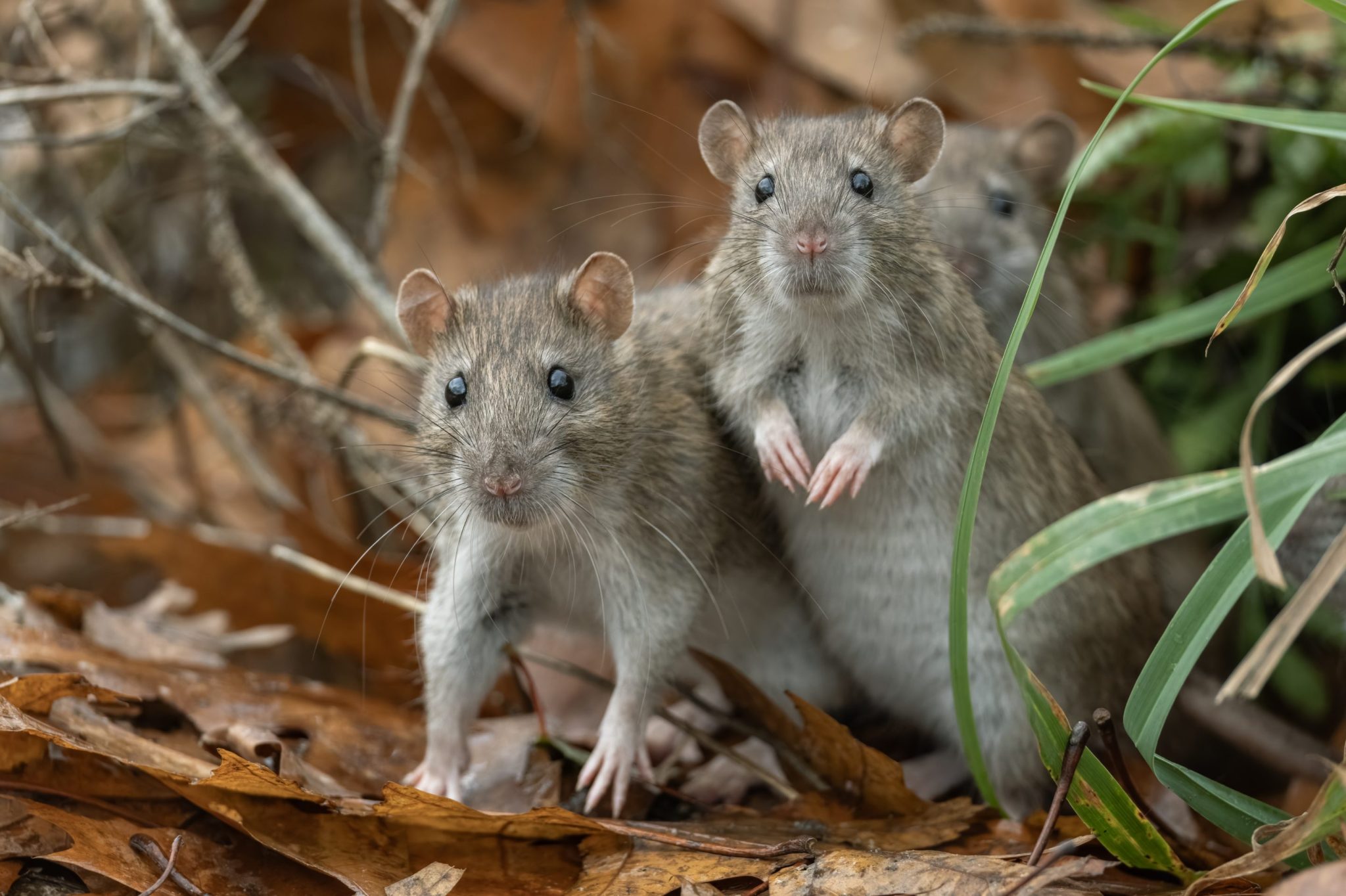
The deaths of three passengers aboard the expedition cruise ship MV Hondius have triggered an international scramble to trace passengers and crew exposed to the rare Andes strain of hantavirus. The outbreak has reignited public fear about a virus most Americans associate with rural rodent exposure, and raised an uncomfortable question about whether human-to-human spread could become more common.
Two scientists working on opposite ends of the hantavirus problem—Dr. Scott Pegan, a virologist at the UC Riverside School of Medicine, and Dr. Marieke Rosenbaum, a veterinary public health expert at Tufts University’s Cummings School of Veterinary Medicine—both say the same thing: don’t panic, but take this seriously.
A self-contained environment aboard the cruise ship
For most of its known history, hantavirus has been a disease of close rodent contact: a dusty barn, a mouse-infested cabin, a grain shed. The Andes strain circulating through MV Hondius is unusual because it can spread, it seems, between people. But Pegan said the conditions on the ship were extraordinary.
“It’s a hypothesis that the virus builds up a higher titer in the saliva,” said Pegan of the blood test that measures the concentration of specific antibodies. He compared it to aspects of the early COVID-19 strain—which also was christened with a famous cruise ship of its own, the Diamond Princess. Cruise ships, as society learned six years ago, are a perfect breeding ground for viruses. “And that’s, of course, going to be a respiratory venue, and so that’s going to be likely to infect more people.”
But that doesn’t mean the Andes virus behaves anything like COVID. The transmission Pegan described is what virologists call nosocomial, meaning hospital-acquired or close-contact spread.
“If a patient shows up at a hospital and they don’t really know what they have, and then no one does any protection, and then all of a sudden, the healthcare workers come down with it, because they’ve been intimately involved with the individual,” he explained.
A cruise ship cabin, he said, is functionally the same problem. “If they weren’t on a cruise ship in a small container, then it wouldn’t have supported itself in spreading.”
Rosenbaum, who has been studying urban rats in Boston for over a decade as part of the Boston Urban Rat Study, agreed.
“The risk of human-to-human transmission of hantavirus is really low, and this cruise was just like the perfect condition for it to spread to more people than I think it might have otherwise,” she said. “If these people were home and started feeling ill, they probably would stay home and there wouldn’t be as much exposure to other people.”
The real risk is cleaning, not contact
Both researchers were emphatic that the average person’s risk from hantavirus has not changed because of the cruise ship outbreak. The virus still spreads almost entirely the way it always has, through aerosolized particles from rodent urine, droppings, or saliva.
“You’re not exactly going to, you know, be face to face with a rat breathing heavily on you,” Pegan said.
Instead, the issue is with how most of us typically interact with rodents, in cleanup. “Most cases, like in the United States, it’s usually because somebody is cleaning out a rat-infested area, and maybe not using sufficient PPE, mask, whatever, to do it,” Pegan said. “They’re basically dusting up old rat urine and things of that nature, and that gets it in the air, and they breathe it in.”
“If you’re cleaning up an area that has rodent urine or droppings, you should be careful,” Rosenbaum said. “You should wear gloves, you should wear a mask, and you should spray the area with water, because if you just sweep it, it’s going to aerosolize all the dry particles and feces and urine particles, and potentially increase your inhalation.” And absolutely no vaccuuming.
The most dangerous exposures, she added, tend to happen indoors: in attics, sheds, basements, or any enclosed space “where you have limited ventilation, so you’re aerosolizing that material, and it doesn’t have anywhere to go.”
What to do (and not do)
Both scientists offered the same short, unglamorous list of advice: don’t sweep or vacuum rodent droppings; wet contaminated areas before cleaning; wear gloves and a mask; ventilate the space; and if you’ve recently traveled to South America and start running a fever with muscle aches, tell your doctor.
“If somebody comes in and they say, hey, I’ve got some muscle aches, and I recently went down to South America, they’re probably getting a blood test for hantavirus,” Pegan said. The diagnostic isn’t perfect: it’s most reliable more than 72 hours after symptoms begin.
And seeing a rat on the street, Pegan said, is not a reason to panic.
“This is really the principal way hanta is still very much spread: It’s mostly stirring up of the feces and the urine, saliva. The rat can bite you and things like that,” he said, but added, unless you’re in the same air space as a rat, you’re probably fine.
The ‘wicked problem’ of surveillance
While Pegan focuses on the molecular machinery of the virus and on developing vaccines and antibody therapeutics, Rosenbaum works on a question that’s harder to fund and harder to solve: what’s actually circulating in the rodents living among us?
For more than a decade, she has run the Boston Urban Rat Study, partnering with the city’s inspectional services to test wild Norway rats for pathogens including leptospirosis, Staphylococcus aureus, influenza A, and hantavirus. Her team is finishing a paper on hantavirus in Boston rats now.
“It’s quite a wicked problem,” she said of urban rodent control and disease surveillance, “because it would require so much cooperation across sectors to deal with.”
Norway rats, the brown rats that thrive in nearly every major American city, are the reservoir for Seoul virus, a hantavirus that causes hemorrhagic fever with renal syndrome. “Most of the investigation in America and Europe has been related to colonies of rats that are being bred for research purposes, or for pets or pet food purposes,” Rosenbaum said. “There’ve been very few studies that have actually looked at wild rats. So we really don’t know a lot about if it’s out there.”
Severe hantavirus cases are rare in humans, she said, but that’s partly because no one is looking. “You could get infected and develop mild symptoms and overcome the infection and never go to the doctor and get diagnosed.”
The issue is there hasn’t been plenty of funding to increase surveillance and research into the hantavirus, in part because it never had its big, attention-grabbing American outbreak.
“The funding landscape has just generally shifted a lot,” Rosenbaum said. “When it comes down to surveillance in rats, it can be challenging, because people might think, well, we should do surveillance in humans first.” She compared it to West Nile virus surveillance, which is now a routine public health function in cities, but only because of past outbreaks. “If there is an outbreak of hantavirus in New York City that stems from rats, there probably may be more interest in longer-term surveillance, but until that happens, it’s probably not going to capture the interest of dollars.”
Surveillance in wildlife is also just hard. “For rat trapping, we’re trapping in the middle of the night,” she said. “It takes a lot of effort, a lot of money, a lot of time.”
Pegan, who recently received a $3.4 million NIH grant for his work on Crimean-Congo hemorrhagic fever (CCHF) virus, a close cousin of hantavirus in the bunyavirus family, made a similar point about therapeutic development. “If you talk about, like, what’s the vaccine, or what’s the countermeasure? Well, there really isn’t any. And that’s just because, again, we haven’t valued that virus enough to invest the billions of dollars it would take to get one. It’s not that we couldn’t get one. It’s just that it’s a prioritization of what we’re spending funds and money on.”
His lab has developed a vaccine platform currently aimed at CCHF that he said could be adapted for hantaviruses. “We developed a vaccine platform for bunyaviruses. We were using it for CCHF right now, but that’s a platform, and like other platforms, it could be adapted for hantaviruses.” The platform protects in as little as three days, he said: “You can take it on Friday, bingewatch Netflix, and go back to the public on Monday.”
The only existing hantavirus vaccine, Hantavax, “is only really effective against the Seoul and Hantaan virus, and those are older viruses,” Pegan said. “There’s zero evidence that that would do any good against the Andes or anything else.” (Rosenbaum has a research paper coming out about finding the Seoul variant of the hantavirus in Boston rats, but again, calmed fears and said it’s incredibly rare to contract).
Another pandemic’s on the schedule
It may not be the hantavirus, but given how social humans are and how viruses evolve, it’s just a matter of time before the world may experience another pandemic.
“I can safely say there’ll be another pandemic in our future,” Pegan said. “Do we know when or where? We are one population that’s increasing. We are moving more into these areas where some of these viruses hang out, and where these animals are, and that does have consequences.”
It’s the breakdown of the boundary between people and wildlife, Pegan said, pointing to the same dynamic that drove COVID-19, Ebola, and now this hantavirus outbreak. “You’re breaking down that human-wilderness interface, and that’s where you’re going to get these cross events, much like COVID.”
Decades ago, an Ebola case in a remote village might burn itself out. Today, that’s no longer how the world works. “You’re going to have more of those situations of people getting exposed in those climates, and hopping on a cruise ship and hopping on a plane,” Pegan said. “That’s just kind of the way we live our lives today.”
He noted that a virology researcher happened to be aboard the cruise ship as a passenger: Dr. Stephen Kornfeld, who was there bird-watching, again toying at the lines between humans and wildlife. “It’s just going to bring more of these,” Pegan said. The combination of population growth, encroachment on wildlife habitat, and global travel means more spillover events, more often. “Evolution is just not tied down, you know, it’s not like the virus is saying, ‘I’m not leaving rats ever.’ But it doesn’t mean that it’s not going to start sampling other things if you keep getting exposed to it over and over again.”
Rosenbaum said the cruise ship outbreak does not change the immediate risk profile for Americans, but she’d like cities to think harder about who’s most exposed. One of the Boston Urban Rat Study’s trapping sites was at the heart of Boston’s opioid crisis, where street encampments overlapped directly with rodent activity. “There’s direct physical contact that’s occurring for that population,” she said. “There are certain pockets of individuals that we should consider focusing on when we think about risk of contracting rodent-borne diseases.”
[ad_2]
Original Source Link