
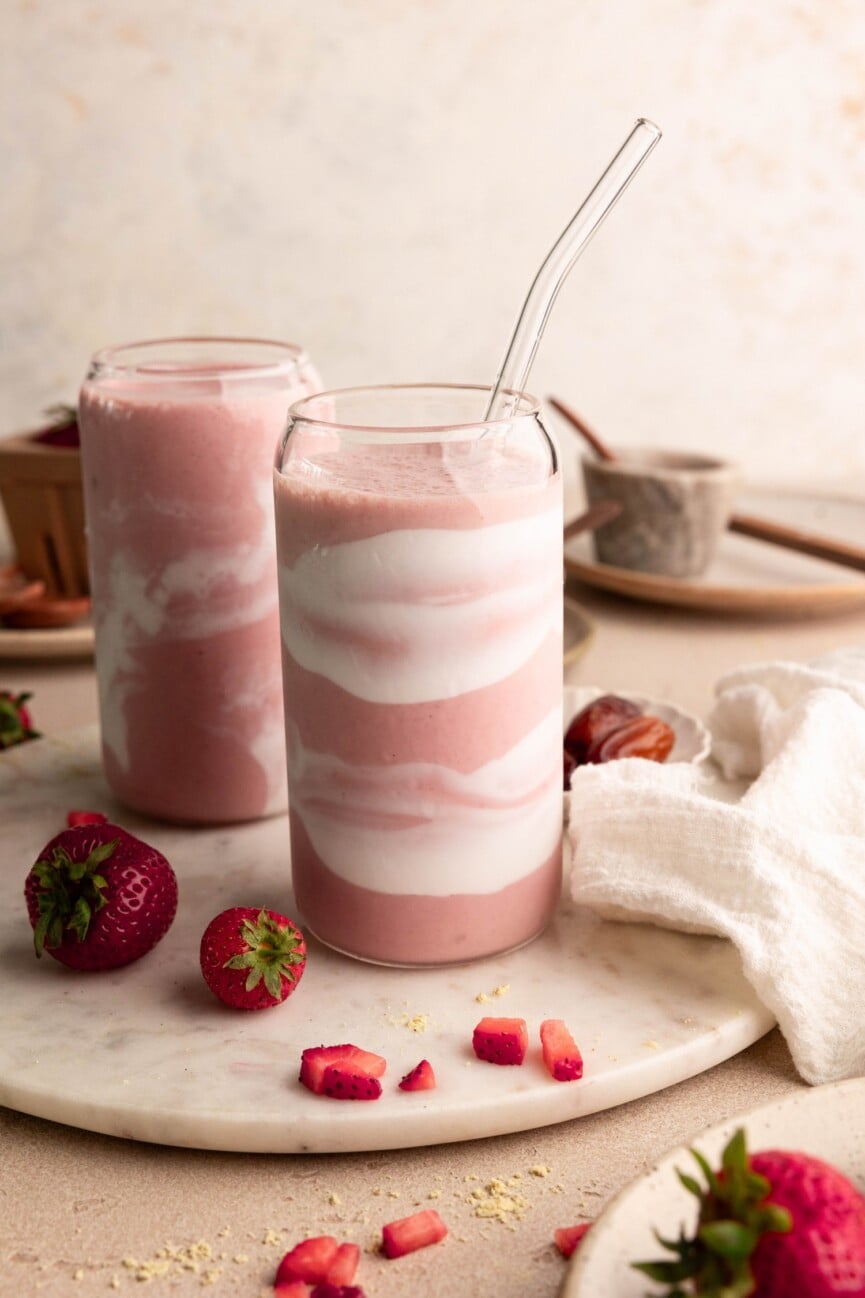
No matter what the calendar says, smoothie season is forever. Fruit frozen at peak ripeness makes smoothies easy to enjoy any time of year—just add cinnamon in the fall, cocoa powder in the winter, fresh greens in the spring. But despite the convenience of vitamins and minerals, not all smoothies are created equal. If your usual blend leaves you hungry an hour later, it may be missing two key ingredients: protein and fiber.
A high-protein, high-fiber smoothie combines fruit or vegetables with a substantial protein source, a fiber-rich add-in, healthy fat, and enough liquid to bring it all together. The result? A creamy, genuinely satisfying smoothie that can hold its own as breakfast—or make a filling snack when you need something quick.
Below, I’m sharing my simple build-your-own formula, practical ingredient swaps, and our favorite high-protein, high-fiber smoothie recipes. Consider this your ultimate guide to a balanced blend that doesn’t skimp on deliciousness.

How Much Protein and Fiber Should a Smoothie Have?
For a smoothie meant to serve as breakfast or a meal, aim for approximately 20–30 grams of protein and 8–10 grams of fiber. A snack-size smoothie may contain less, depending on your appetite and what else you’re eating throughout the day.
These are practical starting points, not one-size-fits-all recommendations. Your individual protein needs depend on factors like age, body size, activity level, pregnancy, and health goals. Fiber needs vary, too. For general reference, the FDA’s Daily Value is 50 grams of protein and 28 grams of fiber per day, based on a 2,000-calorie diet. Think of these as labeling benchmarks rather than personalized nutrition targets.
Why focus on both? Protein can make a meal more satisfying, while fiber adds volume and takes longer to move through the digestive system than many other carbohydrates. Fiber also supports digestive health and regularity. Together, protein and fiber help turn a fruit-and-liquid smoothie into a more substantial breakfast or snack.
If your current diet is relatively low in fiber, increase it gradually. Going from very little fiber to a double-digit dose overnight can cause bloating or digestive discomfort. As always, remember to drink plenty of fluids throughout the day.
How to Build a High-Protein, High-Fiber Smoothie
Once you understand the basic components, building a satisfying smoothie is simple. No complicated recipe required. Use this formula as your starting point:
20–30 grams of protein + 1–2 cups of produce + a fiber-rich add-in + healthy fat + ½–1 cup of liquid
From there, adjust the ingredients and quantities to suit your appetite, dietary needs, and preferred texture.
Start With Protein
Protein is what takes a smoothie from a light drink to something that can actually hold you over. Choose one substantial protein source or combine two smaller ones to reach approximately 20–30 grams.
Try:
- ¾–1 cup plain Greek yogurt or skyr
- ¾–1 cup cottage cheese
- ½–1 cup silken tofu
- One serving of protein powder
- Dairy or high-protein plant milk combined with yogurt, tofu, or seeds
- A combination of Greek yogurt and nut or seed butter
If you’re using protein powder, check the label. The amount of protein per serving varies significantly from one brand to another. For plant-based options, look for a complete protein or a blend formulated to provide all nine essential amino acids.
A quick note on collagen: while collagen peptides can add protein, collagen isn’t considered a complete protein. If collagen is your go-to, consider pairing it with another source such as dairy milk, Greek yogurt, soy milk, or a complete protein powder.
2. Add Fiber-Rich Produce
Next, add 1–2 cups of fruit, vegetables, or a combination of both. Frozen produce will give your smoothie the thickest, creamiest texture—no watered-down blend in sight.
A few favorites:
- Berries
- Banana
- Mango
- Pineapple
- Peaches
- Cherries
- Pear
- Leafy greens
- Frozen zucchini
- Frozen cauliflower
- Avocado
Fruit brings natural sweetness, flavor, vitamins, and fiber to a smoothie. There’s no need to fear higher-carbohydrate fruits like bananas, mangoes, or pineapple. Instead, consider the smoothie as a whole. Pair your favorite fruit with protein, fiber, and fat to create a more balanced—and more satisfying—meal.
3. Add a Concentrated Source of Fiber
While fruits and vegetables contribute fiber, produce alone may not bring your smoothie into the 8–10 gram range. This is where a fiber-rich add-in makes all the difference.
Try:
- 1–2 tablespoons chia seeds
- 1–2 tablespoons ground flaxseed
- 2–3 tablespoons hemp seeds
- ¼–½ cup rolled oats
- ¼–½ avocado
- A protein or smoothie powder that contains a meaningful amount of fiber
Chia and ground flax pull double duty by contributing both fiber and fat. Chia seeds will also thicken your smoothie as they absorb liquid, while flax adds a subtle nutty flavor.
If using flaxseed, choose ground flax rather than whole seeds. Whole flaxseeds can pass through the digestive system largely intact, making their nutrients harder for the body to access.
4. Include a Healthy Fat
Fat adds flavor, richness, and staying power. It also gives smoothies that dreamy, milkshake-like texture.
Add one of the following:
- 1 tablespoon nut or seed butter
- 1–2 tablespoons chia, flax, or hemp seeds
- ¼–½ avocado
- A small handful of walnuts or other nuts
You don’t necessarily need a separate ingredient for every component of the formula. Chia seeds, flaxseed, avocado, and nut butter can all contribute to more than one category.
5. Choose Your Liquid
Start with ½ cup of liquid and add more as needed. It’s much easier to thin a smoothie than to bring an overly watery one back to life.
Try:
- Dairy milk
- Unsweetened soy milk
- Pea-protein milk
- Almond or cashew milk
- Oat milk
- Coconut milk
- Coconut water
- Water
Keep in mind that your liquid can significantly change the smoothie’s nutritional profile. Dairy, soy, and pea-protein milks generally provide more protein than almond, oat, cashew, or coconut beverages. But nutrition varies by brand, so always check the label when calculating the finished recipe.
6. Make It Delicious
Nutrition matters, but flavor is what will make you want to prepare the smoothie again tomorrow. Once the foundation is in place, add ingredients that bring the blend to life:
- Cocoa or cacao powder
- Cinnamon, cardamom, or ginger
- Vanilla extract
- Espresso or cold brew
- Matcha
- Fresh mint or basil
- Lemon or lime juice
- A pinch of sea salt
- Ice for a frostier texture
Taste before pouring. Depending on the ripeness of your fruit and whether your protein powder is sweetened, you may want another handful of fruit, a date, or a drizzle of honey or maple syrup. These ingredients aren’t inherently “bad”—the goal is simply to build a smoothie that tastes good and meets your individual needs.
High-Protein, High-Fiber Smoothie Recipes
Ready to give the formula a whirl? These high-protein, high-fiber smoothies deliver satisfying combinations of fruit, vegetables, protein, and fiber-rich additions. Add them to your weekday breakfast rotation, blend one after a workout, or make a smaller serving when the afternoon slump hits.
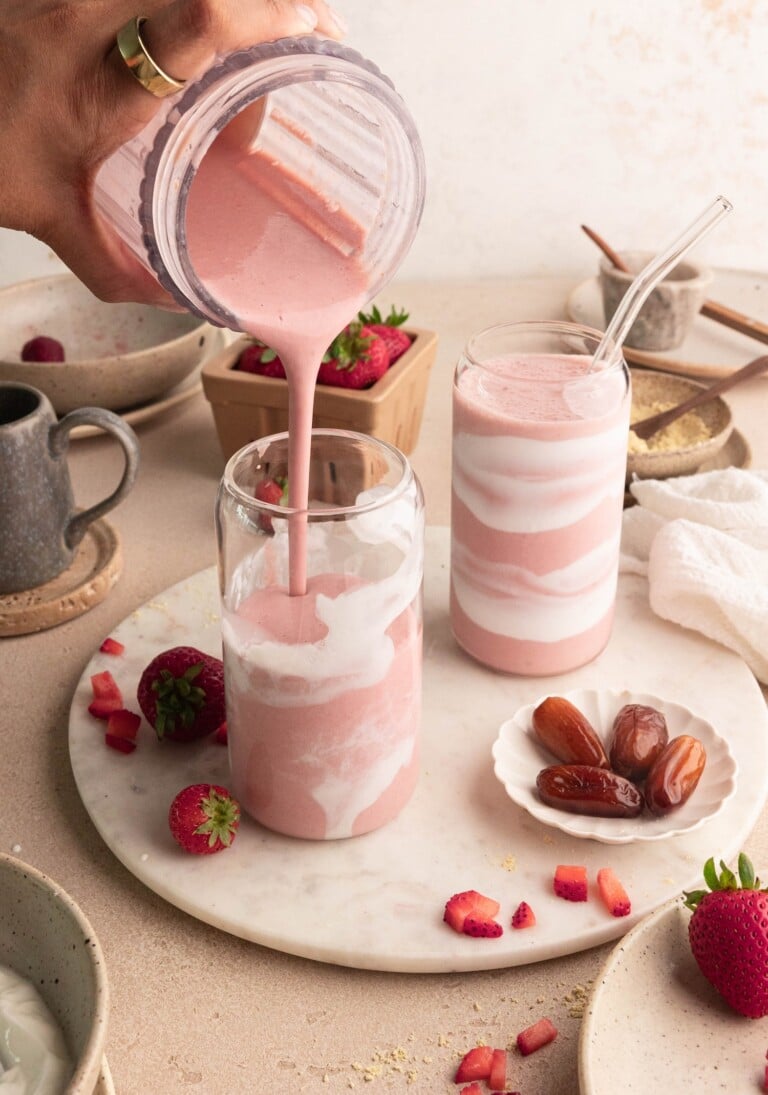
Erewhon-Inspired Strawberry Probiotic Smoothie
This Erewhon-inspired strawberry smoothie gets its creamy texture from coconut yogurt and its sweetness from two kinds of strawberries and dates. Two scoops of collagen bring the protein total to approximately 20 grams, while the fruit contributes around 7–9 grams of fiber. To make it even more satisfying, add a tablespoon of chia seeds—or swap the collagen for a complete protein powder.
Per serving: Approximately 20–22 grams of protein and 7–9 grams of fiber.
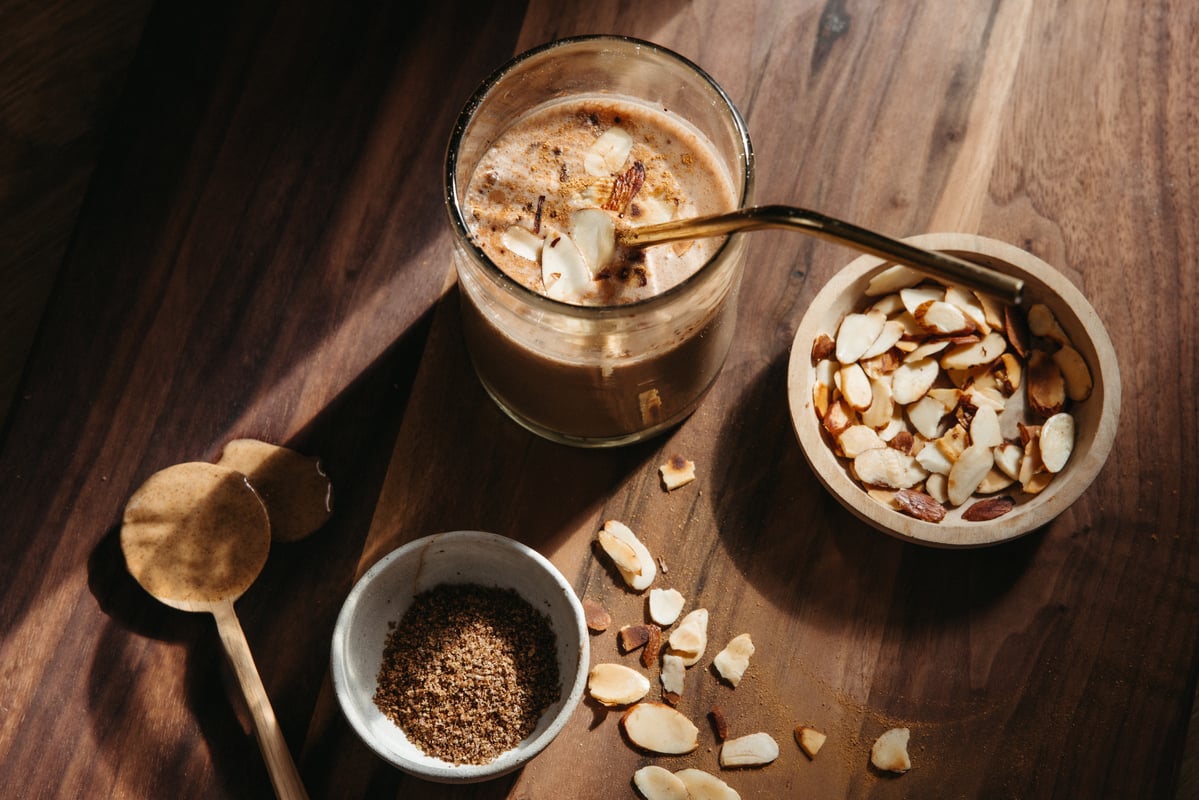
Chocolate Almond Butter Smoothie
Chocolate, banana, almond butter, and cinnamon give this creamy smoothie a nostalgic milkshake flavor. Greek yogurt or skyr and chocolate protein powder deliver more than 35 grams of protein, while banana, almond butter, and ground flaxseed bring it close to our fiber target. For even more fiber, add chia seeds or frozen raspberries.
Per serving: Approximately 36–42 grams of protein and 7–10 grams of fiber.
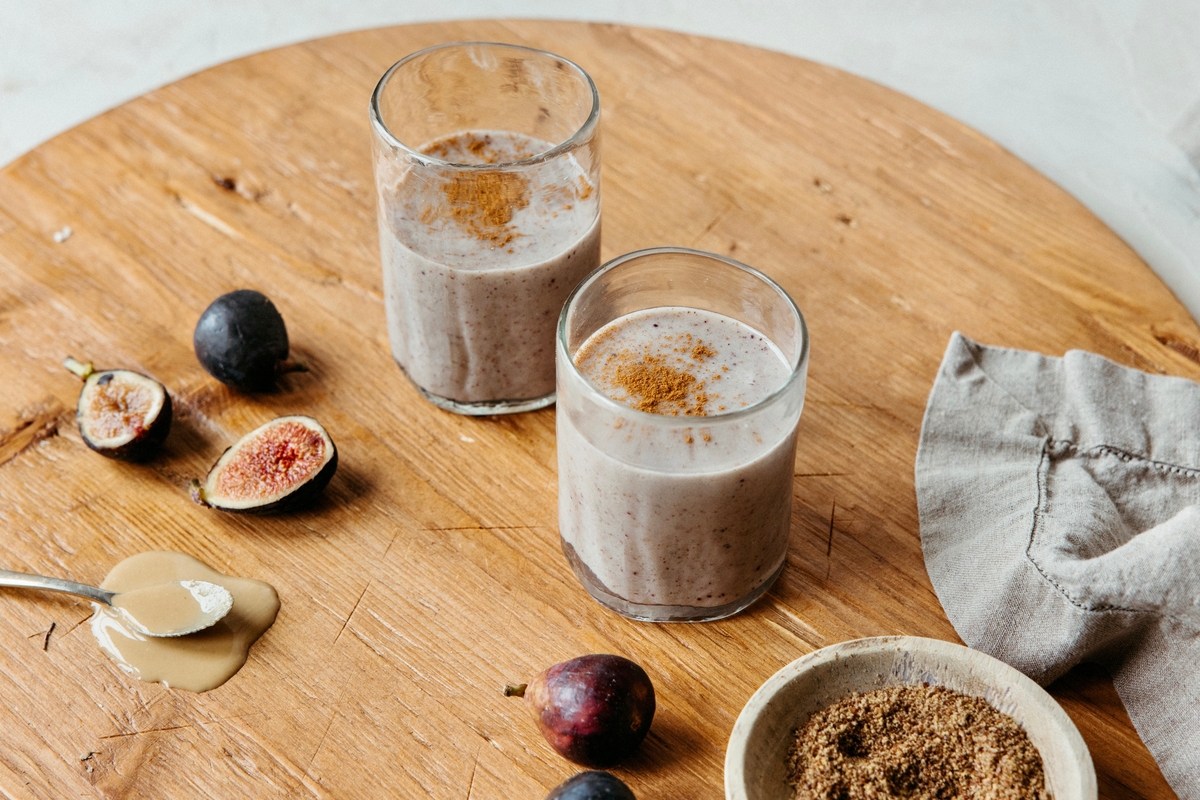
Creamy Fig Smoothie
Fresh figs, tahini, ginger, and cinnamon give this smoothie a warm, subtly sweet flavor that’s especially good as summer shifts into fall. Figs and ground flaxseed bring it comfortably above our fiber target. To ensure it delivers enough protein, choose a powder with at least 20 grams per serving or use a high-protein dairy or plant milk.
Per serving: Approximately 17–33 grams of protein and 11–14 grams of fiber, depending on the milk and protein powder used.
Energizing Matcha Smoothie
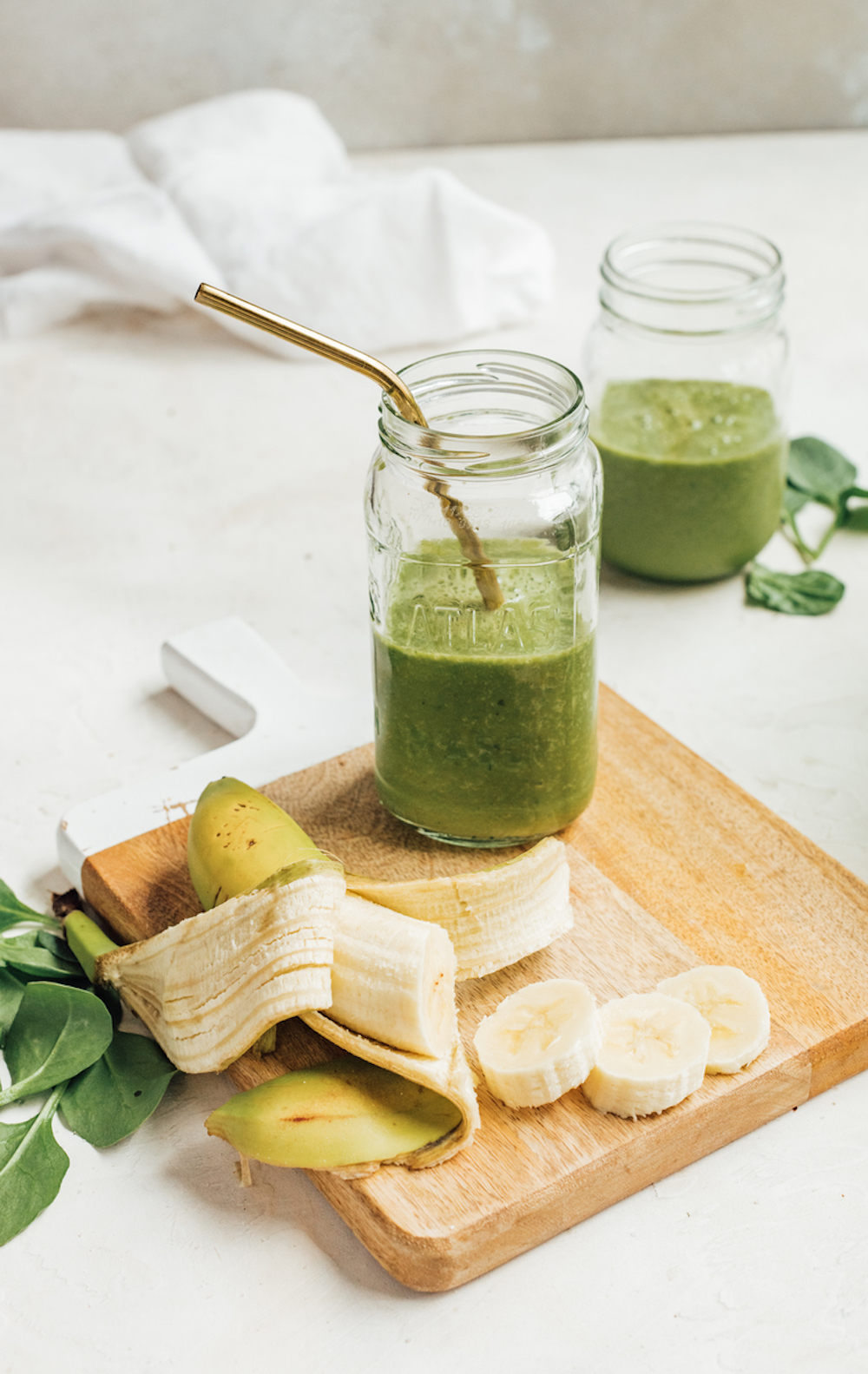
Banana, vanilla, and creamy hemp seeds balance the earthy matcha in this vibrant green smoothie. A full scoop of protein powder brings it comfortably into our target protein range, while spinach, cucumber, and banana contribute fiber. Add a tablespoon of chia seeds to bring the fiber closer to 8–10 grams without changing the flavor.
Per serving: Approximately 26–31 grams of protein and 5–8 grams of fiber.
With 1 tablespoon chia seeds: Approximately 28–33 grams of protein and 9–12 grams of fiber.
Fiber-Rich Green Smoothie
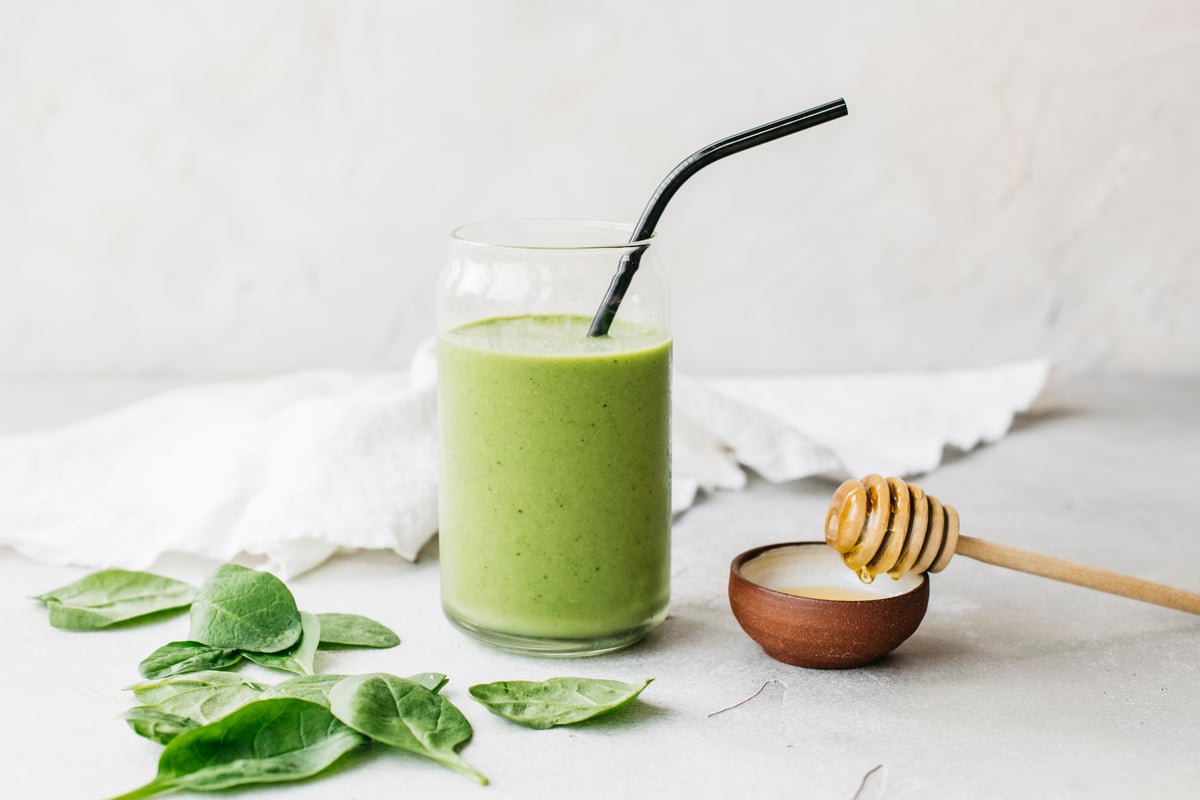
Frozen cauliflower and banana give this green smoothie an unexpectedly creamy texture, while spinach and nut butter add fiber and richness. As written, it meets our fiber goal but needs a more substantial protein source. Add vanilla protein powder, Greek yogurt, or silken tofu—or use high-protein soy milk—to turn it into a more satisfying breakfast.
Per full recipe: Approximately 11–18 grams of protein and 8–13 grams of fiber.
With one serving of protein powder: Approximately 31–43 grams of protein and 9–16 grams of fiber, depending on the powder and milk used.
Jenn Garner’s “Cookies and Cream” Smoothie
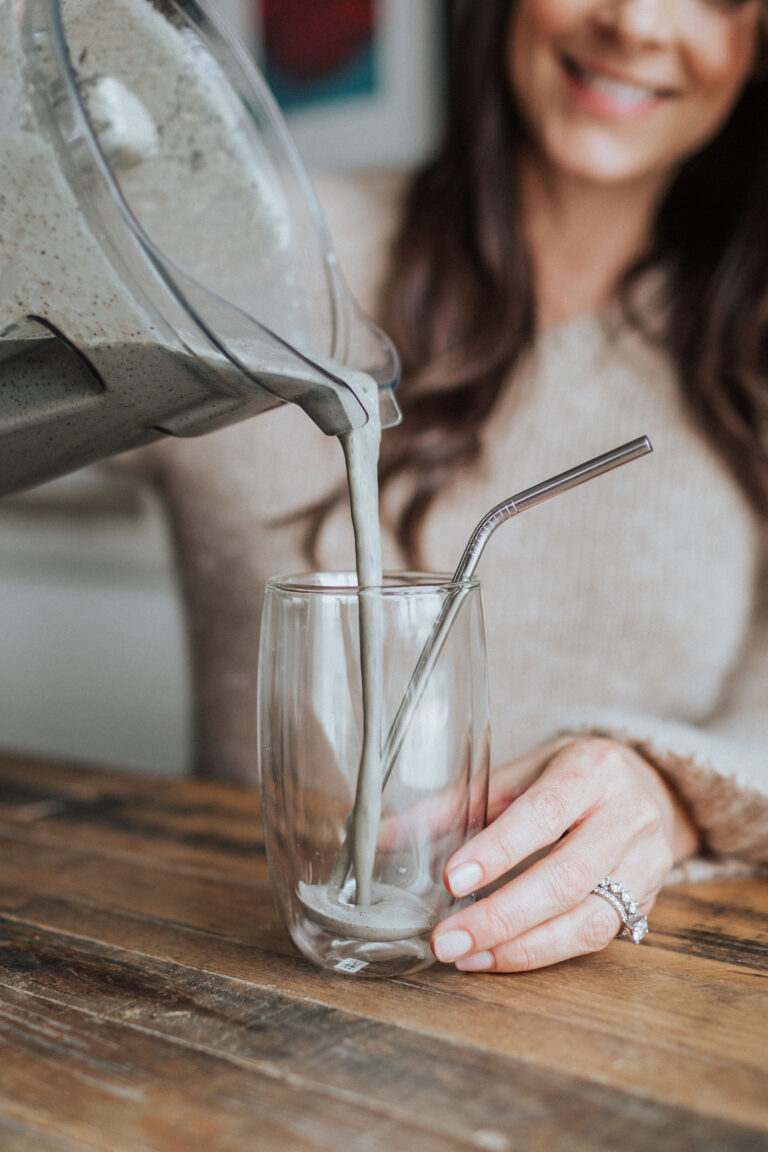
Chocolate, almond butter, and blueberries make this smoothie taste indulgent, while spinach and chia add nutrients without overpowering the flavor. As written, it needs a little more protein—and collagen isn’t a complete protein source. Swap in a complete chocolate protein powder or add Greek yogurt, silken tofu, or high-protein soy milk. Using chia and increasing the blueberries will bring it closer to our fiber target.
Per serving: Approximately 12–18 grams of protein and 5–9 grams of fiber.
With a complete protein powder instead of collagen: Approximately 27–35 grams of protein and 6–11 grams of fiber, depending on the powder and seed used.
Strawberry Matcha Smoothie
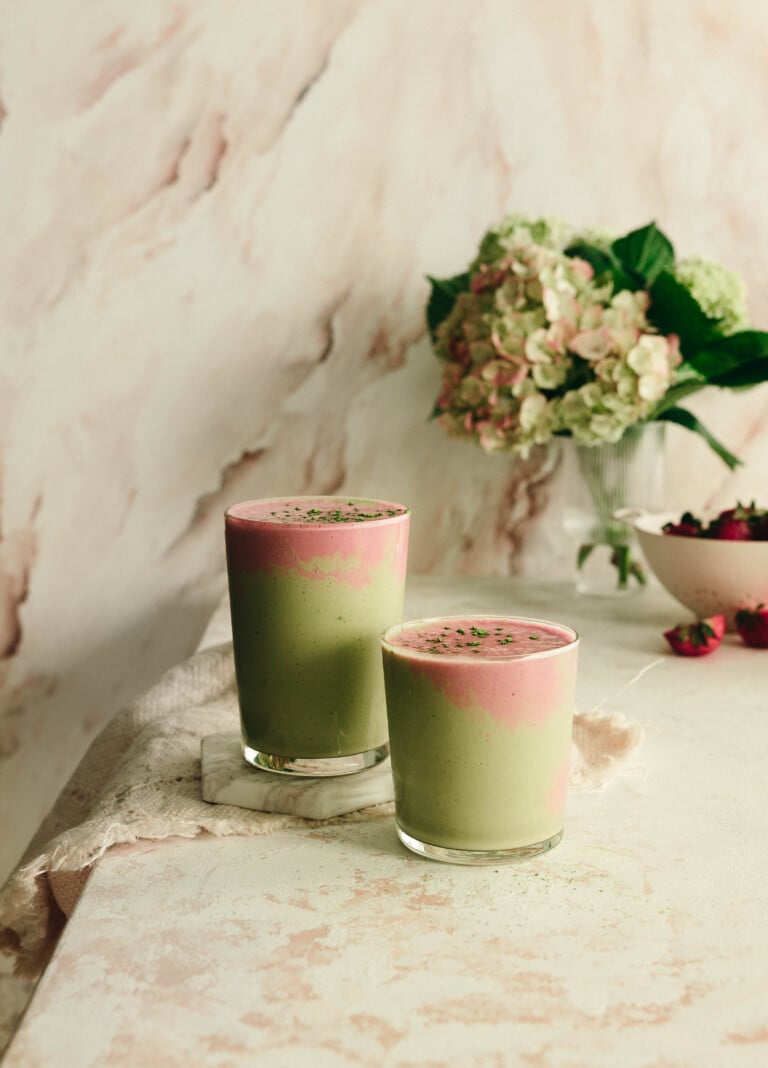
This two-toned smoothie layers earthy matcha and creamy banana with a sweet strawberry-vanilla blend. As written, it’s more fruit-forward than protein-rich, so choose Greek yogurt and dairy or soy milk to increase the protein. To bring each serving closer to our target, add one serving of vanilla protein powder and a tablespoon of chia seeds per smoothie.
Per serving, as written with Greek yogurt and almond milk: Approximately 8–10 grams of protein and 4–5 grams of fiber.
With protein powder and chia seeds: Approximately 28–35 grams of protein and 8–10 grams of fiber, depending on the products used.
The Simple Smoothie We Swear By
When I was chatting smoothie recipes with our team, our Content Marketing Director Brittany shared her go-to “I literally make this every day” smoothie. It tastes more like a milkshake and most of the protein and fiber are already built into the powder.
Milkshake-Like Protein + Fiber Smoothie
Ingredients
- 2 scoops vanilla, chocolate, or chai Ka’Chava
- 1 frozen banana
- ½ cup milk of choice
- Ice
- Water, as needed for blending
Instructions
Add the Ka’Chava, frozen banana, milk, and a handful of ice to a blender. Blend until smooth, adding water a little at a time until it reaches your preferred consistency.
For a fruitier version, swap the frozen banana for frozen strawberries. Or add a handful of leafy greens, a tablespoon of chia seeds, or ground flaxseed for an extra boost of fiber.
At the time of publication, a full serving of Ka’Chava provides 25 grams of plant protein and 6 grams of fiber before adding the banana, milk, or seeds. Because product formulations and serving sizes can change, check the label on your chosen flavor when calculating the final nutrition information.
Easy Smoothie Ingredient Substitutions
Smoothies are endlessly adaptable, but substitutions can meaningfully change the protein, fiber, and calorie totals. If you make a swap, check the new ingredient’s label and recalculate the nutrition information as needed.
Greek Yogurt Substitutions
Swap Greek yogurt for skyr, cottage cheese, silken tofu, or a dairy-free high-protein yogurt. Many almond- and coconut-based yogurts contain significantly less protein than Greek yogurt, so you may need another protein source.
Cottage Cheese Substitutions
Greek yogurt, skyr, or silken tofu will provide a similarly creamy texture. Protein and sodium amounts vary between products, so compare labels if either is important to you.
Silken Tofu Substitutions
Try soy yogurt or a plant-based protein powder. Soy-based products generally provide more protein than almond- or coconut-based alternatives.
Whey Protein Powder Substitutions
Use soy, pea, or a blended plant-based protein powder. Choose a product that fits your dietary needs and check its serving size, protein content, fiber, sweeteners, and allergen information.
Protein Powder Substitutions
You can absolutely make a high-protein smoothie without protein powder. Try combining Greek yogurt, skyr, cottage cheese, silken tofu, dairy milk, soy milk, nut or seed butter, and hemp seeds.
You’ll typically need more than one whole-food source to reach 20–30 grams of protein. Calculate the final recipe rather than assuming any one ingredient will get you there.
Nut Butter Substitutions
For a nut-free smoothie, use sunflower seed butter, tahini, pumpkin seed butter, chia seeds, hemp seeds, or avocado. These swaps aren’t nutritionally identical, but each can add richness and help create a creamy texture.
Dairy Milk Substitutions
Use soy milk, pea-protein milk, almond milk, oat milk, cashew milk, coconut milk, or water. Soy and pea-protein milks generally contain more protein than other plant-based milks, but amounts vary by brand.
Banana Substitutions
Swap banana for frozen strawberries, mango, peaches, cherries, avocado, or frozen zucchini. Each will affect the smoothie’s sweetness, texture, fiber, and calorie count differently.
If you’re eliminating an ingredient because of an allergy, check every packaged product—including protein powders and non-dairy milks—for allergen statements and potential cross-contact.
A Quick Note on Smoothies and Blood Sugar
Carbohydrates—including those naturally found in fruit and milk—are broken down into glucose, an essential source of energy for the body. Pairing carbohydrate-containing foods with protein, fiber, and fat may slow digestion and create a more balanced meal, but individual glucose responses vary.
The takeaway isn’t that certain fruits or smoothie ingredients are “good” or “bad.” Instead, look at the overall combination. A smoothie made with fruit, a substantial protein source, fiber-rich seeds, and healthy fat will generally be more satisfying than one made with fruit and liquid alone.
Most people don’t need a continuous glucose monitor to determine whether a smoothie works for them. CGMs are medical devices commonly used in diabetes care and should be considered with guidance from a qualified healthcare professional. If you’re managing diabetes, insulin resistance, a digestive condition, or another medical concern, work with your healthcare team to build smoothies that support your individual needs.
For a smoothie intended to serve as a meal, approximately 20–30 grams is a practical starting point. You can reach that range with Greek yogurt, skyr, cottage cheese, silken tofu, protein powder, high-protein milk, or a combination of ingredients.
Individual protein needs vary, so treat this as a recipe-building guideline rather than a universal requirement.
Start with fiber-rich fruit or vegetables, then add chia seeds, ground flaxseed, oats, avocado, or another concentrated source. Check the nutrition information for every ingredient. A handful of spinach contributes valuable nutrients, for example, but it likely won’t bring a smoothie to 8–10 grams of fiber on its own.
Raspberries, blackberries, pears, apples, avocado, and certain tropical fruits can all contribute fiber. Frozen berries are particularly convenient because they add fiber, flavor, and a thick texture without requiring extra preparation.
Don’t feel limited to the fruits with the highest fiber counts. Combining your favorite fruit with chia, ground flax, oats, avocado, or another fiber-rich addition makes it easier to reach your overall target.
Absolutely. Greek yogurt, skyr, cottage cheese, silken tofu, dairy milk, soy milk, hemp seeds, and nut or seed butter can all contribute protein.
Reaching 20–30 grams may require combining two or more sources. For example, Greek yogurt with dairy or soy milk will provide substantially more protein than fruit blended with almond milk and a spoonful of nut butter.
Start with soy milk, pea-protein milk, or another high-protein plant milk. Add silken tofu or a complete plant-based protein powder, followed by fruit or vegetables and fiber-rich ingredients such as chia, ground flax, oats, avocado, or nut butter.
Check the protein powder and milk labels to confirm the finished smoothie reaches your desired protein range.
They can be—particularly when they contain adequate protein, fiber, fat, and overall calories. But fullness is individual, and some people find chewing a solid meal more satisfying than drinking one.
If a smoothie leaves you hungry soon afterward, try increasing the protein, making the portion more substantial, blending it into a thicker smoothie bowl, or pairing it with a solid food.
A smoothie can be a complete breakfast when it contains enough protein, fiber, fat, carbohydrates, and total energy to meet your needs. Fruit and liquid alone may not be enough.
Use the build-your-own formula as a guide, then pay attention to how you feel. If you’re hungry an hour later, your smoothie may need more protein, healthy fat, fiber, or total calories.
Yes, although the smoothie may thicken or separate as it sits. Refrigerate it promptly in a sealed container, then stir or re-blend it before drinking.
For better texture, prepare individual smoothie packs instead. Measure the fruit, vegetables, and other freezer-friendly ingredients into containers or reusable bags. When you’re ready to blend, add your protein source, seeds, and liquid.
For many people, a daily smoothie can be an easy way to eat more fruit, vegetables, protein, and fiber. Still, variety matters. Rotate your produce, protein sources, seeds, and healthy fats to get a wider range of nutrients.
If increasing your fiber intake causes ongoing bloating, pain, or changes in digestion, reduce the amount and consult a qualified healthcare professional.