
By Daniel Carter
Home Appliance Technician
Daniel Carter is a home appliance technician and maintenance writer who helps homeowners understand and care for the appliances they use every day. He specializes in practical washer and dryer maintenance, troubleshooting, cleaning, and preventative care. Daniel’s writing focuses on simple steps homeowners can safely perform themselves while clearly identifying problems that may require professional appliance service.
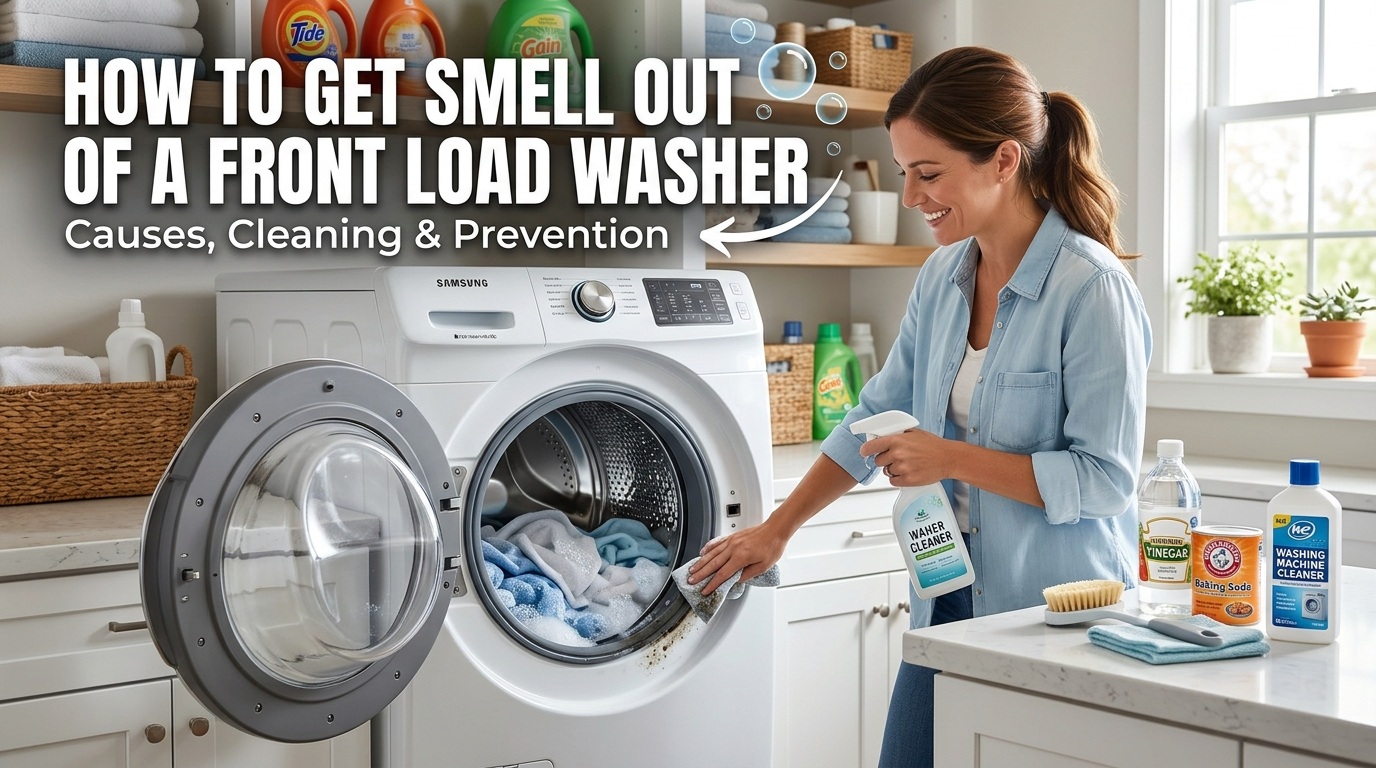
You open the door of your front-load washer expecting the clean smell of freshly washed laundry, but instead you get a whiff of something sour, damp, or musty. The problem may be hiding in a place you rarely think to clean, such as the folds of the rubber door gasket or the detergent dispenser. If your washing machine smells, don’t immediately assume you need a new appliance. Front-load washers can retain moisture and detergent residue, and manufacturers specifically recommend cleaning the gasket, dispenser, and washer interior while allowing the machine to dry between loads.
The fastest way to get a smell out of a front-load washer is to clean the rubber gasket and detergent dispenser, remove trapped debris, run the manufacturer’s recommended washer-cleaning cycle, and let the machine dry completely. If the odor returns quickly after thorough cleaning, check for drainage problems or have the appliance inspected rather than repeatedly adding cleaning chemicals.
Why Does My Front Load Washer Smell Bad?
A front-load washer can smell bad because moisture and residue remain in areas that do not dry quickly. The rubber gasket around the door is particularly important because its folds can hold water, lint, hair, detergent residue, and other debris. Whirlpool says the gasket can accumulate detergent buildup, grime, and mold, while LG notes that water remaining in the gasket after use is normal because there is no suction pump designed to remove all of it.
Detergent can also contribute to the problem when too much is used or when the wrong type is used. Maytag and Whirlpool both recommend using the appropriate HE detergent in high-efficiency machines and following the manufacturer’s recommended amount. Excessive detergent can create residue and, according to Whirlpool, excessive suds can also contribute to draining and rinsing problems.
Another factor is what happens after the wash finishes. Leaving wet laundry sitting inside the drum keeps moisture trapped in the machine and can contribute to musty odors. Leaving the door open between loads allows air to circulate and helps remaining moisture evaporate.
Common sources of washer odors
| Odor source | What may be happening | What to check |
| Door gasket | Water, lint, grime, or residue trapped in folds | Pull back the rubber seal |
| Detergent drawer | Soap or softener residue has accumulated | Remove and wash the drawer |
| Drum/interior | Residue or moisture has built up | Run the manufacturer’s cleaning cycle |
| Wet laundry | Clothes have remained in the washer too long | Remove loads promptly |
| Drain/filter area | Debris or stagnant water may be present | Follow your model’s manual |
| Drainage system | Washer may not be draining correctly | Look for standing water or service issues |
How to Get Rid of Smell in a Front Load Washer
If the washer smells musty, don’t start by pouring several household cleaners into it. Work through the machine in a logical order so you can remove the source rather than simply covering the odor.
1. Empty the Washer Completely
Remove every item from the drum.
Check carefully for small items that may have become trapped around the gasket, including socks, lint, hair, coins, or other debris. Whirlpool specifically identifies trapped clothing and debris around the gasket as a potential source of moisture and odor.
If you find wet clothing that has been sitting inside, remove it immediately and wash it again if it has developed a noticeable odor.
Don’t begin the cleaning cycle until the washer is completely empty.
2. Clean the Rubber Door Gasket
The rubber gasket is the first place to inspect when a front-load washer smells.
Pull the gasket back gently and inspect the folds.
You may find:
- Hair
- Lint
- Small pieces of clothing
- Detergent residue
- Dirt
- Standing water
- Dark staining
Use a soft cloth or sponge with warm water and a cleaner approved for your appliance. Work around the entire seal, including the inner folds that are easy to overlook.
Whirlpool recommends checking the gasket’s crevices for foreign objects and cleaning away grime and detergent residue. After cleaning, rinse as appropriate and dry the seal thoroughly.
Don’t just wipe the visible edge
This is a common mistake.
The front surface of the gasket may look clean while residue remains deep inside its folds. Gently pull back each section and inspect the areas where water collects.
If the gasket has heavy mold-like staining, follow your washer manufacturer’s instructions before choosing a disinfectant or bleach solution. Whirlpool provides a diluted bleach procedure for some models but explicitly tells users to check manufacturer instructions, and LG warns that cleaning products can vary by model.
3. Dry the Gasket Thoroughly
After cleaning, use a clean, dry towel to remove as much moisture as possible.
Pay particular attention to the bottom portion of the gasket, where water may remain.
This small step matters because cleaning without drying leaves the same moisture problem behind.
LG’s current support guidance specifically recommends wiping the gasket and door dry because water can remain in the seal and become stagnant.
4. Clean the Detergent Dispenser
The detergent drawer is another common place for buildup.
Remove it if your model allows removal.
Wash the drawer and its removable components with warm water and mild detergent. A small soft brush can help loosen stubborn residue from corners and openings.
Rinse everything thoroughly and allow the parts to dry before reinstalling them.
If the dispenser does not come out, consult your owner’s manual rather than forcing it. Some designs have release mechanisms or specific cleaning procedures.
Whirlpool and Maytag both recommend regular dispenser cleaning because detergent and fabric-softener residue can accumulate there and contribute to odors.
Check the dispenser cavity, too
Cleaning only the removable drawer isn’t always enough.
Look inside the opening where the drawer normally sits. Residue can collect around the housing and water channels.
Wipe accessible surfaces according to the manufacturer’s instructions and avoid poking objects into small openings that you could damage.
5. Run the Washer’s Cleaning Cycle
After cleaning the accessible areas, run the washer’s dedicated Clean Washer, Tub Clean, or similarly named cycle if your machine has one.
The exact procedure varies by manufacturer and model.
Some machines require a commercial washing-machine cleaner, while others specify another cleaning product or procedure.
For example, Maytag recommends a Clean Washer cycle and monthly use of affresh washer cleaner for its applicable machines, while LG’s current guidance recommends running its Tub Clean cycle approximately once a month or after 30 uses on applicable models.
What if your washer doesn’t have a cleaning cycle?
Check your owner’s manual for the manufacturer’s recommended alternative.
Whirlpool notes that some machines without a dedicated cleaning cycle can use a normal cycle with a hot-water setting or sanitize cycle, depending on the model and instructions.
Do not assume that the hottest possible cycle is automatically appropriate for every washer.
6. Leave the washer to dry.
Once the cleaning cycle has completed open the door.
Leave it open or just a little bit for air to pass through the drum and gasket.
Maytag also notes that it is a good practice to leave the door open in between loads which in turn will help the remaining moisture to evaporate and reduce odor which may cause issues.
If in the home environment that your kids or pets have access to the laundry area which safe ventilation solutions your household and which appliance manufacturer put forth are what you should use.
The goal is simple: Do not leave moisture in the closed washer after cleaning.
7. Check the Drain Filter if present in your model.
Some laundries also have a removable pump or drain filter which is usually behind a little panel at the bottom of the unit.
This space is a collector of debris and water.
Do not open the filter without thought.
The variation in procedures between models is great, and we may find water in the system. Your owner’s manual will advise you if your washer is serviceable, where it is located, and how to drain it safely.
If in your washer you see standing water or have issues with slow draining and also here and there strange sounds coming from it and also if it continues to develop an odor after use then you may have a drainage issue that goes beyond what a quick clean will fix.
Should You Use Vinegar to Clean a Smelly Washing Machine?
This is one of the most common pieces of advice found online, but it is not universally recommended.
Whirlpool currently states that vinegar is not recommended as a washing-machine cleaning product because it can damage washer components over time. It recommends following the washer manufacturer’s cleaning instructions instead.
That means the safest answer is:
Don’t automatically use vinegar just because a cleaning article recommends it. Check your owner’s manual first.
Different manufacturers and models have different materials, cleaning cycles, and approved products.
What About Baking Soda?
Baking powder at times is put forth as a deodorizer.
Whirlpool reports that while in general baking soda is a good choice for deodorizing a smelly washing machine they also advise to check the owner’s manual for model specific cleaning tips.
If it is the case of residue build up, standing water, or a dirty gasket what we see is that deodorizing the machine is a temporary solution which does not fully resolve the issue.
Cleaning goes before deodorizing.
Should You Use Bleach?
Bleach is a suitable option for some washing tasks, but do not consider it a universal solution.
Whirlpool gives out a diluted bleach solution for some gasket clean ups but tells users to read the manufacturer’s instructions. LG at present has different advice for their front load washing machine which puts forth use of an oxygen based cleaning agent and at the same time reports that chlorine or acidic cleaners will cause color change or corrosion in the product.
So the rule is simple:
When using bleach make sure that your washer’s manufacturer gives the go ahead and also supplies the instructions.
Never combine bleach with other cleaning agents like vinegar, acids or ammonia.
Why Does My Washer Smell Like Mildew?
A mildew-like or musty smell often points toward a moisture-and-residue problem.
Front-load washers use a sealed door gasket, and water can remain in and around the seal after a cycle. If the area stays damp and collects detergent residue, grime, or other organic material, odors can develop. Whirlpool specifically identifies moisture retention and buildup in the gasket as contributors to mold, mildew, and odors.
The solution is not simply making the laundry smell stronger with scented detergent.
Instead:
- Clean the gasket.
- Clean the dispenser.
- Run the appropriate washer-cleaning cycle.
- Remove wet laundry promptly.
- Dry the gasket.
- Leave the door open between uses.
If the odor keeps returning despite proper maintenance, investigate deeper drainage or appliance issues.
Why Does My Washing Machine Smell Like Rotten Eggs?
A rotten-egg or sulfur-like odor deserves more careful troubleshooting.
The source maybe what is not visible like the drum or gasket. Based on the plumbing and washer design odors may come from standing water, drain components, or the overall drain system.
Do not continue to use stronger cleaning products because the smell is bad.
First note the area in which the smell is the strongest.
If after cleaning the gasket, dispenser, and interior as the manufacturer’s instructions you still notice the smell or if the machine has issues with drainage, contact an appliance technician or qualified plumbing professional.
A persistent sewer like smell does not have to be from mold.
Why Does My Laundry Still Smell After Washing?
If the washer looks clean but your clothes still smell musty, there are several possibilities.
The washer may still have residue in a less visible area, the load may have sat wet for too long, or the clothes themselves may retain an odor that needs separate treatment.
Start by checking the machine first.
Then wash a small load using the correct detergent amount and remove it promptly when the cycle finishes.
Whirlpool specifically advises removing wet clothing as soon as possible because leaving damp items in the wash basket can contribute to mildew and odors in both the clothing and washer.
If only certain fabrics continue to smell after the washer has been cleaned, the problem may be related to the garments rather than the appliance.
How to Prevent a Smelly Washing Machine
Getting rid of the smell is only half the job.
The issue is in preventing that formed to reappear.
Leave the Door Open Between Loads
Here is an easy change you can make.
After you take out the laundry leave the door open or ajar when it is safe to do and your home arrangement allows.
Fresh air causes moisture to evaporate. Maytag and Whirlpool report that this is best for front load washers.
Wipe the Gasket Regularly
You don’t have to do a deep clean daily.
After washing use a dry cloth to dry the gasket.
Whirlpool suggests you clean the gasket out after every use and do a more in depth clean at other times.
As soon as you see residue, do not wait for the next cleaning.
Remove Wet Clothes Promptly
Do not leave washed clothes in the machine.
In a closed system which is wet produces unsightly smells.
If immediate unloading is not an option, some washers have post wash tumbles or ventilation options which are designed to keep your laundry fresh. Whirlpool includes these features on certain models.
Use the Correct Amount of Detergent
More detergent does not necessarily mean cleaner clothes.
Using too much can leave residue behind, particularly in high-efficiency machines designed to use relatively small amounts of water.
Whirlpool and Maytag both advise using the detergent type and amount specified for the washer, including HE detergent where required.
If you regularly see suds or residue after washing, review your detergent amount and your washer’s instructions.
Don’t Ignore the Dispenser
The detergent drawer should become part of your normal washer-maintenance routine.
How often it needs cleaning depends on the machine and how heavily it is used, but manufacturer guidance commonly recommends regular cleaning rather than waiting until visible buildup becomes severe. Maytag, for example, recommends regular cleaning and approximately monthly washer maintenance for applicable machines.
A clean dispenser also makes it easier to notice problems such as undissolved detergent or fabric-softener buildup.
Run the Cleaning Cycle Regularly
Many manufacturers recommend a regular washer-cleaning cycle.
Whirlpool recommends a Clean Washer cycle around every 30 washes for applicable machines, while LG currently recommends its Tub Clean cycle once a month or after approximately 30 uses for applicable models.
Your own manual takes priority.
If your machine displays a cleaning reminder, don’t ignore it.
Don’t Close a Wet Washer
A front-load washer that is immediately closed after every cycle can retain moisture.
That does not guarantee mold or odor will develop, but it removes an easy opportunity for the interior and gasket to dry.
The practical routine is:
Wash → unload → wipe gasket → leave door open → clean regularly.
It takes very little time and addresses several of the factors manufacturers identify as contributing to odors.
How Often Should You Clean a Front Load Washer?
There is no single schedule that applies to all models.
As a rule of thumb that applies to most manufacturers, Whirlpool says to clean the gasket after every use and do a deep clean once a month or after 30 cycles, whichever comes first. Maytag on the other hand, says to clean their applicable washers once a month. Also LG reports that for applicable models, a Tub Clean cycle should be run once a month or after 30 uses.
Your laundry may benefit from being done more often.
If you:
• Run many loads each week
• Wash heavily soiled clothing
• Use fabric softener frequently
• Live in a humid environment
• Notice recurring odor
You may have to check the gasket and dispenser often.
The owner’s guide is the best resource for your particular machine.
What If the Smell Keeps Coming Back?
If you’ve cleaned the gasket, dispenser, and interior properly and followed the manufacturer’s recommended cleaning cycle but the smell returns quickly, stop repeating the same cleaning step.
That pattern is a clue.
The problem may involve an area you cannot easily access, persistent water retention, drainage, a damaged gasket, or another appliance issue.
Whirlpool recommends scheduling service if the washer continues to smell after thorough cleaning.
This is especially important if you also notice:
- Standing water
- Slow drainage
- Leaking
- Unusual noises
- Error codes
- Persistent sewage-like odor
- A damaged or deteriorating gasket
A cleaning routine cannot fix a mechanical or plumbing problem.
Common Mistakes That Make Washer Odors Worse
Using Too Much Detergent
Mistake: Including extra detergent in which the laundry is very dirty.
Better approach: Follow the detergent and washing machine instructions.
Cleaning Only the Drum
Mistake: Running the cleaning cycle but not checking the gasket or dispenser.
Better approach: Clean the easy access areas as also the interior of the cycle.
Leaving the Door Closed
Mistake: After unloading.
Better approach: Allow the interior and gasket to dry.
Pouring Multiple Cleaners Into the Washer
Mistake: Mixing in vinegar, bleach, baking soda, or other cleaning products as the first option failed.
Better approach: Follow the cleaning instructions of your appliance and do not mix cleaning products.
Assuming all black marks are active mold.
Mistake: Treating each stain on the gasket as a sign that the whole machine is infected.
Better approach: Clean the area as per manufacturer’s instructions and see if the smell and build up comes back.
Some pigmentation may still be present after cleaning.
Front Load Washer Smell: Quick Troubleshooting Guide
| What you notice | First thing to check |
| Musty smell | Gasket, moisture, and washer interior |
| Sour smell | Detergent residue and trapped moisture |
| Odor from detergent drawer | Dispenser and dispenser cavity |
| Clothes smell after washing | Washer cleanliness and time wet |
| Black residue in gasket | Gasket folds and cleaning instructions |
| Rotten-egg smell | Drainage/plumbing and persistent standing water |
| Smell returns after cleaning | Hidden residue, drainage, or service issue |
This isn’t a diagnostic chart. It is a starting point for deciding what to inspect before escalating the problem.
Frequently Asked Questions
How do I remove odor from a front load washer?
Start out by running out the washer and cleaning the rubber door gasket and detergent dispenser. Remove what is caught in the debris, and then run the manufacturers’ recommended Clean Washer or Tub Clean cycle. Also after that wipe the gasket dry and leave the door open for the interior to air out. If the smell returns right away, look into the drainage or call in a professional.
Why does my front load washing machine smell?
The main causes are from trapped moisture, detergent or fabric-softener residue, grime in the door gasket, and wet laundry left in the machine. In front load washers water will stay around the gasket which is why it is important to dry and clean them out regularly.
What is the best way to clean the rubber seal of a front load washer?
Pull out the gasket slowly and clean out its crevices. Wipe the surfaces with warm water and an appliance safe cleaner as per your manufacturer’s instructions. Rinse if you have to and dry the gasket completely. For visible mold or tough staining use only a cleaning method that is approved for your washing machine.
Should I leave my front load washer door ajar?
Usually, in most cases when it is safe you may. Leave the door open or ajar which in turn will allow for better air circulation and also the evaporation of any residual moisture. This is a recommendation put forth by Maytag and Whirlpool as a solution to front load washer odors.
Is it ok to use vinegar in the washing machine?
Whirlpool at this time does not recommend the use of vinegar as a cleaning agent in the washing machine which may in time damage some components. Instead always follow the specific cleaning instructions of your washer’s manufacturer.
Does very overuse of detergent in the washer create odor?
Yes. Excessive use of detergent causes build up in high efficiency machines. Whirlpool and Maytag report that it is important to use the right detergent and to follow manufacturer’s recommended measurements.
How often do you need to clean your front load washer?
Manufacturer recommendations may put out to clean once a month or after 30 uses. Whirlpool reports to run the Clean Washer cycle at about every 30 washes for applicable machines and LG says to use its Tub Clean cycle once a month or at the 30 use mark for applicable models.
If you washing machine still has a smell after cleaning what should you do?
If you have completed the gasket, dispenser, and washer cleaning as per the manufacturer’s instructions and the odor is still present, do not just add more cleaning products. Look out for drainage issues, standing water, damaged seals, or other mechanical problems. If the cause is not easy to see, have the appliance looked at by a qualified technician. Also Whirlpool recommends you seek service if the odor persists after a thorough cleaning.
Final Thoughts
Find which areas are collecting moisture and residue, clean them properly, and give the washer time to dry between loads. Begin with the rubber gasket and detergent dispenser, and then run the manufacturer’s recommended clean cycle. These steps address what appliance manufacturers report over and over as important for odor prevention.
The laundry ritual over the long term is a key thing. Promptly remove wet laundry, measure out the right amount of HE detergent as needed, wipe away moisture from the gasket, leave the door open in between loads when it’s fine to do so and follow the washing machine cleaning instructions for your make and model.
If the smell persists after a thorough cleaning or there is standing water, drainage issues, leaks, or the appliance is not functioning as it should, don’t keep at it with stronger home remedies. That’s the time to do an in depth inspection of the appliance or the plumbing.
Internal Link
- how to clean a washing machine → [INTERNAL LINK NEEDED: washing machine cleaning guide]
- home appliance maintenance → [INTERNAL LINK NEEDED: home appliance maintenance guide]
- how to clean grout → [INTERNAL LINK NEEDED: grout cleaning guide]