
We may receive a portion of sales if you purchase a product through a link in this article.
We live surrounded by polished feeds and showroom rooms, which makes the idea of loving imperfection feel almost radical. How many times have you deleted a blurry photo because it wasn’t perfect? True beauty has always lived in the cracks, the rough edges, the uneven glaze, and the worn spot on a favorite chair. That’s the heart of wabi-sabi, and it’s why the philosophy has captured so many of us.
But it has also been flattened. Somewhere along the way, wabi-sabi became shorthand for a beige room with a chunky bowl on the coffee table, and it’s easy to see why: that look photographs well. The real thing is older, deeper, and far more useful.
At its best, wabi-sabi is a lot less styled. It’s the handmade mug you reach for every morning, the table you stopped trying to keep pristine, the room that gets a little better with use. Here’s what it actually means, and how to live with it.
To understand it, we turned to Julie Pointer Adams, the photographer, creative director, and author of Wabi-Sabi Welcome: Learning to Embrace the Imperfect and Entertain With Thoughtfulness and Ease. As she puts it, wabi-sabi means “living in a way that pays attention and appreciates the beauty of the mundane, minute details of everyday life, things that often go unseen, unnoticed or unvalued.”
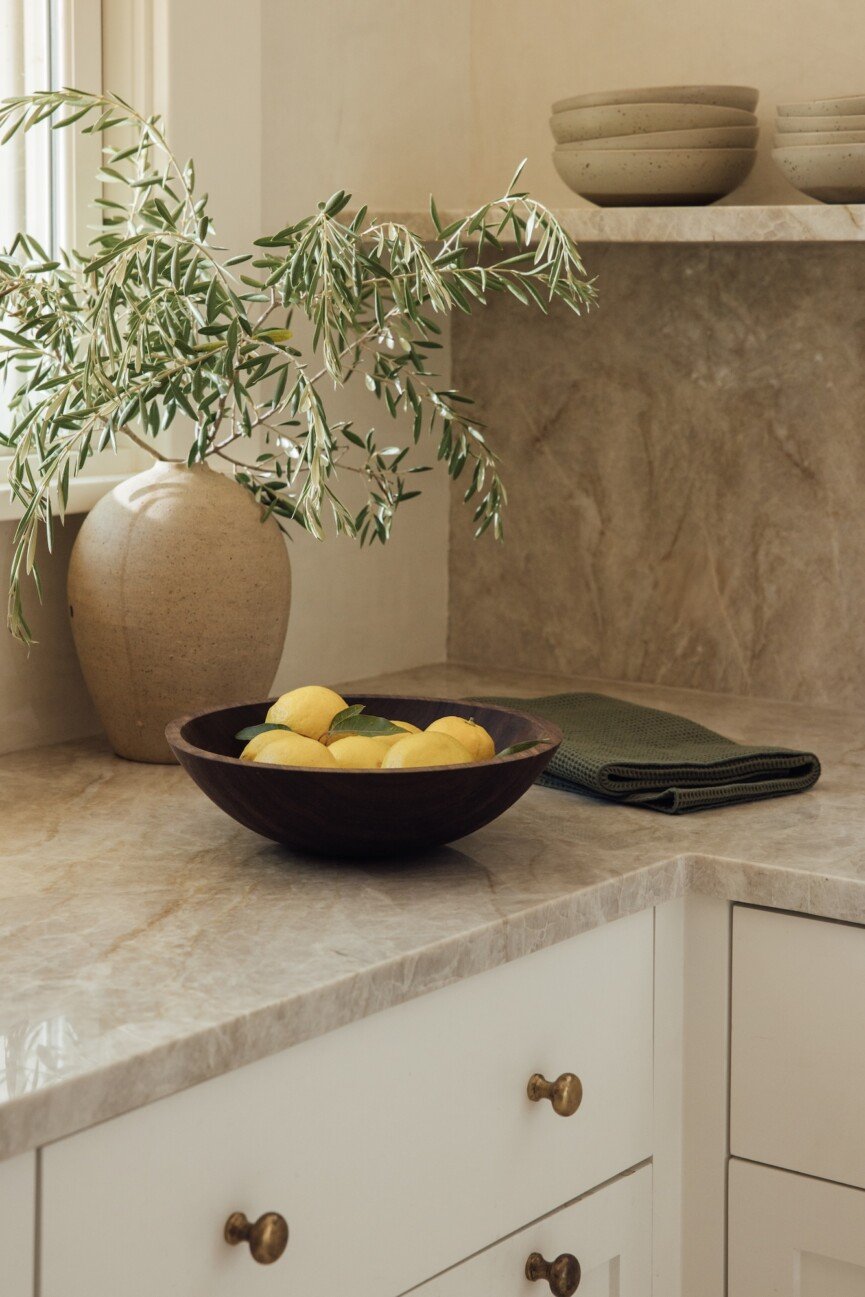
What is wabi-sabi?
Wabi-sabi is difficult to define in a few words, even for the Japanese. Artist and writer Leonard Koren, whose 1994 book introduced the idea to many in the West, describes it as “a beauty of things imperfect, impermanent, and incomplete.” Adams calls it a way of seeing “that frees us to find beauty in what is impermanent, imperfect, and incomplete.”
Both definitions describe a perspective, not a look. That’s the first thing to understand. Wabi-sabi is a way of noticing, and a room can only show the result of that attention.
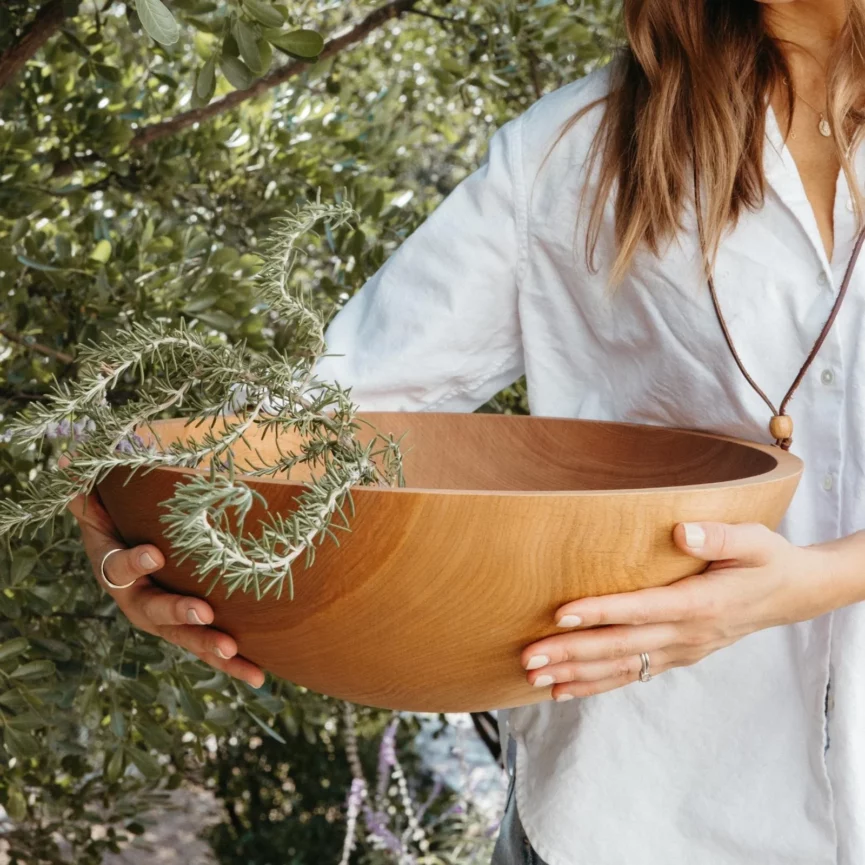
What do “wabi” and “sabi” mean?
The two words used to be separate, and each had its own history.
Wabi comes from a word for loneliness and plainness, the sort of solitude you’d find in a remote hut. Over time, tea masters began to see a deeper beauty in that incompleteness, and wabi came to mean a quiet, humble sufficiency: finding enough in the rustic and the simple. In Adams’ words, it refers to “living simply and in tune with nature, to paring down to the essentials so we can appreciate each moment and object in its fullness.”
Sabi is the older of the two. It once pointed to desolation and chill, and it came to mean the beauty of things that are aged, weathered, and worn. Adams describes it as referring to “transience and the passage of time.”
Together, they describe what Adams calls “a type of beauty and a way of life that embraces imperfection and simple living, clinging to what is humble, mysterious, and unassuming.”
Where does wabi-sabi come from?
Wabi-sabi grew out of Zen Buddhism and, above all, the Japanese tea ceremony. In the 15th century, the Zen priest Murata Juk? began replacing the gold, jade, and porcelain of the Chinese-style tea service with simple, rough wooden and clay vessels. About a century later, the tea master Sen no Riky? (1522 to 1591) refined the practice, favoring humble teaware and a bare, rustic tea room. Britannica credits Riky? and his contemporaries with establishing the wabi and sabi aesthetics in the mid-16th century.
Adams traces the concept further back, to around the 14th century, when artistic and Buddhist ideas from Chinese traditions merged into something distinctly Japanese. “The idea was very tied to the tea ceremony,” she says, “and is still deeply rooted in that time-honored tradition which holds up simplicity, humility, and rustic elegance as essential ideals.” It’s a sharp departure, she adds, “from our deeply-ingrained Western ideal of what’s new, shiny, fancy, expensive, modern, and flashy.”
Others with deep ties to Japan describe it in similar terms: as something lived, not styled. Leonard Koren, the American writer who lived on and off in Japan for about two decades before writing the 1994 book that helped introduce wabi-sabi to the West, notes that wabi-sabi things are often first seen as ugly. Part of the magic, he says, is the “transmutation of the not-beautiful into the beautiful.” Akiko Hirai, a potter born in Shizuoka who works in London, makes pots covered in marks and traces of past events. She describes them as wabi-sabi, “the beauty of imperfection and impermanence.”
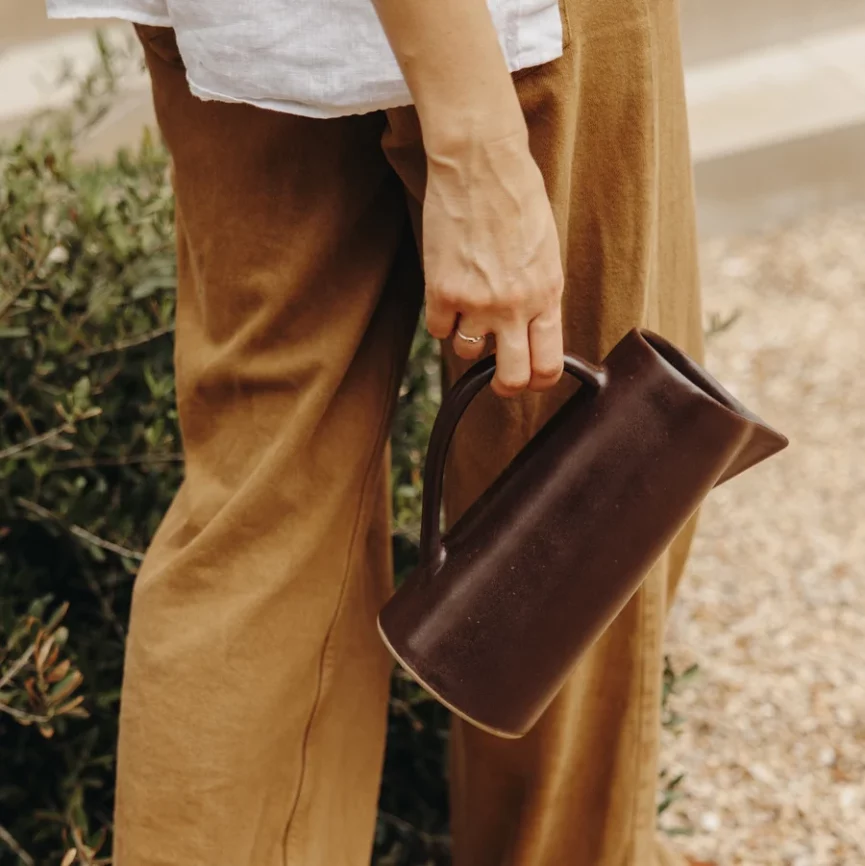
What wabi-sabi is not
Because the idea is so easy to flatten, it helps to say what it isn’t.
- It’s not clutter. Adams is clear that wabi-sabi means “paring down to only what you need.” A room full of stuff isn’t wabi-sabi, however handmade the stuff is.
- It’s not neglect. Patina is what happens when time and care work on an object together. A chipped, dusty, unloved room is just untended.
- It’s not manufactured imperfection. Pre-distressed furniture, faux-aged finishes, and intentionally crooked everything miss the point. The aesthetic is about time and use leaving marks on an object, which is hard to fake.
- It’s not a beige aesthetic. Earthy tones and natural materials are common, but color isn’t the point. Honest materials and attention are. Koren notes that the closest English word is “rustic,” but that captures only a sliver of it.
- It’s not a trend. “It’s sort of ironic that wabi sabi has recently become a bit of a catchphrase,” Adams says, “because by nature, it goes against the grain of what’s popular or trendy.”
How to bring wabi-sabi home
Adams says the first step is subtraction: “take stock of what you have and determine what you may no longer need.” Achieving a sense of wabi-sabi, she says, “is rarely about going out and buying a whole bunch of new stuff, but rather about simplifying, re-evaluating, and thinking carefully about every new purchase.” From there, seven ideas help.
1. Choose natural materials. Wood, clay, stone, linen, and wool all age gracefully. When you do buy something, Adams says to “select timeless items made from natural materials and fibers that will age well (versus cheap and/or trendy) and can be repaired or re-used for years to come.”
Try this: Swap one plastic or laminate surface (a tray, a bowl, a cutting board) for wood or ceramic.
2. Let things patina. Brass darkens, leather softens, unlacquered wood marks. Stop polishing every trace away and treat the change as part of the object’s story.
Try this: Leave one piece of brass or copper unpolished for a season and see what happens.
3. Repair before you replace. Kintsugi, the Japanese art of mending ceramics with lacquer dusted with powdered gold, is the most famous example, though the idea works at any level: sew the button back on, re-glue the chair, keep the chipped bowl. Adams sees it as a metaphor: “if we steadily work on getting the broken parts of lives healed, rather than hiding, ignoring, or glossing over them, they can actually become a visible and lovely part of our strength.”
Try this: Repair one thing this month that you’d normally toss.
4. Welcome asymmetry and the handmade. Hand-thrown pottery with a pooled glaze, a bowl that isn’t quite round, a bunch of branches that isn’t quite centered. Irregularity is the sign that a person made it.
Try this: Set the table with pieces that don’t match but share a feel.
5. Keep fewer, more meaningful objects. Adams’ advice is to “collect sentiment over things.” Keep the objects that carry memory, like family photographs, trip souvenirs, and art made by your children, and let the rest go. “Not everything needs to be useful, too,” she adds, so keep something just because it’s beautiful.
Try this: Choose one shelf and keep only what you’d miss.
6. Bring the seasons in. Clip branches from the yard, pluck wildflowers from the roadside, gather beach-walk pebbles, and let the room change with the year. “Invite wabi-sabi in through the simplest of ways,” Adams says, “like clipping some branches from your backyard and putting in a vase.”
Try this: Replace the store-bought bouquet with whatever is growing outside.
7. Let your rooms evolve. A wabi-sabi home is never finished. Adams puts it this way: “all things are impermanent, imperfect, and incomplete,” and the point is “living wholly in each fleeting moment, while also being aware of the whole arc of time, where nothing stays constant forever.” Add slowly, move things, and let a room grow into itself.
Try this: Rearrange one corner using only what’s already in the house.
Adams describes the result as spaces “full of life and warmth, versus having a kind of perfect showroom sterility to them.” Even sparsely decorated rooms, she says, can have “textured roughness (like plastered walls, live-edge wood, raw stone, nubby wool).” These are rooms designed “for intimacy versus impressing others.”
Wabi-sabi in everyday rituals and hospitality
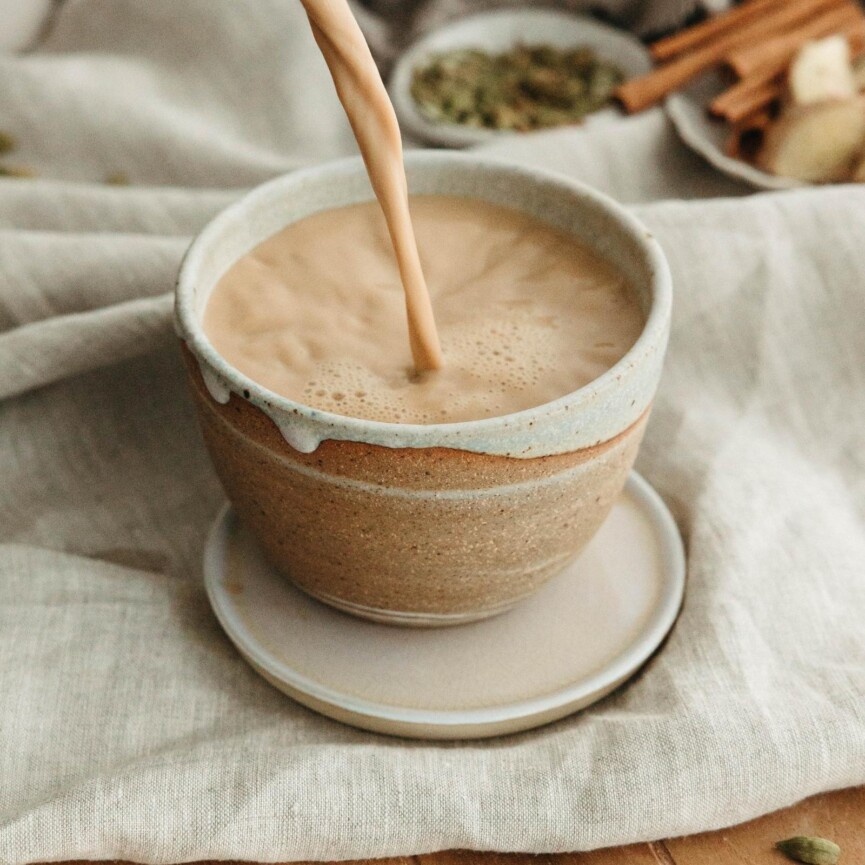
The philosophy began at a tea table, so it’s no surprise that it lives most naturally in small daily rituals: a morning cup, a table set for friends, a meal that’s about the people and not the presentation.
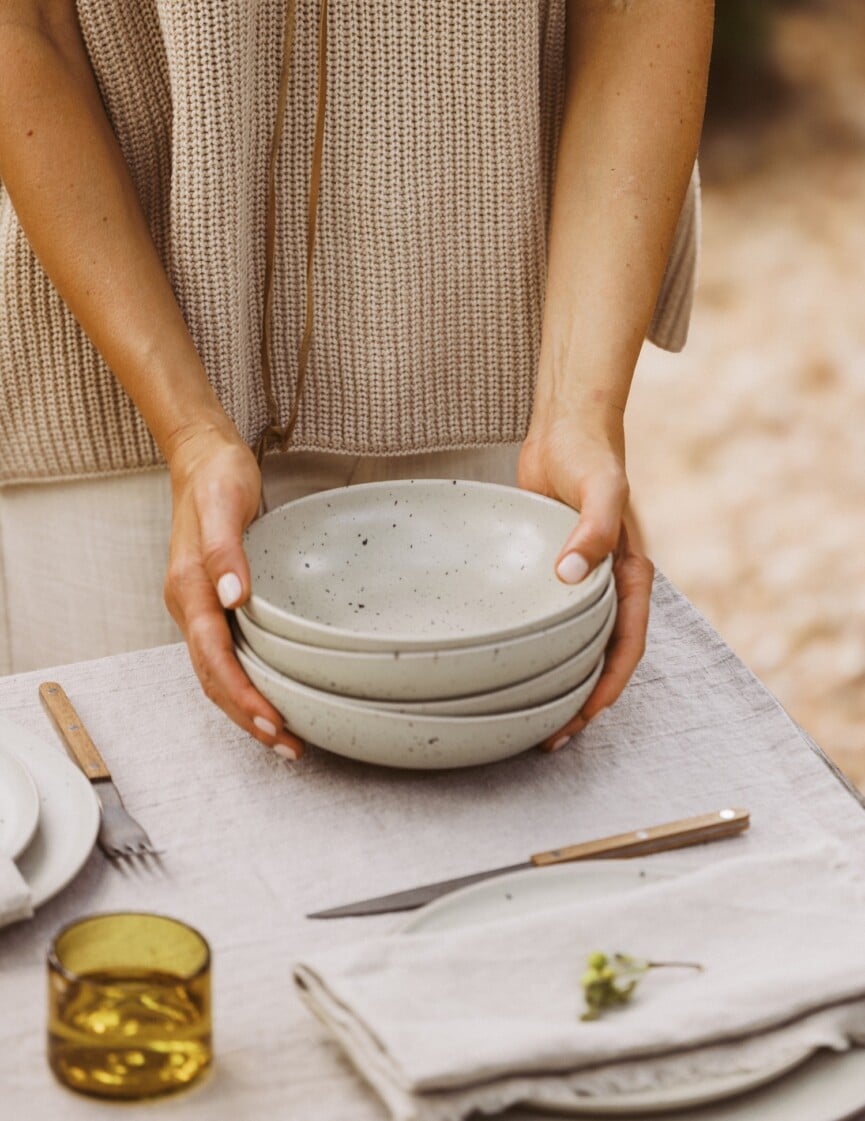
Adams’ book makes the connection to hosting. “I wanted to show how the philosophy can be adopted into anyone’s life experience through the simple rituals and routines of everyday life,” she says. That means setting out the good bowl for a weeknight dinner, serving from a board that has seen a few hundred meals, and letting a guest see the kitchen a little lived-in.
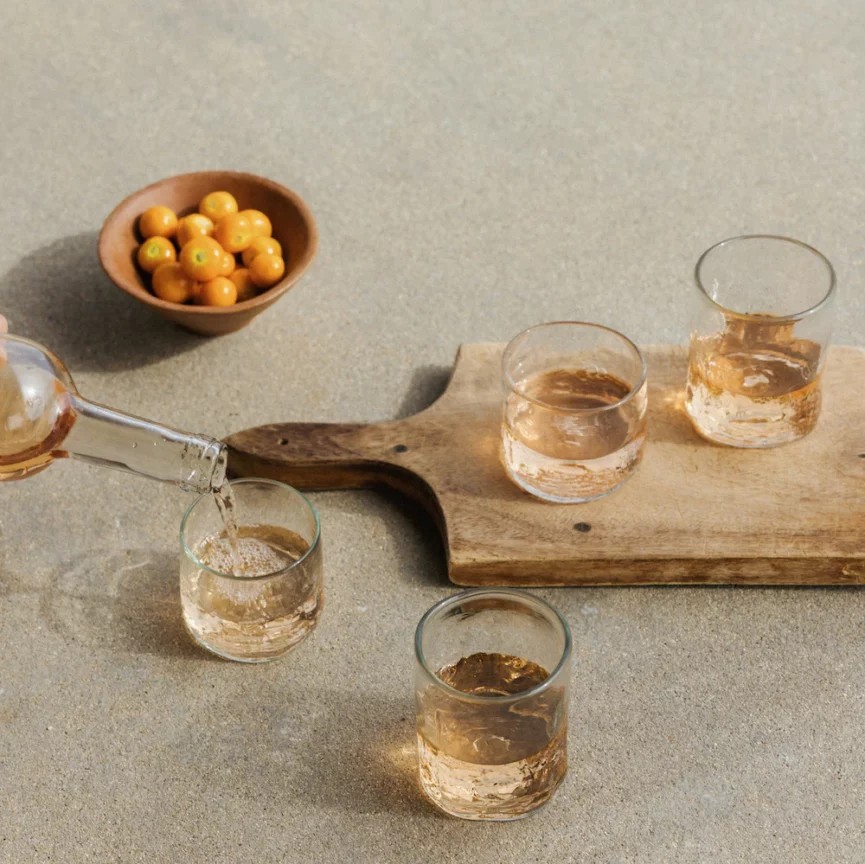
A few pieces from Casa Zuma were made with that spirit in mind. The hand-thrown Solstice Mug, made with LA Clay has a glaze that varies from mug to mug, which is what makes it feel like yours. The terracotta wine cooler is handcrafted from local clay outside San Miguel de Allende, and its porous clay keeps a bottle cool and doubles as a vase for branches. And the recycled glass, handblown in Guatemala, comes out different each time.
For a plan that makes hosting less about perfection, see our Thanksgiving hosting plan and dinner party table setting ideas.ell (versus cheap and/or trendy) and can be repaired or re-used for years to come.
Wabi-sabi FAQs
- What does wabi-sabi mean? Wabi-sabi is a Japanese way of seeing that finds beauty in what is imperfect, impermanent, and incomplete. Wabi refers to simple, humble beauty, and sabi to the beauty of age and wear.
- How do you pronounce wabi-sabi? Wah-bee sah-bee.
- What’s the difference between wabi and sabi? They began as separate words. Wabi points to simplicity and a quiet sufficiency, and sabi to the beauty of things that are aged, weathered, and worn.
- Where does wabi-sabi come from? It grew out of Zen Buddhism and the Japanese tea ceremony, taking shape over several centuries and developing in the 15th and 16th centuries through tea masters such as Murata Juk? and Sen no Riky?.
- What is a wabi-sabi home? A calm, warm, lived-in home built around natural materials, handmade objects, and fewer meaningful things, designed for comfort and intimacy and not to impress.
- Is wabi-sabi the same as minimalism? No. Minimalism is about reducing, and wabi-sabi is about attention and acceptance. A wabi-sabi room can be sparse or full of beloved objects, as long as it’s honest and unfussy.
- What’s the difference between wabi-sabi and kintsugi? Kintsugi is a specific craft: repairing broken pottery with gold-dusted lacquer. It’s closely associated with wabi-sabi because it highlights the repair instead of hiding it, but the two aren’t the same thing.
- Can you buy new things in a wabi-sabi home? Yes, thoughtfully. Adams suggests choosing timeless pieces made from natural materials that will age well and can be repaired, and buying fewer of them.
This post was last updated on November 2, 2026, to include new insights, a clearer definition, and practical guidance for the home.