

In some circles, it’s known as climate reparations. In others, payments for “loss and damage.”
Whatever the term, there are growing calls for a new process that would pay developing countries for damages they’ve suffered from climate change—a problem they did little to create.
Wealthy nations such as the United States have opposed the idea for years. But its advocates have stayed persistent as climate impacts have grown more severe, and the topic is expected to be one of the main issues—and potentially the most divisive—at the next round of international climate talks next month in Egypt.
Here’s a quick guide to climate reparations and why they matter.
1. What are they?
Climate reparations—or “loss and damage” in U.N. speak—account for the economic toll of climate-fueled disasters, such as floods, wildfires and hurricanes. There are also slow-onset climate impacts, such as sea-level rise, that can produce irreversible damage over time.
Taken together, these are climate change impacts that countries can’t defend against, either because the risks are unavoidable or because countries don’t have the money to pay for protection.
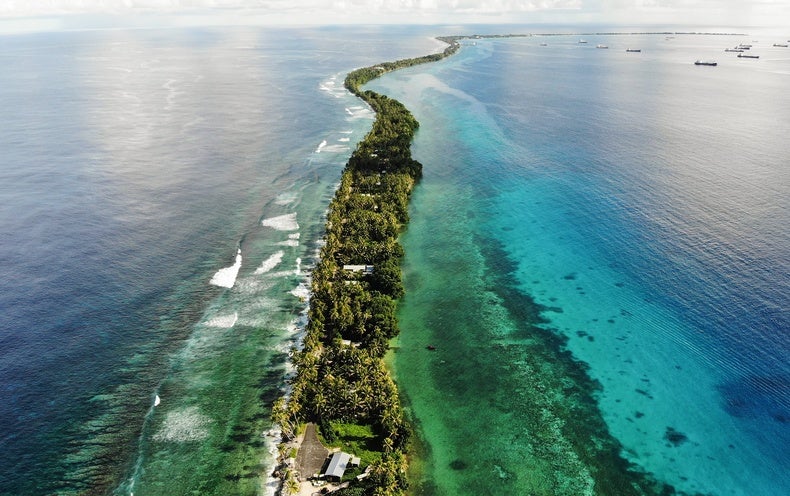
One example is the Pacific island nation of Tuvalu, which is rapidly losing its coastline to rising seas (Climatewire, Sept. 23).
Because of this and other climate impacts, a country can lose homes, farmland and jobs—damaging economic growth. Governments can take steps to adapt, but when impacts exceed adaptation, it’s considered loss and damage.
Finding a way to compensate developing countries for climate losses, however, is a contentious topic.
2. What are they not?
Payment for climate reparations differs from funding that goes toward mitigation or adaptation—two established pillars of climate action.
Mitigation refers to efforts to cut the greenhouse gas emissions that are warming the planet by, for example, switching from coal-fired power to solar or wind. Adaptation helps protect against climate-related damages.
Loss and damage is considered a third pillar, and in many ways, it exists because actions to reduce emissions and support adaptation have fallen short.
“We have been doing mitigation, we have been doing adaptation, but both inadequately,” said Saleemul Huq, director of the International Centre for Climate Change and Development in Bangladesh. “Now it’s no longer something we are preparing for or trying to prevent. But it’s something we’re going to have to deal with.”
That doesn’t mean that mitigating climate change and adapting to its impacts still aren’t critical, but loss and damage makes clear there’s an additional need that requires a response. It’s a need that proponents argue can’t be handled by disaster relief, humanitarian assistance or insurance.
And because it is different, vulnerable countries are asking that the money to address it also be separate and distinct.
3. Where do things stand?
Developing countries put forward a proposal at last year’s climate talks in Glasgow, Scotland, for a financing mechanism for loss and damage.
It didn’t advance, however, because countries such as the United States didn’t support the measure. One concern was that the proposal would make developed countries pay reparations—as opposed to all major emitters, such as China. Another worry was it could open developed countries to legal challenges or endless calls for compensation.
Instead, the agreed upon outcome was a three-year dialogue to hash out how to finance climate damages.
Developing countries have bristled at the prospect of more talk shops and are re-upping their demands to negotiate financing arrangements this year. U.S. officials said that while they’re willing to talk about avenues for loss and damage funding, they won’t yet back a new mechanism and would prefer to look at existing ways of addressing the challenge, including through continued efforts to reduce emissions (Climatewire, Oct. 20).
Climate experts and officials from vulnerable countries say that’s unrealistic because warming has advanced to the point that some climate impacts are already unstoppable (Climatewire, Aug. 9, 2021). And emissions are still rising, despite pledges to move in the other direction. On Monday, more than 140 U.S.-based climate and development organizations sent a letter to U.S. climate envoy John Kerry urging progress on the issue.
Some action is happening outside the U.N. process. Scotland and Denmark have committed around $15 million between them to tackle loss and damage at a global level, and finance ministers from the world’s most climate-vulnerable countries agreed to work with Germany and other wealthy nations to set up a finance and insurance mechanism to address climate risk.
But developing countries and activists argue that a formal loss-and-damage financing mechanism needs to be part of the U.N process to give it legitimacy and account for developing countries’ needs and priorities. The Alliance of Small Island States is seeking agreement among the nearly 200 countries that are parties to the U.N. climate negotiations to set up a new, stand-alone fund for loss and damage before talks start in Egypt.
4. How to put a price on loss and damage
A few studies have attempted to estimate the costs.
One study from 2018 projects that total damages in developing countries could reach between $290 billion and $580 billion by 2030. The African Development Bank Group estimates that the continent loses between 5 and 15 percent of its gross domestic product each year to the impacts of climate change, while a group of 55 climate-vulnerable nations found that they had lost a fifth of their wealth over the past 20 years due to climate-fueled disasters.
Some countries are also starting to price loss and damage into their climate targets. The small Pacific island nation of Vanuatu is calling for nearly $180 million for loss-and-damage compensation and has grounded its new climate targets on support from developing countries (Climatewire, Aug. 23).
What’s important to acknowledge in addressing loss and damage is that it’s seen as additional to other forms of climate and development finance and that it doesn’t take as long as existing financial mechanisms to get set up and start distributing money, said Tom Mitchell, executive director of the International Institute for Environment and Development, a research organization based in London.
In comparison, the U.N.’s Green Climate Fund was created to help developing nations reduce emissions and build resilience to climate impacts. But it can be hard for countries to access, a particular challenge when money is urgently needed. And humanitarian aid has proved inadequate to deal with the scale of the problem.
Without a separate fund, countries may simply redirect development aid toward loss and damage and away from other needs, like poverty reduction and education—something one study shows is already happening with current climate finance pledges (Climatewire, June 23).
5. Why now?
Loss and damage has been a part of the U.N. climate agenda for years. But opposition from the United States and other countries has prevented a robust negotiation on finance from taking off (Climatewire, Nov. 19, 2021).
That’s changing as the impacts become more severe and frustration at the lack of action builds.
Climate-vulnerable country leaders and advocates warn that more talk creates unnecessary delays and that rich countries need to take responsibility for the emissions currently causing the damage, out of a sense of solidarity.
“We know that loss and damage is here. People are suffering. We saw what’s coming from Pakistan, Bangladesh, South Sudan this year, and there are more and more extreme events,” said Madeleine Diouf Sarr, the Senegalese chair of a negotiating group of least-developed countries. “We need to have a global solution,” she added.
Among developing countries, loss and damage is also no longer seen as an issue confined to small island developing states, say finance experts. The proposal to address loss and damage in Glasgow, for instance, was backed by a coalition of 134 developing countries known as the G-77 and by China. That group is currently led by Pakistan, where historic flooding this year has cost more than $30 billion in damages.
Many of the countries in that grouping are also facing high levels of debt distress, and climate is one of the drivers of growing food and water insecurity.
“This whole issue of climate risk and vulnerable countries increasingly having to deal with more frequent and more severe disasters is becoming a bigger domestic and international priority for a lot of countries, even outside of the climate negotiations,” said Taylor Dimsdale, director of risk and resilience at climate think tank E3G.
Failing to reach an agreement on loss-and-damage finance as a part of the formal agenda in Egypt could set the tone for the remainder of the talks, say analysts. It could also reverberate beyond climate negotiations, affecting countries’ willingness to cooperate on a range of issues, among them trade or security.
Reprinted from E&E News with permission from POLITICO, LLC. Copyright 2022. E&E News provides essential news for energy and environment professionals.