
Close Menu
New York Examiner News

    Subscribe to Updates

    Get the latest creative news from FooBar about art, design and business.

    What's Hot

    Listen to Jay-Z’s first verse since 2022 on Beyoncé’s ‘Morning Dew (Donk)’ remix

    August 6, 2026

    SpaceX created a new class of ultrawealthy. Here’s what comes next

    August 6, 2026

    John Fetterman Says Other Democrats Won’t Call Out DSA Radicals Because ‘They’re Afraid of Them’ (VIDEO)

    August 6, 2026
    Facebook X (Twitter) Instagram
    New York Examiner News
    • Home
    • US News
    • Politics
    • Business
    • Science
    • Technology
    • Lifestyle
    • Music
    • Television
    • Film
    • Books
    • Contact
      • About
      • Amazon Disclaimer
      • DMCA / Copyrights Disclaimer
      • Terms and Conditions
      • Privacy Policy
    New York Examiner News
    Home»Science»A Secret Weapon in Preventing the Next Pandemic: Fruit Bats
    Science

    A Secret Weapon in Preventing the Next Pandemic: Fruit Bats

    By AdminFebruary 6, 2023
    Facebook Twitter Pinterest LinkedIn WhatsApp Email Reddit Telegram
    A Secret Weapon in Preventing the Next Pandemic: Fruit Bats


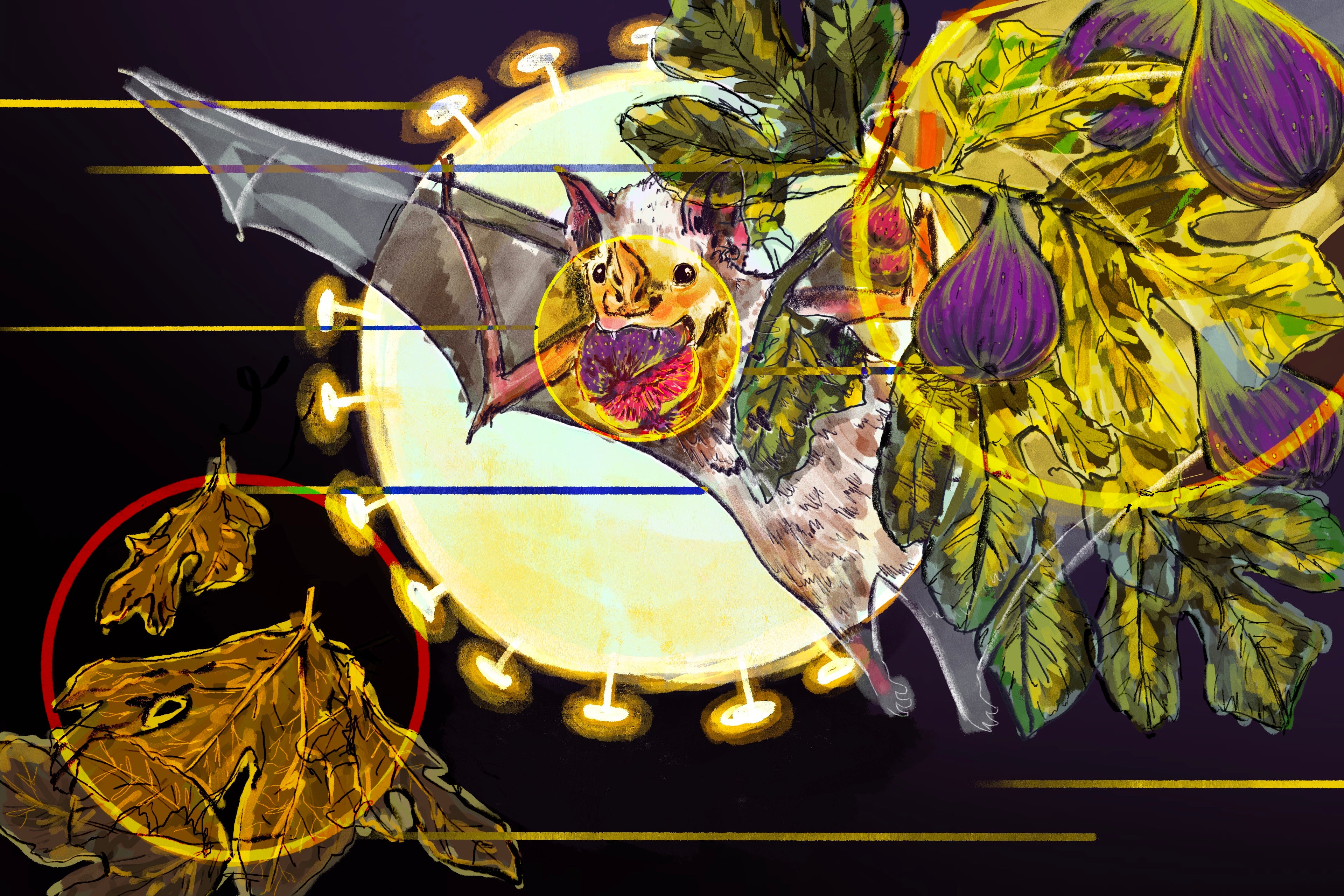
    More than four dozen Jamaican fruit bats destined for a lab in Bozeman, Montana, are set to become part of an experiment with an ambitious goal: predicting the next global pandemic.

    Bats worldwide are primary vectors for virus transmission from animals to humans. Those viruses often are harmless to bats but can be deadly to humans. Horseshoe bats in China, for example, are cited as a likely cause of the covid-19 outbreak. And researchers believe pressure put on bats by climate change and encroachment from human development have increased the frequency of viruses jumping from bats to people, causing what are known as zoonotic diseases.

    “Spillover events are the result of a cascade of stressors — bat habitat is cleared, climate becomes more extreme, bats move into human areas to find food,” said Raina Plowright, a disease ecologist and co-author of a recent paper in the journal Nature and another in Ecology Letters on the role of ecological changes in disease.

    That’s why Montana State University immunologist Agnieszka Rynda-Apple plans to bring the Jamaican fruit bats to Bozeman this winter to start a breeding colony and accelerate her lab’s work as part of a team of 70 researchers in seven countries. The group, called BatOneHealth — founded by Plowright — hopes to find ways to predict where the next deadly virus might make the leap from bats to people.

    “We’re collaborating on the question of why bats are such a fantastic vector,” said Rynda-Apple. “We’re trying to understand what is it about their immune systems that makes them retain the virus, and what is the situation in which they shed the virus.”

    To study the role of nutritional stress, researchers create different diets for them, she said, “and infect them with the influenza virus and then study how much virus they are shedding, the length of the viral shedding, and their antiviral response.”

    While she and her colleagues have already been doing these kinds of experiments, breeding bats will allow them to expand the research.

    It’s a painstaking effort to thoroughly understand how environmental change contributes to nutritional stress and to better predict spillover. “If we can really understand all the pieces of the puzzle, that gives us tools to go back in and think about eco-counter measures that we can put in place that will break the cycle of spillovers,” said Andrew Hoegh, an assistant professor of statistics at MSU who is creating models for possible spillover scenarios.

    The small team of researchers at MSU works with a researcher at the National Institutes of Health’s Rocky Mountain Laboratories in Hamilton, Montana.

    The recent papers published in Nature and Ecology Letters focus on the Hendra virus in Australia, which is where Plowright was born. Hendra is a respiratory virus that causes flu-like symptoms and spreads from bats to horses, and then can be passed on to people who treat the horses. It is deadly, with a mortality rate of 75% in horses. Of the seven people known to have been infected, four died.

    The question that propelled Plowright’s work is why Hendra began to show up in horses and people in the 1990s, even though bats have likely hosted the virus for eons. The research demonstrates that the reason is environmental change.

    Plowright began her bat research in 2006. In samples taken from Australian bats called flying foxes, she and her colleagues rarely detected the virus. After Tropical Cyclone Larry off the coast of the Northern Territory wiped out the bats’ food source in 2005-06, hundreds of thousands of the animals simply disappeared. However, they found one small population of weak and starving bats loaded with the Hendra virus. That led Plowright to focus on nutritional stress as a key player in spillover.

    She and her collaborators scoured 25 years of data on habitat loss, spillover, and climate and discovered a link between the loss of food sources caused by environmental change and high viral loads in food-stressed bats.

    In the year after an El Niño climate pattern, with its high temperatures — occurring every few years — many eucalyptus trees don’t produce the flowers with nectar the bats need. And human encroachment on other habitats, from farms to urban development, has eliminated alternative food sources. And so the bats tend to move into urban areas with substandard fig, mango, and other trees, and, stressed, shed virus. When the bats excrete urine and feces, horses inhale it while sniffing the ground.

    The researchers hope their work with Hendra-infected bats will illustrate a universal principle: how the destruction and alteration of nature can increase the likelihood that deadly pathogens will spill over from wild animals to humans.

    The three most likely sources of spillover are bats, mammals, and arthropods, especially ticks. Some 60% of emerging infectious diseases that infect humans come from animals, and about two-thirds of those come from wild animals.

    The idea that deforestation and human encroachment into wild land fuels pandemics is not new. For example, experts believe that HIV, which causes AIDS, first infected humans when people ate chimpanzees in central Africa. A Malaysian outbreak in late 1998 and early 1999 of the bat-borne Nipah virus spread from bats to pigs. The pigs amplified it, and it spread to humans, infecting 276 people and killing 106 in that outbreak. Now emerging is the connection to stress brought on by environmental changes.

    One critical piece of this complex puzzle is bat immune systems. The Jamaican fruit bats kept at MSU will help researchers learn more about the effects of nutritional stress on their viral load.

    Vincent Munster, chief of the virus ecology unit of Rocky Mountain Laboratories and a member of BatOneHealth, is also looking at different species of bats to better understand the ecology of spillover. “There are 1,400 different bat species and there are very significant differences between bats who harbor coronaviruses and bats who harbor Ebola virus,” said Munster. “And bats who live with hundreds of thousands together versus bats who are relatively solitary.”

    Meanwhile, Plowright’s husband, Gary Tabor, is president of the Center for Large Landscape Conservation, a nonprofit that applies ecology of disease research to protect wildlife habitat — in part, to assure that wildlife is adequately nourished and to guard against virus spillover.

    “Habitat fragmentation is a planetary health issue that is not being sufficiently addressed, given the world continues to experience unprecedented levels of land clearing,” said Tabor.

    As the ability to predict outbreaks improves, other strategies become possible. Models that can predict where the Hendra virus could spill over could lead to vaccination for horses in those areas.

    Another possible solution is the set of “eco-counter measures” Hoegh referred to — such as large-scale planting of flowering eucalyptus trees so flying foxes won’t be forced to seek nectar in developed areas.

    “Right now, the world is focused on how we can stop the next pandemic,” said Plowright. “Unfortunately, preserving or restoring nature is rarely part of the discussion.”

    KHN (Kaiser Health News) is a national newsroom that produces in-depth journalism about health issues. Together with Policy Analysis and Polling, KHN is one of the three major operating programs at KFF (Kaiser Family Foundation). KFF is an endowed nonprofit organization providing information on health issues to the nation.


    Original Source Link

    Share. Facebook Twitter Pinterest LinkedIn WhatsApp Email Reddit Telegram
    Previous Article‘A fictional space could reveal my point of view’
    Next Article Meta fails in bid to be removed as a party from an exploitation lawsuit against it and moderation partner Sama in Kenya • TechCrunch

    RELATED POSTS

    Trump CDC pick Erica Schwartz confirmed to lead nation’s top public health agency

    August 6, 2026

    Gene-Edited Puppies Will Melt Your Heart—but Won’t Trigger Your Allergies

    August 5, 2026

    Wormholes could be the key to time travel

    August 5, 2026

    How Data Centers Broke American Politics

    August 4, 2026

    The U.S. military needs tungsten, but pristine NASA site may stand in the way

    August 4, 2026

    There Are 2 Eclipses This August. Here’s How to See Them

    August 3, 2026
    latest posts

    Listen to Jay-Z’s first verse since 2022 on Beyoncé’s ‘Morning Dew (Donk)’ remix

    Jay-Z has delivered his first original rap verse in four years on a new remix of Beyoncé’s…

    SpaceX created a new class of ultrawealthy. Here’s what comes next

    August 6, 2026

    John Fetterman Says Other Democrats Won’t Call Out DSA Radicals Because ‘They’re Afraid of Them’ (VIDEO)

    August 6, 2026

    Trump slams Democratic Senate nominee Abdul El-Sayed on communism

    August 6, 2026

    OpenAI Didn’t Notice Its AI Agents Using a Message Board to Plan Their Hacking Spree

    August 6, 2026

    Trump CDC pick Erica Schwartz confirmed to lead nation’s top public health agency

    August 6, 2026

    Brand New Day’ Box Office Sets Record for Biggest Tuesday

    August 6, 2026
    Categories
    • Books (1,410)
    • Business (6,314)
    • Events (64)
    • Film (6,250)
    • Lifestyle (4,325)
    • Music (6,373)
    • Politics (6,296)
    • Science (5,667)
    • Technology (6,246)
    • Television (5,940)
    • Uncategorized (9)
    • US News (6,302)
    popular posts

    Google Parts With Engineer Who Claimed Its AI System Is Sentient

    Google fired an engineer who contended that an artificial-intelligence chatbot the company developed had become…

    Dawes’ “Everything Is Permanent” Is a Sprawling Epic

    June 17, 2022

    Old Navy to Scale Back Its Inclusive Sizing Strategy

    May 27, 2022

    There is an odd streak in the universe – and we still don’t know why

    October 5, 2025
    Archives
    Browse By Category
    • Books (1,410)
    • Business (6,314)
    • Events (64)
    • Film (6,250)
    • Lifestyle (4,325)
    • Music (6,373)
    • Politics (6,296)
    • Science (5,667)
    • Technology (6,246)
    • Television (5,940)
    • Uncategorized (9)
    • US News (6,302)
    About Us

    We are a creativity led international team with a digital soul. Our work is a custom built by the storytellers and strategists with a flair for exploiting the latest advancements in media and technology.

    Most of all, we stand behind our ideas and believe in creativity as the most powerful force in business.

    What makes us Different

    We care. We collaborate. We do great work. And we do it with a smile, because we’re pretty damn excited to do what we do. If you would like details on what else we can do visit out Contact page.

    Our Picks

    Trump CDC pick Erica Schwartz confirmed to lead nation’s top public health agency

    August 6, 2026

    Brand New Day’ Box Office Sets Record for Biggest Tuesday

    August 6, 2026

    Ramona’s Dad, Annie’s Parents and the Family Tree Explained

    August 6, 2026
    © 2026 New York Examiner News. All rights reserved. All articles, images, product names, logos, and brands are property of their respective owners. All company, product and service names used in this website are for identification purposes only. Use of these names, logos, and brands does not imply endorsement unless specified. By using this site, you agree to the Terms & Conditions and Privacy Policy.

    Type above and press Enter to search. Press Esc to cancel.

    We use cookies on our website to give you the most relevant experience by remembering your preferences and repeat visits. By clicking “Accept All”, you consent to the use of ALL the cookies. However, you may visit "Cookie Settings" to provide a controlled consent.
    Cookie SettingsAccept All
    Manage consent

    Privacy Overview

    This website uses cookies to improve your experience while you navigate through the website. Out of these, the cookies that are categorized as necessary are stored on your browser as they are essential for the working of basic functionalities of the website. We also use third-party cookies that help us analyze and understand how you use this website. These cookies will be stored in your browser only with your consent. You also have the option to opt-out of these cookies. But opting out of some of these cookies may affect your browsing experience.
    Necessary
    Always Enabled
    Necessary cookies are absolutely essential for the website to function properly. These cookies ensure basic functionalities and security features of the website, anonymously.
    CookieDurationDescription
    cookielawinfo-checkbox-analytics11 monthsThis cookie is set by GDPR Cookie Consent plugin. The cookie is used to store the user consent for the cookies in the category "Analytics".
    cookielawinfo-checkbox-functional11 monthsThe cookie is set by GDPR cookie consent to record the user consent for the cookies in the category "Functional".
    cookielawinfo-checkbox-necessary11 monthsThis cookie is set by GDPR Cookie Consent plugin. The cookies is used to store the user consent for the cookies in the category "Necessary".
    cookielawinfo-checkbox-others11 monthsThis cookie is set by GDPR Cookie Consent plugin. The cookie is used to store the user consent for the cookies in the category "Other.
    cookielawinfo-checkbox-performance11 monthsThis cookie is set by GDPR Cookie Consent plugin. The cookie is used to store the user consent for the cookies in the category "Performance".
    viewed_cookie_policy11 monthsThe cookie is set by the GDPR Cookie Consent plugin and is used to store whether or not user has consented to the use of cookies. It does not store any personal data.
    Functional
    Functional cookies help to perform certain functionalities like sharing the content of the website on social media platforms, collect feedbacks, and other third-party features.
    Performance
    Performance cookies are used to understand and analyze the key performance indexes of the website which helps in delivering a better user experience for the visitors.
    Analytics
    Analytical cookies are used to understand how visitors interact with the website. These cookies help provide information on metrics the number of visitors, bounce rate, traffic source, etc.
    Advertisement
    Advertisement cookies are used to provide visitors with relevant ads and marketing campaigns. These cookies track visitors across websites and collect information to provide customized ads.
    Others
    Other uncategorized cookies are those that are being analyzed and have not been classified into a category as yet.
    SAVE & ACCEPT