
Close Menu
New York Examiner News

    Subscribe to Updates

    Get the latest creative news from FooBar about art, design and business.

    What's Hot

    Florence + The Machine call on crowd to “put your phones the fuck away” and “experience” set at Reading 2026

    August 31, 2026

    Shein CEO’s wealth slumps $15 billion after whittled-down IPO

    August 31, 2026

    College Football Player Dies After Medical Emergency

    August 31, 2026
    Facebook X (Twitter) Instagram
    New York Examiner News
    • Home
    • US News
    • Politics
    • Business
    • Science
    • Technology
    • Lifestyle
    • Music
    • Television
    • Film
    • Books
    • Contact
      • About
      • Amazon Disclaimer
      • DMCA / Copyrights Disclaimer
      • Terms and Conditions
      • Privacy Policy
    New York Examiner News
    Home»Science»AI Learns What an Infant Knows about the Physical World
    Science

    AI Learns What an Infant Knows about the Physical World

    By AdminJuly 11, 2022
    Facebook Twitter Pinterest LinkedIn WhatsApp Email Reddit Telegram
    AI Learns What an Infant Knows about the Physical World


    If I drop a pen, you know that it won’t hover in midair but will fall to the floor. Similarly, if the pen encounters a desk on its way down, you know it won’t travel through the surface but will instead land on top.

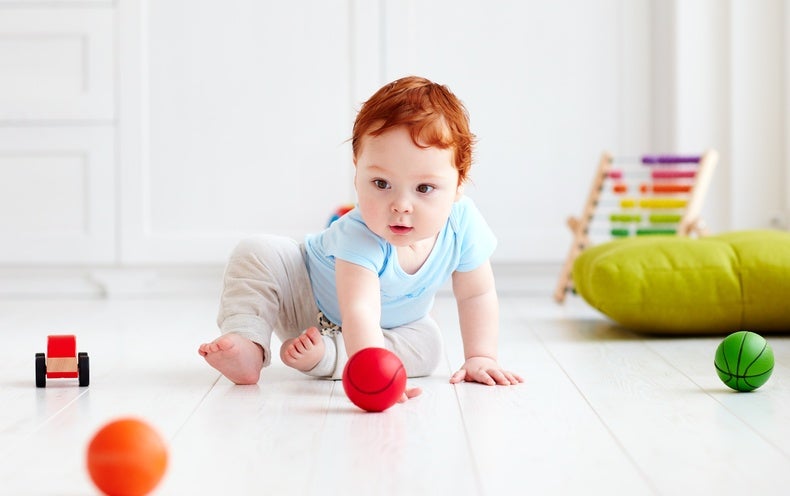
    These fundamental properties of physical objects seem intuitive to us. Infants as young as three months know that a ball no longer in sight still exists and that the ball can’t teleport from behind the couch to the top of the refrigerator.

    Despite mastering complex games, such as chess and poker, artificial intelligence systems have yet to demonstrate the “commonsense” knowledge that an infant is either born with or picks up seemingly without effort in their first few months.

    “It’s so striking that as much as AI technologies have advanced, we still don’t have AI systems with anything like human common sense,” says Joshua Tenenbaum, a professor of cognitive sciences at the Massachusetts Institute of Technology, who has done research in this area. “If we were ever to get to that point, then understanding how it works, how it arises in humans” will be valuable.

    A study published on July 11 in the journal Nature Human Behaviour by a team at DeepMind, a subsidiary of Google’s parent company Alphabet, takes a step toward advancing how such commonsense knowledge might be incorporated into machines—and understanding how it develops in humans. The scientists came up with an “intuitive physics” model by integrating the same inherent knowledge that developmental psychologists think a baby is born with into an AI system. They also created a means of testing the model that is akin to the methods used to assess cognition in human infants.

    Normally, the deep-learning systems that have become ubiquitous in AI research go through training to identify patterns of pixels in a scene. By doing so, they can recognize a face or a ball, but they cannot predict what will happen to those objects when placed in a dynamic scene where they move and bump into each other. To tackle the trickier challenge presented by intuitive physics, the researchers developed a model called PLATO (Physics Learning through Auto-encoding and Tracking Objects) to focus on whole objects instead of individual pixels. They then trained PLATO on about 300,000 videos so that it could learn how an object behaves: a ball falling, bouncing against another object or rolling behind a barrier only to reappear on the other side.

    The goal was to have PLATO understand what violates the laws of intuitive physics based on five fundamental concepts: object permanence (an object still exists even if it’s not in view), solidity (objects are physically solid), continuity (objects move in continuous paths and can’t disappear and reappear in an unexpectedly distant place), unchangeableness (an object’s properties always remain the same) and directional inertia (an object only changes direction under the law of inertia). PLATO, like an infant, exhibited “surprise” when it, say, viewed an object that moved through another one without ricocheting backward upon impact. It performed significantly better at distinguishing physically possible versus impossible scenes than a traditional AI system that was trained on the same videos but had not been imbued with an inherent knowledge of objects.

    “Psychologists think that people use objects to understand the physical world, so maybe if we build a system like that, we’re going to maximize our likelihood of [an AI model] actually understanding the physical world,” said Luis Piloto, a research scientist at DeepMind who led the study, during a press conference.

    Previous efforts to teach intuitive physics to AI by incorporating varying degrees of built-in or acquired physical knowledge into the system have achieved mixed success. The new study attempted to obtain an understanding of intuitive physics in the same manner that developmental psychologists think an infant does by first displaying an inborn awareness of what an object is. The child then learns the physical rules that govern the object’s behavior by watching it move about the world.

    “What’s exciting and unique about this paper is that they did it very closely based on what is known in cognitive psychology and developmental science,” says Susan Hespos, a psychology professor at Northwestern University, who co-wrote a News & Views article accompanying the paper but was not involved with the research. “We are born with innate knowledge, but it’s not like it’s perfect when we’re born with it…. And then, through experience and the environment, babies—just like this computer model—elaborate that knowledge.”

    The DeepMind researchers emphasize that, at this stage, their work is not ready to advance robotics, self-driving cars or other trending AI applications. The model they developed will need substantially more training on objects involved in real-world scenarios before it can be incorporated into AI systems. As the model grows in sophistication, it might also inform developmental psychology research about how infants learn to understand the world. Whether commonsense knowledge is learned or innate has been debated by developmental psychologists for nearly 100 years, dating back to Swiss psychologist Jean Piaget’s work on the stages of cognitive development.

    “There’s a fruitful collaboration that can happen between artificial intelligence that takes ideas from developmental science and incorporates it into their modeling,” Hespos says. “I think it can be a mutually beneficial relationship for both sides of the equation.”


    Original Source Link

    Share. Facebook Twitter Pinterest LinkedIn WhatsApp Email Reddit Telegram
    Previous ArticleRelease Iranian Filmmakers After Arrest – The Hollywood Reporter
    Next Article 10 Deals at Best Buy’s ‘Black Friday in July’ Prime Day Rival Sale (2022)

    RELATED POSTS

    NASA’s Nancy Grace Roman Telescope launches to space

    August 31, 2026

    Scientists Create the Littlest Big Bang to Study the Universe’s Origins

    August 30, 2026

    NASA’s Roman Space Telescope could find alien Earths—but not like you think

    August 30, 2026

    NASA’s Nancy Grace Roman Space Telescope Has a Hidden Technological Leap

    August 29, 2026

    Where are all the aliens? A new book explores possible answers

    August 29, 2026

    There Are So Many Conspiracy Theories About Dolly Parton and Vaccines

    August 28, 2026
    latest posts

    Florence + The Machine call on crowd to “put your phones the fuck away” and “experience” set at Reading 2026

    Florence + The Machine headlined Reading Festival for the first time tonight (August 30) – see the full…

    Shein CEO’s wealth slumps $15 billion after whittled-down IPO

    August 31, 2026

    College Football Player Dies After Medical Emergency

    August 31, 2026

    Lindsay Clancy verdict pending as NC mother raises insanity defense

    August 31, 2026

    Google Maps Now Shows ‘Lake America’ Instead of Lake Ontario

    August 31, 2026

    NASA’s Nancy Grace Roman Telescope launches to space

    August 31, 2026

    Naya Rivera & Ryan Dorsey’s 10-Year-Old Son Josey Lands 1st Film Role

    August 31, 2026
    Categories
    • Books (1,461)
    • Business (6,364)
    • Events (70)
    • Film (6,299)
    • Lifestyle (4,372)
    • Music (6,426)
    • Politics (6,349)
    • Science (5,716)
    • Technology (6,297)
    • Television (5,987)
    • Uncategorized (9)
    • US News (6,352)
    popular posts

    The Case for Shorts

    The Case for ShortsWritten by: Sandra Slusarczyk | Published on: July 2, 2024Fashion editor: Sandra…

    Companies and countries can stay nimble even as they navigate the ‘unexploded ordinance’ of U.S.-China competition, experts say

    November 17, 2025

    HIV, Trans Health, and Covid Research Targeted by Trump Cuts to NIH

    April 12, 2025

    Can we genetically improve humans using George Church’s famous list?

    January 31, 2026
    Archives
    Browse By Category
    • Books (1,461)
    • Business (6,364)
    • Events (70)
    • Film (6,299)
    • Lifestyle (4,372)
    • Music (6,426)
    • Politics (6,349)
    • Science (5,716)
    • Technology (6,297)
    • Television (5,987)
    • Uncategorized (9)
    • US News (6,352)
    About Us

    We are a creativity led international team with a digital soul. Our work is a custom built by the storytellers and strategists with a flair for exploiting the latest advancements in media and technology.

    Most of all, we stand behind our ideas and believe in creativity as the most powerful force in business.

    What makes us Different

    We care. We collaborate. We do great work. And we do it with a smile, because we’re pretty damn excited to do what we do. If you would like details on what else we can do visit out Contact page.

    Our Picks

    NASA’s Nancy Grace Roman Telescope launches to space

    August 31, 2026

    Naya Rivera & Ryan Dorsey’s 10-Year-Old Son Josey Lands 1st Film Role

    August 31, 2026

    Shirley Ballas Gives Input On AJ & Rylee Drama, Defends Dancer

    August 31, 2026
    © 2026 New York Examiner News. All rights reserved. All articles, images, product names, logos, and brands are property of their respective owners. All company, product and service names used in this website are for identification purposes only. Use of these names, logos, and brands does not imply endorsement unless specified. By using this site, you agree to the Terms & Conditions and Privacy Policy.

    Type above and press Enter to search. Press Esc to cancel.

    We use cookies on our website to give you the most relevant experience by remembering your preferences and repeat visits. By clicking “Accept All”, you consent to the use of ALL the cookies. However, you may visit "Cookie Settings" to provide a controlled consent.
    Cookie SettingsAccept All
    Manage consent

    Privacy Overview

    This website uses cookies to improve your experience while you navigate through the website. Out of these, the cookies that are categorized as necessary are stored on your browser as they are essential for the working of basic functionalities of the website. We also use third-party cookies that help us analyze and understand how you use this website. These cookies will be stored in your browser only with your consent. You also have the option to opt-out of these cookies. But opting out of some of these cookies may affect your browsing experience.
    Necessary
    Always Enabled
    Necessary cookies are absolutely essential for the website to function properly. These cookies ensure basic functionalities and security features of the website, anonymously.
    CookieDurationDescription
    cookielawinfo-checkbox-analytics11 monthsThis cookie is set by GDPR Cookie Consent plugin. The cookie is used to store the user consent for the cookies in the category "Analytics".
    cookielawinfo-checkbox-functional11 monthsThe cookie is set by GDPR cookie consent to record the user consent for the cookies in the category "Functional".
    cookielawinfo-checkbox-necessary11 monthsThis cookie is set by GDPR Cookie Consent plugin. The cookies is used to store the user consent for the cookies in the category "Necessary".
    cookielawinfo-checkbox-others11 monthsThis cookie is set by GDPR Cookie Consent plugin. The cookie is used to store the user consent for the cookies in the category "Other.
    cookielawinfo-checkbox-performance11 monthsThis cookie is set by GDPR Cookie Consent plugin. The cookie is used to store the user consent for the cookies in the category "Performance".
    viewed_cookie_policy11 monthsThe cookie is set by the GDPR Cookie Consent plugin and is used to store whether or not user has consented to the use of cookies. It does not store any personal data.
    Functional
    Functional cookies help to perform certain functionalities like sharing the content of the website on social media platforms, collect feedbacks, and other third-party features.
    Performance
    Performance cookies are used to understand and analyze the key performance indexes of the website which helps in delivering a better user experience for the visitors.
    Analytics
    Analytical cookies are used to understand how visitors interact with the website. These cookies help provide information on metrics the number of visitors, bounce rate, traffic source, etc.
    Advertisement
    Advertisement cookies are used to provide visitors with relevant ads and marketing campaigns. These cookies track visitors across websites and collect information to provide customized ads.
    Others
    Other uncategorized cookies are those that are being analyzed and have not been classified into a category as yet.
    SAVE & ACCEPT