
Close Menu
New York Examiner News

    Subscribe to Updates

    Get the latest creative news from FooBar about art, design and business.

    What's Hot

    Lily Allen Announces 2026 North American Tour

    December 7, 2025

    National Park Service drops free admission on MLK Day and Juneteenth while adding Trump’s birthday

    December 7, 2025

    Calls Grow For Trump And Pete Hegseth To Be Impeached For War Crimes

    December 7, 2025
    Facebook X (Twitter) Instagram
    New York Examiner News
    • Home
    • US News
    • Politics
    • Business
    • Science
    • Technology
    • Lifestyle
    • Music
    • Television
    • Film
    • Books
    • Contact
      • About
      • Amazon Disclaimer
      • DMCA / Copyrights Disclaimer
      • Terms and Conditions
      • Privacy Policy
    New York Examiner News
    Home»Science»AI Slop—How Every Media Revolution Breeds Rubbish and Art
    Science

    AI Slop—How Every Media Revolution Breeds Rubbish and Art

    By AdminNovember 10, 2025
    Facebook Twitter Pinterest LinkedIn WhatsApp Email Reddit Telegram
    AI Slop—How Every Media Revolution Breeds Rubbish and Art


    November 8, 2025

    4 min read

    The Slop Cycle—How Every Media Revolution Breeds Rubbish and Art

    The popularization of the term “slop” for AI output follows a centuries-long pattern where new tools flood the zone, audiences adapt and some of tomorrow’s art emerges from today’s excess
    By Deni Ellis Béchard edited by Clara Moskowitz

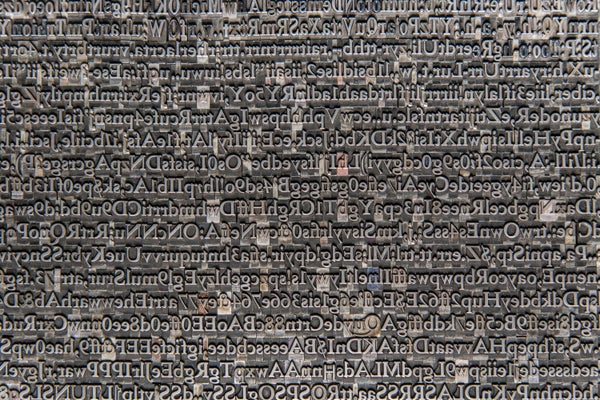
    A photograph of moveable type in which the letters are lined up without any order.

    Old metal printing letters used for traditional letterpress text printing.

    Spam, fluff, clickbait, churnalism, kitsch—slop: These are all ways to describe mass-produced, low-quality content. The latter term is reserved for the newest variety, which comes from artificial intelligence. Though references to AI slop date back at least to 2022, a poet and technologist who writes under the name “deepfates” popularized it two years later as “the term for unwanted AI generated content” in a post on X. Shortly afterward, developer Simon Willison shared the concept in a blog post: “Not all AI-generated content is slop,” he wrote. “But if it’s mindlessly generated and thrust upon someone who didn’t ask for it, slop is the perfect term.” Today slop’s pejorative bite is increasingly aimed at all things AI, treating it as an undeniable cultural pollutant. And most of it is—but by indiscriminately dismissing all of it, we risk missing out on the minority of creations that are keepers.

    Mass‑produced culture has a long, messy history. The biblical book of Ecclesiastes—thought to have been written between 300 and 200 B.C.E.—laments, “Of making many books there is no end.” This was in response to the flood of philosophical writings in the ancient Near East and Hellenistic world. Since then, whenever new tools to crank out communications have become available, somebody has flooded the zone with the fastest, most imitative material that could garner attention. But over the years, some of that sediment has incubated new artforms, and trash and treasure have appeared in the same stream.

    One notable slop moment came after Johannes Gutenberg invented the movable-type printing press in Europe. The device—the ChatGPT of the 1450s—allowed the mass production of cheap printed material. Over the next 300 years, chapbooks and broadside ballads became mainstays in Britain. Carrying news, satire and story into places where expensive books had seldom reached, they were sold for pennies, tacked to alehouse walls and sung aloud for the illiterate. Some of this material was drivel, sure, but much of it entertained and educated the masses. It also inspired authors from William Shakespeare to Samuel Taylor Coleridge.


    On supporting science journalism

    If you’re enjoying this article, consider supporting our award-winning journalism by subscribing. By purchasing a subscription you are helping to ensure the future of impactful stories about the discoveries and ideas shaping our world today.


    In the early 1700s, a growing reading public and coffeehouse networks created steady demand for text, giving rise to Grub Street—the slop generator of its time. The name belonged to a London area with printing shops, booksellers and cheap lodgings where impoverished writers churned out pamphlets, satires, political tracts, sensational stories and hack journalism—whatever sold. Samuel Johnson’s 1755 dictionary made “grubstreet” a synonym for “mean production.” Elites stirred up a now familiar moral panic about commerce corrupting letters and mocked Grub Street even as its writers built the first modern freelance economy and mass-print culture. Johnson himself made his early living in the Grub Street milieu, and other luminaries, such as Daniel Defoe, Eliza Haywood and Jonathan Swift, all wrote for the burgeoning market.

    The 20th-century cinema boom followed a similar pattern. By 1908 roughly 8,000 nickelodeons—five‑cent storefront theaters—ran nonstop shows. The production demands produced a lot of rubbish, but this effort also developed the motion-picture industry’s infrastructure while spreading information and helping newly arrived immigrants learn English. Even in the 1960s and 1970s, B-movie studios churned out films while training directors and actors who would reshape Hollywood, such as Francis Ford Coppola, Martin Scorsese, Jack Nicholson and Robert De Niro.

    In all of these situations, the point wasn’t to forge masterpieces; it was to create rapidly and cheaply. But the production of new types of slop widens the on‑ramps, allowing more people to participate—just as the Internet and social media birthed bunk but also new kinds of creators. Perhaps because much of mass‑made culture has been forgettable, original work stands out even clearer against the backdrop of sameness, and audiences begin to demand more of it.

    The current wave of AI‑generated slop raises the stakes because the cost for those making slop has collapsed to near zero, while the cost for others is high in terms of cognitive burden—of doubting what we see and experiencing the demands on our attention—not to mention the environmental cost of heavy computing. The onslaught of mass-produced content urgently requires that we identify and elevate what stands out so that we can better discourage what doesn’t. The word “slop” helps us do that when it is used correctly.

    Willison and deepfates were careful to specify that not all AI content is slop. Many human-guided AI creations are original, surprising and affecting. Some have been displayed in museums. Calling everything worthless is a misguided attempt to dam the flood rather than channel it.

    If “culture is ordinary, in every society and in every mind,” as Welsh cultural theorist Raymond Williams wrote in 1958, then the ordinary act of making at scale will always include waste. But with work and luck, it’ll also produce the seeds of the next thing we’ll decide to keep.

    It’s Time to Stand Up for Science

    If you enjoyed this article, I’d like to ask for your support. Scientific American has served as an advocate for science and industry for 180 years, and right now may be the most critical moment in that two-century history.

    I’ve been a Scientific American subscriber since I was 12 years old, and it helped shape the way I look at the world. SciAm always educates and delights me, and inspires a sense of awe for our vast, beautiful universe. I hope it does that for you, too.

    If you subscribe to Scientific American, you help ensure that our coverage is centered on meaningful research and discovery; that we have the resources to report on the decisions that threaten labs across the U.S.; and that we support both budding and working scientists at a time when the value of science itself too often goes unrecognized.

    In return, you get essential news, captivating podcasts, brilliant infographics, can’t-miss newsletters, must-watch videos, challenging games, and the science world’s best writing and reporting. You can even gift someone a subscription.

    There has never been a more important time for us to stand up and show why science matters. I hope you’ll support us in that mission.


    Original Source Link

    Share. Facebook Twitter Pinterest LinkedIn WhatsApp Email Reddit Telegram
    Previous ArticleWhy Solo Leveling’s Next Arc Will Dethrone Jeju Island as Its Greatest Yet
    Next Article Blue Origin scrubs second New Glenn launch, will try again November 12

    RELATED POSTS

    How Close Are Today’s AI Models to AGI—And to Self-Improving into Superintelligence?

    December 7, 2025

    Comet 3I/ATLAS from beyond solar system carries key molecule for life

    December 6, 2025

    Watch the Highlights From WIRED’s 2025 Big Interview Event Right Here

    December 6, 2025

    CDC Vaccine Panel Scraps Guidance for Universal Hepatitis B Shots at Birth

    December 5, 2025

    AI can influence voters’ minds. What does that mean for democracy?

    December 5, 2025

    A Startup Says It Has Found a Hidden Source of Geothermal Energy

    December 4, 2025
    latest posts

    Lily Allen Announces 2026 North American Tour

    Lily Allen will tour North America for the first time in seven years in April…

    National Park Service drops free admission on MLK Day and Juneteenth while adding Trump’s birthday

    December 7, 2025

    Calls Grow For Trump And Pete Hegseth To Be Impeached For War Crimes

    December 7, 2025

    Indiana wins Big 10 championship after Ohio State flubs short field goal

    December 7, 2025

    Pat Gelsinger wants to save Moore’s Law, with a little help from the Feds

    December 7, 2025

    How Close Are Today’s AI Models to AGI—And to Self-Improving into Superintelligence?

    December 7, 2025

    Kaiju No. 8’s New Spinoff Is Way Better Than the Original Shonen Jump Series

    December 7, 2025
    Categories
    • Books (924)
    • Business (5,828)
    • Events (24)
    • Film (5,765)
    • Lifestyle (3,870)
    • Music (5,859)
    • Politics (5,829)
    • Science (5,179)
    • Technology (5,759)
    • Television (5,441)
    • Uncategorized (6)
    • US News (5,815)
    popular posts

    ‘American Horror Story NYC’ Recap: Season 11 Episode 5 — Angel Of Death

    FX promised a “season like no other” with American Horror Story: NYC, and it certainly…

    John Lennon’s Killer Said, ‘Gee, I’m Sorry I Ruined Your Night’

    December 4, 2023

    Paul Thomas Anderson has reportedly worked with Radiohead spin-off The Smile on new project

    November 13, 2023

    Amazon Quarterly Sales Surge on Strong Holiday Shopping

    February 2, 2024
    Archives
    Browse By Category
    • Books (924)
    • Business (5,828)
    • Events (24)
    • Film (5,765)
    • Lifestyle (3,870)
    • Music (5,859)
    • Politics (5,829)
    • Science (5,179)
    • Technology (5,759)
    • Television (5,441)
    • Uncategorized (6)
    • US News (5,815)
    About Us

    We are a creativity led international team with a digital soul. Our work is a custom built by the storytellers and strategists with a flair for exploiting the latest advancements in media and technology.

    Most of all, we stand behind our ideas and believe in creativity as the most powerful force in business.

    What makes us Different

    We care. We collaborate. We do great work. And we do it with a smile, because we’re pretty damn excited to do what we do. If you would like details on what else we can do visit out Contact page.

    Our Picks

    How Close Are Today’s AI Models to AGI—And to Self-Improving into Superintelligence?

    December 7, 2025

    Kaiju No. 8’s New Spinoff Is Way Better Than the Original Shonen Jump Series

    December 7, 2025

    Trailer, Premiere Date, Cast, Plot, and More

    December 7, 2025
    © 2025 New York Examiner News. All rights reserved. All articles, images, product names, logos, and brands are property of their respective owners. All company, product and service names used in this website are for identification purposes only. Use of these names, logos, and brands does not imply endorsement unless specified. By using this site, you agree to the Terms & Conditions and Privacy Policy.

    Type above and press Enter to search. Press Esc to cancel.

    We use cookies on our website to give you the most relevant experience by remembering your preferences and repeat visits. By clicking “Accept All”, you consent to the use of ALL the cookies. However, you may visit "Cookie Settings" to provide a controlled consent.
    Cookie SettingsAccept All
    Manage consent

    Privacy Overview

    This website uses cookies to improve your experience while you navigate through the website. Out of these, the cookies that are categorized as necessary are stored on your browser as they are essential for the working of basic functionalities of the website. We also use third-party cookies that help us analyze and understand how you use this website. These cookies will be stored in your browser only with your consent. You also have the option to opt-out of these cookies. But opting out of some of these cookies may affect your browsing experience.
    Necessary
    Always Enabled
    Necessary cookies are absolutely essential for the website to function properly. These cookies ensure basic functionalities and security features of the website, anonymously.
    CookieDurationDescription
    cookielawinfo-checkbox-analytics11 monthsThis cookie is set by GDPR Cookie Consent plugin. The cookie is used to store the user consent for the cookies in the category "Analytics".
    cookielawinfo-checkbox-functional11 monthsThe cookie is set by GDPR cookie consent to record the user consent for the cookies in the category "Functional".
    cookielawinfo-checkbox-necessary11 monthsThis cookie is set by GDPR Cookie Consent plugin. The cookies is used to store the user consent for the cookies in the category "Necessary".
    cookielawinfo-checkbox-others11 monthsThis cookie is set by GDPR Cookie Consent plugin. The cookie is used to store the user consent for the cookies in the category "Other.
    cookielawinfo-checkbox-performance11 monthsThis cookie is set by GDPR Cookie Consent plugin. The cookie is used to store the user consent for the cookies in the category "Performance".
    viewed_cookie_policy11 monthsThe cookie is set by the GDPR Cookie Consent plugin and is used to store whether or not user has consented to the use of cookies. It does not store any personal data.
    Functional
    Functional cookies help to perform certain functionalities like sharing the content of the website on social media platforms, collect feedbacks, and other third-party features.
    Performance
    Performance cookies are used to understand and analyze the key performance indexes of the website which helps in delivering a better user experience for the visitors.
    Analytics
    Analytical cookies are used to understand how visitors interact with the website. These cookies help provide information on metrics the number of visitors, bounce rate, traffic source, etc.
    Advertisement
    Advertisement cookies are used to provide visitors with relevant ads and marketing campaigns. These cookies track visitors across websites and collect information to provide customized ads.
    Others
    Other uncategorized cookies are those that are being analyzed and have not been classified into a category as yet.
    SAVE & ACCEPT