
The U.S. has no clear vision of how to reach a postpandemic world. Over the past two years, we have developed extraordinary scientific tools for the mitigation, treatment and prevention of COVID. But we’ve stumbled badly in implementing them. Many of these failures happened because our public health messages were not clear about how to use those tools, which include vaccines, masks, tests, antiviral drugs and temporary activity restrictions. The result is confusion among the public that has left us vulnerable to the disease and unable to respond to new and more transmissible variants such as BA.2 and its sublineages, which are infecting a rising number of people across the nation. America has already lost one million people during this pandemic. There may be future mutations that could be more lethal and highly contagious, and we are still woefully unprepared for them.
Recovering from these mistakes will require a bold change in direction for our national health messages. Now, as cases rise, it is an opportune time for the Biden administration to launch a new communications campaign through the Centers for Disease Control and Prevention (CDC), one with the resources and structure to prepare Americans to move forward. The campaign must begin by drawing a line in the sand: how many deaths are we willing to tolerate? Can we accept 50,000 deaths per year as part of our “new normal”? 100,000? With our hard-won ability to prevent deaths from the disease, it would be morally abhorrent to lose tens of thousands more Americans to COVID. These deaths orphan hundreds of thousands of children and, along with the serious illnesses, destroy an entire generation of older Americans, rip apart family structure and wreak havoc on the economy.
At the start of the year, the Omicron variant made our vulnerability painfully clear. A surge of cases caused by this highly transmissible version of the virus completely disrupted American society, causing 3.6 million work absences in January alone. Hospitals, already struggling with staff shortages, burnout and inadequate resources, were once again overloaded. Failures in containment made the relatively mild variant far deadlier than the dangerous Delta variant that preceded it. In February, the country was averaging more than 15,000 COVID deaths per week. The million deaths we have suffered is a record far worse than any other wealthy nation.
Why have we failed to protect ourselves? A major reason is that federal agencies focused on a vaccination-only strategy when inoculations became available. Their erratic efforts to pursue other safety measures have been infrequent, and slow, and have often been rejected by the courts. On the local level, governments have rushed to abandon almost all mitigation strategies, from mask mandates to vaccination requirements. The manners in which measures have been introduced and rescinded vary widely across state and county lines, which has caused confusion about how dangerous the virus continues to be and what precautions remain necessary.
The COVID-19 Community Levels assessment issued by the CDC is an example of a whiplash change in messaging that confuses more people than it helps. At the end of February, the CDC switched overnight from a tool focused on new infections to one that relies primarily on hospital admissions and occupancy. As a result, many counties that were previously high-risk zones suddenly became low-risk. The agency added new recommendations for behavior to these altered ratings. For instance, it no longer recommends masking indoors for medium-risk counties. The change seems hard to justify: there is a delay of three to 10 days between symptom onset and hospitalization, one 2020 study reported, and this causes a consistent lag between spikes in reported cases and the consequent increase in hospitalizations. With new cases poorly tracked and their trends deemphasized, the new system will be much less useful for everyday decision-making about getting on a bus or train or going into a crowded office.
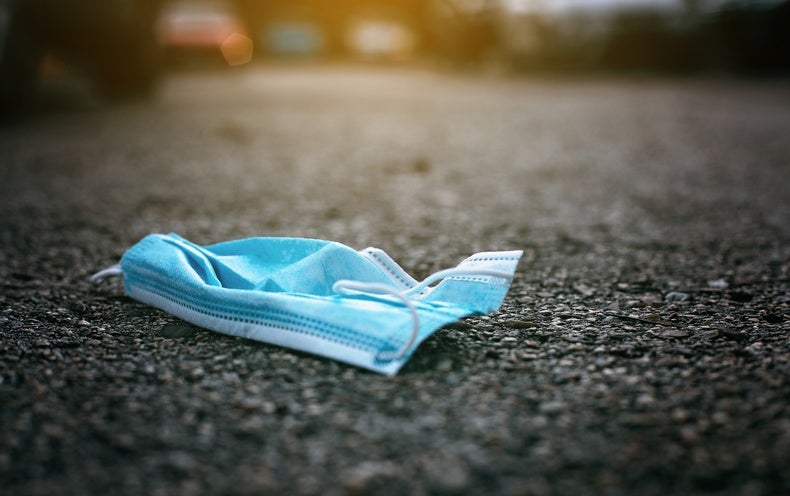
Worse, many of these CDC recommendations leave decisions completely up to personal and idiosyncratic judgements. Visit any gym in the country and you’ll find members taking care to disinfect treadmills and weights, even while exercising without a mask in poorly ventilated spaces. These poorly protective behaviors reflect CDC messaging. Agency messages place vaccination and masking at the top of their list of preventive measure lists, but do little to differentiate the importance of these measures from those that matter far less, such as cleaning surfaces. The CDC still does not clearly recommend the use of N95 and KN95 masks, even though robust evidence for the superior effectiveness of N95s was available for years before the pandemic began. Instead the agency equivocates, emphasizing comfort and stating people should “wear the most protective mask you can that fits well and that you will wear consistently.” In January of this year, the agency finally clarified that N95-type masks types are more protective than others. (Early in the pandemic it had warned Americans away from these masks because of concerns about supply shortages for medical workers).
In some cases, changes of CDC positions were prompted by shifts in our scientific understanding of the disease. But in many others, the changes appear to be arbitrary or to be driven by public pressure and business interests. In December of 2021, the agency reduced recommended isolation periods for infected health care workers from 10 days down to seven, adding that “isolation time can be cut further if there are staffing shortages.” A week later, they shortened recommended isolation and quarantine periods for the general population down to just five days, irrespective of whether a person was still infectious, and did not require a negative test result. Yet the agency itself notes that “people can continue to spread the virus another [eight] days after their symptoms began.”
The CDC’s director, Rochelle Walensky, acknowledged that the goal was to allow people to “continue their daily lives.” Several experts noted, however, that while the move was necessary to prevent economic strain in certain sectors, a five-day isolation period and no test requirement were not sufficient to minimize risk.
This year Walensky gave the public mixed messages on mask wearing. In an interview on February 21 she described donning a mask as “easy” and “painless” but also called the protective coverings “the scarlet letter” of the pandemic. She added that they were “annoying” and a barrier to “living our lives normally.” These contradictory statements about a critical lifesaving tool added a dangerous stigma to it, and are a real failure in public health communications.
A new and successful communications campaign has to start by defining how much death and disease, going forward, that the country can accept from this virus. The administration must bring together public health experts to set these targets at low, achievable numbers. Then Congress—which has recently balked at spending money on prevention and treatment—must commit resources to match them.
It is also urgent for the federal government to publicize useful yardsticks for when and how people should use masks, social distancing and mass testing. These tools are highly effective but difficult to continue for long periods, so everyone needs to understand when they need to be implemented and when they can be stopped. Those short-term measures should be framed as protections and should be easy for the public to adopt when key metrics begin to rise. They must be accompanied by multiple fallback plans that are also widely publicized, so that the public is ready to respond as the pandemic continues to shift and evolve.
Reaching and motivating the public will also require substantial long-term changes to how we disseminate public health information. These efforts need to go far beyond CDC guidelines and academic articles; we need celebrity involvement, interactive (and appealing) online media, educational materials and broadcasts, and in-person outreach. We need ambassadors and voices from different communities, particularly those that are more marginalized or more at risk, and materials in multiple languages.
The reality is that local governments and courts have made this kind of coordination difficult through active resistance to federal guidance. But their opposition was enabled by the absence of a clear top-down vision beginning with the Trump administration, frequent vacillation on key pieces of guidance, and the repeated failure to establish links between guidance and underlying science. Consistent and sustained public messaging can also serve as a countermeasure against misinformation and disinformation.
We know far more about how to treat COVID and mitigate the risks than we did two years ago. But we have failed to translate this knowledge into clear messaging capable of prompting collective action to move us toward a “new normal.” A nationwide public health communication strategy that is consistent and as free as possible from political influence is urgently needed to close the space between knowledge and action.
This is an opinion and analysis article, and the views expressed by the author or authors are not necessarily those of Scientific American.