
Americans have long been proud of our federalism, the way that we divide governmental power between the states and national government. As former Supreme Court Justice Anthony Kennedy famously explained, the framers of the U.S. Constitution “split the atom of sovereignty” creating “two political capacities, one state and one federal, each protected from incursion by the other.” In theory, this political invention serves to preserve liberty while bringing the government closer to the people. It allows red states to enact laws to their pleasing, and blue states to do the same. But in today’s public health, political and legal environment, our federalism has become deadly. Rather than permitting the governmental units that can best tackle health problems to do so, federalism invites partisan litigation and thwarts interstate cooperation. As a result, both the states and the federal government are increasingly unable to meet the nation’s health threats, even as those threats become ever more complex and dangerous.
This is not the first time our federalism has harmed health. Despite its many benefits, from the Constitution’s founding until the Civil War, federalism served to support slavery. Even after the Civil War and abolition, it perpetuated racial oppression, providing a rationale and legal defense for state laws that enforced segregation and imposed racial discrimination. By so doing, federalism helped to sow and maintain the racial inequities in health that continue to this day.
Despite that sordid background, for most of U.S. history, federalism also ensured that the units of government that were most capable of solving health problems—the states—had the legal authority to do so. When few people traveled and most goods were locally produced, the states (and their cities and towns) were in the best position to respond to disease outbreaks. States and localities could and did impose quarantines, license physicians and institute a range of other measures designed to protect the public’s health. All of these actions were grounded in the states’ so-called police powers, the sovereign powers that the states retained when they joined the federal union. For the most part, courts deferred to such powers, leaving states with broad authority over public health. Indeed, courts have repeatedly emphasized the centrality of public health to the states’ police powers.
The federal government, in contrast, lacks a police power. Its authority is limited to the areas specifically enumerated in the Constitution. Health is not one of those areas. Nevertheless, the federal government has long used its might to regulate international and interstate commerce, and to tax and spend for the general welfare, for the protection of health. For example, in 1798 Congress enacted a law providing Relief of Sick and Disabled Seaman, which led to the establishment of marine hospitals along navigable waters. In 1848 Congress passed the Drug Importation Act, which required the U.S. Customs Service inspection to block the importation of adulterated drugs.
As the economy became more integrated and travel became faster and more frequent, health threats were increasingly recognized as nationwide in scope. In turn, the federal government’s involvement with health expanded. In 1889, Congress established the United States Public Health Service. In 1906 it passed the Pure Food and Drug Act, leading to the establishment of the Food and Drug Administration. In 1965 Congress created Medicare and Medicaid. The Environmental Protection Agency was established in 1970. One year later, the Occupational Safety and Health Administration was born. Today the federal government’s role in health policy is pervasive.
Many federal health programs rely on what is commonly known as “cooperative federalism.” The federal government sets minimum standards and pays much of the costs. In exchange, the states, federal territories and tribal jurisdictions follow federal guidelines, do much of the on-the-ground work and, at times, set standards that are even more protective of health than those set by the federal government.
Still, many Americans cling to the nostalgic notion that the protection of health belongs primarily to the states, territories and tribal jurisdictions. In the early months of the COVID pandemic, then-President Trump expressed that view, telling governors that they were going to call their “own shots.” That’s a sentiment that the conservative justices of the Supreme Court seemed to share last June when they limited EPA’s ability to address climate change and overturned Roe v. Wade.
There are times when it makes sense to leave health policy to the states. Some health threats are truly local. Consider an unsanitary restaurant. It probably doesn’t require a nationwide solution. By leaving restaurant inspections to states and local governments, the public is more likely to be protected against unsafe meals. Likewise, states and local governments are in a far better position than the federal government to provide many on-the-ground health services, from sexually transmitted disease clinics to tuberculosis screenings. The day-to-day work of public health departments depends in large measure on their placement in and relationships with local communities.
States, territories, and tribal government can also serve as “laboratories of democracy,” to borrow Justice Louis Brandeis’ term. They can develop innovative health policies that other governments and even the federal government can copy. For example, Massachusetts 2006 health care reform law served as the model for the federal Affordable Care Act. States and cities have also led the way in tobacco control, banning youth access and indoor smoking years before the federal government made a serious effort to reduce cigarette consumption.
Policy differences between jurisdictions can also serve as a type of a natural experiment, from which policy makers can learn which laws work and which don’t. Researchers can look at how varying motor vehicle safety laws in different states or different childhood vaccine laws correlate with motor vehicular accidents and vaccination respectively. Much of what we know about the efficacy of health policies comes precisely from such studies.
Unfortunately, the cry for “states’ rights” today often ends up endangering health, just as it did by perpetuating the systematic racial oppression that underlies so many of today’s health inequities. To see how federalism threatens health, consider the early days of the COVID pandemic. Although states could and did implement many measures that slowed the coronavirus in 2020, they could not prevent the transmission of the microbe across state lines. One state’s lax policies invariably led to increases in cases in other states. The divergent approaches by different state governments in 2020 and 2021 also muddied the public health message. (To be fair, the poor messaging from the federal government did not help.) For example, it was hard to know in the summer and fall of 2020 if masking was beneficial when only some states required it. Worse, the variation in policies among states created a type of race to the bottom in which the economic competition from states with looser regulations pushed other states to rescind their own health orders. (Interestingly, states that kept restrictions in place longer had better health outcomes, but faced worse economic conditions).
The need for a national response has also been evident during the monkeypox outbreak. One of the major stumbling blocks to containing the disease last summer was a shortfall of reliable data. But due to constitutional limitations and the norms that have grown up around them, the federal government depends on the states, territories and tribal authorities to gather and share data about disease outbreaks, as well as for much of the frontline response, as Secretary of Health and Human Services Xavier Becerra noted in excusing the federal government’s inability to get on top of the escalating outbreak. While Becerra’s statement was largely self-serving, he was correct in stating that the federal government’s capacity to respond to a pandemic depends, in large measure, on the cooperation of the states, territories, and tribal authorities.
These inefficiencies have been amplified by more than two decades of Supreme Court decisions that, in the name of states’ rights, have handcuffed the federal government’s ability to protect the public’s health. For example, in 1997, the Supreme Court ruled that the federal government could not command state officials to conduct background checks before gun sales. That decision explains why the federal government could not require the states to open or close schools during the pandemic, or require states to impose vaccination requirements. While the federal government can use its spending powers to induce states to comply with its policy goals, states can reject the money and refuse to cooperate.
The Supreme Court underscored that point, while emphasizing states’ rights in its 2012 decision in NFIB v. Sebelius, which blocked the federal government’s efforts through the Affordable Care Act to expand Medicaid. The result: more than two million more Americans were left uninsured. The goal of preserving the states’ primary role over health also played a crucial rule in the Supreme Court’s 2021 ruling striking CDC’s eviction moratorium, a policy the agency had intended to prevent people from losing their homes during the pandemic. The Supreme Court later relied on that case to block the Occupational Safety and Health Administration’s rule mandating that large employers require their employees to be vaccinated or wear a mask and be tested. A few months later, the Court cited those decisions to strike down EPA’s Clean Power Plan rule. Lower courts have relied on these cases to enjoin federal COVID vaccine mandates for federal contractors, federal employees and even Head Start childcare programs.
The impact of the Court’s decisions is magnified in our current polarized and often dysfunctional political landscape in which Congress and the states often choose not to cooperate with the federal government, or even sister states, regardless of the health consequences. Indeed, the various structural limits that the Court has erected to protect states’ rights have come to serve as a tool that partisans use to attack the policies of federal leaders from the opposing party. Hence, we have the increasingly frequent practice of red states rushing to court to challenge the policies of Democratic presidents, and blue states bringing lawsuits against Republican presidents. How else to explain the fact that 22 states brought lawsuits challenging a vaccine mandate for federal contractors? With the courts’ assent, if not invitation, federalism has become but another weapon for partisan warriors. With that, health policies languish and public well-being declines.
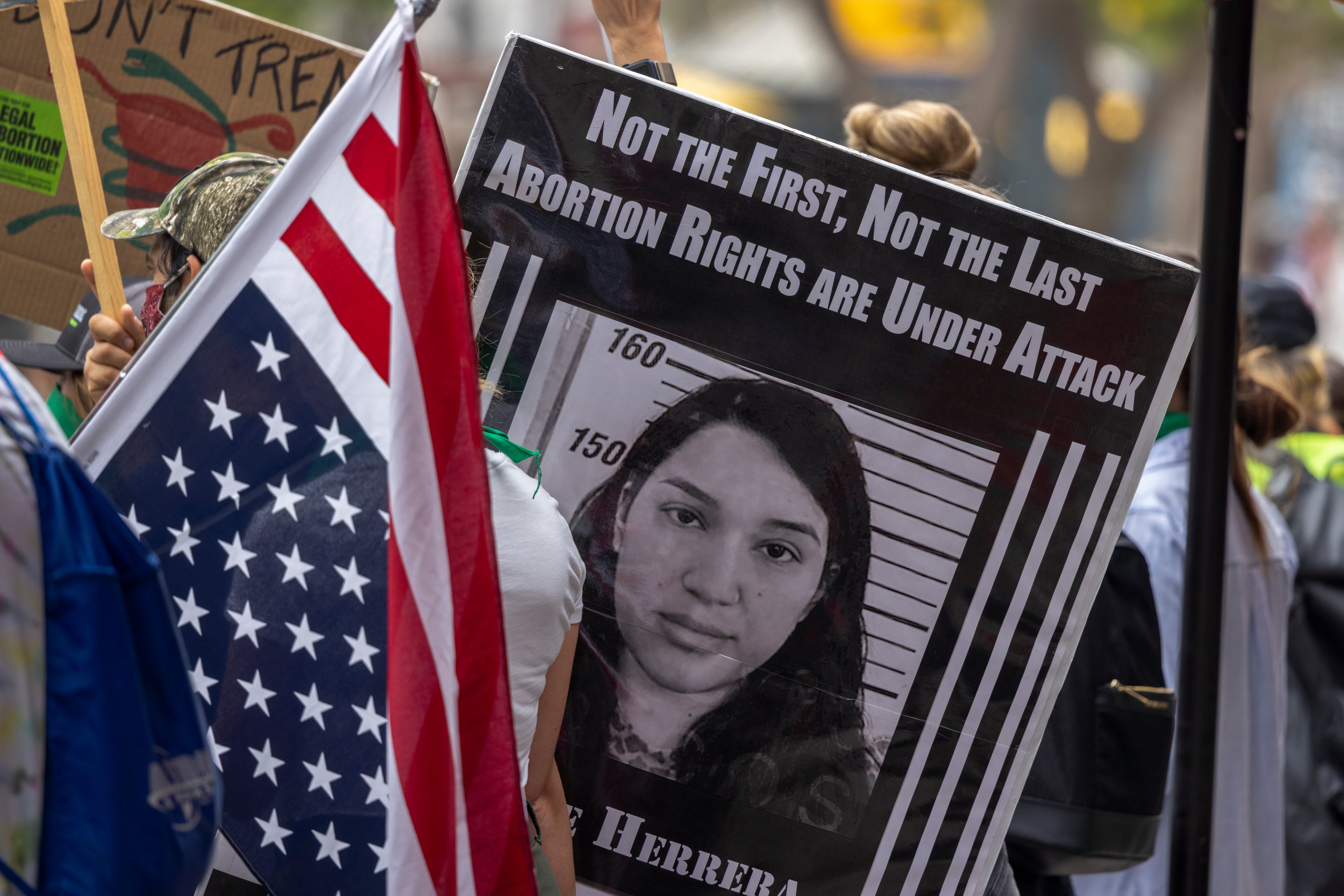
The deleterious impact of our polarized environment has also spurred battles among the states. During the early days of the pandemic, several states threatened to block travel from residents of other states. States also engaged in a bidding war for the procurement of critical supplies in spring 2020. Such intrastate strife has only escalated since the Supreme Court issued its decision in Dobbs v. Jackson Women’s Health Center, overturning Roe v. Wade. In theory, the Supreme Court’s decision should allow each state to go its own way. But this live-and-let-live attitude may not be viable with an issue as deeply contentious as abortion (as it was not with slavery or Jim Crow). Predictably, in the months since Dobbs was decided, we have seen the type of interstate battles that we have not seen since the Civil War, as states banning abortion have threatened to block interstate travel and criminalize procedures done in other states, while states permitting abortion rushed to pass laws protecting their clinicians from out-of-state prosecution. Meanwhile, the federal government and the states are also engaged in litigation about whether federal protections for patients in emergency departments supersedes state bans on abortion. And advocates on both sides of the issue seek a federal law codifying their position. In short, despite frequent paeans to federalism, neither side is willing to accept the diversity of approaches that federalism should entail.
For more than a century, our federalism enabled the governmental units that were then best equipped to respond to health threats to do so. Even today, federalism need not be fatal, as the experience of other federal nations, such Germany and Canada, show. Both countries grant their states or provinces significant authority over health. But both nations were able to weather the COVID pandemic far more successfully than the U.S. And the citizens of both countries enjoy significantly longer life expectancies than Americans.
Federalism is not, of course, the only reason why the U.S. fares so poorly as compared to other wealthy nations on a wide range of health measures. But in today’s increasingly polarized political environment, legal doctrines that once supported the states’ ability to protect the health of their residents are diminishing the capacity of both our national and local governments to do so. Unless the courts stop enabling this political weaponization of federalism, our federalism will remain uncooperative. And deadly.
This is an opinion and analysis article, and the views expressed by the author or authors are not necessarily those of Scientific American.