
Close Menu
New York Examiner News

    Subscribe to Updates

    Get the latest creative news from FooBar about art, design and business.

    What's Hot

    Charli XCX Releases New Song “Wall of Sound”

    January 18, 2026

    Democrats think a war-powers resolution for Greenland would get more GOP votes than one on Venezuela

    January 18, 2026

    Trump accuses Tim Walz and Ilhan Omar of using ICE protests to distract from

    January 18, 2026
    Facebook X (Twitter) Instagram
    New York Examiner News
    • Home
    • US News
    • Politics
    • Business
    • Science
    • Technology
    • Lifestyle
    • Music
    • Television
    • Film
    • Books
    • Contact
      • About
      • Amazon Disclaimer
      • DMCA / Copyrights Disclaimer
      • Terms and Conditions
      • Privacy Policy
    New York Examiner News
    Home»Science»Fossils Buried in LA Tar Pit Show Why Saber-Toothed Cats Blinked Out of Existence
    Science

    Fossils Buried in LA Tar Pit Show Why Saber-Toothed Cats Blinked Out of Existence

    By AdminAugust 17, 2023
    Facebook Twitter Pinterest LinkedIn WhatsApp Email Reddit Telegram
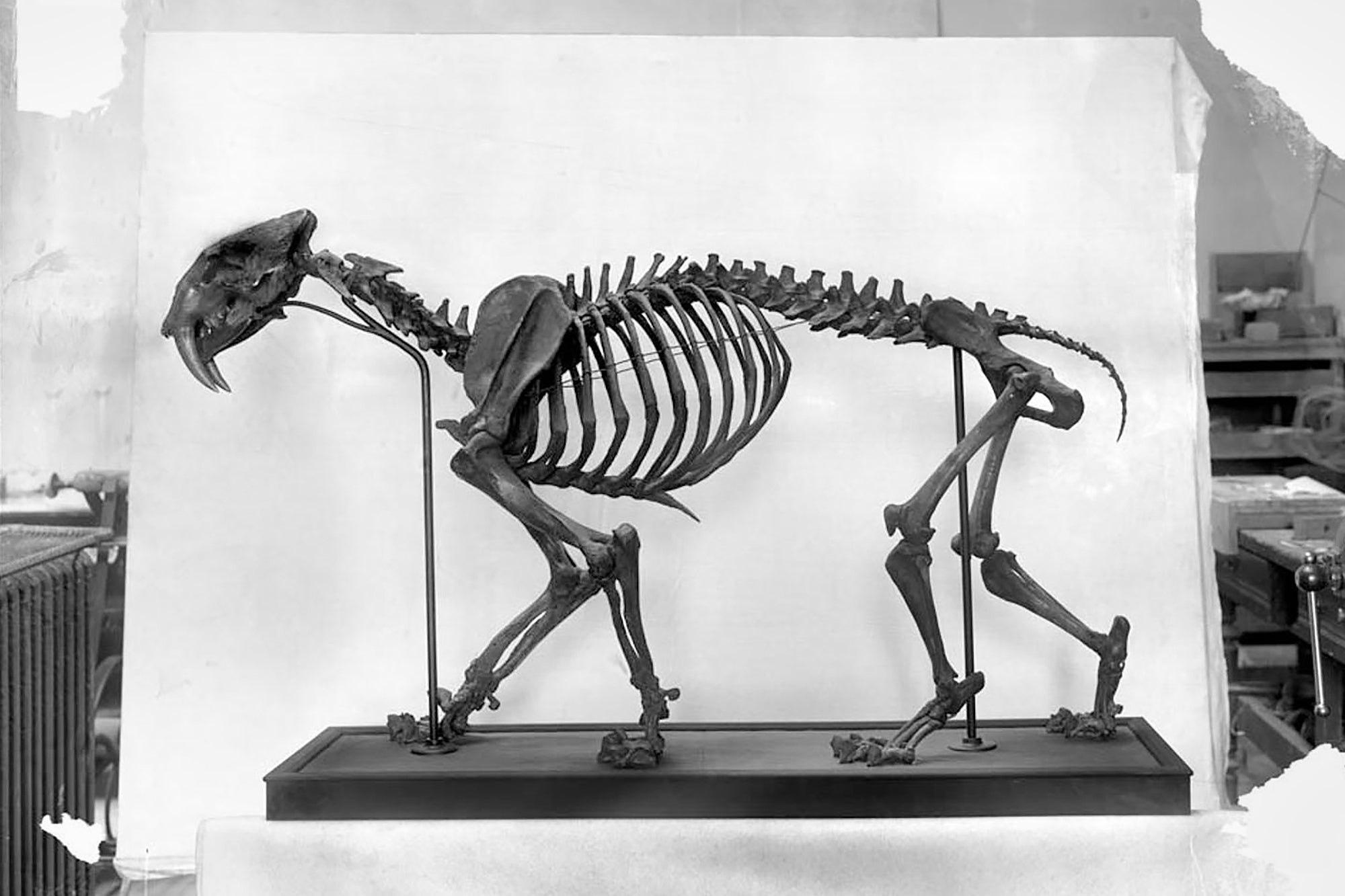
    Fossils Buried in LA Tar Pit Show Why Saber-Toothed Cats Blinked Out of Existence


    Fossils Buried in LA Tar Pit Show Why Saber-Toothed Cats Blinked Out of Existence

    Some 14,000 years ago, downtown Los Angeles was awash with dire wolves, saber-toothed cats, nearly one-ton camels and 10-foot-long ground sloths. But in the geologic blink of an eye, everything changed. By just after 13,000 years ago, these giant animals had all disappeared. What were once lush woodlands had become a dry, shrubby landscape called a chaparral, and large fires were common. What went wrong?

    Possible answers to that question come from new research into the famed La Brea Tar Pits published on August 17 in Science. Between 50,000 and 10,000 years ago, naturally occurring asphalt in these “tar pits” trapped organisms ranging from massive predators to hoary bats (Lasiurus cinereus), rainbow trout (Oncorhynchus mykiss) and garter snakes (Thamnophis sirtalis). The new study shows just how quickly the largest animals disappeared from the La Brea fossil record.

    The researchers dated 172 specimens belonging to seven extinct species—the dire wolf (Aenocyon dirus), the ancient bison (Bison antiquus), a camel called Camelops hesternus, a horse called Equus occidentalis, the saber-toothed cat (Smilodon fatalis), the American lion (Panthera atrox) and Harlan’s ground sloth (Paramylodon harlani)—and the still-living coyote (Canis latrans). The scientists noticed that although the coyote fossils dated anywhere from 16,000 to 10,000 years ago, every other species abruptly disappeared sometime between 14,000 and 13,000 years ago, with the camels and sloths seemingly blinking out a few hundred years before the predators.

    “No one in the study was prepared for what we found,” says F. Robin O’Keefe, a biologist at Marshall University and a co-author of the new research. “The coyotes keep being deposited, but the megafauna just, poof, disappear. And for most of them it is like a ‘poof’—it’s a pretty dramatic event.”

    To try to understand the fate of these mammals, O’Keefe and his colleagues analyzed sediment cores from a nearby lake that provided data on air temperature, salinity and precipitation. The researchers were particularly struck by a 300-year-long period of high charcoal accumulation from wildfires in the lake that began about 13,200 years ago—right around when the megafauna went missing from the tar pits. “We see these huge pulses of charcoal going into Lake Elsinore all of a sudden, and they’re enormous, compared to anything that happens before that time or after that time,” O’Keefe says. “That’s what clued us in to ‘Okay, the fires are a really important factor.’”

    Next the scientists used a computer model to figure out how fires, climate change, species loss and human arrival in the area fit together. And the result is a much more complicated picture of the extinction than that depicted by previous theories, which often blame the extinctions on just one culprit, such as human hunting or climate change. Instead, O’Keefe says, humans likely pushed the ecosystem over the brink by killing off herbivores, which allowed the vegetation that served as wildfire fuel to proliferate just as the climate was drying out anyway and left carnivores without prey.

    “It’s not necessarily like massive wildfires drove an extinction of megafauna,” says Allison Karp, a paleoecologist at Yale University, who was not involved in the new research. “It’s that human dynamics changed the fire regime; this interacted with a climate that is arid and at a higher temperature; and this, combined with decreases in herbivore densities, really pushed the system in a nonlinear way and shifted it to another state—a state that included a lot less herbivores and a very different vegetation community and a much higher fire regime than had been seen previously.”

    Jacquelyn Gill, a paleoecologist at the University of Maine, who was also not involved in the new work, was not surprised that O’Keefe’s team found such a nuanced explanation. “We know that in modern systems, extinction is very rarely unicausal,” Gill says. “You often need to have some force that’s stressing this population. Then there’s often an element of bad luck or some other stressor that comes in. We see that over and over again.”

    O’Keefe, Karp and Gill agree that the parallels between today’s headlines and the disappearance of these iconic animals from southern California against a backdrop of wildfires and climate change are eerie.

    O’Keefe notes that the research traces a shift from two different ecosystems in just a few centuries. “Mathematically, it’s a catastrophe,” he says. “If the medium of that state shift is fire, and then you look around, and everything’s starting to catch on fire, you start to think, ‘Is it happening again?’ That’s a rational thing to think.”

    Understanding how extinctions unfolded long ago, Gill says, can also help ecologists better predict what might happen next today. In that way, they can predict which species, if left to their own devices, are more likely to go the way of the dire wolves or that of the coyotes. “Ecologically speaking, there are winners and losers whenever we have these big upheaval events,” Gill says. “That information helps us to perform the necessary triage that we need to do as we try to save a million species.”


    Original Source Link

    Share. Facebook Twitter Pinterest LinkedIn WhatsApp Email Reddit Telegram
    Previous ArticleStrays review – tedious enough to make you hate dogs
    Next Article A Letter Prompted Talk of AI Doomsday. Many Who Signed Weren’t Actually AI Doomers

    RELATED POSTS

    NASA’s Artemis II mission to the moon is inching toward the launch pad

    January 18, 2026

    First treaty to protect the high seas comes into force

    January 18, 2026

    How Does the Hive Mind Work in ‘Pluribus?

    January 17, 2026

    RFK, Jr., shifts focus to questioning whether cell phones are safe. Here’s what the science says

    January 17, 2026

    Meat may play an unexpected role in helping people reach 100

    January 16, 2026

    OpenAI Invests in Sam Altman’s New Brain-Tech Startup Merge Labs

    January 16, 2026
    latest posts

    Charli XCX Releases New Song “Wall of Sound”

    Charli XCX has shared a new song from Wuthering Heights, her soundtrack and accompaniment to…

    Democrats think a war-powers resolution for Greenland would get more GOP votes than one on Venezuela

    January 18, 2026

    Trump accuses Tim Walz and Ilhan Omar of using ICE protests to distract from

    January 18, 2026

    Ukrainian drone strikes hit Russian energy infrastructure, Zelenskyy says

    January 18, 2026

    Jones Hovercraft 2.0 Snowboard Review: For Big Powder Days

    January 18, 2026

    NASA’s Artemis II mission to the moon is inching toward the launch pad

    January 18, 2026

    Chihiro Amano: ‘It was like I hit a wall in all…

    January 18, 2026
    Categories
    • Books (1,009)
    • Business (5,914)
    • Events (29)
    • Film (5,850)
    • Lifestyle (3,960)
    • Music (5,951)
    • Politics (5,915)
    • Science (5,265)
    • Technology (5,844)
    • Television (5,528)
    • Uncategorized (6)
    • US News (5,902)
    popular posts

    Witness Tells Jeff Clark He’s Perfect for Trump AG Because His First Step Would Be to Commit Felony

    Just how unqualified was Jeff Clark, the man Donald Trump wanted to install as Attorney…

    Why Trump Guitars Was Hit With a Cease-and-Desist By Gibson

    November 25, 2024

    Greg Berlanti Talks Fly Me to the Moon, End of the Arrowverse

    July 13, 2024

    Walmart-backed PhonePe set to challenge Google’s dominance with app store in India

    April 24, 2023
    Archives
    Browse By Category
    • Books (1,009)
    • Business (5,914)
    • Events (29)
    • Film (5,850)
    • Lifestyle (3,960)
    • Music (5,951)
    • Politics (5,915)
    • Science (5,265)
    • Technology (5,844)
    • Television (5,528)
    • Uncategorized (6)
    • US News (5,902)
    About Us

    We are a creativity led international team with a digital soul. Our work is a custom built by the storytellers and strategists with a flair for exploiting the latest advancements in media and technology.

    Most of all, we stand behind our ideas and believe in creativity as the most powerful force in business.

    What makes us Different

    We care. We collaborate. We do great work. And we do it with a smile, because we’re pretty damn excited to do what we do. If you would like details on what else we can do visit out Contact page.

    Our Picks

    NASA’s Artemis II mission to the moon is inching toward the launch pad

    January 18, 2026

    Chihiro Amano: ‘It was like I hit a wall in all…

    January 18, 2026

    Where We Left Off & What’s Ahead in Season 15

    January 18, 2026
    © 2026 New York Examiner News. All rights reserved. All articles, images, product names, logos, and brands are property of their respective owners. All company, product and service names used in this website are for identification purposes only. Use of these names, logos, and brands does not imply endorsement unless specified. By using this site, you agree to the Terms & Conditions and Privacy Policy.

    Type above and press Enter to search. Press Esc to cancel.

    We use cookies on our website to give you the most relevant experience by remembering your preferences and repeat visits. By clicking “Accept All”, you consent to the use of ALL the cookies. However, you may visit "Cookie Settings" to provide a controlled consent.
    Cookie SettingsAccept All
    Manage consent

    Privacy Overview

    This website uses cookies to improve your experience while you navigate through the website. Out of these, the cookies that are categorized as necessary are stored on your browser as they are essential for the working of basic functionalities of the website. We also use third-party cookies that help us analyze and understand how you use this website. These cookies will be stored in your browser only with your consent. You also have the option to opt-out of these cookies. But opting out of some of these cookies may affect your browsing experience.
    Necessary
    Always Enabled
    Necessary cookies are absolutely essential for the website to function properly. These cookies ensure basic functionalities and security features of the website, anonymously.
    CookieDurationDescription
    cookielawinfo-checkbox-analytics11 monthsThis cookie is set by GDPR Cookie Consent plugin. The cookie is used to store the user consent for the cookies in the category "Analytics".
    cookielawinfo-checkbox-functional11 monthsThe cookie is set by GDPR cookie consent to record the user consent for the cookies in the category "Functional".
    cookielawinfo-checkbox-necessary11 monthsThis cookie is set by GDPR Cookie Consent plugin. The cookies is used to store the user consent for the cookies in the category "Necessary".
    cookielawinfo-checkbox-others11 monthsThis cookie is set by GDPR Cookie Consent plugin. The cookie is used to store the user consent for the cookies in the category "Other.
    cookielawinfo-checkbox-performance11 monthsThis cookie is set by GDPR Cookie Consent plugin. The cookie is used to store the user consent for the cookies in the category "Performance".
    viewed_cookie_policy11 monthsThe cookie is set by the GDPR Cookie Consent plugin and is used to store whether or not user has consented to the use of cookies. It does not store any personal data.
    Functional
    Functional cookies help to perform certain functionalities like sharing the content of the website on social media platforms, collect feedbacks, and other third-party features.
    Performance
    Performance cookies are used to understand and analyze the key performance indexes of the website which helps in delivering a better user experience for the visitors.
    Analytics
    Analytical cookies are used to understand how visitors interact with the website. These cookies help provide information on metrics the number of visitors, bounce rate, traffic source, etc.
    Advertisement
    Advertisement cookies are used to provide visitors with relevant ads and marketing campaigns. These cookies track visitors across websites and collect information to provide customized ads.
    Others
    Other uncategorized cookies are those that are being analyzed and have not been classified into a category as yet.
    SAVE & ACCEPT