
Rachel Feltman: Happy Monday, listeners! For Scientific American’s Science Quickly, I’m Rachel Feltman. Let’s kick off the week with a quick roundup of some science news you may have missed.
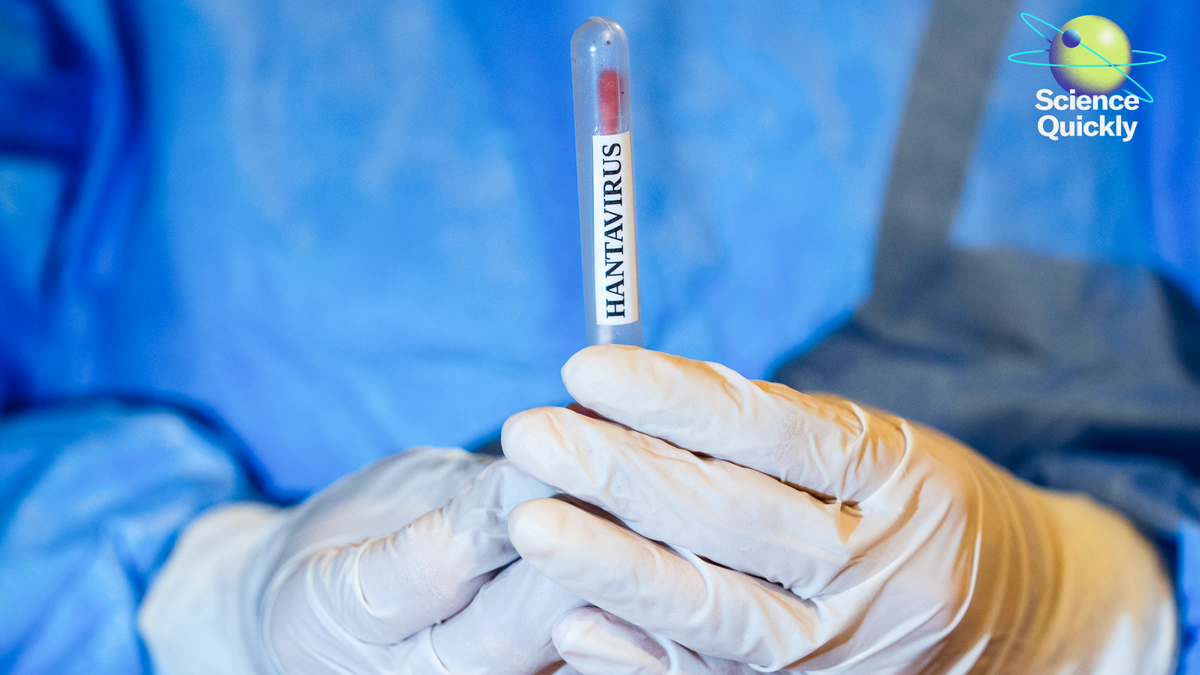
First, you may have seen some headlines last week about an outbreak of hantavirus on a cruise ship. Here to tell us more about what happened is Tanya Lewis, SciAm’s senior desk editor for health and medicine.
Tanya, thanks so much for coming on to walk us through this.
On supporting science journalism
If you’re enjoying this article, consider supporting our award-winning journalism by subscribing. By purchasing a subscription you are helping to ensure the future of impactful stories about the discoveries and ideas shaping our world today.
Tanya Lewis: Yeah, no, thanks so much for having me.
Feltman: Why are we talking about hantavirus and this cruise ship? What happened?
Lewis: Just to catch people up, this outbreak was first noticed about a week ago on a ship called the MV Hondius, which was a cruise ship departing from South America, Argentina. And the people that were sickened and unfortunately passed away, two of those individuals were a married couple who had been traveling—it was a Dutch couple—we think were infected in Argentina and then boarded the ship. And then subsequently, multiple other people have been infected. As of May 7 the number of people on this cruise ship who had been infected with hantavirus was eight people. So that probably could still change.
But you might not have heard of hantavirus before, but it is a virus family that people have been sickened with before, and it’s generally spread by rodents, like rats or mice. And this commonly happens in places where people are exposed to the feces of these animals.
And it causes pretty severe disease. It can cause anything from respiratory distress and fluid in the lungs to some forms of it can be more of, like, a hemorrhagic fever, kind of like Ebola. But the kind that we’re seeing on this cruise ship is more the respiratory kind.
But yeah, this is a virus that, while it is fairly rare to be infected with it, it’s quite lethal. The estimates of its lethality vary, but anywhere from, like, 30 percent to even 50 percent of people infected have died of it.
Feltman: Right, well, and like you said, it, it’s usually spread through rodent feces. But unfortunately, the specific virus we’re talking about, with regard to this cruise ship, is one of the rare instances where it is technically possible to spread from human to human. Can you tell us a little bit more about that?
Lewis: Basically, these individuals on the ship were thought to be infected by human-to-human transmission. At least, that’s the working hypothesis right now. And the reason has to do with the exposure routes.
As I mentioned two of the people were a married couple, so we’re talking about, like, very close contact. This is not something like SARS-CoV-2, the virus that causes COVID, where it’s, like, in the air and wafting around for hours or something. This is something that you would probably need to be, like, breathing very closely, in the same space. And of course, cruise ships are, like, kind of the perfect petri dish for that.
Feltman: Yeah.
So I think there are two things to talk about. There’s, one, why experts are not immediately super concerned about pandemic potential from this specific thing, but also why it is reasonable that I think so many of us, when seeing this news, went, “Uh-oh. We’re—this is a reminder of public-health paradigms I do not wanna be reminded of.”
So let’s start with the good news: Why are experts not freaking out about this?
Lewis: Yeah, so we have to remember that this is a virus that is very different than a lot of the pathogens that have caused respiratory pandemics in the past. In order for a pathogen to be a major pandemic concern, it needs to be very transmissible, and that is something that we have not yet seen with this hantavirus.
I should say, this particular strain is the only strain that has been shown to transmit human to human; it’s called the Andes strain. Most hantaviruses are not thought to spread that way. So the good news is, it’s kind of rare. The bad news, maybe, is that it does appear to have spread, at least, you know, in a limited way, between people.
But yeah, in terms of why experts are not, like, immediately concerned that this will spark a larger epidemic, I think the reason is just that this type of virus and the way it spreads is not conducive, as far as we know, to that type of outbreak. And it’s also happening in a very contained space, so although there have been reports that several of the people on board the ship have disembarked and we are still following that closely, at this point there is no indication of wider community spread, which is what we call it when people are getting infected who have not had direct exposure to the infected individuals.
Feltman: Is there any concern that the time that this virus spent, you know, in such a perfect petri dish may have given it the opportunity to mutate and be better at jumping from person to person?
Lewis: I think what virologists would tell you is, like, the more opportunities a virus has to jump between people, the higher the risk of it developing, like, a concerning mutation that makes it more transmissible.
That said, we’re still talking about a relatively small number of individuals. I mean, eight people sounds like a lot, but, you know, when you’re talking about this being very close quarters on a ship, this is not like, oh, you’re walking into a giant city like New York City and infecting everyone around you or something. So I think that is a little bit reassuring, perhaps, at this point.
But that said, we’ve been humbled before, and I think if there’s one lesson we can take from the COVID pandemic, it’s that we shouldn’t panic, but we should definitely pay attention. And at least scientists wanna know and learn more about this virus and understand it better.
Feltman: I think a lot of people are getting a little freaked out by this news. [Laughs.]
Lewis: Yeah, and I mean, I would be the first to say, like, something like this you hear about, it’s, like, instantly puts you back in that fearful space of 2020. And of course, there was the famous cruise ship, the Diamond Princess, where some of the early COVID cases happened. So that is always concerning.
On the other hand, you know, we have to sort of put it in perspective and remember this is a rare virus and it is something that people have been infected with in the past, so it’s not a completely new virus, unlike SARS-CoV-2, which we had never seen before. So we do have some idea of how this virus works, and while we don’t have any specific treatments for it, we do at least have experts who study it. So that should hopefully give some reassurance that, like, this is not a complete unknown. We are not starting from square one.
Feltman: Thanks for that, Tanya.
Now, listeners, keep in mind we had this conversation on Thursday, May 7. But you can always go to ScientificAmerican.com for more up-to-date science news.
Now for new research on micro- and nanoplastics—but this isn’t the health story you might be expecting. According to a study published last Monday in Nature Climate Change, these tiny bits of broken-down plastic could be contributing to our planet’s warming temperatures.
For starters, just in case you are blissfully unaware: yes, there are, unfortunately, microplastics in the sky. According to a study published in 2021, some of these particles swirl up into the air from the road, where tires and brakes frequently shed small pieces of plastic.
Now, the idea of microplastics permeating the air and even seeding clouds into existence is creepy enough, in my opinion. But this new study suggests they can also have a warming effect on the atmosphere.
Here’s how that would work: if you’ve ever spent time on a patch of blacktop on a sunny summer day, you know that black material absorbs heat. Conversely, white material reflects heat. The same thing happens when you scatter bits of dark and light plastic into the atmosphere, which is what humanity has inadvertently done quite a bit over the past few decades.
Unfortunately, according to this new study, any cooling effects we might get from light microplastics are probably vastly outweighed by the warming effects of dark microplastics. While the estimated effect is a small percentage of the warming fueled by soot from coal power plants, the results are still worrying.
As Jackie Flynn Mogenson reported for SciAm last week, we don’t actually know the concentration of micro- and nanoplastics currently in our atmosphere. But the authors of the new study argue that global climate assessments should do more to factor in these tiny plastic bits. And their findings serve as a great reminder that when we talk about the downsides of plastic, we should recognize that there may be impacts far less concrete and obvious than creating growing piles of trash in landfills.
Now I’ll turn the mic over briefly to SciAm’s chief newsletter editor, Andrea Gawrylewski. She’s gonna tell us about the science behind a tsunami that caught Alaska by surprise.
Andrea Gawrylewski: Thanks, Rachel.
Last summer, in August, a small cruise boat called the David B spent the night in an inlet about 50 miles from Juneau, Alaska. They were supposed to be at anchor nearer to Juneau in this beautiful fjord called Tracy Arm, but bad weather had forced them to pick another place to stay. And it turns out that detour may have saved their lives.
In the morning, from where they were anchored, the boat’s owners noticed seawater rolling over the nearby [sandbar] and shoreline. It was weird because the tide was supposed to be out at that time, and they had no idea why the water was so high.
When scientists heard about the strange sea-level rise, they began examining seismic data, they looked at aerial footage and satellite images, and determined that a massive landslide had occurred at the top of the Tracy Arm fjord.
So what had happened?
The South Sawyer Glacier at the top of Tracy Arm has been steadily shrinking and retreating for the last 25 years. In the spring and summer of last year the ice retreated inland several hundred feet, exposing so much bare rock that it ultimately caused a landslide.
That big slide hit the water and sent a tsunami racing through the fjord—like, so much water that the tsunami surged more than 1,500 feet up the sides of the fjord and sloshed back and forth, like in a bathtub.
That event also produced a seismic signal equivalent to a magnitude 5.4 earthquake. Scientists found smaller seismic events in the data that had occurred at least 24 hours before the big one, and they were increasing exponentially in intensity in the six hours before the landslide.
So now the question is: Could these early seismic signals be used as a warning system? One scientist at the Alaska Earthquake Center has been testing a landslide detection algorithm, and so far it’s detected 35 landslides in near real time. Sending out warnings within three to four minutes of big events could make all the difference to people who live in the area, so scientists are working to improve tools like these.
If you want more updates like this, sign up for my free daily newsletter, Today in Science, at SciAm.com/#newsletter.
Feltman: That’s all for this week’s science news roundup. We’ll be back on Wednesday to talk all about protein. Why is it everywhere all of a sudden? We’ll cut through the hype so you can just enjoy your tofu in peace.
Science Quickly is produced by me, Rachel Feltman, along with Fonda Mwangi, Sushmita Pathak and Jeff DelViscio. This episode was edited by Alex Sugiura. Shayna Posses and Aaron Shattuck fact-check our show. Our theme music was composed by Dominic Smith. Subscribe to Scientific American for more up-to-date and in-depth science news.
For Scientific American, this is Rachel Feltman. Have a great week!