
Close Menu
New York Examiner News

    Subscribe to Updates

    Get the latest creative news from FooBar about art, design and business.

    What's Hot

    Slipknot’s Clown Addresses Status of Next Album

    January 17, 2026

    Elon Musk’s Boring Co. is studying a tunnel project to Tesla Gigafactory near Reno

    January 17, 2026

    Democrats Won’t Allow Trump To Rig The Midterm As They Take A Big Step Toward Redistricting In Virginia

    January 17, 2026
    Facebook X (Twitter) Instagram
    New York Examiner News
    • Home
    • US News
    • Politics
    • Business
    • Science
    • Technology
    • Lifestyle
    • Music
    • Television
    • Film
    • Books
    • Contact
      • About
      • Amazon Disclaimer
      • DMCA / Copyrights Disclaimer
      • Terms and Conditions
      • Privacy Policy
    New York Examiner News
    Home»Science»How Culture Affects the ‘Marshmallow Test’
    Science

    How Culture Affects the ‘Marshmallow Test’

    By AdminJuly 17, 2023
    Facebook Twitter Pinterest LinkedIn WhatsApp Email Reddit Telegram
    How Culture Affects the ‘Marshmallow Test’


    How Culture Affects the ‘Marshmallow Test’

    In 2017 my family and I moved from Boulder, Colo., to live in Kyoto, Japan. My kids immediately noticed many cultural differences. Japanese homes typically do not have central heating, for one. We arrived during an unusually cold February, so my older child would curl up under the kotatsu—a low dining table with a heater affixed underneath—to get warm. After enrolling in the neighborhood elementary school, my kids saw how their peers cleaned classrooms and served food, unlike in the U.S., where specialized workers handle each task.

    One of their most memorable lessons occurred during their first school lunch. They lined up with their classmates to be served, carried their lunch tray to their seat and started eating. The other students quickly began shaking their head and waving their hands. My children didn’t speak Japanese, but the message was clear; they stopped eating. After every student in the classroom sat down with their food, the students called out in unison, “Itadakimasu”—literally “I humbly receive” and akin to “bon appétit.” Then they began eating together. The next day, my kids waited to eat along with all their classmates.

    When my children described this situation, it got me thinking. Many studies have looked at the ability to delay a snack as a measure of self-control—and found that such delayed gratification foretells a brighter future. Was it possible that children in Japan had a special advantage?

    The incident inspired me, as a psychologist, to reexamine a classic experiment involving delayed gratification for a food reward. What I learned would shift how I think about self-control, individual differences, human development, equity in science and my heritage.

    [Read more about how culture shapes psychology]

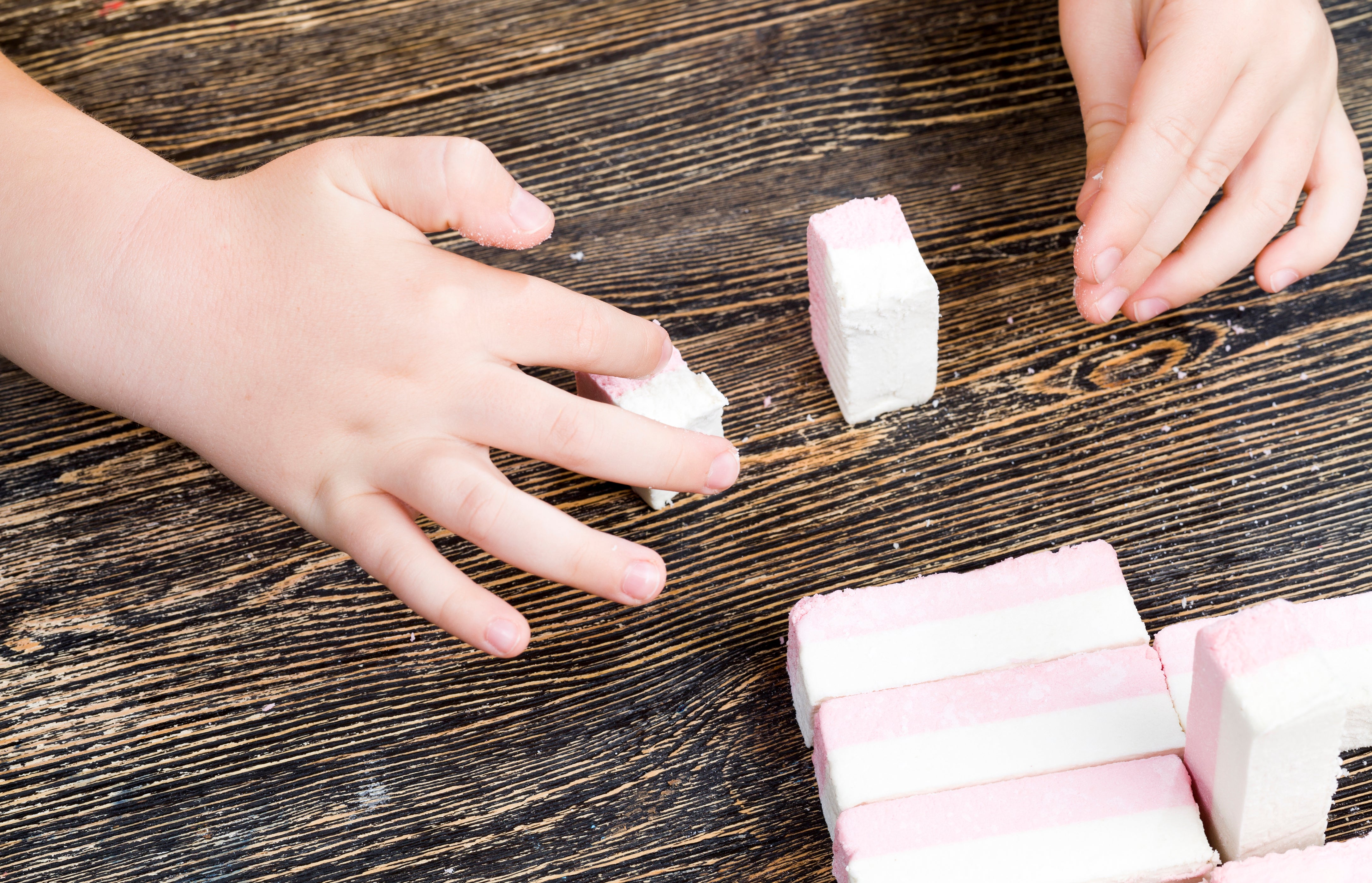
    The classic marshmallow test, invented by the late psychologist Walter Mischel, involves presenting a child with one marshmallow and explaining that they can have it now or they can have two later if they wait until the marshmallow giver returns. Children sit alone in a room with the tempting treat. Psychologists have generally viewed the length of time kids resist the sweet as a measure of their self-control: how effectively they can inhibit impulsive behaviors and work toward longer-term goals. Some studies have found that better performance on that marshmallow test in childhood predicts better outcomes in school, relationships and health later in life.

    Together with Satoru Saito of Kyoto University and Kaichi Yanaoka of the University of Tokyo, my research team revisited this test with a few twists. We worked with 144 children in both the U.S. and Japan. We first ensured that all of these four- and five-year-olds had eaten marshmallows before. We asked parents how often their children waited to eat until others were served and how well their children could suppress impulsive behaviors.

    Then the kids faced the classic test: Did they want one marshmallow now or two later? Most children in the U.S. waited less than four minutes before tasting the one marshmallow. Most children in Japan waited for two marshmallows for the maximum possible time—15 minutes!

    If we had stopped there, we might have simply concluded that Japanese kids have better self-control. But we conducted another test. We presented children with a wrapped gift and told them that they could open it now or they could have two gifts if they waited. The pattern flipped. Most children in Japan waited less than five minutes before unwrapping the gift, while most children in the U.S. waited the maximum 15 minutes or close to it.

    What was going on? It seems that with repeated experiences delaying gratification, children can develop habits that make it easier to wait in the future. According to the reports from their parents, the Japanese children had stronger habits of waiting to eat than the U.S. children. The stronger these habits, the longer the children waited for two marshmallows. But when it comes to opening gifts, children in the U.S. likely experience waiting more consistently. Birthday presents can sit on a table, unopened, until the end of a party. Christmas presents may sit under a tree for days before they can be unwrapped on December 25. In Japan, people give gifts year-round on simple occasions that do not involve traditions of waiting.

    Not only did children wait longer when our test of delaying gratification aligned with their cultural experiences, they seemed to rely on different skills. We assessed how sensitive children were to social conventions about how they should behave. The greater their sensitivity, the longer they waited to open the gift in the U.S. and the longer they waited to eat the marshmallow in Japan. How well they could suppress impulsive behaviors no longer mattered.

    These findings suggest that delaying gratification isn’t just about self-control. Cultural routines—and how sensitive we are to them—make a difference in how long we wait. These routines can vary not just between cultures but within a culture, based on heritage, socioeconomic status and geographical area. So when a child waits for two marshmallows and goes on to succeed in school and life, this may partially reflect their experiences and habits around delaying gratification. These habits may actually supplement their self-control, helping them delay gratification in ways that serve them well in school and beyond. Children learn how to navigate social situations, attend to elders and tackle chores or homework in culturally specific ways that may help them later—if their habits align with the demands they face.

    This research also raises big-picture questions for my field. Our study demonstrates how the results from psychology and other sciences sometimes capture cultural nuances that scientists may not even recognize. If we had conducted our study in just one country or with just one reward, we would have reached very different conclusions. How many other studies of human behavior reflect narrow cultural lenses? For that matter, how often has our research and academic culture privileged just a subset of voices and experiences? Without meaning to do so, we as researchers may be comparing people without considering how cultural norms, years of practice and social scaffolding make a particular task significantly harder or easier for some than others.

    Fortunately, we can take steps to address this problem. Centering historically marginalized voices in our science can address research misconceptions and gaps. It can also give us a deeper and more equitable understanding of human behavior.

    My family and I are living in the U.S. again. Thanks to this study, we now share knowing looks when it comes to dessert. If my husband suggests getting ice cream—as he often does—I tend to propose we hold off and do something to earn it first. I used to think we just differed in self-control. But my parents immigrated to the U.S. from Japan only a few years before I was born, and they raised my sisters and me in their traditions. Delaying gratification for ice cream doesn’t feel effortful to me. I see now how old habits run deep.

    Are you a scientist who specializes in neuroscience, cognitive science or psychology? And have you read a recent peer-reviewed paper that you would like to write about for Mind Matters? Please send suggestions to Scientific American’s Mind Matters editor Daisy Yuhas at pitchmindmatters@gmail.com.

    This is an opinion and analysis article, and the views expressed by the author or authors are not necessarily those of  Scientific American.


    Original Source Link

    Share. Facebook Twitter Pinterest LinkedIn WhatsApp Email Reddit Telegram
    Previous ArticleWe’re Actually Worried About What Tom Cruise Will Do Next After Mission Impossible 7
    Next Article Tesla announces first Cybertruck build ahead of Q2 earnings

    RELATED POSTS

    RFK, Jr., shifts focus to questioning whether cell phones are safe. Here’s what the science says

    January 17, 2026

    Meat may play an unexpected role in helping people reach 100

    January 16, 2026

    OpenAI Invests in Sam Altman’s New Brain-Tech Startup Merge Labs

    January 16, 2026

    Americans Overwhelmingly Support Science, but Some Think the U.S. Is Lagging Behind: Pew

    January 15, 2026

    Woolly rhino genome recovered from meat in frozen wolf pup’s stomach

    January 15, 2026

    Microsoft Has a Plan to Keep Its Data Centers From Raising Your Electric Bill

    January 14, 2026
    latest posts

    Slipknot’s Clown Addresses Status of Next Album

    It’s been a little while since Slipknot released their last original album and percussionist and…

    Elon Musk’s Boring Co. is studying a tunnel project to Tesla Gigafactory near Reno

    January 17, 2026

    Democrats Won’t Allow Trump To Rig The Midterm As They Take A Big Step Toward Redistricting In Virginia

    January 17, 2026

    Minnesota judge bars federal officers from tear gas on peaceful protesters

    January 17, 2026

    AI cloud startup Runpod hits $120M in ARR — and it started with a Reddit post  

    January 17, 2026

    RFK, Jr., shifts focus to questioning whether cell phones are safe. Here’s what the science says

    January 17, 2026

    Next ‘Paranormal Activity’ Movie Lands Summer 2027 Date

    January 17, 2026
    Categories
    • Books (1,006)
    • Business (5,911)
    • Events (29)
    • Film (5,847)
    • Lifestyle (3,957)
    • Music (5,948)
    • Politics (5,912)
    • Science (5,262)
    • Technology (5,841)
    • Television (5,525)
    • Uncategorized (6)
    • US News (5,899)
    popular posts

    Rethinking Credit Cards – Diversifying

    Hey, you’ve reached Delyanne Barros, host of Diversifying. What’s your credit card debt like? How…

    Father John Misty Releases Lana Del Rey’s “Buddy’s Rendezvous” Cover: Listen

    June 16, 2022

    Entergy Corp Shuts Down Nuclear Power Plant in Michigan

    May 21, 2022

    Love and Thunder Trailer Officially Released – The Hollywood Reporter

    May 24, 2022
    Archives
    Browse By Category
    • Books (1,006)
    • Business (5,911)
    • Events (29)
    • Film (5,847)
    • Lifestyle (3,957)
    • Music (5,948)
    • Politics (5,912)
    • Science (5,262)
    • Technology (5,841)
    • Television (5,525)
    • Uncategorized (6)
    • US News (5,899)
    About Us

    We are a creativity led international team with a digital soul. Our work is a custom built by the storytellers and strategists with a flair for exploiting the latest advancements in media and technology.

    Most of all, we stand behind our ideas and believe in creativity as the most powerful force in business.

    What makes us Different

    We care. We collaborate. We do great work. And we do it with a smile, because we’re pretty damn excited to do what we do. If you would like details on what else we can do visit out Contact page.

    Our Picks

    RFK, Jr., shifts focus to questioning whether cell phones are safe. Here’s what the science says

    January 17, 2026

    Next ‘Paranormal Activity’ Movie Lands Summer 2027 Date

    January 17, 2026

    ‘90 Day Fiance’ Big Ed Brown & Rose Vega Reconcile?

    January 17, 2026
    © 2026 New York Examiner News. All rights reserved. All articles, images, product names, logos, and brands are property of their respective owners. All company, product and service names used in this website are for identification purposes only. Use of these names, logos, and brands does not imply endorsement unless specified. By using this site, you agree to the Terms & Conditions and Privacy Policy.

    Type above and press Enter to search. Press Esc to cancel.

    We use cookies on our website to give you the most relevant experience by remembering your preferences and repeat visits. By clicking “Accept All”, you consent to the use of ALL the cookies. However, you may visit "Cookie Settings" to provide a controlled consent.
    Cookie SettingsAccept All
    Manage consent

    Privacy Overview

    This website uses cookies to improve your experience while you navigate through the website. Out of these, the cookies that are categorized as necessary are stored on your browser as they are essential for the working of basic functionalities of the website. We also use third-party cookies that help us analyze and understand how you use this website. These cookies will be stored in your browser only with your consent. You also have the option to opt-out of these cookies. But opting out of some of these cookies may affect your browsing experience.
    Necessary
    Always Enabled
    Necessary cookies are absolutely essential for the website to function properly. These cookies ensure basic functionalities and security features of the website, anonymously.
    CookieDurationDescription
    cookielawinfo-checkbox-analytics11 monthsThis cookie is set by GDPR Cookie Consent plugin. The cookie is used to store the user consent for the cookies in the category "Analytics".
    cookielawinfo-checkbox-functional11 monthsThe cookie is set by GDPR cookie consent to record the user consent for the cookies in the category "Functional".
    cookielawinfo-checkbox-necessary11 monthsThis cookie is set by GDPR Cookie Consent plugin. The cookies is used to store the user consent for the cookies in the category "Necessary".
    cookielawinfo-checkbox-others11 monthsThis cookie is set by GDPR Cookie Consent plugin. The cookie is used to store the user consent for the cookies in the category "Other.
    cookielawinfo-checkbox-performance11 monthsThis cookie is set by GDPR Cookie Consent plugin. The cookie is used to store the user consent for the cookies in the category "Performance".
    viewed_cookie_policy11 monthsThe cookie is set by the GDPR Cookie Consent plugin and is used to store whether or not user has consented to the use of cookies. It does not store any personal data.
    Functional
    Functional cookies help to perform certain functionalities like sharing the content of the website on social media platforms, collect feedbacks, and other third-party features.
    Performance
    Performance cookies are used to understand and analyze the key performance indexes of the website which helps in delivering a better user experience for the visitors.
    Analytics
    Analytical cookies are used to understand how visitors interact with the website. These cookies help provide information on metrics the number of visitors, bounce rate, traffic source, etc.
    Advertisement
    Advertisement cookies are used to provide visitors with relevant ads and marketing campaigns. These cookies track visitors across websites and collect information to provide customized ads.
    Others
    Other uncategorized cookies are those that are being analyzed and have not been classified into a category as yet.
    SAVE & ACCEPT