
Close Menu
New York Examiner News

    Subscribe to Updates

    Get the latest creative news from FooBar about art, design and business.

    What's Hot

    North West shares teaser of new single with father Kanye, ‘Piercing On My Hand’

    January 17, 2026

    Trump launches trade war vs. NATO after European countries sent troops to Greenland

    January 17, 2026

    'Scourge' of sexual predators, violent criminals being removed from Minneapolis

    January 17, 2026
    Facebook X (Twitter) Instagram
    New York Examiner News
    • Home
    • US News
    • Politics
    • Business
    • Science
    • Technology
    • Lifestyle
    • Music
    • Television
    • Film
    • Books
    • Contact
      • About
      • Amazon Disclaimer
      • DMCA / Copyrights Disclaimer
      • Terms and Conditions
      • Privacy Policy
    New York Examiner News
    Home»Science»How Florence Nightingale Changed Data Visualization Forever
    Science

    How Florence Nightingale Changed Data Visualization Forever

    By AdminJuly 23, 2022
    Facebook Twitter Pinterest LinkedIn WhatsApp Email Reddit Telegram
    How Florence Nightingale Changed Data Visualization Forever


    In the summer of 1856 Florence Nightingale sailed home from war furious. As the nursing administrator of a sprawling British Army hospital network, she had witnessed thousands of sick soldiers endure agony in filthy wards. An entire fighting force had been effectively lost to disease and infection. The “horrors of war,” Nightingale realized, were inflicted by more than enemy bullets.

    Nightingale had earned the moniker “Lady with the Lamp” by making night rounds on patients, illuminated by a paper lantern. She was serving in the Crimean War, where Britain fought alongside France against the Russian invasion of the Ottoman Empire. The causes of the soldiers’ torment were numerous: incompetent officers, meager supplies, inadequate shelters, overcrowded hospitals and cruel medical practices.

    Nightingale arrived back in London determined to prevent similar suffering from happening again. It would be an uphill slog. Many government leaders accepted the loss of common soldiers as inevitable. They wrongly believed, for example, that communicable diseases were caused by unavoidable realities—the weather, bad diet and harsh work conditions. And the poor quality of army data made it impossible to know exactly how soldiers died. Patient outcomes varied depending on whether you asked the officer who lost fighters, the ferryman who shuttled the sick, the doctor who treated invalids or the adjutant who buried bodies.
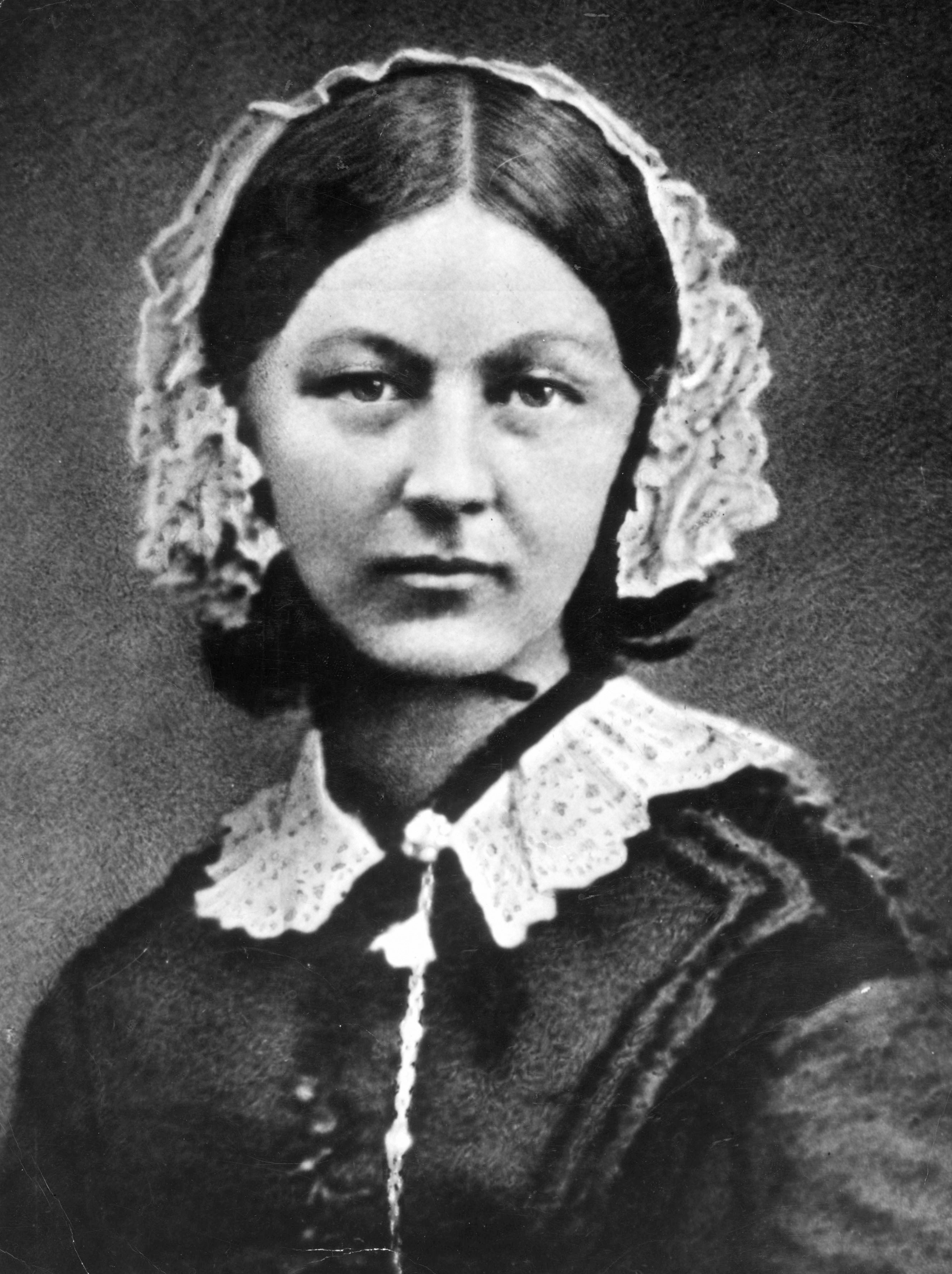
    FLORENCE NIGHTINGALE was photographed in London a few months after returning home from war. At around this same time, she began working with data and charts. Credit: Hulton Archive/Getty Images

    Resolute, Nightingale set out to sway the minds of generals, medical officers and parliamentarians. Their poor data literacy muted statistical arguments that could have oriented them toward the facts. Nightingale, with her quantitative mind, had to persuade people with common understanding but uncommon standing. Her prime target throughout this effort was the head of the British Army, Queen Victoria.

    With public attention drifting away from the concluded war, Nightingale knew that the opportunity for reform was fleeting. She worked 20-hour days, mostly behind the scenes, writing letters, wrangling data and publishing anonymously. She did not do it alone—a circle of experts, including statesmen, statisticians and scientists, united with her to break the policy makers’ inertia and ineptitude. The team focused its campaign on promoting sanitary reform: fresh air, clean sewers and less crowding.

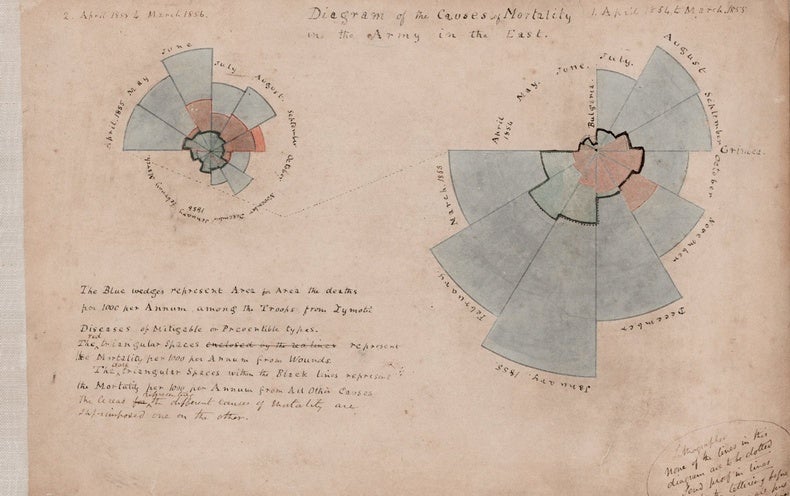
    Nightingale’s key persuasion tactic was to convey statistics in exciting ways. I recently conducted the first in-depth study of how Nightingale created and used data visualization, and I share my research in the forthcoming book Florence Nightingale, Mortality and Health Diagrams (Visionary Press). I studied correspondence that details Nightingale’s information-design process, hand-drawn draft diagrams never before seen by the public and a complete catalog of her information graphics. We can now appreciate better than ever what an innovator Nightingale was and how her techniques foreshadowed how data graphics would become essential to public understanding and debate today.

    Recognizing that few people actually read statistical tables, Nightingale and her team designed graphics to attract attention and engage readers in ways that other media could not. Their diagram designs evolved over two batches of publications, giving them opportunities to react to the efforts of other parties also jockeying for influence. These competitors buried stuffy graphic analysis inside thick books. In contrast, Nightingale packaged her charts in attractive slim folios, integrating diagrams with witty prose. Her charts were accessible and punchy. Instead of building complex arguments that required heavy work from the audience, she focused her narrative lens on specific claims. It was more than data visualization—it was data storytelling.

    Nightingale’s stories showcased how poor sanitation and overcrowding caused unnecessary death. She constructed her arguments from easy-to-understand comparisons. For instance, Nightingale brilliantly framed army mortality by contrasting it with civilian mortality. She showed how, for example, peacetime soldiers living in army barracks died at higher rates than civilian men of similar ages. Her graphics made it impossible to deny the realities represented by the data: army administration needed dramatic reform.

    Nightingale’s diagrams received broad coverage in the press. Within months after the first batch was published, the issue of overcrowded barracks was debated in both houses of Parliament, which moved to reform the sanitary conditions of the army. This resolution was backed by four subcommissions focused on sanitary construction, health codes, a military medical school and military statistics. Within a couple of years the quality of British Army data soared under the leadership of a Nightingale ally. The new data-collection operation—eventually lauded as the best in Europe—also proved the success of the sanitary reforms: mortality from preventable disease among soldiers declined to less than that in the comparable civilian population. Nightingale celebrated this milestone with a final Crimean War diagram, published in 1863.

    Her campaign’s biggest impact on civilian public health took another decade to materialize. The reforms Nightingale fought for were finally codified in the British Public Health Act of 1875. The legislation established requirements for well-built sewers, clean running water and regulated building codes. The law and the precedent it set worldwide would be driving forces—along with the development of vaccines that conferred immunity to diseases and artificial fertilizer that boosted crop yields—in doubling the average human life span during the following century.


    Original Source Link

    Share. Facebook Twitter Pinterest LinkedIn WhatsApp Email Reddit Telegram
    Previous ArticleWhat A Guilty Plea Means For RHOSLC Star Jen Shah
    Next Article Google Wallet Returns, Replaces Google Pay on US Phones

    RELATED POSTS

    How Does the Hive Mind Work in ‘Pluribus?

    January 17, 2026

    RFK, Jr., shifts focus to questioning whether cell phones are safe. Here’s what the science says

    January 17, 2026

    Meat may play an unexpected role in helping people reach 100

    January 16, 2026

    OpenAI Invests in Sam Altman’s New Brain-Tech Startup Merge Labs

    January 16, 2026

    Americans Overwhelmingly Support Science, but Some Think the U.S. Is Lagging Behind: Pew

    January 15, 2026

    Woolly rhino genome recovered from meat in frozen wolf pup’s stomach

    January 15, 2026
    latest posts

    North West shares teaser of new single with father Kanye, ‘Piercing On My Hand’

    North West has shared a teaser of a new collaborative single with her father Kanye West – check…

    Trump launches trade war vs. NATO after European countries sent troops to Greenland

    January 17, 2026

    'Scourge' of sexual predators, violent criminals being removed from Minneapolis

    January 17, 2026

    Chris D’Elia calls comedians ‘spineless’ following sexual misconduct allegations

    January 17, 2026

    Reddit Has Thoughts on Paris Hilton Cookware. So Do We

    January 17, 2026

    How Does the Hive Mind Work in ‘Pluribus?

    January 17, 2026

    The Uncertain Future Of The 4-Part Western Epic

    January 17, 2026
    Categories
    • Books (1,007)
    • Business (5,912)
    • Events (29)
    • Film (5,848)
    • Lifestyle (3,958)
    • Music (5,949)
    • Politics (5,913)
    • Science (5,263)
    • Technology (5,842)
    • Television (5,526)
    • Uncategorized (6)
    • US News (5,900)
    popular posts

    Heat wave in UK and Europe

    A firefighter watches the flames in Louchats as wildfires continue to spread in the Gironde region…

    Trump to celebrate July 4th at White House with military flight crew behind Iran strike

    July 4, 2025

    Scientists Made Human Eggs From Skin Cells and Used Them to Form Embryos

    September 30, 2025

    Mapan’s services helps low-income Indonesians users afford goods and services – TechCrunch

    June 29, 2022
    Archives
    Browse By Category
    • Books (1,007)
    • Business (5,912)
    • Events (29)
    • Film (5,848)
    • Lifestyle (3,958)
    • Music (5,949)
    • Politics (5,913)
    • Science (5,263)
    • Technology (5,842)
    • Television (5,526)
    • Uncategorized (6)
    • US News (5,900)
    About Us

    We are a creativity led international team with a digital soul. Our work is a custom built by the storytellers and strategists with a flair for exploiting the latest advancements in media and technology.

    Most of all, we stand behind our ideas and believe in creativity as the most powerful force in business.

    What makes us Different

    We care. We collaborate. We do great work. And we do it with a smile, because we’re pretty damn excited to do what we do. If you would like details on what else we can do visit out Contact page.

    Our Picks

    How Does the Hive Mind Work in ‘Pluribus?

    January 17, 2026

    The Uncertain Future Of The 4-Part Western Epic

    January 17, 2026

    Where Can You Watch Betty White’s Classic TV Shows?

    January 17, 2026
    © 2026 New York Examiner News. All rights reserved. All articles, images, product names, logos, and brands are property of their respective owners. All company, product and service names used in this website are for identification purposes only. Use of these names, logos, and brands does not imply endorsement unless specified. By using this site, you agree to the Terms & Conditions and Privacy Policy.

    Type above and press Enter to search. Press Esc to cancel.

    We use cookies on our website to give you the most relevant experience by remembering your preferences and repeat visits. By clicking “Accept All”, you consent to the use of ALL the cookies. However, you may visit "Cookie Settings" to provide a controlled consent.
    Cookie SettingsAccept All
    Manage consent

    Privacy Overview

    This website uses cookies to improve your experience while you navigate through the website. Out of these, the cookies that are categorized as necessary are stored on your browser as they are essential for the working of basic functionalities of the website. We also use third-party cookies that help us analyze and understand how you use this website. These cookies will be stored in your browser only with your consent. You also have the option to opt-out of these cookies. But opting out of some of these cookies may affect your browsing experience.
    Necessary
    Always Enabled
    Necessary cookies are absolutely essential for the website to function properly. These cookies ensure basic functionalities and security features of the website, anonymously.
    CookieDurationDescription
    cookielawinfo-checkbox-analytics11 monthsThis cookie is set by GDPR Cookie Consent plugin. The cookie is used to store the user consent for the cookies in the category "Analytics".
    cookielawinfo-checkbox-functional11 monthsThe cookie is set by GDPR cookie consent to record the user consent for the cookies in the category "Functional".
    cookielawinfo-checkbox-necessary11 monthsThis cookie is set by GDPR Cookie Consent plugin. The cookies is used to store the user consent for the cookies in the category "Necessary".
    cookielawinfo-checkbox-others11 monthsThis cookie is set by GDPR Cookie Consent plugin. The cookie is used to store the user consent for the cookies in the category "Other.
    cookielawinfo-checkbox-performance11 monthsThis cookie is set by GDPR Cookie Consent plugin. The cookie is used to store the user consent for the cookies in the category "Performance".
    viewed_cookie_policy11 monthsThe cookie is set by the GDPR Cookie Consent plugin and is used to store whether or not user has consented to the use of cookies. It does not store any personal data.
    Functional
    Functional cookies help to perform certain functionalities like sharing the content of the website on social media platforms, collect feedbacks, and other third-party features.
    Performance
    Performance cookies are used to understand and analyze the key performance indexes of the website which helps in delivering a better user experience for the visitors.
    Analytics
    Analytical cookies are used to understand how visitors interact with the website. These cookies help provide information on metrics the number of visitors, bounce rate, traffic source, etc.
    Advertisement
    Advertisement cookies are used to provide visitors with relevant ads and marketing campaigns. These cookies track visitors across websites and collect information to provide customized ads.
    Others
    Other uncategorized cookies are those that are being analyzed and have not been classified into a category as yet.
    SAVE & ACCEPT