
Close Menu
New York Examiner News

    Subscribe to Updates

    Get the latest creative news from FooBar about art, design and business.

    What's Hot

    Best Songs of the Week: Staff Picks March 20th

    March 27, 2026

    Meta promised it wouldn’t spy on you with its AI smart glasses. A lawsuit says humans are watching you, actually

    March 27, 2026

    Mike Johnson’s Self-Destruction Means Republicans Now Own Airport Chaos Crisis

    March 27, 2026
    Facebook X (Twitter) Instagram
    New York Examiner News
    • Home
    • US News
    • Politics
    • Business
    • Science
    • Technology
    • Lifestyle
    • Music
    • Television
    • Film
    • Books
    • Contact
      • About
      • Amazon Disclaimer
      • DMCA / Copyrights Disclaimer
      • Terms and Conditions
      • Privacy Policy
    New York Examiner News
    Home»Science»How Humans’ Ability to Digest Milk Evolved from Famine and Disease
    Science

    How Humans’ Ability to Digest Milk Evolved from Famine and Disease

    By AdminJuly 28, 2022
    Facebook Twitter Pinterest LinkedIn WhatsApp Email Reddit Telegram
    How Humans’ Ability to Digest Milk Evolved from Famine and Disease


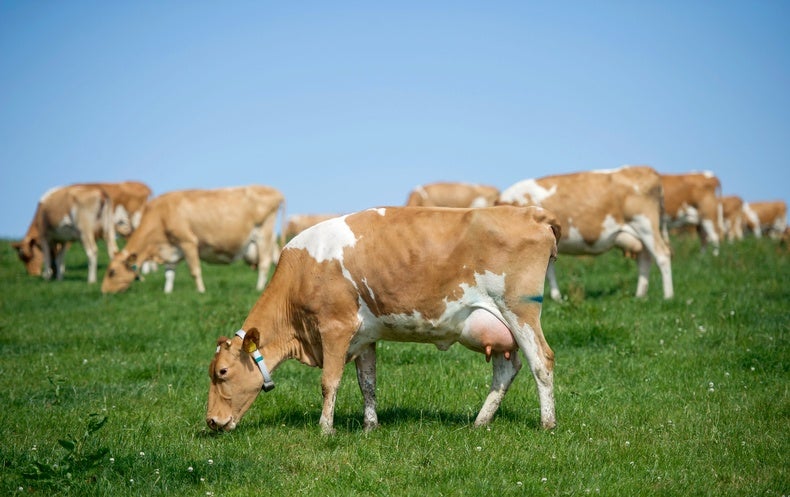
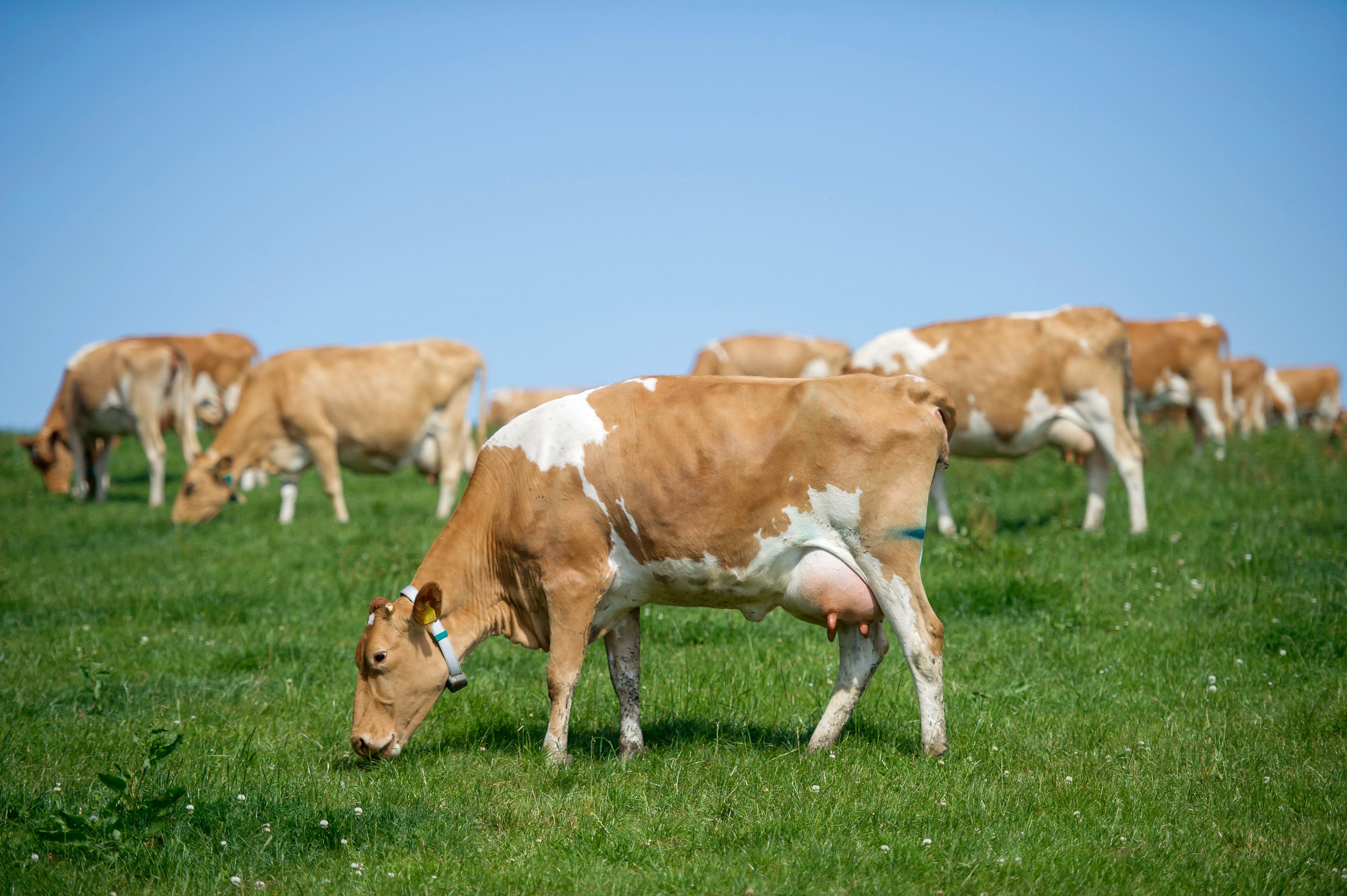
    The dawn of dairy farming in Europe occurred thousands of years before most people evolved the ability to drink milk as adults without becoming ill. Now researchers think they know why: lactose tolerance was beneficial enough to influence evolution only during occasional episodes of famine and disease, explaining why it took thousands of years for the trait to become widespread1.

    The theory — backed up by an analysis of thousands of pottery shards and hundreds of ancient human genomes as well as sophisticated modelling — explains how the ability to digest milk became so common in modern Europeans, despite being almost non-existent in early dairy farmers. This ability, known as lactase persistence, comes from an enzyme that breaks down milk sugar and usually shuts down after young children are weaned.

    The study, published in Nature on 27 July, is the first major effort to quantify the forces that have shaped this trait, says Shevan Wilkin, a molecular archaeologist at the University of Zurich, Switzerland. “Lactase-persistence evolution was much more complicated than we ever thought.”

    Natural selection

    The ability to digest milk evolved independently in ancient populations around the world. Researchers have mapped the trait to gene variants that instruct cells to produce high levels of lactase. The variant that most people of European ancestry carry is one of the strongest examples of natural selection on the human genome.

    Yet scientists have struggled to explain the forces underlying the high prevalence of lactase persistence in Europe. Many had presumed that the variation proved beneficial only after ancient peoples started routinely consuming dairy products. Another influential theory held that the early cows, goats and sheep — domesticated around 10,000–12,000 years ago — were used mainly for their meat, and that milk consumption followed millennia later.

    But Richard Evershed, a biogeochemist at the University of Bristol, UK, who co-led the latest study, and his team have found milk-fat residues on ancient potsherds dating from the dawn of animal domestication. Ancient genomics studies, meanwhile, showed that these early animal farmers were lactose intolerant, and that tolerance for milk did not become common in Europe until after the Bronze Age, 5,000–4,000 years ago.

    To determine the probable forces behind Europeans’ ability to digest milk, a team led by Evershed and two Bristol colleagues, chemist Mélanie Roffet-Salque and epidemiologist George Davey Smith, together with Mark Thomas, an evolutionary geneticist at University College London, collated archaeological and genomic data. They then modelled how various factors, such as the use of dairy milk and population size, explained the rise of lactase persistence, drawing on the genomes of more than 1,700 ancient Eurasian people.

    The team found little overlap between leaps in lactose tolerance and heightened milk consumption, inferred by the presence of milk-fat residues from some 13,000 potsherds from more than 550 archaeological sites across Europe. “All previous hypotheses for what was the natural-selection advantage of lactase persistence pegged themselves to the extent of milk use,” says Thomas, because of the presumed nutritional benefits of being able to consume milk without getting sick.

    Another explanation

    With that idea scotched, the researchers looked at how lactose tolerance relates to milk drinking in modern Europeans. In the UK Biobank, a repository of health and genomic data from half a million people in the United Kingdom, they found little correlation between milk consumption and lactose tolerance, with 92% of lactose-intolerant participants preferring fresh milk over alternatives. And lactose tolerance showed no clear health or fertility benefits, which might drive natural selection.

    This suggests that, for most lactose-intolerant people, the costs of drinking milk aren’t that high today, Thomas says — and probably weren’t in ancient times, either. “If you’re healthy, you get a bit of diarrhoea, you get cramps, you fart a lot. It’s unpleasant, but you’re not going to die.”

    But the researchers propose that the consequences of milk drinking among lactose-intolerant people long ago would have been much more severe for those who were in ill health, as a result of famine or infection. Fluid loss, through diarrhoea, contributes to deaths through malnutrition and infection, especially in places with poor sanitation. The researchers’ model found that lactase persistence was more likely to occur in ancient populations exposed to animal pathogens and famine than in those exposed to other factors examined.

    The team proposes that natural selection for lactase tolerance was turbocharged during such periods, when lactose-intolerant individuals would have been more likely to die than people who lacked the suddenly beneficial gene variation.

    More to explore

    “Are they right? I don’t know. It’s hard to say,” says Wilkin. Even if people didn’t die from the effects of lactose intolerance during hard times, it could have made them less likely to procreate than people who could digest milk, allowing lactose persistence to flourish. But she’s not sure that this fully explains why the trait is absent, or very rare, in early farming and some Bronze Age dairying populations, who must have been exposed to famine and infection.

    Christina Warinner, a molecular archaeologist at Harvard University in Cambridge, Massachusetts, says that the study puts numbers on and provides evidence for a picture that has been emerging over the past decade. “Now we have some idea where we need to start looking.” One focus should be on ancient human genomes and other archaeological data from the medieval period and the Iron Age (3,000–1,000 years ago), when levels of lactose tolerance in Europe rose considerably.

    Wilkin hopes that the study will also encourage researchers to reassess the evolution of lactase persistence outside Europe — for example, in Africa, where it evolved several times, and in Central Asia and the Middle East. Researchers also need a better grasp on how dairying and milk drinking can be widespread in places where lactose tolerance has never been common, such as the Mongolian steppe. “I really hope this kind of huge and really ambitious study spurs people to start investigating this,” she says.

    This article is reproduced with permission and was first published on July 27 2022.


    Original Source Link

    Share. Facebook Twitter Pinterest LinkedIn WhatsApp Email Reddit Telegram
    Previous ArticleChris Evans’ Best & Worst Movies, Ranked (According To IMDb)
    Next Article How Tor Is Fighting—and Beating—Russian Censorship

    RELATED POSTS

    One Way or Another, Most of Our Electricity Comes From Solar Power

    March 27, 2026

    Why your psoriasis flares up in the same spots

    March 27, 2026

    First glimpse of sperm whale birth reveals teamwork to support newborn

    March 26, 2026

    The Shingles Virus May Be Aging You More Quickly

    March 26, 2026

    Earth’s magnetic field may be more powerful than we thought

    March 25, 2026

    Earth may have formed from two separate rings around the sun

    March 25, 2026
    latest posts

    Best Songs of the Week: Staff Picks March 20th

    Every Friday, our Songs of the Week column puts the spotlight on the best new…

    Meta promised it wouldn’t spy on you with its AI smart glasses. A lawsuit says humans are watching you, actually

    March 27, 2026

    Mike Johnson’s Self-Destruction Means Republicans Now Own Airport Chaos Crisis

    March 27, 2026

    Social media’s Big Tobacco moment arrives with landmark child harm verdicts

    March 27, 2026

    AI Research Is Getting Harder to Separate From Geopolitics

    March 27, 2026

    One Way or Another, Most of Our Electricity Comes From Solar Power

    March 27, 2026

    Oscars Move From Dolby to Peacock Theater Supported by Academy Member

    March 27, 2026
    Categories
    • Books (1,147)
    • Business (6,051)
    • Events (40)
    • Film (5,987)
    • Lifestyle (4,091)
    • Music (6,096)
    • Politics (6,051)
    • Science (5,404)
    • Technology (5,981)
    • Television (5,668)
    • Uncategorized (6)
    • US News (6,039)
    popular posts

    Chad Smith and Matt Cameron Apologize to Foo Fighters Over Quotes About Taylor Hawkins

    In a new Rolling Stone article about Taylor Hawkins, friends and colleagues of the late…

    The Doctor Behind the ‘Suicide Pod’ Wants AI to Assist at the End of Life

    October 15, 2024

    DCG’s Barry Silbert writes letter to investors after FTX collapse

    November 24, 2022

    Bruiser – first-look review

    September 25, 2022
    Archives
    Browse By Category
    • Books (1,147)
    • Business (6,051)
    • Events (40)
    • Film (5,987)
    • Lifestyle (4,091)
    • Music (6,096)
    • Politics (6,051)
    • Science (5,404)
    • Technology (5,981)
    • Television (5,668)
    • Uncategorized (6)
    • US News (6,039)
    About Us

    We are a creativity led international team with a digital soul. Our work is a custom built by the storytellers and strategists with a flair for exploiting the latest advancements in media and technology.

    Most of all, we stand behind our ideas and believe in creativity as the most powerful force in business.

    What makes us Different

    We care. We collaborate. We do great work. And we do it with a smile, because we’re pretty damn excited to do what we do. If you would like details on what else we can do visit out Contact page.

    Our Picks

    One Way or Another, Most of Our Electricity Comes From Solar Power

    March 27, 2026

    Oscars Move From Dolby to Peacock Theater Supported by Academy Member

    March 27, 2026

    ‘SLOMW’ Harry Jowsey Responds To Jessi Draper Affair Rumors

    March 27, 2026
    © 2026 New York Examiner News. All rights reserved. All articles, images, product names, logos, and brands are property of their respective owners. All company, product and service names used in this website are for identification purposes only. Use of these names, logos, and brands does not imply endorsement unless specified. By using this site, you agree to the Terms & Conditions and Privacy Policy.

    Type above and press Enter to search. Press Esc to cancel.

    We use cookies on our website to give you the most relevant experience by remembering your preferences and repeat visits. By clicking “Accept All”, you consent to the use of ALL the cookies. However, you may visit "Cookie Settings" to provide a controlled consent.
    Cookie SettingsAccept All
    Manage consent

    Privacy Overview

    This website uses cookies to improve your experience while you navigate through the website. Out of these, the cookies that are categorized as necessary are stored on your browser as they are essential for the working of basic functionalities of the website. We also use third-party cookies that help us analyze and understand how you use this website. These cookies will be stored in your browser only with your consent. You also have the option to opt-out of these cookies. But opting out of some of these cookies may affect your browsing experience.
    Necessary
    Always Enabled
    Necessary cookies are absolutely essential for the website to function properly. These cookies ensure basic functionalities and security features of the website, anonymously.
    CookieDurationDescription
    cookielawinfo-checkbox-analytics11 monthsThis cookie is set by GDPR Cookie Consent plugin. The cookie is used to store the user consent for the cookies in the category "Analytics".
    cookielawinfo-checkbox-functional11 monthsThe cookie is set by GDPR cookie consent to record the user consent for the cookies in the category "Functional".
    cookielawinfo-checkbox-necessary11 monthsThis cookie is set by GDPR Cookie Consent plugin. The cookies is used to store the user consent for the cookies in the category "Necessary".
    cookielawinfo-checkbox-others11 monthsThis cookie is set by GDPR Cookie Consent plugin. The cookie is used to store the user consent for the cookies in the category "Other.
    cookielawinfo-checkbox-performance11 monthsThis cookie is set by GDPR Cookie Consent plugin. The cookie is used to store the user consent for the cookies in the category "Performance".
    viewed_cookie_policy11 monthsThe cookie is set by the GDPR Cookie Consent plugin and is used to store whether or not user has consented to the use of cookies. It does not store any personal data.
    Functional
    Functional cookies help to perform certain functionalities like sharing the content of the website on social media platforms, collect feedbacks, and other third-party features.
    Performance
    Performance cookies are used to understand and analyze the key performance indexes of the website which helps in delivering a better user experience for the visitors.
    Analytics
    Analytical cookies are used to understand how visitors interact with the website. These cookies help provide information on metrics the number of visitors, bounce rate, traffic source, etc.
    Advertisement
    Advertisement cookies are used to provide visitors with relevant ads and marketing campaigns. These cookies track visitors across websites and collect information to provide customized ads.
    Others
    Other uncategorized cookies are those that are being analyzed and have not been classified into a category as yet.
    SAVE & ACCEPT