
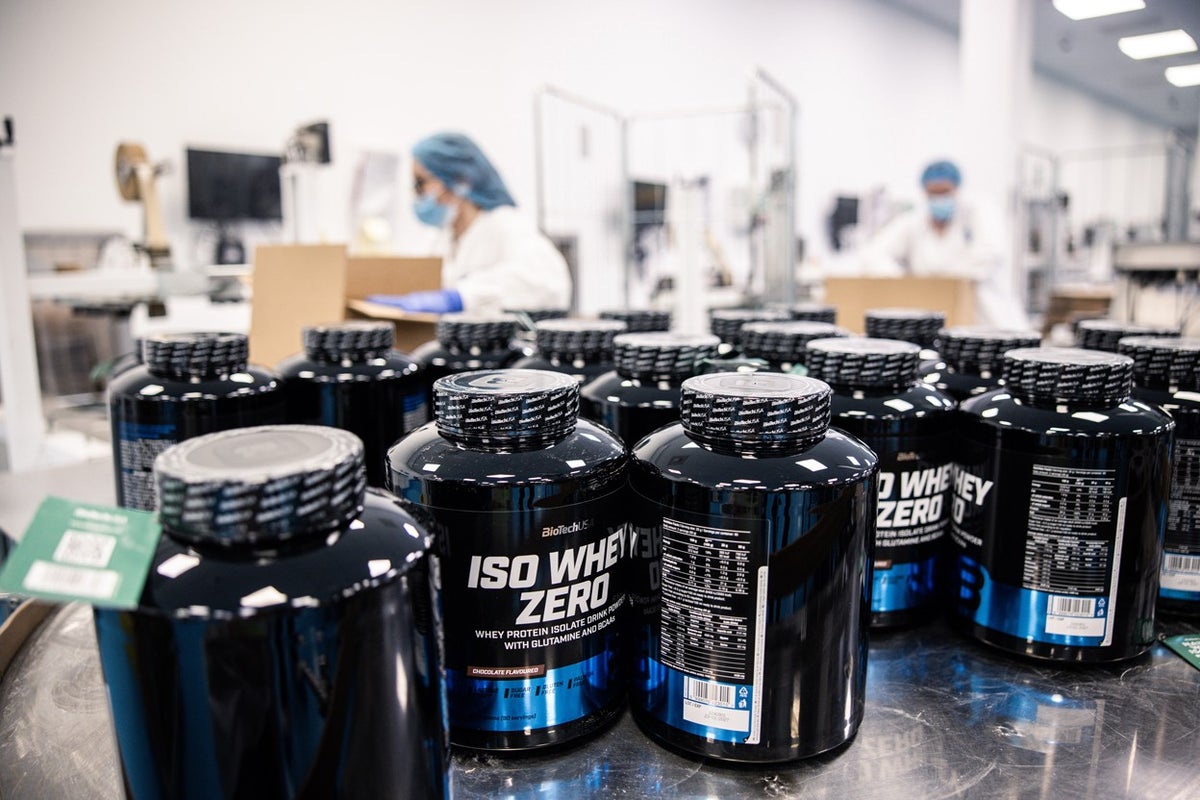
Snack bars, yogurts, ice cream, even bottled water: it seems like food makers have worked out ways to slip extra protein into just about anything as they seek to capitalize on a growing consumer trend.
Today, protein-fortified foods and protein supplements form a market worth tens of billions of US dollars, with fitness influencers, as well as some researchers and physicians, promoting high-protein diets as the secret to strength and longevity. Protein is undeniably essential, but how much people really need is still a topic of debate.
On the one hand, most official guidelines recommend a minimum of close to one gram of protein per kilogram of body weight per day, or the equivalent of about 250 grams of cooked chicken (which contains around 68 g of protein) for an adult weighing 70 kilograms. On the other hand, a growing narrative in wellness circles encourages people to eat more than double that amount. Many scientists fall somewhere in the middle and take issue with some of the advice circulating online.
On supporting science journalism
If you’re enjoying this article, consider supporting our award-winning journalism by subscribing. By purchasing a subscription you are helping to ensure the future of impactful stories about the discoveries and ideas shaping our world today.
“It’s really frustrating because there isn’t evidence to support the claims that they’re making,” says Katherine Black, an exercise nutritionist at the University of Otago in Dunedin, New Zealand, referring to the super-high protein recommendations often shared on social media. What research does show is that protein needs can vary from person to person and can change throughout a lifetime. And people should think carefully about what they eat to meet those needs. “On social media, it’s like everyone’s worried about protein, putting protein powder into everything,” she says.
Health authorities can help to guide people’s dietary choices on the basis of the latest research. The next Dietary Guidelines for Americans, a document that advises on what to eat for maintaining a healthy lifestyle, is due to come out by the end of this year. But its recommendations, which have tended to be broadly influential, might be changing.
Calculating protein needs
Researchers have been trying to estimate how much protein people need for more than a century. In 1840, chemist Justus von Liebig estimated that the average adult required 120 grams of protein a day, on the basis of a group of German workers’ diets. Later, scientists started to use nitrogen to calculate protein requirements. Protein is the only major dietary component that contains nitrogen. So, by measuring how much of it people consume and the amount they excrete, researchers could estimate how much the body uses.
Since the 1940s, this nitrogen-balance method has been used to determine the Recommended Dietary Allowances (RDA), a set of nutrient recommendations developed by the US National Academies of Sciences, Engineering, and Medicine.
The latest such recommendation for protein, from 2005, establishes the RDA for both men and women at 0.8 grams per kilogram of body weight per day, which it states should be enough to meet the needs of 97–98% of healthy people. European and global-health authorities recommend similar or slightly higher levels.
Although scientists recognize that RDAs are a useful reference point, many say that people could benefit from a higher amount. “The RDA is not a target; it’s simply the minimum that appears to prevent any detectable deficiency,” says Donald Layman, a researcher focusing on protein requirements at the University of Illinois Urbana–Champaign. Evidence suggests that the optimal range is between 1.2 and 1.6 grams of protein per kilogram of body weight per day, he says.
That is especially true for older adults, who often experience muscle loss as they age, as well as for certain athletes and people trying to gain muscle.
For example, in an observational study of 2,066 adults aged 70–79, those who reported eating the most protein — about 1.1 gram per kilogram of bodyweight — lost 40% less lean mass during the three years of follow-up than did those who ate the least — around 0.7 grams per kilogram.
“For older adults, 1.2 grams per kilogram is just giving them a little extra protection,” says Nicholas Burd, a nutrition and exercise researcher also at the University of Illinois Urbana–Champaign. Furthermore, older people might experience a decline in appetite, which makes it particularly important for them to pay attention to their protein intake. It doesn’t mean that they need to take protein supplements, he says. “It’s all things we can do with just normal incorporation of high-protein foods in our lives.”
For healthy adults, increasing protein can boost the effects of resistance exercise, such as weightlifting. A 2017 systematic review found that, among people engaged in this type of training, taking protein supplements enhanced muscle gain and strength. But increasing protein beyond 1.6 grams per kilogram per day provided no further benefit.
Meanwhile, some fitness influencers swear by eating 2.2 grams per kilogram of body weight. For most people, that’s simply overkill, says Burd. There’s little harm, other than for people with kidney disease, but Burd adds: “You just create an inefficient system where your body gets very good at wasting food protein.”
Some practitioners might recommend higher protein targets to ensure that people get enough, Burd says. But the protein craze has been driven mostly by aggressive marketing of high-protein foods and supplements, he says.
“The myth of increased protein needs has seeped into popular imagination, including among health professionals, and has been conveniently reinforced by the food industry,” says Fernanda Marrocos, a researcher specializing in nutrition and food policy at the University of São Paulo in Brazil.
Amino-acid goals
Not all proteins are the same, and some researchers argue for a more nuanced recommendation that takes into account the amino acids — the building blocks of proteins — that foods contain. The human body requires 20 amino acids to function properly, including 9 that are considered ‘essential’ because they can be obtained only through food.
The balance of those nine in animal-based foods is exactly what other animals need, says Layman. “In plants, the essential amino acids are generally there, but they’re in proportions for the plants.” That means that some plants might be rich in certain amino acids but not in others, so meeting the amino-acid requirements with plant-based products might require a greater variety of foods.
He is critical of the way that official dietary guidelines calculate the recommendations for proteins from different sources. For example, according to the US Department of Agriculture, 14 grams of almonds can substitute 28 grams of chicken breast. Research by Layman and his colleagues, which considers the amino-acid balance, suggests that it would actually take more than 115 grams of almonds to substitute 28 grams of chicken.
Robert Wolfe, a researcher focusing on muscle metabolism at the University of Arkansas for Medical Sciences in Little Rock, says that dietary guidelines should incorporate the analysis of the quality of the protein, including the amino-acid balance and the degree to which the human body can digest them.
One area for future research, Wolfe says, is understanding exactly how food processing affects protein content. Factors such as cooking temperature, for example, can influence how well the body digests protein. This can have implications for certain protein supplements and high-protein bars, which are generally highly processed.
Obtaining that information requires going beyond nitrogen-balance studies. Wolfe’s team has used isotope tracers to determine the rate at which food protein is incorporated into new proteins in the body. One study of 56 young adults, for example, concluded that eating animal-based proteins resulted in a greater gain in body protein than did eating the equivalent amount of plant-based protein. But studies in this area are still small and shouldn’t be taken to mean that people must get all their protein from animal sources.
The American Heart Association recommends prioritizing plant proteins, given that the saturated fat found in red meats can increase the risk of cardiovascular disease. There’s also a high environmental cost associated with meat production, which is a major source of greenhouse-gas emissions.
Burd says that if a diet includes at least a portion of animal-based protein, it will probably provide all the essential amino acids for maintaining good health. And it is possible to achieve the same benefits solely from plant-based proteins. “This is where supplements could be beneficial because it’s more challenging to reach that balance from plants only,” Burd says.
Specialists advising the formulation of the upcoming Dietary Guidelines for Americans say that most Americans already eat more than enough proteins. They suggest reducing protein consumption from red meat, chicken and eggs and increasing the consumption of certain vegetables. But it’s unclear what exactly will be in the guidelines: US health secretary Robert F. Kennedy Jr has stated in recent months that they will emphasize the need to eat saturated fats from sources including meat and dairy, which goes against recommendations from many medical associations.
Protein consumption is adequate in most parts of the world, says Marrocos. A study her team led in Brazil found that, in general, people consume well above the World Health Organization’s protein recommendation, even those with the lowest income. So there’s no need to obsess about hitting an exact protein number.
“For most people, as long as they’re eating enough calories and a reasonably varied diet, they’ll get all the protein they need,” says Marrocos.
This article is reproduced with permission and was first published on November 12, 2025.