
Close Menu
New York Examiner News

    Subscribe to Updates

    Get the latest creative news from FooBar about art, design and business.

    What's Hot

    New York City Declares West 8th Street as “Jimi Hendrix Way”

    June 11, 2026

    Digital sovereignty isn’t the same thing as digital isolation. Asia’s governments should be careful

    June 11, 2026

    Democrats Have All The Info They Need To End Trump And Vance With A Real Epstein Investigation

    June 11, 2026
    Facebook X (Twitter) Instagram
    New York Examiner News
    • Home
    • US News
    • Politics
    • Business
    • Science
    • Technology
    • Lifestyle
    • Music
    • Television
    • Film
    • Books
    • Contact
      • About
      • Amazon Disclaimer
      • DMCA / Copyrights Disclaimer
      • Terms and Conditions
      • Privacy Policy
    New York Examiner News
    Home»Science»How Your Brain Detects Patterns without Conscious Thought
    Science

    How Your Brain Detects Patterns without Conscious Thought

    By AdminSeptember 30, 2024
    Facebook Twitter Pinterest LinkedIn WhatsApp Email Reddit Telegram
    How Your Brain Detects Patterns without Conscious Thought


    September 27, 2024

    3 min read

    How Your Brain Detects Patterns without Conscious Thought

    Neurons in certain brain areas integrate ‘what’ and ‘when’ information to discern hidden order in events happening in real time
    By Miryam Naddaf & Nature magazine

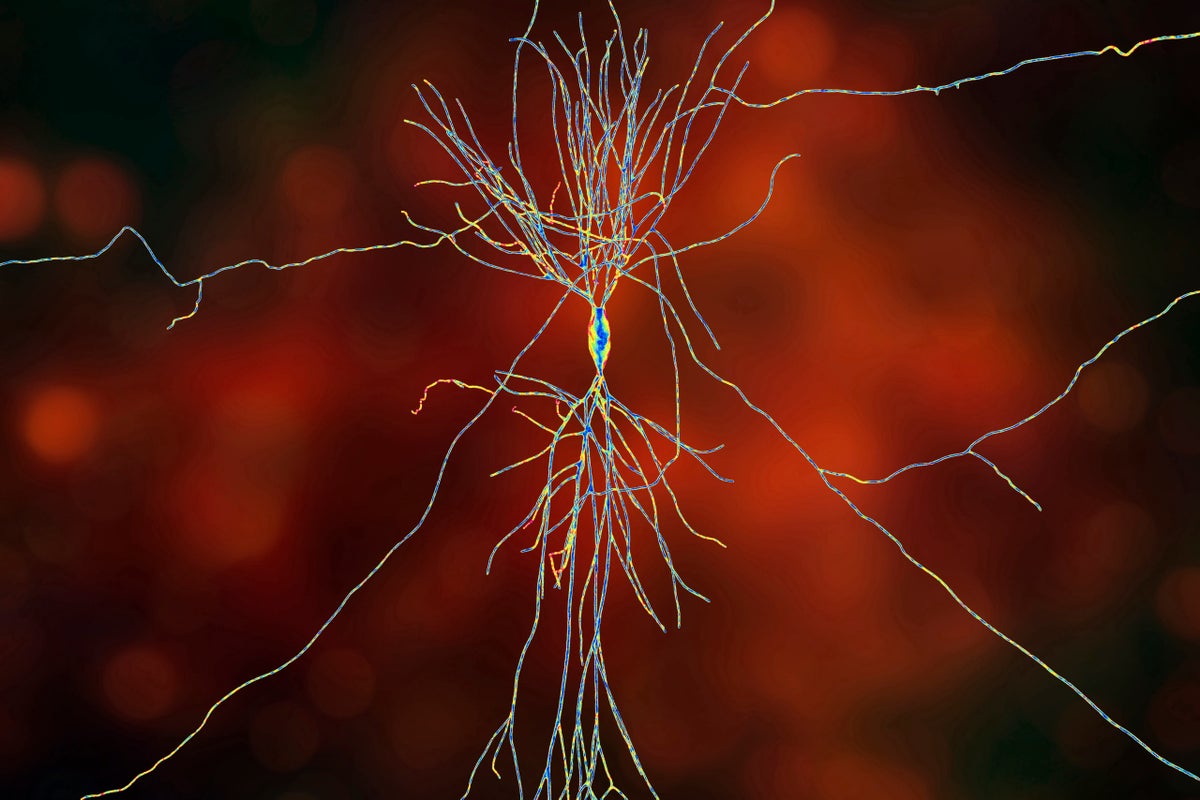
    Hippocampus neuron spider on orange.

    Kateryna Kon/Science Photo Library/Getty Images

    The human brain is constantly picking up patterns in everyday experiences — and can do so without conscious thought, finds a study of neuronal activity in people who had electrodes implanted in their brain tissue for medical reasons.

    The study shows that neurons in key brain regions combine information on what occurs and when, allowing the brain to pick out the patterns in events as they unfold over time. That helps the brain to predict coming events, the authors say. The work was published today in Nature.

    “The brain does a lot of things that we are not consciously aware of,” says Edvard Moser, a neuroscientist at the Norwegian University of Science and Technology in Trondheim. “This is no exception.”


    On supporting science journalism

    If you’re enjoying this article, consider supporting our award-winning journalism by subscribing. By purchasing a subscription you are helping to ensure the future of impactful stories about the discoveries and ideas shaping our world today.


    Blizzard of data

    To make sense of the world around us, the brain must process an onslaught of information on what happens, where it happens and when it happens. The study’s authors wanted to explore how the brain organizes this information over time — a crucial step in learning and memory.

    The team studied 17 people who had epilepsy and had electrodes implanted in their brains in preparation for surgical treatment. These electrodes allowed the authors to directly capture the activity of individual neurons in multiple brain regions.

    Among those regions were the hippocampus and entorhinal cortex, which are involved in memory and navigation. These areas contain time and place cells that act as the body’s internal clock and GPS system, encoding time and locations. “All the external world coming into our brain has to be filtered through that system,” says study co-author Itzhak Fried, a neurosurgeon and neuroscientist at the University of California, Los Angeles.

    Parade of faces

    In preparation for the main experiment, the researchers showed each participant a variety of images of faces. For each participant, the scientists identified six of the faces that prompted an individual neuron in the participant’s brain to fire strongly. A participant might have a ‘man in sunglasses’ neuron, for example, along with a ‘woman in a hat’ neuron and four more that each favoured a particular face.

    The team arranged each participant’s six images in a triangle that had one image at each corner and one on each side. Each image was connected to its nearest neighbours by lines running down the triangle’s sides and through its interior.

    In an experimental trial, participants viewed a series of the face images. A simple rule dictated the sequence of images: each face was followed by one that was connected to it on the triangle. For example, if the first face was the one on the triangle’s bottom left corner, the second face would be one of its two direct neighbours: the face in the middle of the triangle’s base or the face in the middle of the triangle’s left side. The experimenters did not reveal this rule to participants. What’s more, they distracted the participants by asking them questions about the images’ content during each trial.

    During the experiment, neurons in each participant’s hippocampus and entorhinal cortex gradually began to respond not only to the face being presented but also to faces directly connected to it on the triangle. When asked whether they noticed any pattern in the order of the images, the participants said they didn’t. But their brain cells still learnt the pattern, showing that the brain can recognize patterns without conscious awareness. In the breaks between trials, the participants’ ‘face’ neurons replayed what they had learnt, cycling through the patterns on their own without being stimulated to do so.

    “This is something that is not explicit, it is implicit. And the brain gets it, essentially, very quickly, and we can see those changes in the individual cells,” says Fried.

    Future-facing neurons

    The authors found that the neurons could also anticipate what images would appear next, suggesting that the brain can learn to predict future events on the basis of learnt patterns.

    “The fact that’s happening without any external motivator is really interesting,” says Matt Jones, a neuroscientist at the University of Bristol, UK. “Many of the findings are remarkably consistent with predictions from rodent work, highlighting how hippocampal circuits have evolved to structure our cognitive maps,” he adds.

    Understanding how the brain organizes information about sequences of events could have important clinical applications. For example, memory-enhancement therapies might focus on boosting specific neuronal patterns that represent important memories, says Fried. “It’s eventually a question of putting things together in time. This is really the crux of memory.”

    This article is reproduced with permission and was first published on September 25, 2024.


    Original Source Link

    Share. Facebook Twitter Pinterest LinkedIn WhatsApp Email Reddit Telegram
    Previous ArticleThe Teacher review – a wonderful cinematic experience
    Next Article Raspberry Pi launches camera module for vision-based AI applications

    RELATED POSTS

    China Opens World’s First Wind-Powered Underwater Data Center

    June 11, 2026

    How Canadian rock duo Angine de Poitrine play with neurobiology and physics to make viral music

    June 10, 2026

    Frozen squirrel scat preserves ancient DNA from hundreds of species

    June 10, 2026

    This Summer Travel Season Could Forever Alter the Future of Sustainable Aviation Fuel

    June 9, 2026

    ‘Odd’ Gulf of Mexico earthquake rattles Florida and Cuba

    June 9, 2026

    Cuts to US ocean programme will hinder monitoring of El Niño and AMOC

    June 8, 2026
    latest posts

    New York City Declares West 8th Street as “Jimi Hendrix Way”

    While most of New York City right now is adorned in blue and orange, a…

    Digital sovereignty isn’t the same thing as digital isolation. Asia’s governments should be careful

    June 11, 2026

    Democrats Have All The Info They Need To End Trump And Vance With A Real Epstein Investigation

    June 11, 2026

    Jim Jordan scrutinizes U.K. surveillance laws over Five Eyes trust concerns

    June 11, 2026

    CISA Tells US Agencies to Fix Security Bugs in as Little as 3 Days Thanks to AI Threats

    June 11, 2026

    China Opens World’s First Wind-Powered Underwater Data Center

    June 11, 2026

    Poppy Liu on I Love Boosters, Working With Boots Riley, Hacks Ending

    June 11, 2026
    Categories
    • Books (1,298)
    • Business (6,201)
    • Events (58)
    • Film (6,138)
    • Lifestyle (4,220)
    • Music (6,258)
    • Politics (6,194)
    • Science (5,555)
    • Technology (6,134)
    • Television (5,824)
    • Uncategorized (7)
    • US News (6,189)
    popular posts

    ‘Bachelor in Paradise’ Season 8 Reveals First Cast Members & Teaser (VIDEO)

    While most of us are getting ready for sweater weather and pumpkin spice lattes, the…

    Peanut Butter Chocolate Protein Balls Recipe – Ferbena.com

    August 4, 2023

    ‘Jeopardy’ Fans React to Only Fans Category

    June 28, 2023

    It’s Not Just Loot Boxes: Predatory Monetization Is Everywhere

    July 29, 2022
    Archives
    Browse By Category
    • Books (1,298)
    • Business (6,201)
    • Events (58)
    • Film (6,138)
    • Lifestyle (4,220)
    • Music (6,258)
    • Politics (6,194)
    • Science (5,555)
    • Technology (6,134)
    • Television (5,824)
    • Uncategorized (7)
    • US News (6,189)
    About Us

    We are a creativity led international team with a digital soul. Our work is a custom built by the storytellers and strategists with a flair for exploiting the latest advancements in media and technology.

    Most of all, we stand behind our ideas and believe in creativity as the most powerful force in business.

    What makes us Different

    We care. We collaborate. We do great work. And we do it with a smile, because we’re pretty damn excited to do what we do. If you would like details on what else we can do visit out Contact page.

    Our Picks

    China Opens World’s First Wind-Powered Underwater Data Center

    June 11, 2026

    Poppy Liu on I Love Boosters, Working With Boots Riley, Hacks Ending

    June 11, 2026

    ‘The Valley’ Jesse Lally Sticks Up For Danny Booko & His Drinking

    June 11, 2026
    © 2026 New York Examiner News. All rights reserved. All articles, images, product names, logos, and brands are property of their respective owners. All company, product and service names used in this website are for identification purposes only. Use of these names, logos, and brands does not imply endorsement unless specified. By using this site, you agree to the Terms & Conditions and Privacy Policy.

    Type above and press Enter to search. Press Esc to cancel.

    We use cookies on our website to give you the most relevant experience by remembering your preferences and repeat visits. By clicking “Accept All”, you consent to the use of ALL the cookies. However, you may visit "Cookie Settings" to provide a controlled consent.
    Cookie SettingsAccept All
    Manage consent

    Privacy Overview

    This website uses cookies to improve your experience while you navigate through the website. Out of these, the cookies that are categorized as necessary are stored on your browser as they are essential for the working of basic functionalities of the website. We also use third-party cookies that help us analyze and understand how you use this website. These cookies will be stored in your browser only with your consent. You also have the option to opt-out of these cookies. But opting out of some of these cookies may affect your browsing experience.
    Necessary
    Always Enabled
    Necessary cookies are absolutely essential for the website to function properly. These cookies ensure basic functionalities and security features of the website, anonymously.
    CookieDurationDescription
    cookielawinfo-checkbox-analytics11 monthsThis cookie is set by GDPR Cookie Consent plugin. The cookie is used to store the user consent for the cookies in the category "Analytics".
    cookielawinfo-checkbox-functional11 monthsThe cookie is set by GDPR cookie consent to record the user consent for the cookies in the category "Functional".
    cookielawinfo-checkbox-necessary11 monthsThis cookie is set by GDPR Cookie Consent plugin. The cookies is used to store the user consent for the cookies in the category "Necessary".
    cookielawinfo-checkbox-others11 monthsThis cookie is set by GDPR Cookie Consent plugin. The cookie is used to store the user consent for the cookies in the category "Other.
    cookielawinfo-checkbox-performance11 monthsThis cookie is set by GDPR Cookie Consent plugin. The cookie is used to store the user consent for the cookies in the category "Performance".
    viewed_cookie_policy11 monthsThe cookie is set by the GDPR Cookie Consent plugin and is used to store whether or not user has consented to the use of cookies. It does not store any personal data.
    Functional
    Functional cookies help to perform certain functionalities like sharing the content of the website on social media platforms, collect feedbacks, and other third-party features.
    Performance
    Performance cookies are used to understand and analyze the key performance indexes of the website which helps in delivering a better user experience for the visitors.
    Analytics
    Analytical cookies are used to understand how visitors interact with the website. These cookies help provide information on metrics the number of visitors, bounce rate, traffic source, etc.
    Advertisement
    Advertisement cookies are used to provide visitors with relevant ads and marketing campaigns. These cookies track visitors across websites and collect information to provide customized ads.
    Others
    Other uncategorized cookies are those that are being analyzed and have not been classified into a category as yet.
    SAVE & ACCEPT