
Close Menu
New York Examiner News

    Subscribe to Updates

    Get the latest creative news from FooBar about art, design and business.

    What's Hot

    19 Big-Name Punk Bands With Only One Original Member Left

    September 24, 2026

    Like Jamie Dimon, Databricks CEO hates days with too many meetings—it means he gets nothing done

    September 24, 2026

    The White House Was Too Scared To Wake Trump Up To Lift Reporter Ban

    September 24, 2026
    Facebook X (Twitter) Instagram
    New York Examiner News
    • Home
    • US News
    • Politics
    • Business
    • Science
    • Technology
    • Lifestyle
    • Music
    • Television
    • Film
    • Books
    • Contact
      • About
      • Amazon Disclaimer
      • DMCA / Copyrights Disclaimer
      • Terms and Conditions
      • Privacy Policy
    New York Examiner News
    Home»Science»Interstellar Meteors Hit Earth All the Time but Still Elude Astronomers
    Science

    Interstellar Meteors Hit Earth All the Time but Still Elude Astronomers

    By AdminJuly 27, 2025
    Facebook Twitter Pinterest LinkedIn WhatsApp Email Reddit Telegram
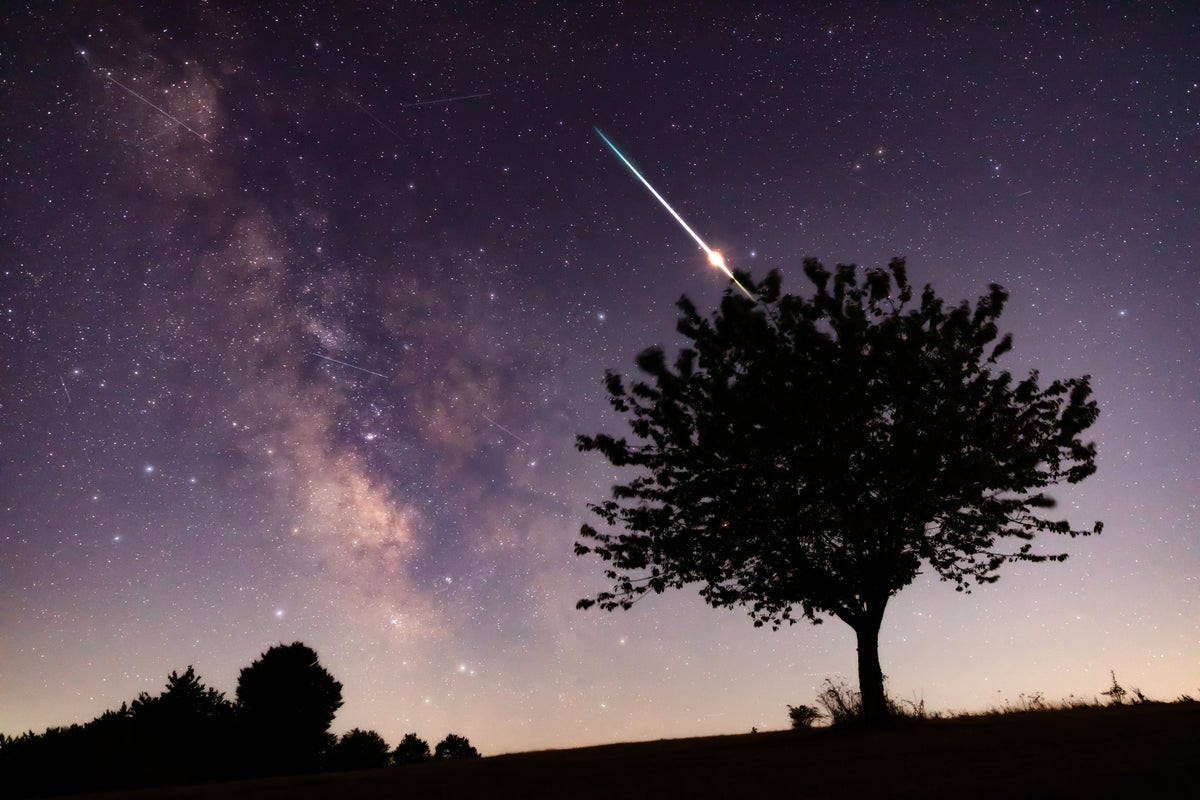
    Interstellar Meteors Hit Earth All the Time but Still Elude Astronomers


    Aliens are visiting our solar system.

    Not little green men, sadly, but natural alien objects—cosmic bodies such as comets and asteroids born elsewhere in the galaxy that zip by the sun as they drift through the Milky Way. They’re not so much visiting as just passing through.

    Though these objects were speculated to exist for a long time, we didn’t know they were out there for sure until October 2017, when astronomers noticed a small body moving through space at exceptionally high speed. Observations over just a few nights showed it was moving far too quickly to be orbiting the sun and thus must have come from some other star. It was our first known interstellar visitor.


    On supporting science journalism

    If you’re enjoying this article, consider supporting our award-winning journalism by subscribing. By purchasing a subscription you are helping to ensure the future of impactful stories about the discoveries and ideas shaping our world today.


    Eventually designated 1I/‘Oumuamua, it was 30 million kilometers from Earth and already outward bound from the solar system when it was discovered, offering scant time for follow-up studies. But then, less than two years later, a second such object was found, also moving far faster than usual. 2I/Borisov turned out to be a comet very similar to those we’re familiar with, except for its trajectory, which clearly showed it came from interstellar space.

    And now a third such alien body is barreling through the solar system: 3I/ATLAS, moving so rapidly its path is barely bent at all by the sun’s gravity as it zooms past.

    In science, one is an anomaly and two might be coincidence, but three is a trend. Clearly, objects like this are passing by on the regular. Roughly speaking, there could be ones 100 meters in size or larger passing through the inner solar system at any time. Given their speed and intrinsic faintness, though, they’re difficult to detect.

    We also know that when it comes to things such as asteroids and comets, nature tends to make many more smaller ones than bigger ones. In our own solar system, for example, only a couple of dozen main-belt asteroids are bigger than 200 km wide, but more than a million are 1 km across or larger.

    This generalization should hold for interstellar interlopers as well. For every kilometer-scale one that we see, there should be far more that are smaller. In fact, there could be millions of sand-grain-sized alien objects whizzing past us right now.

    And we already know that they’re out there: in 2014 astronomers announced they had found seven grains of cosmic dust brought down to Earth from the Stardust space probe, which was designed to catch material ejected from a comet. Also, embedded in some meteorites that have hit Earth are tiny bits of material, called presolar grains, that are so old they actually formed around other stars. They got here after being blown across the void of space into the collapsing cloud of gas and dust that formed the sun and planets 4.6 billion years ago. Larger material could be ejected from an alien planetary system if it’s given a gravitational assist when passing by a planet there, or it could be torn away from its parent star by another star passing closely to that system.

    So it seems certain interstellar jetsam would occasionally hit our planet. Earth is a small target, but with so many galactic bullets, you’d think some would actually find their way to our planetary bull’s-eye.

    The problem is detecting them. Every day Earth is hit by very roughly 100 tons of locally grown interplanetary debris—material ejected from asteroids and comets native to our solar system—which translates into billions of tiny specks zipping across our sky daily. Detecting the tiny fraction that have an interstellar origin is tough.

    And the difficulty is not just in the sheer numbers. It’s in tracing the trajectories of that small handful across the sky back up into space to calculate their orbits.

    When an object such as a planet or an asteroid orbits the sun, we say it’s gravitationally bound to our star. That orbit in general is an ellipse, an oval shape. These can be defined mathematically, with the key factor being the eccentricity: how much the ellipse deviates form a circle. A perfect circle has an eccentricity of 0, and the higher the eccentricity, the more elliptical the orbit, up to a value of just under 1. An orbit with an eccentricity of 0.99, say, is extremely elongated; you might find that an object dropping down very close to the sun from the outer solar system has an eccentricity that high.

    It’s possible to have an eccentricity higher than 1 as well. That kind of trajectory is called hyperbolic—named after the mathematical curve, not because it’s exaggeratedly over-the-top—and an object on this path is not bound to the sun gravitationally. Once it’s heading out, it’s gone forever. It ain’t coming back.

    This is how we know ‘Oumuamua, Borisov and ATLAS are from interstellar space; each has an eccentricity greater than 1—‘Oumuamua’s is about 1.2 and Borisov’s 3.4, which is quite high, but ATLAS has them both beat with an astonishing eccentricity of 6.2. That’s extraordinarily high and also indicates it’s hauling asteroid (or, more accurately, it’s not comet back).

    Do we see any meteors with eccentricities like these?

    If the exact path of a meteoroid (the term for the solid bit that burns up in the air and becomes a meteor) through Earth’s atmosphere can be determined, that can be backtracked up into space, allowing the object’s trajectory, including its eccentricity, to be calculated. This can be done with multiple sky cameras set up in various locations; if a meteor streaks across their field of view, the multiple vantages can allow astronomers to triangulate on the rock and measure its path.

    There are quite a few such camera networks. It’s actually difficult getting good enough data to determine solid orbits for meteoroids, though. Many do have eccentricities very close to 1; these likely come from long-period comets that originate out past Neptune.

    NASA’s Jet Propulsion Laboratory maintains a database of bright fireballs—exceptionally luminous meteors—at the Center for Near-Earth Object Studies (CNEOS). The earliest recorded meteors in the database date back to 1988, so there is a rich hunting ground in the data. Are any of the meteors listed hyperbolic? Unfortunately, no. At least, not unambiguously—there have been false positives but nothing clear-cut.

    Additionally, a study from 2020 looked at 160,000 measurements by the Canadian Meteor Orbit Radar covering 7.5 years. The researchers found just five potential interstellar meteors. The results aren’t quite statistically strong enough to claim detections for sure, but they’re very compelling.

    What we need are more eyes on the sky, more meteor camera networks that can catch as many of these pieces of cosmic ejecta burning up in our atmosphere as possible. It’s a numbers game: the more we see, the more likely we’ll see some that are not from around here. The science would be, well, stellar: these meteors can tell us a lot about the environments around other stars, the ways they formed and perhaps even the stars they come from.

    We’re getting physical samples from the greater galaxy for free. We should really try to catch them.

    Hat tip to planetary scientist Michele Bannister for the link to the CNEOS article.


    Original Source Link

    Share. Facebook Twitter Pinterest LinkedIn WhatsApp Email Reddit Telegram
    Previous ArticleThe Fantastic Four: First Steps + Ralph Ineson | What Does That Nature Say To You | The Green Ray (1986)
    Next Article ‘Wizard of Oz’ blown up by AI for giant Sphere screen

    RELATED POSTS

    The Ovary Is Surprisingly Active After Menopause. Scientists Are Trying to Figure Out Why

    September 24, 2026

    Blood test for multiple cancers clears crucial hurdle on track to FDA approval

    September 24, 2026

    A Startup Wants to Power Data Centers With ‘Supercritical’ Carbon Dioxide

    September 23, 2026

    Scientists discover largest new impact crater in the solar system ever—on our moon

    September 23, 2026

    Residents Harmed by Oil Drilling May Soon Receive Reparations Under New California Law

    September 22, 2026

    What a Trump order to put political appointees in charge of NIH funding would mean for science

    September 22, 2026
    latest posts

    19 Big-Name Punk Bands With Only One Original Member Left

    For some, being in a punk band isn’t for the faint of heart.This especially rings…

    Like Jamie Dimon, Databricks CEO hates days with too many meetings—it means he gets nothing done

    September 24, 2026

    The White House Was Too Scared To Wake Trump Up To Lift Reporter Ban

    September 24, 2026

    Macklemore announces ‘Free Palestine Tour’ after Ed Sheeran firing

    September 24, 2026

    Google Photos ‘Clueless’-inspired virtual closet is now available on Android and iOS

    September 24, 2026

    The Ovary Is Surprisingly Active After Menopause. Scientists Are Trying to Figure Out Why

    September 24, 2026

    Charles Melton: ‘It was like a waking dream’

    September 24, 2026
    Categories
    • Books (1,510)
    • Business (6,414)
    • Events (76)
    • Film (6,348)
    • Lifestyle (4,413)
    • Music (6,478)
    • Politics (6,401)
    • Science (5,766)
    • Technology (6,347)
    • Television (6,038)
    • Uncategorized (9)
    • US News (6,401)
    popular posts

    Serena Kerrigan’s Essentials for Effing Dating

    Serena Kerrigan’s Essentials for Effing DatingWritten by: the Editors of goop | Published on: January…

    Tom Waits Shares Previously Unreleased Version of “Get Behind the Mule”: Listen

    August 12, 2024

    Ryan Paevey on Meeting Fans, Catching Waves & His Jump From ‘GH’ to Hallmark Channel

    June 26, 2022

    Australian Music Retailer Sanity to Close – Billboard

    January 4, 2023
    Archives
    Browse By Category
    • Books (1,510)
    • Business (6,414)
    • Events (76)
    • Film (6,348)
    • Lifestyle (4,413)
    • Music (6,478)
    • Politics (6,401)
    • Science (5,766)
    • Technology (6,347)
    • Television (6,038)
    • Uncategorized (9)
    • US News (6,401)
    About Us

    We are a creativity led international team with a digital soul. Our work is a custom built by the storytellers and strategists with a flair for exploiting the latest advancements in media and technology.

    Most of all, we stand behind our ideas and believe in creativity as the most powerful force in business.

    What makes us Different

    We care. We collaborate. We do great work. And we do it with a smile, because we’re pretty damn excited to do what we do. If you would like details on what else we can do visit out Contact page.

    Our Picks

    The Ovary Is Surprisingly Active After Menopause. Scientists Are Trying to Figure Out Why

    September 24, 2026

    Charles Melton: ‘It was like a waking dream’

    September 24, 2026

    Who Is Still Alive From ‘Petticoat Junction’?

    September 24, 2026
    © 2026 New York Examiner News. All rights reserved. All articles, images, product names, logos, and brands are property of their respective owners. All company, product and service names used in this website are for identification purposes only. Use of these names, logos, and brands does not imply endorsement unless specified. By using this site, you agree to the Terms & Conditions and Privacy Policy.

    Type above and press Enter to search. Press Esc to cancel.

    We use cookies on our website to give you the most relevant experience by remembering your preferences and repeat visits. By clicking “Accept All”, you consent to the use of ALL the cookies. However, you may visit "Cookie Settings" to provide a controlled consent.
    Cookie SettingsAccept All
    Manage consent

    Privacy Overview

    This website uses cookies to improve your experience while you navigate through the website. Out of these, the cookies that are categorized as necessary are stored on your browser as they are essential for the working of basic functionalities of the website. We also use third-party cookies that help us analyze and understand how you use this website. These cookies will be stored in your browser only with your consent. You also have the option to opt-out of these cookies. But opting out of some of these cookies may affect your browsing experience.
    Necessary
    Always Enabled
    Necessary cookies are absolutely essential for the website to function properly. These cookies ensure basic functionalities and security features of the website, anonymously.
    CookieDurationDescription
    cookielawinfo-checkbox-analytics11 monthsThis cookie is set by GDPR Cookie Consent plugin. The cookie is used to store the user consent for the cookies in the category "Analytics".
    cookielawinfo-checkbox-functional11 monthsThe cookie is set by GDPR cookie consent to record the user consent for the cookies in the category "Functional".
    cookielawinfo-checkbox-necessary11 monthsThis cookie is set by GDPR Cookie Consent plugin. The cookies is used to store the user consent for the cookies in the category "Necessary".
    cookielawinfo-checkbox-others11 monthsThis cookie is set by GDPR Cookie Consent plugin. The cookie is used to store the user consent for the cookies in the category "Other.
    cookielawinfo-checkbox-performance11 monthsThis cookie is set by GDPR Cookie Consent plugin. The cookie is used to store the user consent for the cookies in the category "Performance".
    viewed_cookie_policy11 monthsThe cookie is set by the GDPR Cookie Consent plugin and is used to store whether or not user has consented to the use of cookies. It does not store any personal data.
    Functional
    Functional cookies help to perform certain functionalities like sharing the content of the website on social media platforms, collect feedbacks, and other third-party features.
    Performance
    Performance cookies are used to understand and analyze the key performance indexes of the website which helps in delivering a better user experience for the visitors.
    Analytics
    Analytical cookies are used to understand how visitors interact with the website. These cookies help provide information on metrics the number of visitors, bounce rate, traffic source, etc.
    Advertisement
    Advertisement cookies are used to provide visitors with relevant ads and marketing campaigns. These cookies track visitors across websites and collect information to provide customized ads.
    Others
    Other uncategorized cookies are those that are being analyzed and have not been classified into a category as yet.
    SAVE & ACCEPT