
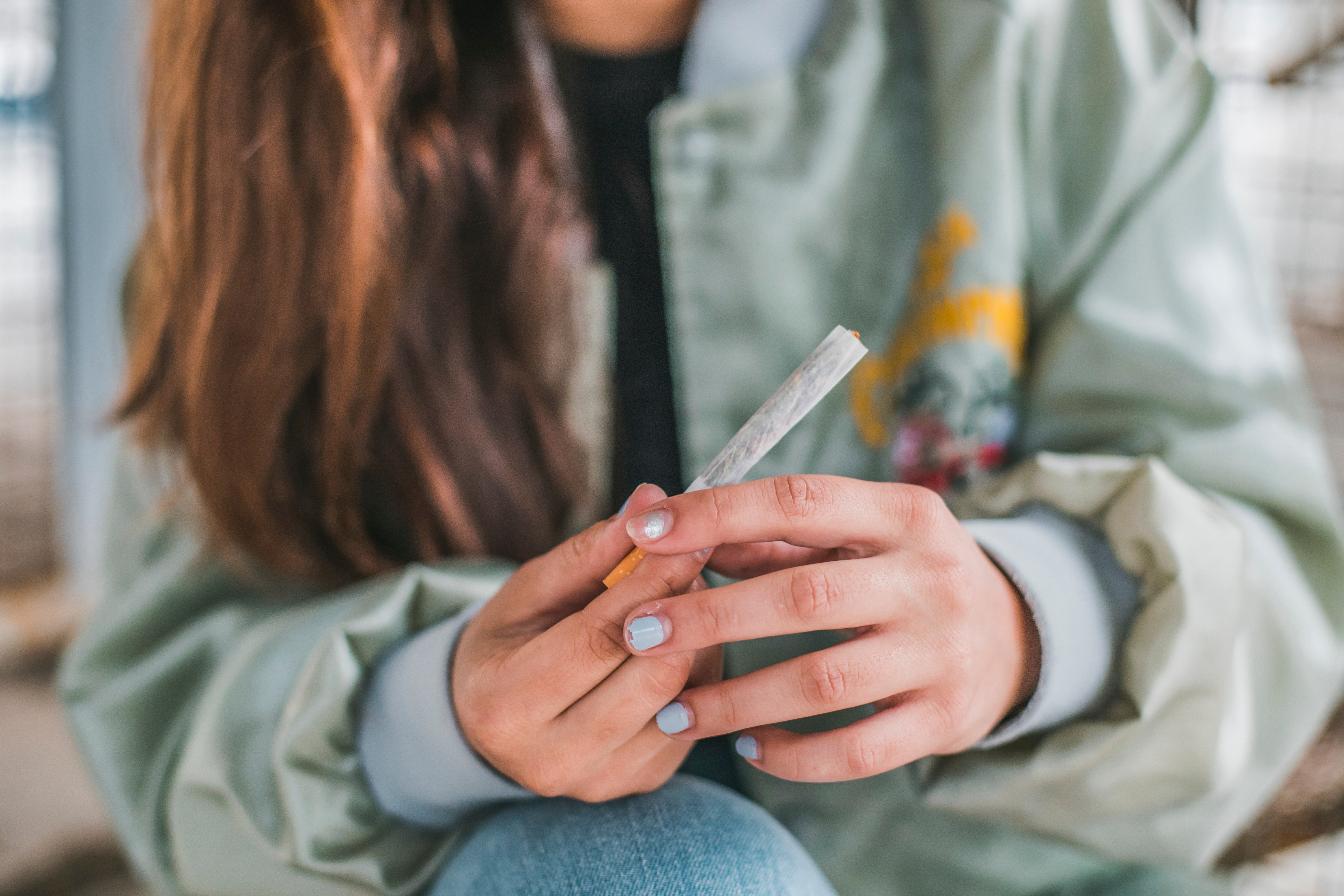
Krista Lisdahl has been studying cannabis use among adolescents for two decades, and what she sees makes her worried for her teenage son.
“I see the data coming in, I know that he is going to come across it,” she says.
As a clinical neuropsychologist at the University of Wisconsin–Milwaukee, she sees plenty of young people who have come into contact with the drug to varying degrees, from trying it once at a party to using potent preparations of it daily. The encounters have become more frequent as efforts to legalize cannabis for recreational use intensify around the world. In some of her studies, around one-third of adolescents who regularly use cannabis show signs of a cannabis use disorder — that is, they can’t stop using the drug despite negative impacts on their lives. But she wants more conclusive evidence when it comes to talking about the drug and its risks to young people, including her son.
Deciding what to say is difficult, however. Anti-drug messaging campaigns have dwindled, and young people are forced to consider sometimes-conflicting messages on risks in a culture that increasingly paints cannabis and other formerly illicit drugs as harmless or potentially therapeutic. “Teenagers are pretty smart, and they see that adults use cannabis,” Lisdahl says. That makes blanket warnings and prohibitions practically useless.
It’s now a decade since the drug was officially legalized for recreational use by adults aged 18 and older in Uruguay, and aged 21 and older in the states of Colorado and Washington. Many other states and countries have followed, and researchers are desperately trying to get a handle on how usage patterns are changing as a result; how the drug impacts brain development; and how cannabis use correlates with mental-health conditions such as depression, anxiety and schizophrenia.
The data so far don’t tell clear stories: young people don’t seem to be using in greater numbers than before legalization, but there seem to be trends towards more problematic use. Frequent use also coincides with higher rates of mental-health issues and the risk of addiction, but there could be other explanations for these trends. Experimental studies in humans and animals could help, but they are stymied by the fact that cannabis is still illegal in many places. And it is difficult to study the same products and potencies that people can now readily access.
As a result, some researchers worry that society is stumbling, unaware, into a big public-health problem. “I am concerned that this will hit us like tobacco hit us,” says Nora Volkow, director of the National Institute on Drug Abuse in Bethesda, Maryland. Even if the risks of cannabis use are small, “it’s like playing roulette,” she says.
In the hope of getting a better handle on the situation, her agency funded the Adolescent Brain Cognitive Development (ABCD) study. Started in 2015, ABCD recruited more than 10,000 children aged 9 and 10, with the goal of taking annual images of their brains to monitor how different factors affect their development. Participants are now between 16 and 18, and some are starting to come into contact with the drug, says Lisdahl, who co-leads the project. “So we should be able to really measure the impact of starting cannabis,” she says.
Changing patterns of use
Medicinal cannabis has been legal in some parts of the United States since 1996, but Colorado and Washington led the way on legalizing its recreational use when the issue was put to public votes in 2012. Uruguay was the first country to legalize the sale of the drug for recreational use the following year. There were fears that legalization would result in a flood of adolescent users, but so far, this doesn’t seem to be the case, says Angela Bryan, a neuroscientist at the University of Colorado, Boulder. “Paradoxically, the legalization of cannabis has decreased use among adolescents”, at least in her state, she says.
A series of biennial surveys by the Colorado Department of Public Health and Environment found that cannabis use among students aged 14–18 declined from a stable rate of about 21% during 2005–19 to 13% in 2021 (see go.nature.com/47yojx9). Nationwide usage patterns seem to show a similar dip, which one study associated with the COVID-19 pandemic.
But legalization is bound to have varying effects in different areas, says James MacKillop, a clinical psychologist at McMaster University in Hamilton, Canada. There was no initial spike in cannabis use among adolescents when it was legalized in Canada for adults aged 18 and older 5 years ago. But there was a rise in use when illegal cannabis stores that are not licensed by the government began to open, he says.
Now, “There are more cannabis storefronts than there are Tim Hortons,” says MacKillop, referring to a famously ubiquitous Canadian coffee shop. Some negative consequences might also be emerging. A recent study in Ontario found that residents who were within walking distance of a cannabis dispensary were more likely to attend a hospital for treatment of psychosis — which is increasingly being linked to high-potency cannabis products.
A hemisphere away, Uruguay saw an initial spike in usage among those age 18 to 21 as legalization rolled out in 2014. But usage quickly went back to pre-legalization levels, according to survey results. The survey also found no increase in adolescents developing addiction or having more problematic use of cannabis. This could be because of a slew of factors, says Ariadne Rivera-Aguirre, a social epidemiologist at New York University, who led the survey. These include the fact that Uruguay has set limits on the potency of products sold legally, banned advertisements on packaging and only permits the sale of cannabis flower products — no edibles or concentrates.
Rivera-Aguirre measured not just how many adolescents were using cannabis, but also how many were using it at problematic levels, which she says many past surveys haven’t taken into account. The spike in use might have been the result of increased discussion and media attention surrounding legalization, Rivera-Aguirre says. Many others are also interested in understanding when casual use becomes problematic. “That’s where I think the research needs to focus, rather than worrying about the typical 17-year-old who has a joint at a party,” says Bryan.
Whereas use hasn’t exploded in people under 21, there are concerns about the types of product being sold. Increasingly, what is available at dispensaries — at least outside Uruguay — has much higher concentrations of delta-9-tetrahydrocannabinol (THC), the main active ingredient in cannabis. “The cannabis of today is not the cannabis of yesteryear,” says Ryan Sultan, a clinical psychiatrist at Columbia University in New York City. The THC concentration in products obtained by the US Drug Enforcement Administration has increased by more than threefold since 1996 (see go.nature.com/3r7fmbm), and many dispensaries sell vaping fluids and products for ‘dabbing’, a method of consuming concentrated THC that can deliver large amounts of the drug into a person’s lungs.
Health impacts
High-potency preparations carry much higher risks of inducing psychosis, and some researchers fear that this could have long-term effects. “The thing that the psychiatric community is scared to their bones about is the link between cannabis and schizophrenia,” says Sultan.
A study of more than 40,000 people with schizophrenia in Denmark, where cannabis has been legal since 2018, found that around 15% of cases could be tied to cannabis use disorder, with that figure being even higher in young men.
But it is unclear whether the association in Denmark is causal or not, says Carsten Hjorthøj, an epidemiologist at the University of Copenhagen who led the work. It could be that those with schizophrenia are seeking out cannabis to self-medicate. There are similar issues in clarifying the connections between cannabis and depression and anxiety, but the associations are there.
In a study of almost 70,000 adolescents in the United States, Sultan found that around 1 in 40 were addicted to cannabis. Another 1 in 10 used cannabis but were not addicted. Even in this group, young people were twice as likely to experience bouts of depression along with other negative outcomes, such as skipping school, having lower grades than non-users and being arrested.
Some researchers are working on establishing possible mechanisms by which cannabis can affect mental health, and others are finding connections through surveys and health records. Many are hoping that more conclusive results will come from long-term studies such as ABCD.
Studies that just look at connections at a single point in time are limited. “You have to wonder, what is the reason that you find that adolescent cannabis users show higher levels of depression?” asks Madeline Meier, a clinical psychologist at Arizona State University in Tempe. “Is that because the cannabis caused depression in these adolescents, or is it because adolescents with depression selectively seek out cannabis? Or is there some third variable?”
What’s going on in the brain?
Cannabis works by mimicking natural cannabinoid neurotransmitters in the body, which can activate a handful of receptors in the brain. “It’s mimicking that system, but it’s cheating the system,” Lisdahl says, because high-potency THC products are stimulating receptors much more than everyday activities would.
In adolescents, one of the main concerns is THC’s ability to bind easily to one receptor, called CB1. These receptors are found all over the brain, but they are particularly common in areas associated with reward and executive functioning — which includes memory and decision-making. CB1 is more abundant in adolescent brains than in adult ones.
Researchers are trying to see how the prolonged use of cannabis, especially products with high concentrations of THC, can affect mental health or cognitive function. Meier and her colleagues analysed the effect of cannabis use into adulthood for a group of around 1,000 people born between 1972 and 1973. They found that those who used cannabis consistently scored lower, on average, on IQ tests than did those who used cannabis less frequently or not at all. And this effect was most pronounced in people who started using cannabis in adolescence.
Meier says her work points to infrequent cannabis use in adolescence not leading to significant cognitive decline. But, she says, “it’s enough to urge caution against using.” The bigger issue, to her, is that people who start using during adolescence are at a higher risk of long-term use.
One criticism of her team’s study, Meier says, is that it didn’t account for other factors that affect cognitive function, such as genetics and socio-economic status.
These criticisms were all considered when designing the ABCD study, Volkow says. By recruiting 10,000 children from various backgrounds, the study is likely to include a sufficiently large and diverse group of frequent cannabis users. Over the course of the study, researchers will be imaging participants’ brains, tracking academic test scores and measuring cognitive function, all while interviewing them about their contact with drugs. Many think that it will be able to paint as accurate a picture of the effects of cannabis as one study can.
And its timing should also help researchers to understand the long-term effect of high-potency THC products, because many of the participants are likely to end up trying these. Efforts to study such products in the United States have been hampered by the fact that cannabis is still illegal at the federal level. Publicly funded research institutions can access only one strain of cannabis, and it is notoriously weaker than the products sold in dispensaries or on the street.
“Certain kinds of research are not being done because it takes so many complicated steps,” says R. Lorraine Collins, a psychologist at the University at Buffalo in New York. “It adds extra costs and extra staffing.” And as for research-grade cannabis, study participants “don’t like it at all”, says psychiatrist Jesse Hinckley, who specializes in adolescent addiction at the University of Colorado Anschutz Medical Campus in Aurora.
Some researchers have created workarounds to study cannabis on the streets. Bryan and others in Colorado have fashioned several vans into mobile laboratories, which they call canna-vans, to allow them to test the blood of cannabis users before and after they take the drug. The researchers have begun to expand their work to adolescents.
Volkow is working to make research on cannabis relevant to the current landscape — one rife with vaping, dabbing, edibles and other products. And Lisdahl is gearing up for the next stage of the ABCD study. Most of her cohort is now aged between 16 and 18 — the point at which she and others are expecting that some will begin using cannabis. When Lisdahl talks to the young people in her study and their parents, she worries that there’s little concrete guidance on cannabis safety — so she has to give advice on a case-by-case basis.
“I would just like to have information for the teens and for the adults to make better decisions for themselves,” Lisdahl says.
She also hopes to nail down how much cannabis is too much, and what contributes to the risk of developing a cannabis use disorder. This might differ from person to person, and could involve genetics and even the structure of the brain. All of this could help her in conversations with her own son. “He has lofty academic goals and I’ve seen that cannabis disrupts things like speed of thinking, complex attention and short-term memory, and it affects grades negatively.” For now, she hopes that pointing this out will make a difference, or at the very least, keep him informed of the risks.
This article is reproduced with permission and was first published on December 11, 2023.