
When I was a child, my grandma was diagnosed with breast cancer. She had a radical mastectomy at 55, which back then meant removing all her muscle, skin, and breast tissue – a disfiguring surgery that resulted in lingering pain, swelling, and complete loss of sensation in her chest.
Grandma couldn’t feel a burn if she spilled hot coffee on her chest or the telling breeze if the collar of her blouse dipped too low. All she could sense was pressure, if I leaned against her too hard while sitting on her lap or giving her a hug.
Modern mastectomy and breast reconstruction have come leaps and bounds since then, but most approaches still result in full sensation loss in the nipple and breast due to nerve damage from stretching and cutting the breast tissue. Until now, that is.
Through a journey marked by curiosity, stubbornness, and a little luck, my plastic surgery colleague Nicholas Haddock, M.D., and I have developed a first-of-its-kind robotic nipple-sparing mastectomy (rNSM) and reconstruction procedure that provides remarkably natural-looking outcomes while preserving full breast sensation.
Rather than making incisions in the underwire area below the breasts, we use a single-port robot to enter the breast from the armpit to remove tissue and reconstruct the breast, avoiding the nerve damage that results in desensitization.
Against a backdrop of heavy scrutiny and some controversy, UT Southwestern supported our efforts to bring this advanced procedure to the U.S. and our patients in North Texas – giving them access to a leading-edge treatment that eliminates their cancer without some of the disheartening long-term side effects of mastectomy.
In January 2024, we published the results of a four-year study in JAMA Surgery showing that single port robotic nipple-sparing mastectomy is not only a safe and feasible approach to breast reconstruction, it also gives patients a very good chance of retaining some or all of the sensitivity in their breasts.
Making discoveries in the Sim Center
UT Southwestern is home to one of the largest and most sophisticated simulation centers in the country. It’s where we train everyone from medical students to accomplished surgeons, and our Sim Center is particularly well-equipped for training on robot-assisted procedures.
Some breast surgeries, such as NSM, are difficult to teach in a simulation setting because the surgeon’s field of vision is very limited – if you can’t see the exact steps, it’s challenging to explain.
This got me thinking. If I could take a page from the robotic surgery handbook and insert a small camera into the breast during surgery, perhaps I could help trainees better visualize the steps of the NSM procedure.
As it turns out, I wasn’t the only surgeon thinking this way. Multiple sessions at the 2018 American College of Surgeons meeting revolved around next steps in laparoscopic and robotic surgery, which offer more precise visualization and smaller incisions. What I heard there reinforced the idea that had started marinating in my brain: If I could figure out a way to do robotic NSM, my teaching would improve, and potentially, so would my patients’ outcomes.
So after the night’s final session, I drank way too much coffee and stayed up until 3 a.m. writing an email outlining my vision for rNSM to Herbert Zeh III, M.D., Professor and Chair of the Department of Surgery at UT Southwestern.
Dr. Zeh, who is a pioneer in the field of robotic surgery, replied within five minutes to say that if I could figure it out, he would support my research. Coincidentally, our idea was born just as surgical watchdogs and the FDA were raising concerns around the safety of robotic breast surgery.
That put a big target on the back of growing rNSM, since it wasn’t yet being done in the U.S. and hadn’t been deeply studied internationally. But if we can’t study new approaches at academic medical centers like UT Southwestern, how else can discoveries happen?
Undeterred, Dr. Haddock and I got Dr. Zeh’s blessing and started making plans for a trip overseas to pursue more than a month of intensive training.
New approach, new robot
In 2018, only three centers in the world were doing robotic breast surgery: hospitals in Paris, Milan, and Seoul. I reached out to surgeons at these hospitals, and Dr. Haddock and I were invited to Italy to observe the surgeon who, at the time, had done the most robotic mastectomies in the world.
The moment we saw the first procedure, we immediately understood why the FDA had issued their statement. Surgical robots that were widely available at the time had multiple ports and large, bulky arms designed for abdominal surgery – not a small, delicate area like the breast.
Learning rNSM was definitely going to be harder than we imagined. But we embraced the opportunity. After watching a few cases, we agreed that with some modifications, we could make this happen stateside.
As luck would have it, a single-port robot with four small arms designed for intricate cancer surgeries had just become available on the market, and UT Southwestern had invested in one for the Department of Urology. I was able to access to it to get credentialed, and eventually train to do the rNSM procedure.
The single-port robot makes it possible to maneuver the camera like a cobra, snaking and swiveling for a more encompassing view in a smaller space, which was ideal for rNSM.
After months of diligent practice, I earned my credentialing. The next step was to get permission to use it “off label” and study the effectiveness of rNSM. We applied to UT Southwestern’s Institutional Review Board (IRB) – an independent set of experts who observe new surgical procedures – to begin performing the procedure with real patients who fit the surgical criteria:
Breast cancer or a high risk of genetic breast cancer, such as BRCA1- or BRCA2-associated cancers
Smaller breasts with limited sagging, so we can properly align the nipple in reconstruction
The cancer cannot be near the nipple so we can preserve
No pre-existing breast implants
We received IRB approval in 2020 and began enrolling patients in our first clinical trial to study rNSM.
How the single-port rNSM procedure works
Robot-assisted procedures require two providers – one at the bedside and one controlling the robot from a console across the operating room. For rNSM, I operated the robot while Dr. Zeh was at bedside, helping articulate the borders of the breast tissue. After several surgeries, he taught a physician assistant to serve in this role.
After I separate the breast tissue from the skin, I insert the narrow arm of the robot into the breast through an axillary incision in the armpit. Then I separate the breast tissue from the chest muscle to remove the tissue through the incision. Using the robot’s flexible camera tip, I can assess the entire empty breast space for remaining tissue to remove it thoroughly. Approaching from the armpit and side of the breast also provides easy access to remove nearby lymph nodes.
Then Dr. Haddock places a tissue expander, which looks like an inflated mini-pillow, to start the reconstruction. For patients who want to use their own tissue for reconstruction, he can harvest a banana-shaped piece of tissue from where the buttocks meet the thighs (PAP flap), along with the blood vessel that supplies it. He then slides the tissue and vessel into the breast through the incision and curls it to fill the space.
UT Southwestern was the first hospital in the U.S. to perform a single-port robotic nipple-sparing mastectomy and PAP reconstruction.
Every patient retained breast sensation
Several cases into our initial study, we noticed a surprising trend. Every single one of the patients in the initial study had retained sensitivity in their breasts. Women were reporting “hyper-sensation” and full sexual function in follow-up, saying they could feel soft touch as well as pressure in the nipple and breast.
Dr. Haddock and I were floored. In a traditional mastectomy, the breast tissue and nerves are often stretched and potentially severed from the incisions and manipulation of the tissue. Even if the reconstructed breasts looked fantastic, patients would often feel as if their breasts were numb and detached, similar to how your legs feel after getting an epidural.
With rNSM, nerve disruption is somehow significantly reduced. Entering through the side is much gentler, and we suspect this is why our patients retained sensation. We started doing formal sensation measurements with each patient on follow up, and every one in the initial study maintained sensation.
We had achieved the original goals of the procedure – better teaching visualization and more aesthetic outcomes. But we’d also fortuitously unlocked an achievement that surgeons have been trying to attain for a decade: eliminating breast cancer without reducing a woman’s quality of life.
Patients began spreading the word, and people in the medical community got wind of our outcomes – including the FDA, which in 2021 invited us to apply for an investigational device exemption (IDE). That would grant a formal license to hold a larger clinical trial, which we launched in January 2022, and the results to date have been outstanding. We have performed more than 60 rNSM procedures, and 88% of patients have retained sensation.
When I presented our outcomes data nationally the first time, many surgical oncologists were baffled that we could perform a thorough mastectomy through such a small incision. Surely, they said, we were leaving breast tissue behind. The anatomical visualization was too small, the instruments too tiny, the surgical incision too narrow – the naysayers went on and on. But we stood behind our oncologically valid surgery, our patients’ experiences, and our data.
Dr. Zeh organized a robotic surgery symposium in 2022 and invited surgeons from around the U.S. to observe UT Southwestern’s successful, yet controversial robot-assisted procedures: robotic Whipple for pancreatic cancer, robotic hepatectomy for liver cancer, and rNSM. Seeing is believing. Surgeons who observed us realized that rNSM is the same oncologic surgery they were used to, but with functional and aesthetic results.
The future of single-port rNSM
In the past, there was a ferocious approach to eradicating breast cancer at any cost to a patient’s happiness and appearance. Today, our passion to save patients’ lives remains undeterred but we are also able to focus on enhancing women’s quality of life after treatment.
The next phases of our research will be to determine exactly why our procedure preserves sensation, how we can more precisely select lymph nodes for removal, and how we can broaden the surgical criteria to offer rNSM to more patients.
Though preserving sensation was not the original goal of rNSM, it has definitely become the most exciting outcome. We’ve welcomed patients from around the country – California, Minnesota, Florida – to participate in our clinical study, which involves returning to UTSW for scans and sensation testing every six months after surgery. And a national clinical study is starting soon at multiple centers to study rNSM.
Radical mastectomy was all there was to offer when my grandmother battled breast cancer, and she died from what today is a highly curable disease. I think she’d be pleased to see the progress we are making, and glad that today’s patients have more opportunities for a cure for breast cancer.
About UT Southwestern Medical Center
UT Southwestern, one of the nation’s premier academic medical centers, integrates pioneering biomedical research with exceptional clinical care and education. The institution’s faculty members have received six Nobel Prizes and include 26 members of the National Academy of Sciences, 21 members of the National Academy of Medicine, and 13 Howard Hughes Medical Institute Investigators. The full-time faculty of more than 3,100 is responsible for groundbreaking medical advances and is committed to translating science-driven research quickly to new clinical treatments. UT Southwestern physicians provide care in more than 80 specialties to more than 120,000 hospitalized patients, more than 360,000 emergency room cases, and oversee nearly 5 million outpatient visits a year.
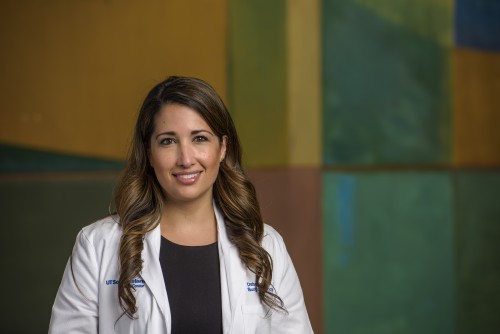
By Deborah Farr, M.D., Associate Professor of Surgery, UT Southwestern Medical Center
Related
The material in this press release comes from the originating research organization. Content may be edited for style and length. Want more? Sign up for our daily email.