
Close Menu
New York Examiner News

    Subscribe to Updates

    Get the latest creative news from FooBar about art, design and business.

    What's Hot

    Klein Surprise Releases New Album My Own Fairytale

    September 28, 2026

    Saudi Arabia is reaping a massive oil windfall, making it perhaps the Iran war’s only winner

    September 28, 2026

    New Canaan Football Remains Unscored Upon Through 3 Games

    September 28, 2026
    Facebook X (Twitter) Instagram
    New York Examiner News
    • Home
    • US News
    • Politics
    • Business
    • Science
    • Technology
    • Lifestyle
    • Music
    • Television
    • Film
    • Books
    • Contact
      • About
      • Amazon Disclaimer
      • DMCA / Copyrights Disclaimer
      • Terms and Conditions
      • Privacy Policy
    New York Examiner News
    Home»Science»Ocean Discoveries Are Revising Long-Held Truths about Life
    Science

    Ocean Discoveries Are Revising Long-Held Truths about Life

    By AdminJuly 22, 2022
    Facebook Twitter Pinterest LinkedIn WhatsApp Email Reddit Telegram
    Ocean Discoveries Are Revising Long-Held Truths about Life


    For more than 50 years deep-sea exploration has been a continuous fount of discoveries that change how we think about life in the ocean, on dry land and even beyond our planet. Consider the following three events.

    On October 16, 1968, a cable tethering the submersible Alvin to a research ship located 100 miles off Nantucket broke. The sub sank to the seafloor more than 5,000 feet below; the crew of three escaped safely. Nearly a year later, when a team brought Alvin back to the surface, the biggest surprise was that the crew’s lunch—bologna sandwiches and apples in a plastic box—was strikingly well preserved. Bacteriological and biochemical assays proved it. Someone even took a bite. Subsequent experiments in the Woods Hole Oceanographic Institution laboratory where I’m writing this article found that rates of microbial degradation in the retrieved samples were 10 to 100 times slower than expected. This discovery, and others, led to the conclusion that metabolic and growth rates among deep-sea organisms were much slower than those of comparable species at the ocean’s surface.

    In 1977 scientists diving in the restored Alvin made another historic discovery—the first in-person observations of life around hot, hydrothermal vents rising from the seafloor. This sighting overturned the long-held view that our entire planetary food web was built on photosynthesis—using sunlight’s energy to convert carbon dioxide and water into complex carbohydrates and oxygen. The hydrothermal organisms, and the entire ecosystem, thrived in pure darkness, converting chemicals in the vent fluid into life-sustaining compounds through a process we now call chemosynthesis.

    If that revelation wasn’t surprising enough, an expedition I was part of in 1993 exposed an earlier mistaken belief. We had discovered a significant hydrothermal vent ecosystem on the East Pacific Rise. The system had been destroyed by a seafloor eruption just a few years earlier, yet it had already been bountifully recolonized. A bologna sandwich might decay so slowly in the deep that you could eat it a year later, but it turned out that biological processes in the deep sea could be extremely fast as well.

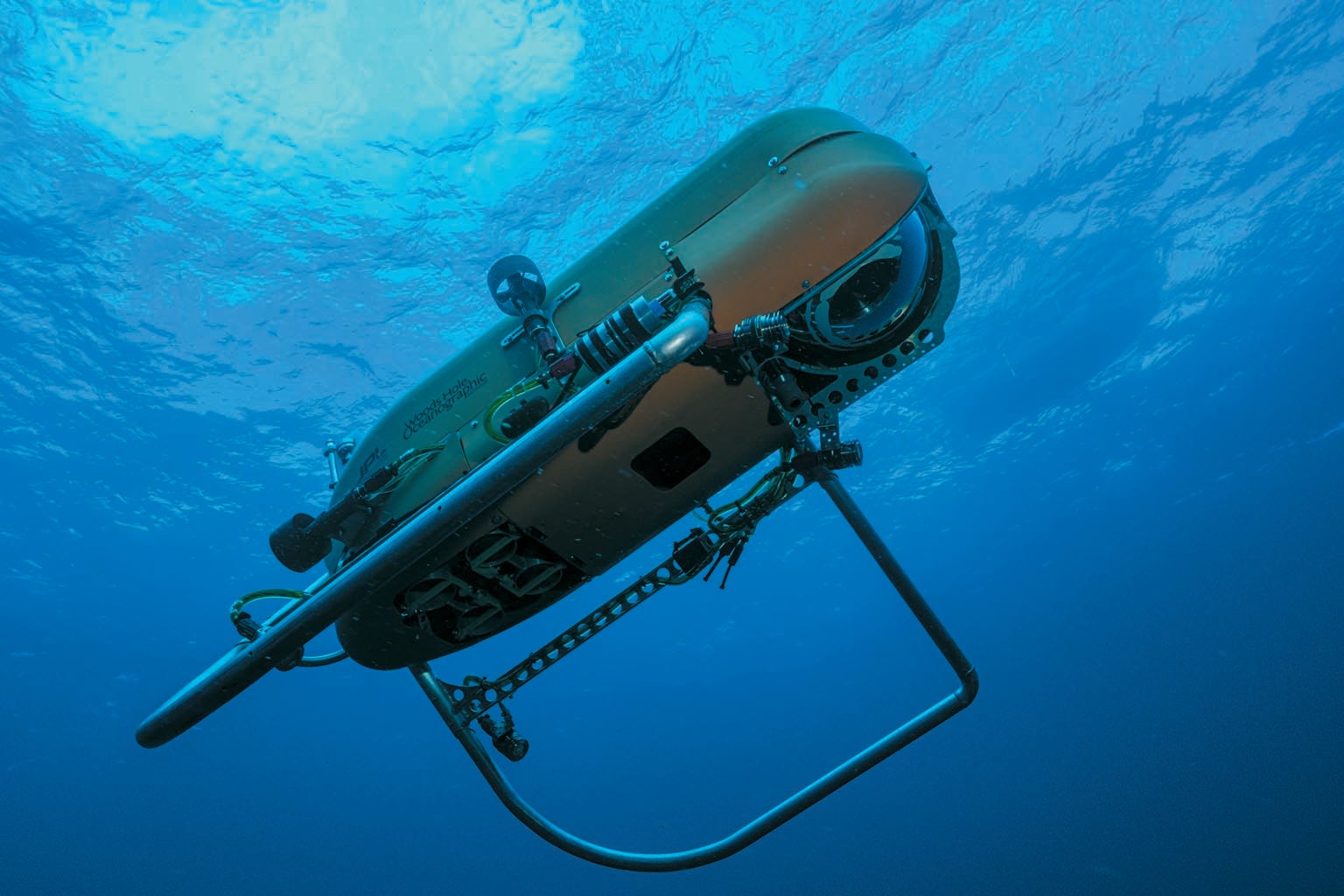
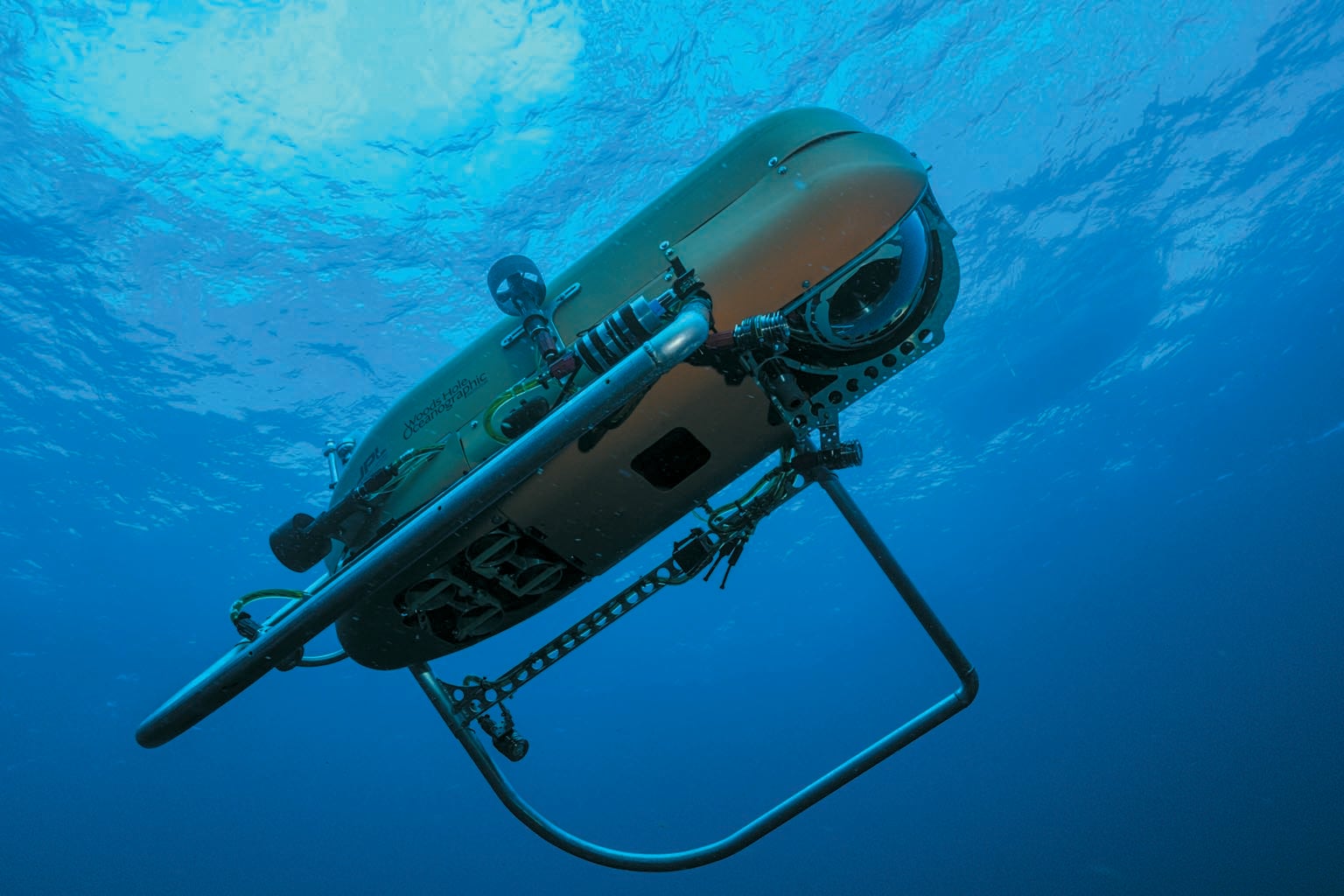
    Each new ocean discovery that disrupts old dogma reinforces a much larger truth: the ocean is far more complex—and much more intertwined with our own lives—than we ever imagined. For much of the 20th century, for example, scientists maintained that the deep ocean was a harsh, monotonous place of perpetual darkness, frigid temperatures, limited food and extreme pressure—conditions that should make complex forms of life impossible. But new tools for observing, sensing and sampling the deep ocean, such as increasingly sophisticated underwater vehicles with high-definition camera systems, have demonstrated that biodiversity in the darkest depths may rival that of rain forests and tropical coral reefs. These missions have further revealed that the depths are far from uniform; like kangaroo habitat in Australia and tiger lands in Asia, they are home to evolutionarily distinct biogeographic regions.

    We are beginning to appreciate how connected these realms are to our own. The rapid three-dimensional change of conditions such as temperature, salinity and oxygen concentration in the deep ocean and the currents and eddies that establish the boundaries of these provinces are expected to fundamentally change as the effects of human activity reach ever farther below the surface. Already lobsters are moving to deeper, colder waters and molting at different times of the year. Commercially important groundfish such as cod and haddock are migrating poleward in search of more suitable habitat.

    We are seeing that the ocean’s biogeographic boundaries are neither immutable nor beyond the imprint of humans. In studies, more than half of sampled hadal organisms—those living in the deepest parts of the ocean, beyond 20,000 feet—had plastics in their gut. PCBs, which were banned in the U.S. in 1979 and phased out internationally as part of the Stockholm Convention beginning in 2001, are also common in tissues of animals from the extreme bottoms of the sea.

    We are also starting to learn that life in the deep might have things to teach us. Deep-sea fish produce biomolecules called osmolytes that permit cellular functions, such as the precise folding and unfolding of proteins, to proceed unimpeded by crushing water-column pressures exceeding 15,000 pounds per square inch. Medical researchers have determined that some of these molecules could help treat Alzheimer’s disease, which is characterized by misfolded proteins. In addition, decoding the genes that govern traits we see in deep-sea animals, such as those that stave off errors in DNA replication, transcription and translation, might be used in therapies for cancer and other afflictions.

    The greatest paradigm that ocean exploration may tear down is that Earth represents the sole example of life in the universe. Life might have existed on Mars when it hosted liquid water, and the fact that Earth and Mars have shared ejected material in the past means we could have exchanged the building blocks of life. But the discovery of chemosynthetic life on Earth and the more recent finding of perhaps 13 liquid-water oceans underneath the icy shells of moons such as Jupiter’s Europa and Saturn’s Enceladus—places that may have been too distant to have shared life-bearing material with Earth in the past—raise the possibility of a second, independent genesis of life. And if life can form twice in one solar system, then it could be anywhere we look in the heavens.


    Original Source Link

    Share. Facebook Twitter Pinterest LinkedIn WhatsApp Email Reddit Telegram
    Previous ArticleIndividual Stories Are Lost in Fight for Abortion Rights – The Hollywood Reporter
    Next Article The Amazon effect is fueling a wave of robotics investments, acquisitions and maybe an IPO – TechCrunch

    RELATED POSTS

    Space Lasers Are About to Get Their First Real Test Generating Energy

    September 28, 2026

    The secret Cold War history of Tetris

    September 28, 2026

    The Data Center Backlash Should Also Be a Climate Reckoning. It Isn’t Yet

    September 27, 2026

    How a horse flu crisis fueled animals rights advocacy in the U.S.

    September 27, 2026

    A Gravitational Battle Within the Earth Is Changing the Length of Days

    September 26, 2026

    Scientists just found a bizarre cosmic object ‘hiding in plain sight’

    September 26, 2026
    latest posts

    Klein Surprise Releases New Album My Own Fairytale

    Klein has shared a new suite of ambient music. The London composer and vocalist released…

    Saudi Arabia is reaping a massive oil windfall, making it perhaps the Iran war’s only winner

    September 28, 2026

    New Canaan Football Remains Unscored Upon Through 3 Games

    September 28, 2026

    Bucs provide Baker Mayfield injury update as team set to play undrafted rookie at quarterback

    September 28, 2026

    Google is killing off Gemini’s Gems in favor of ‘skills’

    September 28, 2026

    Space Lasers Are About to Get Their First Real Test Generating Energy

    September 28, 2026

    The Day the Earth Stood Still Review: Movie (1951)

    September 28, 2026
    Categories
    • Books (1,518)
    • Business (6,422)
    • Events (77)
    • Film (6,356)
    • Lifestyle (4,421)
    • Music (6,486)
    • Politics (6,410)
    • Science (5,774)
    • Technology (6,355)
    • Television (6,047)
    • Uncategorized (9)
    • US News (6,409)
    popular posts

    Controversy Grows Over whether Mars Samples Endanger Earth

    Less than a decade from now, a spacecraft from Mars may swing by Earth to…

    Paul McCartney & Ringo Starr Reunite for Performance in London

    December 20, 2024

    18 Best Casual Sneakers for Men To Master Any Look In 2023

    February 15, 2023

    22 best travel journals of 2022 for your next adventure

    July 21, 2022
    Archives
    Browse By Category
    • Books (1,518)
    • Business (6,422)
    • Events (77)
    • Film (6,356)
    • Lifestyle (4,421)
    • Music (6,486)
    • Politics (6,410)
    • Science (5,774)
    • Technology (6,355)
    • Television (6,047)
    • Uncategorized (9)
    • US News (6,409)
    About Us

    We are a creativity led international team with a digital soul. Our work is a custom built by the storytellers and strategists with a flair for exploiting the latest advancements in media and technology.

    Most of all, we stand behind our ideas and believe in creativity as the most powerful force in business.

    What makes us Different

    We care. We collaborate. We do great work. And we do it with a smile, because we’re pretty damn excited to do what we do. If you would like details on what else we can do visit out Contact page.

    Our Picks

    Space Lasers Are About to Get Their First Real Test Generating Energy

    September 28, 2026

    The Day the Earth Stood Still Review: Movie (1951)

    September 28, 2026

    Their Upcoming Movies and TV Shows After Season 2 Wraps

    September 28, 2026
    © 2026 New York Examiner News. All rights reserved. All articles, images, product names, logos, and brands are property of their respective owners. All company, product and service names used in this website are for identification purposes only. Use of these names, logos, and brands does not imply endorsement unless specified. By using this site, you agree to the Terms & Conditions and Privacy Policy.

    Type above and press Enter to search. Press Esc to cancel.

    We use cookies on our website to give you the most relevant experience by remembering your preferences and repeat visits. By clicking “Accept All”, you consent to the use of ALL the cookies. However, you may visit "Cookie Settings" to provide a controlled consent.
    Cookie SettingsAccept All
    Manage consent

    Privacy Overview

    This website uses cookies to improve your experience while you navigate through the website. Out of these, the cookies that are categorized as necessary are stored on your browser as they are essential for the working of basic functionalities of the website. We also use third-party cookies that help us analyze and understand how you use this website. These cookies will be stored in your browser only with your consent. You also have the option to opt-out of these cookies. But opting out of some of these cookies may affect your browsing experience.
    Necessary
    Always Enabled
    Necessary cookies are absolutely essential for the website to function properly. These cookies ensure basic functionalities and security features of the website, anonymously.
    CookieDurationDescription
    cookielawinfo-checkbox-analytics11 monthsThis cookie is set by GDPR Cookie Consent plugin. The cookie is used to store the user consent for the cookies in the category "Analytics".
    cookielawinfo-checkbox-functional11 monthsThe cookie is set by GDPR cookie consent to record the user consent for the cookies in the category "Functional".
    cookielawinfo-checkbox-necessary11 monthsThis cookie is set by GDPR Cookie Consent plugin. The cookies is used to store the user consent for the cookies in the category "Necessary".
    cookielawinfo-checkbox-others11 monthsThis cookie is set by GDPR Cookie Consent plugin. The cookie is used to store the user consent for the cookies in the category "Other.
    cookielawinfo-checkbox-performance11 monthsThis cookie is set by GDPR Cookie Consent plugin. The cookie is used to store the user consent for the cookies in the category "Performance".
    viewed_cookie_policy11 monthsThe cookie is set by the GDPR Cookie Consent plugin and is used to store whether or not user has consented to the use of cookies. It does not store any personal data.
    Functional
    Functional cookies help to perform certain functionalities like sharing the content of the website on social media platforms, collect feedbacks, and other third-party features.
    Performance
    Performance cookies are used to understand and analyze the key performance indexes of the website which helps in delivering a better user experience for the visitors.
    Analytics
    Analytical cookies are used to understand how visitors interact with the website. These cookies help provide information on metrics the number of visitors, bounce rate, traffic source, etc.
    Advertisement
    Advertisement cookies are used to provide visitors with relevant ads and marketing campaigns. These cookies track visitors across websites and collect information to provide customized ads.
    Others
    Other uncategorized cookies are those that are being analyzed and have not been classified into a category as yet.
    SAVE & ACCEPT