
Close Menu
New York Examiner News

    Subscribe to Updates

    Get the latest creative news from FooBar about art, design and business.

    What's Hot

    Slipknot’s Clown Addresses Status of Next Album

    January 17, 2026

    Elon Musk’s Boring Co. is studying a tunnel project to Tesla Gigafactory near Reno

    January 17, 2026

    Democrats Won’t Allow Trump To Rig The Midterm As They Take A Big Step Toward Redistricting In Virginia

    January 17, 2026
    Facebook X (Twitter) Instagram
    New York Examiner News
    • Home
    • US News
    • Politics
    • Business
    • Science
    • Technology
    • Lifestyle
    • Music
    • Television
    • Film
    • Books
    • Contact
      • About
      • Amazon Disclaimer
      • DMCA / Copyrights Disclaimer
      • Terms and Conditions
      • Privacy Policy
    New York Examiner News
    Home»Science»Proposed House Bill Would Weaken Marine Mammal Protection Act, Endangering Whales, Dolphins and More
    Science

    Proposed House Bill Would Weaken Marine Mammal Protection Act, Endangering Whales, Dolphins and More

    By AdminAugust 7, 2025
    Facebook Twitter Pinterest LinkedIn WhatsApp Email Reddit Telegram
    Proposed House Bill Would Weaken Marine Mammal Protection Act, Endangering Whales, Dolphins and More


    The Law That Saved the Whales Is Under Attack

    Proposed amendments to the Marine Mammal Protection Act would cut down protections to whales, dolphins, polar bears and other species
    By Ryan Green edited by Andrea Gawrylewski

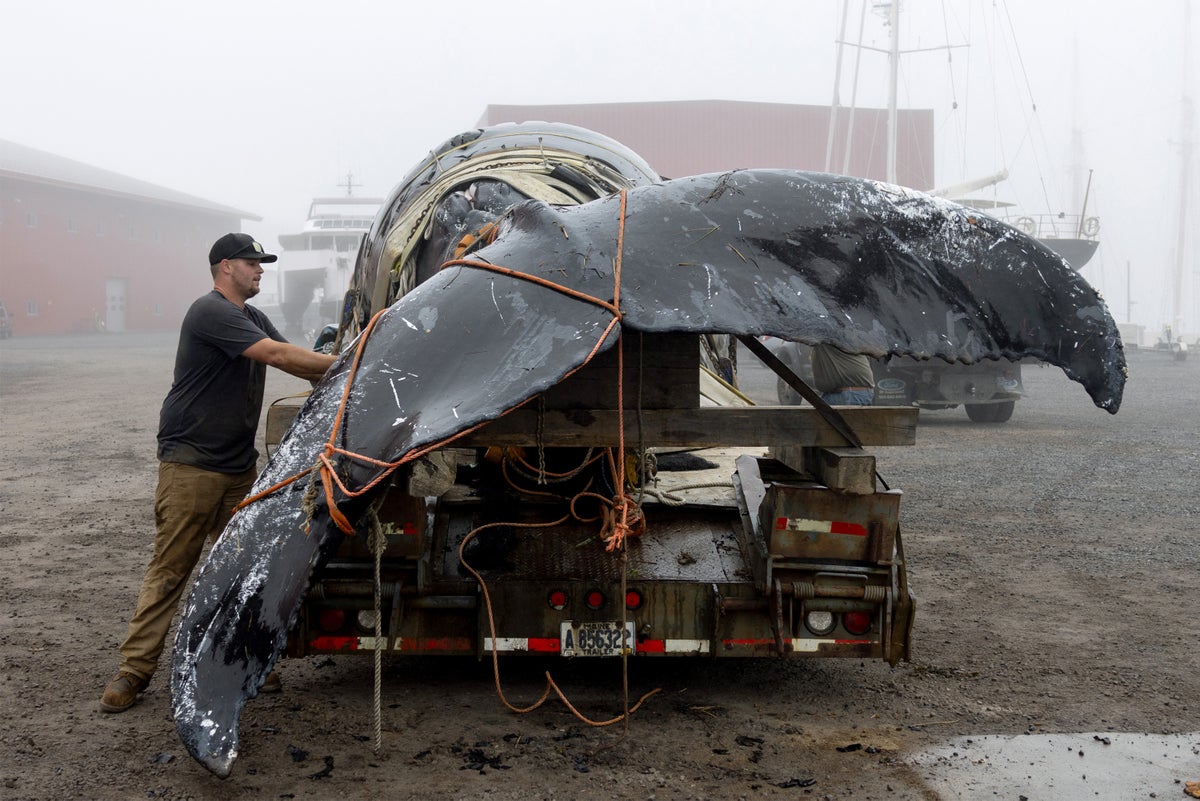
    Man secures rope around dead whale on truckbed

    Aaron Doughty finishes securing a dead humpback whale that was hauled out of Portland Harbor on to his trailer on Thursday, June 6, 2024.

    Brianna Soukup/Portland Press Herald via Getty Images

    A landmark law passed more than 50 years ago to protect whales, dolphins and other marine mammals in U.S. waters could be upended by amendments proposed on July 22 during a legislative hearing of the House Committee on Natural Resources’ Subcommittee on Water, Wildlife, and Fisheries.

    Republican representative Nicholas Begich of Alaska proposed changes to the Marine Mammal Protection Act (MMPA) that some scientists say would eviscerate it. For instance, the amendments would roll back current definitions of harm or disturbance to marine mammals while also requiring “impossibly high hurdles for conservation action,” according to a fact sheet from the Natural Resources Defense Council and other organizations that was issued earlier in July. These hurdles include a much higher burden of proof to justify even simple conservation actions.

    The Marine Mammal Protection Act was passed in 1972 with bipartisan support and was implemented following 150 years of industrial whaling, where some whale populations had fallen to 5 percent or less of their historical estimates.


    On supporting science journalism

    If you’re enjoying this article, consider supporting our award-winning journalism by subscribing. By purchasing a subscription you are helping to ensure the future of impactful stories about the discoveries and ideas shaping our world today.


    Since its passing, not a single marine mammal species in U.S. waters has gone extinct, even as use of the ocean has increased. The act has overseen astonishing recoveries of species such as humpback whales—according to a 2006 study, North Pacific humpback whale abundance was estimated at 21,063 individuals, recovered from what the National Oceanic and Atmospheric Administration estimates could have been only a few thousand individuals in the 1970s.

    “Some of the most compelling conservation success stories in recent history” have the MMPA to thank, says Lauren Eckert, a postdoctoral fellow researching conservation science at the University of British Columbia.

    Some marine mammals have yet to fully recover, and in these cases, the act plays a crucial role as the last line of defense against extinction. Take the North Atlantic right whale; if even one of these critically endangered animals is lost, “that could be the difference between them being here 100 years from now and them being gone,” says John Hildebrand, a professor at the Scripps Institution of Oceanography, who studies sound used by marine mammals. “Without the MMPA, these groups would have very little chance of going forward,” he says. “With the MMPA, they’ve got a fighting chance.” These mammals are vital to not only ocean ecosystems but also economies; according to a 2020 study from NOAA, Alaska’s whale watching industry brings in more than $100 million annually.

    The amendments hamstring scientific processes that have proven successful for decades, experts say. They would require scientists to obtain “systematic and complete abundance survey data,” or exact accountings of animal numbers, to establish any limit on marine mammal loss. “It is disturbing because systematic, long-term surveys of these populations are already extremely difficult and are going to become more so,” Eckert says.

    Further, the draft downgrades requirements to sustain healthy populations of marine mammals to a “minimum survivability of populations.” Instead of necessitating sustainable, genetically diverse populations, it would require a much lower bar for the number of individuals in the wild.

    Scientists contacted by Scientific American are also concerned about the proposed changes to how protections are granted; under these amendments, the U.S. would only recognize protections for marine mammals where there has been a direct effect rather than including the indirect effects that are currently in the MMPA. “The deaths of marine mammals that aren’t directly observed and documented are excluded from any takes [animal capture allowances] or regulatory action,” Eckert says. Although military sonar or offshore drilling can have profound consequences for marine mammals, it would become near impossible to regulate these activities in the name of protecting animals, she adds.

    The amendments would also undermine the process known as “take reduction planning,” which protects marine mammals that are accidentally caught or entangled in fishing gear, called “incidental take,” by eliminating a key safeguard that limits marine mammal deaths. This is especially dangerous for the critically endangered North Atlantic right whale, for which entanglements are a primary threat.

    The draft amendments contradict Republican rhetoric about protecting ocean life. President Donald Trump and other Republicans have actively blocked offshore wind projects that follow environmental regulations, claiming they endanger whales (ship strikes and net entanglements are greater dangers). Additionally, this draft is taking shape in tandem with another extreme proposal that would repeal much of the Endangered Species Act, which has historically worked harmoniously with the MMPA.

    In the coming months, the stakeholders pushing this draft could decide to drop it, resolve certain aspects or move it forward as is. If the bill is passed, it would move through the standard legislative process, possibly even making it to the Senate floor for a vote.

    Regardless of what happens, “this is an extreme bill. This is essentially a rewrite of the entire Marine Mammal Protection Act,” says Jane Davenport, an attorney at the conservation organization Defenders of Wildlife, one of the groups that issued the July fact sheet. “The overall thrust is going to essentially put a stake through the heart of the statute.”

    Many of the animals that would lose protection from changes to the MMPA are already vulnerable to climate change, says Jeff Boehm, former executive director of the Marine Mammal Center. “They’re an embodiment of so much about the oceans,” he says, “and a more serious assault on how this nation manages and conserves marine mammals, I can’t imagine.”


    It’s Time to Stand Up for Science

    Before you close the page, we need to ask for your support. Scientific American has served as an advocate for science and industry for 180 years, and we think right now is the most critical moment in that two-century history.

    We’re not asking for charity. If you become a Digital, Print or Unlimited subscriber to Scientific American, you can help ensure that our coverage is centered on meaningful research and discovery; that we have the resources to report on the decisions that threaten labs across the U.S.; and that we support both future and working scientists at a time when the value of science itself often goes unrecognized. Click here to subscribe.


    Original Source Link

    Share. Facebook Twitter Pinterest LinkedIn WhatsApp Email Reddit Telegram
    Previous ArticleInside the inaugural edition of the Collective Film Festival London
    Next Article Eli Lilly’s Obesity Pill Shows Promising Weight Loss in New Results

    RELATED POSTS

    RFK, Jr., shifts focus to questioning whether cell phones are safe. Here’s what the science says

    January 17, 2026

    Meat may play an unexpected role in helping people reach 100

    January 16, 2026

    OpenAI Invests in Sam Altman’s New Brain-Tech Startup Merge Labs

    January 16, 2026

    Americans Overwhelmingly Support Science, but Some Think the U.S. Is Lagging Behind: Pew

    January 15, 2026

    Woolly rhino genome recovered from meat in frozen wolf pup’s stomach

    January 15, 2026

    Microsoft Has a Plan to Keep Its Data Centers From Raising Your Electric Bill

    January 14, 2026
    latest posts

    Slipknot’s Clown Addresses Status of Next Album

    It’s been a little while since Slipknot released their last original album and percussionist and…

    Elon Musk’s Boring Co. is studying a tunnel project to Tesla Gigafactory near Reno

    January 17, 2026

    Democrats Won’t Allow Trump To Rig The Midterm As They Take A Big Step Toward Redistricting In Virginia

    January 17, 2026

    Minnesota judge bars federal officers from tear gas on peaceful protesters

    January 17, 2026

    AI cloud startup Runpod hits $120M in ARR — and it started with a Reddit post  

    January 17, 2026

    RFK, Jr., shifts focus to questioning whether cell phones are safe. Here’s what the science says

    January 17, 2026

    Next ‘Paranormal Activity’ Movie Lands Summer 2027 Date

    January 17, 2026
    Categories
    • Books (1,006)
    • Business (5,911)
    • Events (29)
    • Film (5,847)
    • Lifestyle (3,957)
    • Music (5,948)
    • Politics (5,912)
    • Science (5,262)
    • Technology (5,841)
    • Television (5,525)
    • Uncategorized (6)
    • US News (5,899)
    popular posts

    Election Day 2024: Donald Trump, Kamala Harris news and results

    When do voting locations close across the U.S. on Election Day?How late can you cast…

    The Federal Reserve could start resembling the Supreme Court

    August 24, 2025

    Trump promises to respond with ‘full strength and might’ of US military if Iran attacks America

    June 15, 2025

    Are Tesla’s Death Traps? By Howard Bloom

    December 22, 2023
    Archives
    Browse By Category
    • Books (1,006)
    • Business (5,911)
    • Events (29)
    • Film (5,847)
    • Lifestyle (3,957)
    • Music (5,948)
    • Politics (5,912)
    • Science (5,262)
    • Technology (5,841)
    • Television (5,525)
    • Uncategorized (6)
    • US News (5,899)
    About Us

    We are a creativity led international team with a digital soul. Our work is a custom built by the storytellers and strategists with a flair for exploiting the latest advancements in media and technology.

    Most of all, we stand behind our ideas and believe in creativity as the most powerful force in business.

    What makes us Different

    We care. We collaborate. We do great work. And we do it with a smile, because we’re pretty damn excited to do what we do. If you would like details on what else we can do visit out Contact page.

    Our Picks

    RFK, Jr., shifts focus to questioning whether cell phones are safe. Here’s what the science says

    January 17, 2026

    Next ‘Paranormal Activity’ Movie Lands Summer 2027 Date

    January 17, 2026

    ‘90 Day Fiance’ Big Ed Brown & Rose Vega Reconcile?

    January 17, 2026
    © 2026 New York Examiner News. All rights reserved. All articles, images, product names, logos, and brands are property of their respective owners. All company, product and service names used in this website are for identification purposes only. Use of these names, logos, and brands does not imply endorsement unless specified. By using this site, you agree to the Terms & Conditions and Privacy Policy.

    Type above and press Enter to search. Press Esc to cancel.

    We use cookies on our website to give you the most relevant experience by remembering your preferences and repeat visits. By clicking “Accept All”, you consent to the use of ALL the cookies. However, you may visit "Cookie Settings" to provide a controlled consent.
    Cookie SettingsAccept All
    Manage consent

    Privacy Overview

    This website uses cookies to improve your experience while you navigate through the website. Out of these, the cookies that are categorized as necessary are stored on your browser as they are essential for the working of basic functionalities of the website. We also use third-party cookies that help us analyze and understand how you use this website. These cookies will be stored in your browser only with your consent. You also have the option to opt-out of these cookies. But opting out of some of these cookies may affect your browsing experience.
    Necessary
    Always Enabled
    Necessary cookies are absolutely essential for the website to function properly. These cookies ensure basic functionalities and security features of the website, anonymously.
    CookieDurationDescription
    cookielawinfo-checkbox-analytics11 monthsThis cookie is set by GDPR Cookie Consent plugin. The cookie is used to store the user consent for the cookies in the category "Analytics".
    cookielawinfo-checkbox-functional11 monthsThe cookie is set by GDPR cookie consent to record the user consent for the cookies in the category "Functional".
    cookielawinfo-checkbox-necessary11 monthsThis cookie is set by GDPR Cookie Consent plugin. The cookies is used to store the user consent for the cookies in the category "Necessary".
    cookielawinfo-checkbox-others11 monthsThis cookie is set by GDPR Cookie Consent plugin. The cookie is used to store the user consent for the cookies in the category "Other.
    cookielawinfo-checkbox-performance11 monthsThis cookie is set by GDPR Cookie Consent plugin. The cookie is used to store the user consent for the cookies in the category "Performance".
    viewed_cookie_policy11 monthsThe cookie is set by the GDPR Cookie Consent plugin and is used to store whether or not user has consented to the use of cookies. It does not store any personal data.
    Functional
    Functional cookies help to perform certain functionalities like sharing the content of the website on social media platforms, collect feedbacks, and other third-party features.
    Performance
    Performance cookies are used to understand and analyze the key performance indexes of the website which helps in delivering a better user experience for the visitors.
    Analytics
    Analytical cookies are used to understand how visitors interact with the website. These cookies help provide information on metrics the number of visitors, bounce rate, traffic source, etc.
    Advertisement
    Advertisement cookies are used to provide visitors with relevant ads and marketing campaigns. These cookies track visitors across websites and collect information to provide customized ads.
    Others
    Other uncategorized cookies are those that are being analyzed and have not been classified into a category as yet.
    SAVE & ACCEPT