
Close Menu
New York Examiner News

    Subscribe to Updates

    Get the latest creative news from FooBar about art, design and business.

    What's Hot

    Lainey Wilson Set to Host 2026 CMA Awards

    September 5, 2026

    U.S. sanctions Turkish bank, accusing it of helping Iran transfer oil revenue from China to Turkey

    September 5, 2026

    Arizona Rancher Tells Trump That Dem Gov Katie Hobbs Wants to Evict Him From Family Land to Build Foreign Company’s Solar Energy Plant During Oval Office Meeting * The Gateway Pundit * by Jordan Conradson

    September 5, 2026
    Facebook X (Twitter) Instagram
    New York Examiner News
    • Home
    • US News
    • Politics
    • Business
    • Science
    • Technology
    • Lifestyle
    • Music
    • Television
    • Film
    • Books
    • Contact
      • About
      • Amazon Disclaimer
      • DMCA / Copyrights Disclaimer
      • Terms and Conditions
      • Privacy Policy
    New York Examiner News
    Home»Science»Securing rare earths for Europe’s high-tech industries – Horizon Magazine Blog
    Science

    Securing rare earths for Europe’s high-tech industries – Horizon Magazine Blog

    By AdminJanuary 4, 2024
    Facebook Twitter Pinterest LinkedIn WhatsApp Email Reddit Telegram
    Securing rare earths for Europe’s high-tech industries – Horizon Magazine Blog


    A group of critical raw materials may help Europe reduce supply-chain vulnerabilities.

    By  Michael Allen

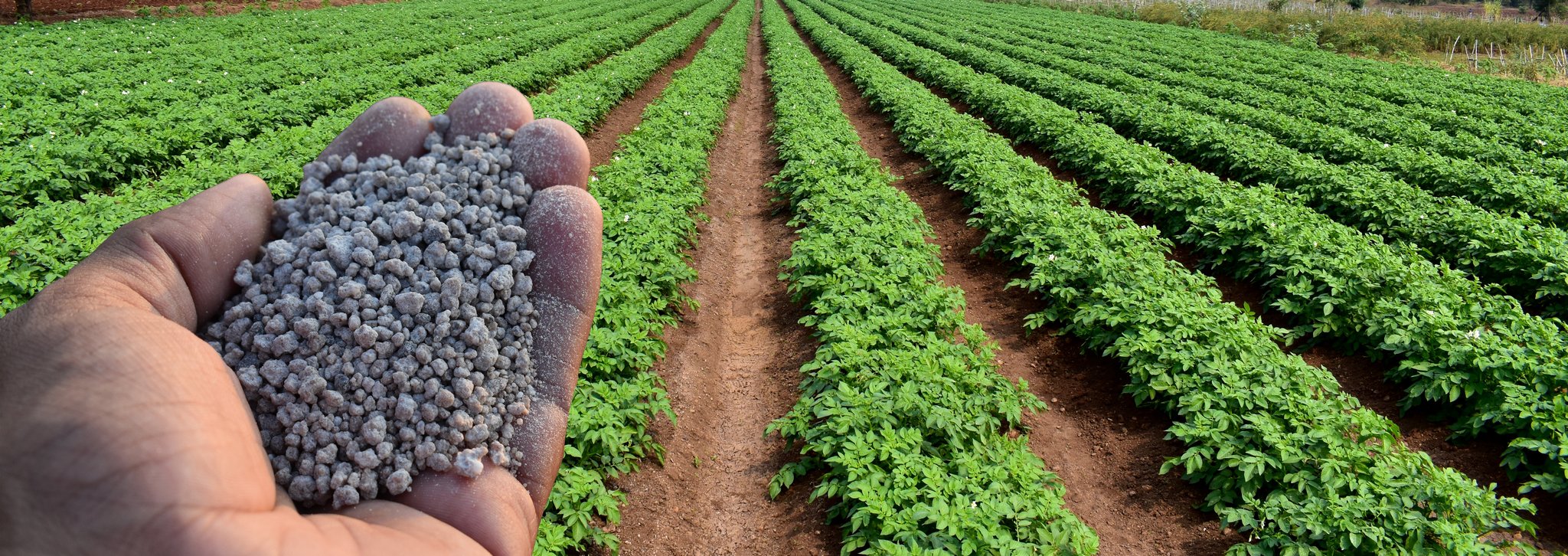
    Dr Arne Petter Ratvik is championing high-tech goods for Europe through a low-tech source: fertiliser.

    Ratvik, a metals expert at independent Norwegian research organisation SINTEF, says raw materials needed by the European auto, computer, electronics, energy and other industries can be extracted from ordinary fertiliser production.

    Magnetic attraction

    Industrial magnets, for example, are made from raw materials known as rare earths located in the Earth’s crust and are key components of everything from smartphones and tablets to refrigerators and microwaves.

    ‘Rare earths from fertilisers could produce very good magnets,’ said Ratvik, a senior research scientist at SINTEF.

    He led a research project that received EU funding to boost European supplies of rare earths by removing them during the fertiliser-manufacturing process. Called SecREEts, the project ran for four and a half years through November 2022.

    Ensuring Europe’s access to raw materials has jumped to the top of the EU political agenda as geostrategic questions expose vulnerabilities in European supply chains.

    Individual non-EU countries including China, the Democratic Republic of the Congo and South Africa have dominant control over some critical raw materials.

    For example, China refines all the rare earths used in permanent magnets worldwide, according to the European Commission.

    In March 2023, the Commission proposed to set EU targets of at least 10% for the extraction, 40% for the processing and 15% for the recycling in Europe of critical raw materials, including rare earths.

    Unearthed earths

    Rare earths are comprised of 17 metallic elements with special properties that facilitate technological advances in a range of industries.

    SecREEts focused on three rare earths that are key for the EU green-energy transition: dysprosium, neodymium and praseodymium – all used to make permanent magnets for electric cars and wind turbines.

    Based on European fertiliser production, the extraction technique developed by the project team has the potential to cover around 5% to 10% of Europe’s demand for dysprosium, neodymium and praseodymium, according to Ratvik.

    ‘We developed an integrated extraction process within the fertiliser production process to take out the rare earth elements,’ he said.

    Ratvik said that, for example, phosphate rocks used to make fertiliser contain between 0.3% and 1% rare earths. Currently, these elements just end up in the final product without giving it any extra value.

    Phosphate fertiliser is produced by dissolving phosphate rocks in acid. In subsequent steps, unwanted elements are turned into solids and filtered out – a chemical process known as precipitation.

    To achieve its technique, the SecREEts team included an extra precipitation step allowing rare earths to be removed from the fertiliser production stream.

    As part of the project, the rare earths were further processed and then sent to magnet producers in Germany and the UK.

    The activity resulted in powerful, high-performance magnets, according to Ratvik.

    Overseas influences

    While he ponders ways to deploy the SecREEts extraction method on an industrial scale as well as potential obstacles resulting from Russia’s war in Ukraine – both countries are major suppliers of phosphate rocks for fertiliser production – another researcher in Europe is exploring how two EU partner nations in Asia tackle supply-chain challenges.

    Dr Jewellord Nem Singh, an expert in critical minerals and industrial policy in the Netherlands, is in the midst of visits to Japan and South Korea to discuss the matter with government and industry representatives there.

    Based at the International Institute of Social Studies in The Hague, Nem Singh leads an EU-funded research project on the geopolitical implications of rare earths. Called GRIP-ARM, the project runs for five years through January 2026.

    The initiative focuses on China, Brazil and Kazakhstan as mineral-producing countries and on the EU, Japan and Korea as consumers of rare earths.

    The GRIP-ARM researchers are examining ways for the EU to secure future supplies of these raw materials while reducing the socio-environmental costs of extraction.

    ‘Part of what we are trying to understand are the conditions that have led to specific decisions of governments and businesses around the question of how to secure access to critical minerals,’ said Nem Singh.

    Processing power

    He said that China’s economic advantage in rare earths comes not only from controlling roughly 60% of known global reserves but also from extraction and processing.

    ‘China, since the 1970s, has put a lot of money into refining, separation and processing technologies,’ Nem Singh said.

    Rare earths from anywhere in the world must be sent to China because it has the processing plants and expertise.

    In addition, it has created long supply chains – from mining through processing to manufacturing final products, including electric cars, medical devices and solar panels. That adds to the country’s economic leverage, including over rare-earth prices.

    Nonetheless, China still relies on other countries to produce the most technologically advanced versions of some products, according to Nem Singh. For instance, he said that Japanese companies still make better permanent magnets.

    ‘What China is trying to accomplish is to fully complete that loop from mineral extraction all the way to final products of high-tech and advanced manufactured goods,’ Nem Singh said.

    Fine balance

    That means other nations have opportunities to rebalance relationships with China while accepting its role as a major industrial player.

    ‘The EU already recognises that China is a strategic partner,’ said Nem Singh. ‘But it is also an EU competitor, so we need to figure out how to build a relationship with China along those lines.’

    He cited the example of Germany’s current push – with EU support – to expand semiconductor manufacturing after three decades of declining market share in the face of heightened global competition.

    While this could create a high-tech industry in Europe decoupled from China, Germany would still need to retain access to important Chinese minerals used by German carmakers.

    The fundamental question that the EU faces – and that Nem Singh hopes to help answer through GRIP-ARM – is the scope for Europe to exclude China from key parts of the supply chain linked to core technologies.

    ‘They need to figure out if they can produce these segments of the supply chain in Europe,’ he said.

    Research in this article was funded by the EU including, in the case of GRIP-ARM, via the European Research Council (ERC). The views of the interviewees don’t necessarily reflect those of the European Commission.

    More info

    This article was originally published in Horizon, the EU Research and Innovation Magazine.

    Related


    Original Source Link

    Share. Facebook Twitter Pinterest LinkedIn WhatsApp Email Reddit Telegram
    Previous ArticleJohn Ridley Says Scrapped Marvel TV Series Was About the Eternals – The Hollywood Reporter
    Next Article 10 Best Deals on Fitness Trackers and Smartwatches

    RELATED POSTS

    Scientists Put Caterpillars in an Ultraquiet Chamber to Learn How They Hear Without Ears

    September 5, 2026

    Geometry Reveals the Tricks behind Gerrymandering

    September 5, 2026

    Japan Is Launching a Probe to Collect the First-Ever Samples From a Martian Moon

    September 4, 2026

    ‘Unparalleled’ study finds psilocybin protects against nerve damage from chemotherapy

    September 4, 2026

    Scientists Have Found the Most Convincing Evidence Yet of a Dark Matter Particle

    September 3, 2026

    U.N. admits exceeding Paris Agreement’s 1.5-degree-C warming target is ‘unavoidable’

    September 3, 2026
    latest posts

    Lainey Wilson Set to Host 2026 CMA Awards

    Lainey Wilson is set to become the first woman to solo-host the CMA Awards twice.…

    U.S. sanctions Turkish bank, accusing it of helping Iran transfer oil revenue from China to Turkey

    September 5, 2026

    Arizona Rancher Tells Trump That Dem Gov Katie Hobbs Wants to Evict Him From Family Land to Build Foreign Company’s Solar Energy Plant During Oval Office Meeting * The Gateway Pundit * by Jordan Conradson

    September 5, 2026

    Texas opens season against Texas State as Arch Manning faces a make-or-break college football year

    September 5, 2026

    Oura is going public, but these smart ring companies are coming for its crown

    September 5, 2026

    Scientists Put Caterpillars in an Ultraquiet Chamber to Learn How They Hear Without Ears

    September 5, 2026

    18 Years Later, A Beloved PlayStation 2 JRPG Is Coming To PS5

    September 5, 2026
    Categories
    • Books (1,472)
    • Business (6,375)
    • Events (72)
    • Film (6,310)
    • Lifestyle (4,383)
    • Music (6,438)
    • Politics (6,361)
    • Science (5,727)
    • Technology (6,308)
    • Television (5,998)
    • Uncategorized (9)
    • US News (6,363)
    popular posts

    6 Best Soaps for a New Tattoo: Keep That Ink Clean in 2024

    If you’re trying to find the best soaps for a new tattoo, you’re either imminently…

    Star Trek Reinvents TNG’s Barclay as a Super-Competent Villain

    October 5, 2022

    Jason Momoa Says Future of ‘Aquaman’ Films Is “Not Looking Too Good” – The Hollywood Reporter

    December 16, 2023

    Trump’s Nightmare Week Worsens As Democrats Prepare Day One Impeachment Plan

    April 24, 2026
    Archives
    Browse By Category
    • Books (1,472)
    • Business (6,375)
    • Events (72)
    • Film (6,310)
    • Lifestyle (4,383)
    • Music (6,438)
    • Politics (6,361)
    • Science (5,727)
    • Technology (6,308)
    • Television (5,998)
    • Uncategorized (9)
    • US News (6,363)
    About Us

    We are a creativity led international team with a digital soul. Our work is a custom built by the storytellers and strategists with a flair for exploiting the latest advancements in media and technology.

    Most of all, we stand behind our ideas and believe in creativity as the most powerful force in business.

    What makes us Different

    We care. We collaborate. We do great work. And we do it with a smile, because we’re pretty damn excited to do what we do. If you would like details on what else we can do visit out Contact page.

    Our Picks

    Scientists Put Caterpillars in an Ultraquiet Chamber to Learn How They Hear Without Ears

    September 5, 2026

    18 Years Later, A Beloved PlayStation 2 JRPG Is Coming To PS5

    September 5, 2026

    Their Affair, Marriage, Kids, and More

    September 5, 2026
    © 2026 New York Examiner News. All rights reserved. All articles, images, product names, logos, and brands are property of their respective owners. All company, product and service names used in this website are for identification purposes only. Use of these names, logos, and brands does not imply endorsement unless specified. By using this site, you agree to the Terms & Conditions and Privacy Policy.

    Type above and press Enter to search. Press Esc to cancel.

    We use cookies on our website to give you the most relevant experience by remembering your preferences and repeat visits. By clicking “Accept All”, you consent to the use of ALL the cookies. However, you may visit "Cookie Settings" to provide a controlled consent.
    Cookie SettingsAccept All
    Manage consent

    Privacy Overview

    This website uses cookies to improve your experience while you navigate through the website. Out of these, the cookies that are categorized as necessary are stored on your browser as they are essential for the working of basic functionalities of the website. We also use third-party cookies that help us analyze and understand how you use this website. These cookies will be stored in your browser only with your consent. You also have the option to opt-out of these cookies. But opting out of some of these cookies may affect your browsing experience.
    Necessary
    Always Enabled
    Necessary cookies are absolutely essential for the website to function properly. These cookies ensure basic functionalities and security features of the website, anonymously.
    CookieDurationDescription
    cookielawinfo-checkbox-analytics11 monthsThis cookie is set by GDPR Cookie Consent plugin. The cookie is used to store the user consent for the cookies in the category "Analytics".
    cookielawinfo-checkbox-functional11 monthsThe cookie is set by GDPR cookie consent to record the user consent for the cookies in the category "Functional".
    cookielawinfo-checkbox-necessary11 monthsThis cookie is set by GDPR Cookie Consent plugin. The cookies is used to store the user consent for the cookies in the category "Necessary".
    cookielawinfo-checkbox-others11 monthsThis cookie is set by GDPR Cookie Consent plugin. The cookie is used to store the user consent for the cookies in the category "Other.
    cookielawinfo-checkbox-performance11 monthsThis cookie is set by GDPR Cookie Consent plugin. The cookie is used to store the user consent for the cookies in the category "Performance".
    viewed_cookie_policy11 monthsThe cookie is set by the GDPR Cookie Consent plugin and is used to store whether or not user has consented to the use of cookies. It does not store any personal data.
    Functional
    Functional cookies help to perform certain functionalities like sharing the content of the website on social media platforms, collect feedbacks, and other third-party features.
    Performance
    Performance cookies are used to understand and analyze the key performance indexes of the website which helps in delivering a better user experience for the visitors.
    Analytics
    Analytical cookies are used to understand how visitors interact with the website. These cookies help provide information on metrics the number of visitors, bounce rate, traffic source, etc.
    Advertisement
    Advertisement cookies are used to provide visitors with relevant ads and marketing campaigns. These cookies track visitors across websites and collect information to provide customized ads.
    Others
    Other uncategorized cookies are those that are being analyzed and have not been classified into a category as yet.
    SAVE & ACCEPT