
Close Menu
New York Examiner News

    Subscribe to Updates

    Get the latest creative news from FooBar about art, design and business.

    What's Hot

    Watch Kasabian’s Serge Pizzorno join Calvin Harris for ‘Release The Pressure’ at huge Hampden Park shows as DJ celebrates with ‘rave haggis’

    August 3, 2026

    Sam Altman reveals the investing advice billionaire Peter Thiel gave him that’s led to a $3.3 billion net worth

    August 3, 2026

    Treasonous Trump Sides With Iran After Minnesota Was Cyberattacked

    August 3, 2026
    Facebook X (Twitter) Instagram
    New York Examiner News
    • Home
    • US News
    • Politics
    • Business
    • Science
    • Technology
    • Lifestyle
    • Music
    • Television
    • Film
    • Books
    • Contact
      • About
      • Amazon Disclaimer
      • DMCA / Copyrights Disclaimer
      • Terms and Conditions
      • Privacy Policy
    New York Examiner News
    Home»Science»Six Gravitational-Wave Breakthroughs Scientists Can’t Wait to See
    Science

    Six Gravitational-Wave Breakthroughs Scientists Can’t Wait to See

    By AdminMay 22, 2023
    Facebook Twitter Pinterest LinkedIn WhatsApp Email Reddit Telegram
    Six Gravitational-Wave Breakthroughs Scientists Can’t Wait to See


    Six Gravitational-Wave Breakthroughs Scientists Can’t Wait to See

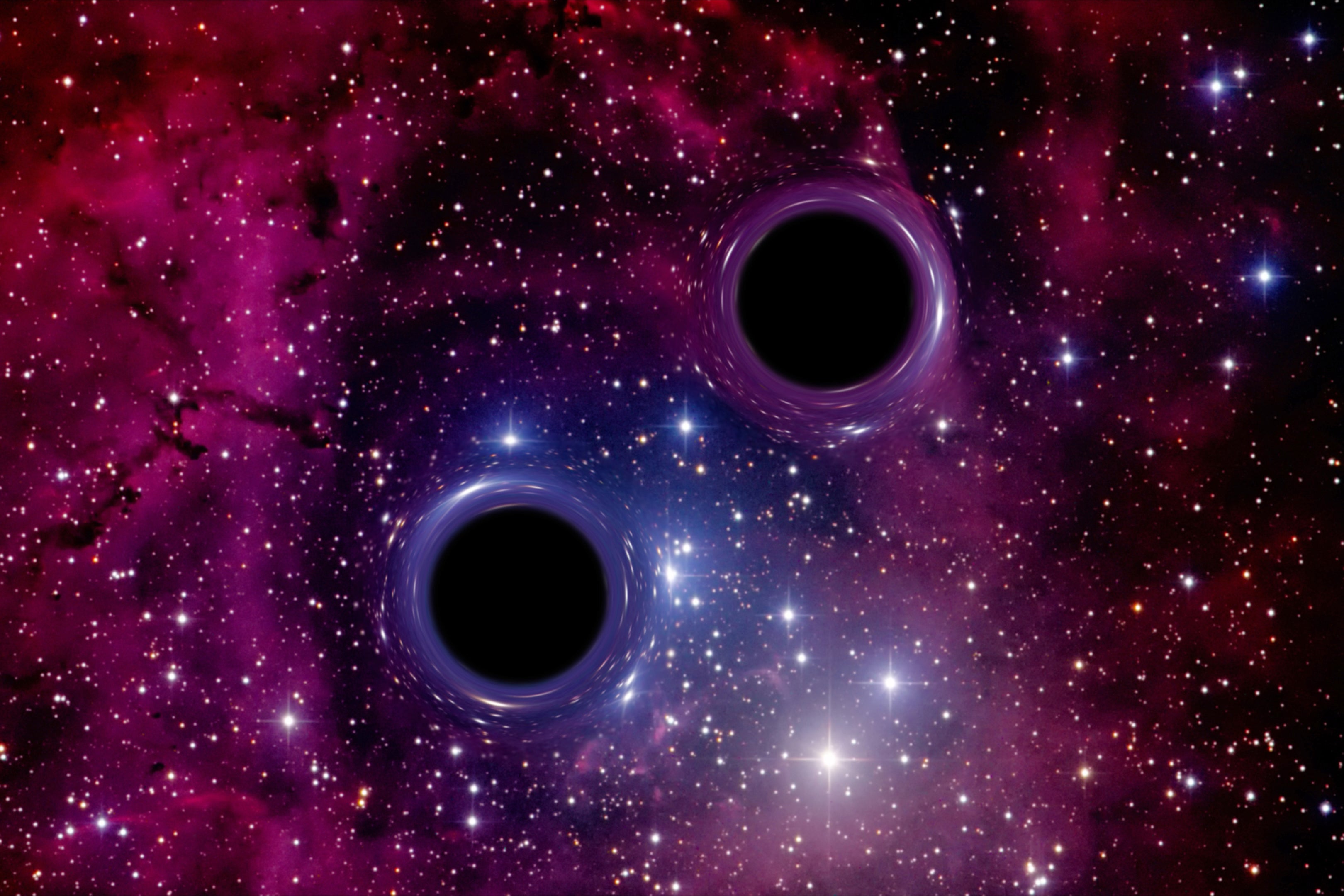
    On May 24, the Laser Interferometer Gravitational-Wave Observatory (LIGO) will resume its hunt for gravitational waves—tiny, periodic variations in the curvature of space and time created by distant, violent cosmic events such as two colliding black holes.

    Some would call gravitational-wave scientists lucky, based on their field’s remarkable series of transformative discoveries occurring in less than a decade’s time. In each of their first three observing periods, gravitational-wave detectors found or confirmed a new astrophysical phenomenon. First, in 2015, the collision of black holes, followed two years later by the collision of ultracompact, dead stars called neutron stars, and then in 2019, objects with masses that were not expected to exist in the universe.

    Past performance is no guarantee for future success. However, as LIGO turns on this month (followed by two other detectors: Virgo in Italy and KAGRA in Japan) there are good reasons to be optimistic about continuing this trend of cosmic discovery.

    Considering how productive these detectors are, why do astronomers turn them on and off in the first place? The simple answer is that observing gravitational waves builds on cutting-edge technology that is rapidly advancing. That allows scientists to detect gravitational waves across an order of magnitude larger swath of the universe than they could back when the very first direct detection occurred. However, the upgrade of gravitational-wave detectors is a complex and time-consuming endeavor. It cannot be done in parallel with observations. Hence the observing periods: scientists alternate between improving their detectors and listening to the sky.

    Surveying this substantially expanded volume of the cosmos virtually guarantees that observers will find new skeletons in the cosmic closet—discoveries that could transform astrophysics and science at large. Here, we’ve cataloged the six potential breakthroughs that we most eagerly await:

    1. The heaviest black holes. The heaviest black hole we have detected so far with gravitational waves weighs about 100 times the mass of our sun. However, thanks to upgrades our detectors are now sensitive to gravitational waves emanating from colliding black holes that are 1,000-fold heavier than our sun. Discovering these much heavier black holes would be a game changer; it would tell us how black holes grow and how some of them reach supermassive sizes of millions or billions of times as massive as our home star. We know of such supermassive black holes in the centers of large galaxies, but their origin is currently a mystery.

    2. Radiating black hole collisions. Black holes are special because nothing, not even light, can escape from them. However, suppose two black holes collide amid a cloud of interstellar gas. Such a collision could spark cosmic fireworks in this surrounding material. Detecting the electromagnetic or possibly even neutrino signature of such collisions, along with gravitational waves, would be a major discovery. With such data we could identify with high precision where and how the crash happened, obtaining vibrant new details about previously inaccessible extreme cosmic environments. This precise localization of a gravitational-wave signal could also offer astronomers a new, independent way of measuring just how fast the universe is expanding.

    3. The origin of gold and platinum in the universe. While most elements in the universe are forged inside stars through thermonuclear fusion, the heaviest elements, such as gold, platinum or uranium, need a special creation process. In 2017, scientists managed to glimpse both gravitational waves and light simultaneously emitted by a colliding pair of neutron stars, revealing how—and how much—these events produce such heavier elements. Whether neutron star collisions are in fact the primary source of cosmic gold remains unclear, but what’s certain is that finding and studying more of these collisions will settle the intense ongoing debate—and give us a better understanding of where and when the element-constrained conditions for life as we know it can cosmically arise.

    4. Nearby supernova explosions. At the ends of their lives, the heaviest stars explode as supernova, creating one of the most spectacular events in the universe. These explosions actually start with an implosion: a stellar core collapses under its own gravitational pull once it reaches a critical mass, leading to an enormous and sudden release of energy that blows apart the entire star. Discovering gravitational waves from such a “core collapse” will let us peek into the heart of the explosion, unveiling its early phases that are otherwise hidden from us deep beneath the dying star’s surface. This can tell us how matter behaves at densities beyond that of an atomic nucleus—that is, at densities in excess of 100 million metric tons per tablespoon of material.

    5. Breakdown of Einstein’s general theory of relativity. Scientists suspect that our current theory of gravity and spacetime is incomplete as we cannot reconcile it with the quantum mechanical description of reality. Part of the problem is the lack of possible experiments that simultaneously test both strong gravity and the small spatial scales where most quantum-mechanical effects manifest. Black holes are probably the closest we can get to these two extremes. Which means that looking for deviations from general relativity in the high-fidelity observations of gravitational waves could rewrite some of our fundamental understandings of space and time.

    6. The “unknown” unknown. History tells us that we should expect the unexpected whenever we expand our horizons. This should be no different for gravitational-wave astrophysics. The most exciting game changer will be if we discover a new object type or cosmic phenomenon that somehow surprises us. Fortunately, scientists are well-prepared for this possibility. Gravitational-wave data are searched not just for known, well-understood signal types but also for the genuinely unknown.

    What’s next? While these six potential breakthroughs may be reached during the upcoming observation period of the LIGO, Virgo and KAGRA detectors, it is worth noting that the future is even brighter. Over the coming decades, scientists and policy makers shall continue exploring the possibilities of a new generation of ambitious gravitational-observatories, some of them space-based. Such observatories could expand our scientific and cosmic horizons far beyond what is currently achievable. These pioneering projects are not aimed merely at probing farther, but aspire to be able to detect black hole collisions from virtually the entire universe. For the future, the greatest surprise would be if there were no surprises.

    This is an opinion and analysis article, and the views expressed by the author or authors are not necessarily those of Scientific American.


    Original Source Link

    Share. Facebook Twitter Pinterest LinkedIn WhatsApp Email Reddit Telegram
    Previous ArticleHigh school is hell in Isao Yukisada’s Go
    Next Article Venmo targets young consumers and parents with new teen accounts and debit card

    RELATED POSTS

    There Are 2 Eclipses This August. Here’s How to See Them

    August 3, 2026

    Eating less protein could help you live longer

    August 3, 2026

    The James Webb Telescope Is Changing Astronomers’ Understanding of the Ancient Cosmos

    August 2, 2026

    AI helped produce two proofs for the same cryptography problem

    August 2, 2026

    Astronomers Have Detected an Exomoon for the First Time

    August 1, 2026

    Postpartum psychosis is at the center of the Lindsay Clancy trial. What is it?

    August 1, 2026
    latest posts

    Watch Kasabian’s Serge Pizzorno join Calvin Harris for ‘Release The Pressure’ at huge Hampden Park shows as DJ celebrates with ‘rave haggis’

    Calvin Harris brought out Kasabian’s Serge Pizzorno for his two huge homecoming shows at Hampden…

    Sam Altman reveals the investing advice billionaire Peter Thiel gave him that’s led to a $3.3 billion net worth

    August 3, 2026

    Treasonous Trump Sides With Iran After Minnesota Was Cyberattacked

    August 3, 2026

    Todd Blanche confirmation advances after anti-weaponization fund axed

    August 3, 2026

    Horizon3 hits $2 billion valuation with $250M Series E as AI threats escalate

    August 3, 2026

    There Are 2 Eclipses This August. Here’s How to See Them

    August 3, 2026

    The Summer Book review – dismally cosy

    August 3, 2026
    Categories
    • Books (1,405)
    • Business (6,309)
    • Events (64)
    • Film (6,245)
    • Lifestyle (4,320)
    • Music (6,368)
    • Politics (6,291)
    • Science (5,662)
    • Technology (6,241)
    • Television (5,935)
    • Uncategorized (9)
    • US News (6,297)
    popular posts

    Listen Up — It’s Time Meet the Real Homelander! (RECAP)

    WARNING: This episode contains themes of suicide. If you or someone you know is considering…

    Robinhood almost imploded during the Gamestop meme stock chaos – TechCrunch

    June 27, 2022

    STUNNING: Janet Yellen Admits Smaller Regional Midwest Banks Will Not Be Bailed Out – Only Big Banks Deemed Worthy by Biden Regime (VIDEO)

    March 17, 2023

    Geena Davis’ Bentonville Film Festival to Honor Fin Argus, Effie Brown – The Hollywood Reporter

    June 16, 2022
    Archives
    Browse By Category
    • Books (1,405)
    • Business (6,309)
    • Events (64)
    • Film (6,245)
    • Lifestyle (4,320)
    • Music (6,368)
    • Politics (6,291)
    • Science (5,662)
    • Technology (6,241)
    • Television (5,935)
    • Uncategorized (9)
    • US News (6,297)
    About Us

    We are a creativity led international team with a digital soul. Our work is a custom built by the storytellers and strategists with a flair for exploiting the latest advancements in media and technology.

    Most of all, we stand behind our ideas and believe in creativity as the most powerful force in business.

    What makes us Different

    We care. We collaborate. We do great work. And we do it with a smile, because we’re pretty damn excited to do what we do. If you would like details on what else we can do visit out Contact page.

    Our Picks

    There Are 2 Eclipses This August. Here’s How to See Them

    August 3, 2026

    The Summer Book review – dismally cosy

    August 3, 2026

    ‘Today’ Announces New Host Joining The Show

    August 3, 2026
    © 2026 New York Examiner News. All rights reserved. All articles, images, product names, logos, and brands are property of their respective owners. All company, product and service names used in this website are for identification purposes only. Use of these names, logos, and brands does not imply endorsement unless specified. By using this site, you agree to the Terms & Conditions and Privacy Policy.

    Type above and press Enter to search. Press Esc to cancel.

    We use cookies on our website to give you the most relevant experience by remembering your preferences and repeat visits. By clicking “Accept All”, you consent to the use of ALL the cookies. However, you may visit "Cookie Settings" to provide a controlled consent.
    Cookie SettingsAccept All
    Manage consent

    Privacy Overview

    This website uses cookies to improve your experience while you navigate through the website. Out of these, the cookies that are categorized as necessary are stored on your browser as they are essential for the working of basic functionalities of the website. We also use third-party cookies that help us analyze and understand how you use this website. These cookies will be stored in your browser only with your consent. You also have the option to opt-out of these cookies. But opting out of some of these cookies may affect your browsing experience.
    Necessary
    Always Enabled
    Necessary cookies are absolutely essential for the website to function properly. These cookies ensure basic functionalities and security features of the website, anonymously.
    CookieDurationDescription
    cookielawinfo-checkbox-analytics11 monthsThis cookie is set by GDPR Cookie Consent plugin. The cookie is used to store the user consent for the cookies in the category "Analytics".
    cookielawinfo-checkbox-functional11 monthsThe cookie is set by GDPR cookie consent to record the user consent for the cookies in the category "Functional".
    cookielawinfo-checkbox-necessary11 monthsThis cookie is set by GDPR Cookie Consent plugin. The cookies is used to store the user consent for the cookies in the category "Necessary".
    cookielawinfo-checkbox-others11 monthsThis cookie is set by GDPR Cookie Consent plugin. The cookie is used to store the user consent for the cookies in the category "Other.
    cookielawinfo-checkbox-performance11 monthsThis cookie is set by GDPR Cookie Consent plugin. The cookie is used to store the user consent for the cookies in the category "Performance".
    viewed_cookie_policy11 monthsThe cookie is set by the GDPR Cookie Consent plugin and is used to store whether or not user has consented to the use of cookies. It does not store any personal data.
    Functional
    Functional cookies help to perform certain functionalities like sharing the content of the website on social media platforms, collect feedbacks, and other third-party features.
    Performance
    Performance cookies are used to understand and analyze the key performance indexes of the website which helps in delivering a better user experience for the visitors.
    Analytics
    Analytical cookies are used to understand how visitors interact with the website. These cookies help provide information on metrics the number of visitors, bounce rate, traffic source, etc.
    Advertisement
    Advertisement cookies are used to provide visitors with relevant ads and marketing campaigns. These cookies track visitors across websites and collect information to provide customized ads.
    Others
    Other uncategorized cookies are those that are being analyzed and have not been classified into a category as yet.
    SAVE & ACCEPT