
The world’s green spotlight is tilting towards the Middle East as Egypt and the United Arab Emirates (UAE) prepare to host the next two major world summits on climate change. Egypt’s Sharm El-Sheikh resort will be the site of the next United Nations Climate Change Conference of the Parties (COP27), which begins on 6 November, and the UAE’s oil giant Abu Dhabi will host COP28 in 2023.
According to a report published by UN Climate Change this week, Egypt and the UAE are among 26 countries that have updated their climate targets in line with promises made last year at COP26 in Glasgow, UK. Egypt is promising to further cut greenhouse-gas emissions from electricity, transport and the oil and gas sectors, although this is only compared to previously forecast levels—and the commitment is contingent on receiving international financial support. The UAE is pledging to cut greenhouse-gas emissions by 31% by 2030, compared to business-as-usual level, which is beyond its previous promised cut of 23.5%.
The UN report says commitments made by countries in the past year will reduce projected emissions rises to 10.6% above 2010 levels by 2030, compared to the 13.7% forecast in a similar analysis last year. But they remain well short of what the world needs to limit warming to 1.5 °C by the end of the century. Sameh Shoukry, Egypt’s minister of foreign affairs and the COP27 president, called the findings alarming and said they merit “a transformative response at COP27”.
The next two COP summits will mark an “important moment” for the Middle East, says Carlos Duarte, a marine ecologist at the King Abdullah University of Science and Technology, near Jeddah, Saudi Arabia. It’s a significant change from the past. In the 1990s, Saudi Arabia consistently blocked action on climate change, while other oil-rich nations, including the United States, tried to stall it, says Michael Oppenheimer, a geoscientist and climate-policy researcher at Princeton University, New Jersey. Saudi Arabia’s representatives on the Intergovernmental Panel on Climate Change (IPCC) doubted the scientific consensus on global warming, says Ben Santer, an atmospheric scientist at the Lawrence Livermore National Laboratory in Livermore, California, and one of the lead authors of the second IPCC assessment report in 1995, which confirmed that human activities were warming the planet.
By contrast, the past decade has seen the region embrace renewable technologies and focus on the environment. Today, Saudi Arabia and other major oil-producing countries are “not fighting the reality of the science”, Oppenheimer says. For states that rely on oil revenues, this move is about trying to diversify their economies in the face of a future fall in demand, as well as using renewables to provide for growing domestic populations while saving fossil fuels for export, says Mia Moisio, a researcher in climate policy at the New Climate Institute think tank in Berlin. Vulnerability to climate change is another driver, she adds. “The region is seeing these extreme heatwaves. That has probably also been a bit of a wake-up call.”
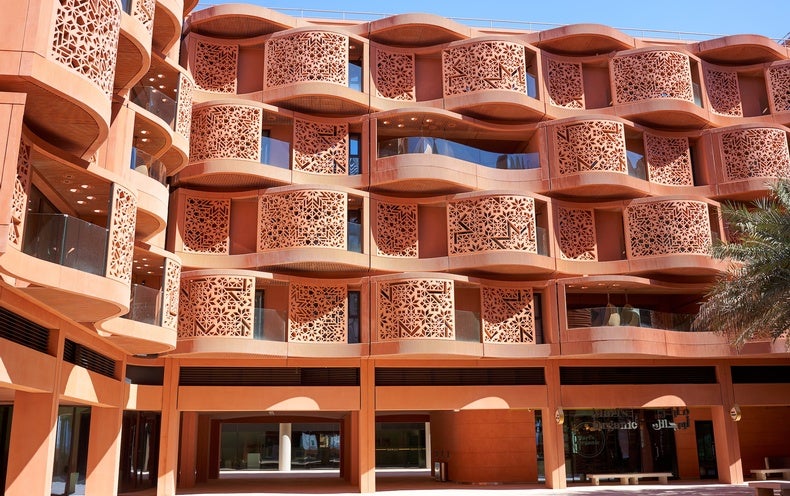
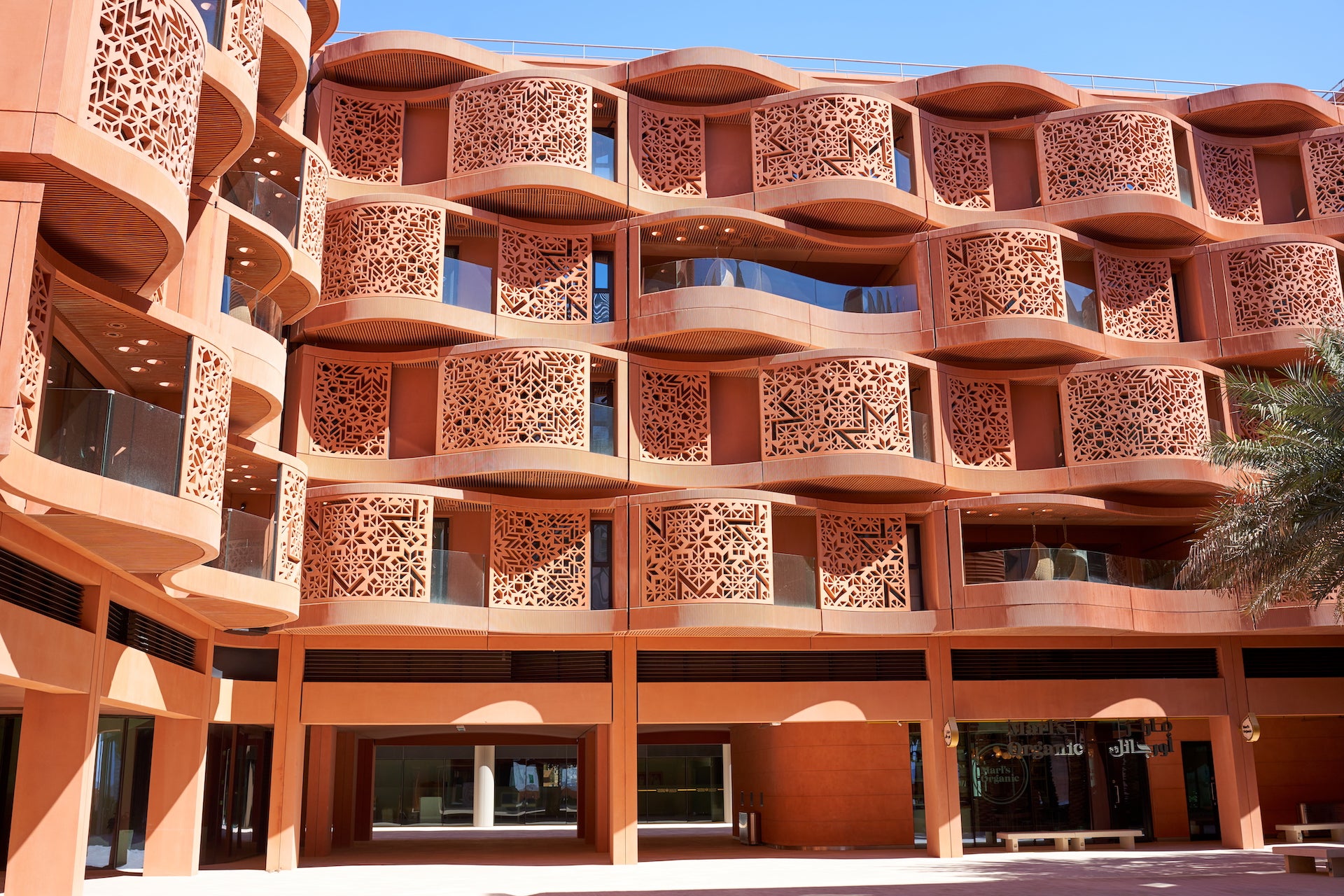
The UAE’s environmental credentials include being home to the International Renewable Energy Agency (IRENA), which was inaugurated in 2015 in Masdar, Abu Dhabi’s flagship effort to create a sustainable city. Last September, Razan Al Mubarak, managing director of Abu Dhabi’s environmental regulator, was elected president of the high-profile International Union for Conservation of Nature, which is based in Gland, Switzerland. In October, the UAE became the first Arab nation to pledge to reach net-zero domestic emissions by 2050.
Efforts are also picking up in other Middle Eastern nations. Saudi Arabia—the world’s largest oil exporter—and its neighbour Bahrain have set net-zero targets for 2060. Gas-rich Qatar, meanwhile, has announced plans to cut its emissions by 25% by 2030 and has created its first climate-change ministry. Israel and Turkey have both announced goals to reach net zero by the mid 2050s.
More widely, the Middle East Green Initiative, spearheaded by Saudi Arabia last year, has announced a goal to reduce carbon emissions from the region’s oil and gas industry by 60%, although no deadline has been given. This industry is one of the world’s largest sources of methane. “For the first time, we’re seeing a lot of countries that used to be, or are still, heavily dependent on their hydrocarbon sector, come out with these net-zero pledges,” says Moisio, who also works on the Climate Action Tracker, which rates countries according to their climate pledges and actions.
The rise of renewables
So far, few details are available on how the countries will achieve these climate goals. However, both the UAE and Saudi Arabia are backing their targets with sizeable investments, including building or expanding carbon-neutral cities. The UAE government says it will invest 600 billion dirhams (around US$163 billion) in clean and renewable energies by 2050. The Saudi government estimates that investment across its Saudi Green Initiative will amount to 700 billion Saudi Arabian riyal (US$186 billion).
According to Bloomberg New Energy Finance, an energy consulting company headquartered in New York City, overall investment in renewables in the Middle East has risen sevenfold in a decade, from $960 million in 2011 to $6.9 billion in 2021. Saudi Arabia invested around $1.5 billion in solar energy alone last year, and the UAE has put almost $9 billion into the technology since 2017. “There is quite profound change we’re seeing in the region in terms of investment,” says Mercedes Maroto-Valer, a chemical engineer and researcher in energy systems at Heriot-Watt University, which is based in Edinburgh and also has a campus in Dubai. Currently, however, according to IRENA data from 2020, the region produces less than 4% of its electricity from renewable sources, compared to a figure of 28% worldwide.
In the short term, the region’s nations are looking mainly to solar energy, wind and hydropower to meet climate targets, says Maroto-Valer. Renewable technologies and nuclear power accounted for 13% of Abu Dhabi’s energy mix in 2021 and are expected to reach more than 54% by 2025, says Awaidha Al Marar, chair of the Abu Dhabi Department of Energy. Egypt already hosts one of the world’s largest solar plants, at 1,650 megawatts, and Qatar plans to open an 800-megawatt solar site by the end of the year.
High levels of solar radiation give the Gulf states a natural advantage, and the cost of electricity from renewables in the Middle East has dropped to as low as 1 US cent per kilowatt hour (compared with a world average in 2021 of around 5 cents for solar projects and 3 cents for onshore wind). This is a “tremendously competitive price”, says Francesco La Camera, director-general of IRENA.
Saudi Arabia and the UAE are counting on that low cost to advance another industry—green hydrogen, a fuel made by using renewable electricity to split water into hydrogen and oxygen. Saudi Arabia has the bold aim of becoming the world’s leading producer and exporter of hydrogen in the 2030s. It plans to achieve this through a plant under construction at a futuristic zero-carbon city called Neom, which is being built in the northwest of the country.
In the longer term, Middle Eastern nations are eyeing ways to capture carbon—whether directly from hydrocarbon plants, or from the atmosphere by boosting the size of ecosystems. The Middle East Green Initiative, for example, includes a goal of planting 50 billion trees—reportedly the world’s biggest afforestation project—which would restore an area equivalent to 200 million hectares of degraded land and fight desertification. Duarte says that, historically, some 38% of global carbon production has been caused by habitat loss. Reversing that should account for around one-third of climate solutions, he says.
Both Saudi Arabia and the UAE will also rely on offsetting emissions directly, by capturing carbon and storing it or using it to make materials such as plastics and cosmetics. But not everyone thinks this approach is sound. The UAE’s 2050 energy strategy, for example, includes providing 12% of energy through ‘clean coal’, whose emissions are captured. Moisio calls this a “red flag”, because the technology is expensive and has not been proved to be economically viable. In general, it should be reserved for industries that are particularly difficult to decarbonize, such as cement and steel, she says.
No end for the oil age
The elephant in the room is that the Middle East’s countries are also continuing to invest in oil and gas exploration. As is the case for most nations, exported emissions are not considered as part of net-zero targets. Middle Eastern economies are less reliant on oil than they were a decade ago. According to World Bank figures, income from oil (specifically a metric called oil rents) accounted for 22.1% of gross domestic product (GDP) in the Middle East and North Africa in 2010. By 2020, this value had fallen to 11.7% of GDP—still considerably higher than the world average, which is less than 1%.
That said, Russia’s invasion of Ukraine, and the subsequent sanctions that have been imposed on Russia by Western countries, have also led energy prices to soar. Saudi Arabia’s state-owned oil firm, Aramco, posted record earnings of US$48.4 billion in the second quarter of 2022—a 90% increase over the same period in 2021. Western nations have been urging members of the Organization of the Petroleum Exporting Countries (OPEC) to supply more oil, to replace Russian production. OPEC producers did agree to a modest increase, but at the most recent meeting of OPEC members and a few associated nations (including Russia), at the beginning of October, that decision was controversially reversed. As a result of the restrictions on oil supply, prices have increased, worsening tensions between Saudi Arabia and the United States ahead of COP27.
At COP26 in Glasgow, reports suggested that Saudi Arabia was among those countries that had watered down a recommendation on phasing out fossil-fuel subsidies. “So I would say there is still push back, and I would say it’s understandable given that their economy is still so dependent on hydrocarbons,” says Moisio. But publicly there has been a clear shift and they don’t want to be seen as “climate-change laggards”, she says.
Stopping further fossil-fuel exploration would be “an important signal, but we haven’t seen that yet”, she adds. The International Energy Agency’s pathway towards net zero by 2050—which will need to be followed if global warming is to be limited to 1.5 ºC—includes no new investment in oil and gas production.
However, Maroto-Valer says that fossil fuels will still be needed for some time in countries that lack the infrastructure required to produce renewable forms of energy, and a fair transition process includes not penalizing nations that export to such countries. “I think we should be aiming to reduce [oil exports], but it should not only be the responsibility of the country producing it,” she adds.
Duarte recognizes that Saudi Arabia’s environmental strategy was previously inadequate. “There’s a lot of room to catch up with other nations, but the pace of progress is very steady and the strategy is very sound,” he says. Projects to address other environmental concerns in the region, such as the conservation of coral reefs, are now backed by billions of dollars of investment, he adds. “I hope the rest of the world can eventually see what I see, and have my optimism.”
This article is reproduced with permission and was first published on October 27 2022.