
Close Menu
New York Examiner News

    Subscribe to Updates

    Get the latest creative news from FooBar about art, design and business.

    What's Hot

    Twisted Sister Cancel Reunion Tour Plans Due to Snider’s Health

    February 6, 2026

    Top analyst Tom Lee on gold’s black swan risk: Elon Musk becoming ‘the new central bank’

    February 6, 2026

    Trump Level Of Core Support Has Cratered To An Astonishing New Low

    February 6, 2026
    Facebook X (Twitter) Instagram
    New York Examiner News
    • Home
    • US News
    • Politics
    • Business
    • Science
    • Technology
    • Lifestyle
    • Music
    • Television
    • Film
    • Books
    • Contact
      • About
      • Amazon Disclaimer
      • DMCA / Copyrights Disclaimer
      • Terms and Conditions
      • Privacy Policy
    New York Examiner News
    Home»Science»The NYPD’s Robot Dog Was a Really Bad Idea: Here’s What Went Wrong
    Science

    The NYPD’s Robot Dog Was a Really Bad Idea: Here’s What Went Wrong

    By AdminApril 19, 2023
    Facebook Twitter Pinterest LinkedIn WhatsApp Email Reddit Telegram
    The NYPD’s Robot Dog Was a Really Bad Idea: Here’s What Went Wrong


    The NYPD’s Robot Dog Was a Really Bad Idea: Here’s What Went Wrong

    Editor’s Note (4/12/23): On Tuesday New York City mayor Eric Adams announced that the New York City Police Department (NYPD) will be deploying a new fleet of robots and other devices, including the controversial “Digidog.” The NYPD first tried out this bot in 2020, but a public backlash to its use led to its retirement in 2021.

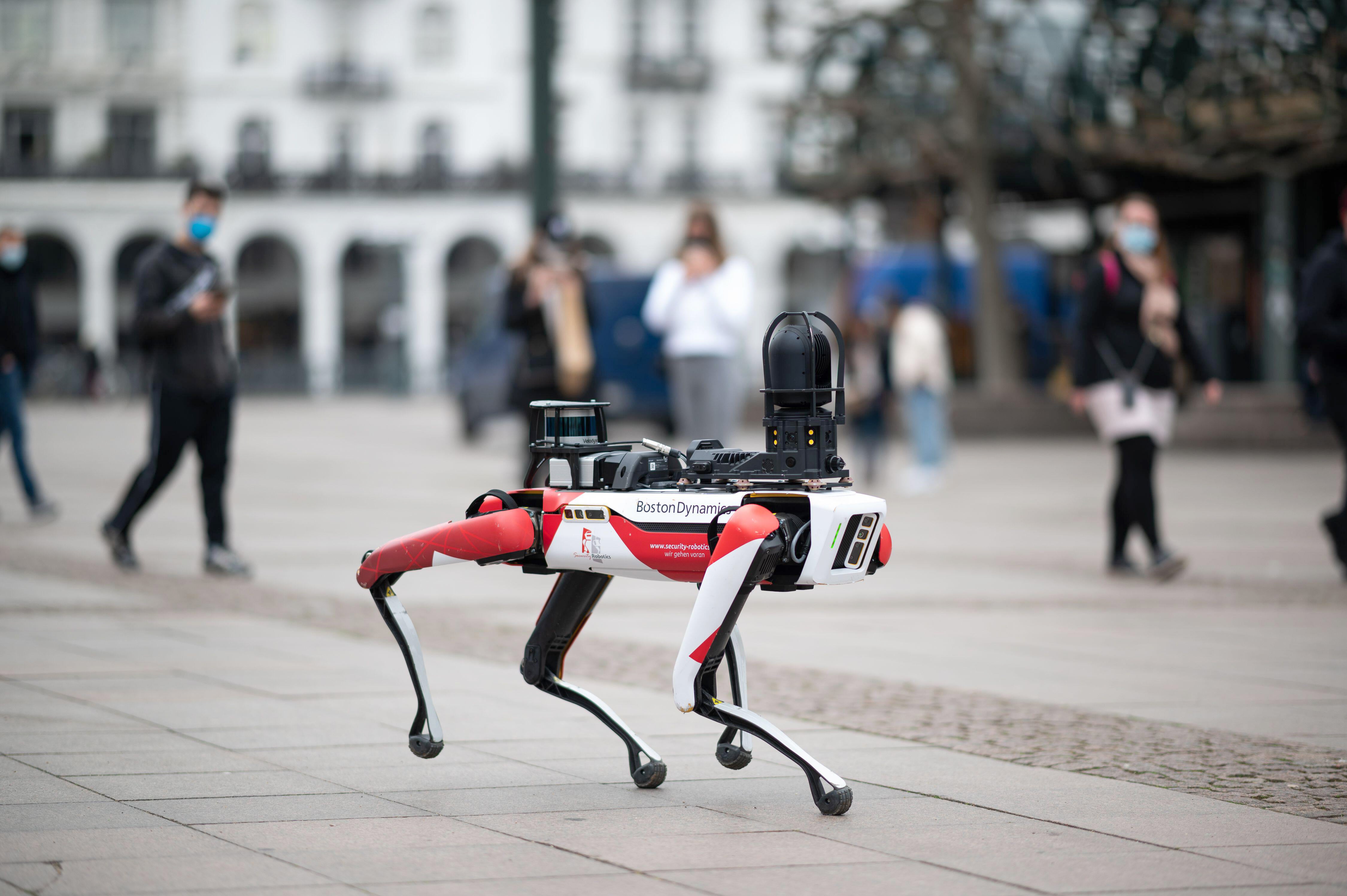
    Last year the New York City Police Department (NYPD) began leasing a caninelike robot—a Spot model from Boston Dynamics that the department nicknamed Digidog. Officers deployed the robot in just a few cases, including a hostage situation in the Bronx and an incident at a public housing building in Manhattan. As word spread (along with photographs and videos), a backlash from the public—and eventually elected officials—quickly gained momentum. Some objected to the robot’s expense. Others worried that its use threatened civil liberties. Many simply found it creepy.

    The NYPD abruptly terminated its lease and quit using the robot last month. Other U.S. police departments have been testing their own Spot models, however. “Spot has been particularly resourceful in tackling dull, dirty and dangerous tasks,” the Boston Dynamics spokesperson told Scientific American. “Public safety initiatives, including police departments, often face dangerous work, such as inspecting a bomb, rummaging through remnants of an explosion or fire, or even deescalating a potentially dangerous situation.”

    Complex social and historical factors influenced the NYPD’s decision to pull Digidog from duty. “This is just not a very good time for [the NYPD] to have tried this,” says David J. Gunkel, a professor of communication at Northern Illinois University. He notes the department made the move “at a time that we are, as a public, beginning to question what police are doing, how they’re being funded and what those monies are being used for.” Scientific American spoke with Gunkel about why people accept some machines while rejecting others—and whether the public can ever fully accept the idea of robotic cops.

    [An edited transcript of the interview follows.]

    What influences how we humans feel about robots? People love the cuddly robotic seal PARO, for example, while having a strong negative reaction to Digidog.

    There’s a combination of factors that come into play: the design of the robot, the contexts in which it’s deployed and user contributions. The PARO robot is designed to engage humans in more social activities. Boston Dynamics robots are not made to look that way. They don’t have a face. They’re not furry and cuddly. So design can have an effect on how people respond.

    But, also, the context of use is really important. The same Boston Dynamics robots that you saw causing trouble with the New York [City] Police Department, just [a few] years earlier, got a great deal of sympathy from humans. Boston Dynamics engineers were shown kicking the robot. People saw these videos online, and there was this outpouring of emotion for “poor Spot.” That robot, because of the context in which it was used, elicited an emotional response that was very different from the response elicited by the police’s Digidog robot.

    And then, finally, there’s what users do with these things. You can design the best robot in the world, but if users don’t use it in the way that you’ve anticipated, that robot could become something very different.

    Is there something about robots in particular that makes humans nervous?

    The really important thing about robots is: they move. And movement is something that elicits, in us human beings, a lot of expectations about what the object is. Already back in the 1940s, [psychologists] Fritz Heider and Marianne Simmel did some studies with very simple animated characters on a piece of film. When they showed this to human test subjects, human beings imparted personality to [a] triangle versus [a] square. And the difference wasn’t that the shapes actually had personalities. The difference was the way they moved. Because movement conveys a whole lot of information about social positioning and expectations, the movement of the robots in physical space really carries a great deal of significance for us.

    Returning to the public backlash against the NYPD, why did people feel so strongly about this specific robot?

    It’s again a number of factors. One is the very design. The robot, if you’ve seen pictures of it, is a rather imposing presence. It’s a little smaller than the robots you see in science fiction. But the way it navigates through space gives it this very imposing profile that can be seen as creepy by a lot of human observers.

    There’s also the context of use. The NYPD used this robot, very famously now, [at] a public housing project. That use of the robot in that place, I think, was a really poor choice on the part of the NYPD—because already you’re talking about police officers entering a public housing facility, now with this massive technological object, and that [exacerbates the] very big power imbalance that’s already there.

    Thirdly, there’s just timing. This is all taking place in the wake of increased public scrutiny on policing and police practices—especially the militarization of the police—and [how] the police have responded to minority populations in ways that are very different from the way that they have responded to populations of white individuals.

    Some people used science fiction to critique Digidog, referencing an episode of the television show Black Mirror in which robotic dogs hunted humans. How do stories shape our reaction to technology?

    The science fiction question is really crucial. We get the word robot from the Czech word robota, which comes to us in a stage play from 1920 by Karel Čapek. So our very idea of “robot” is absolutely connected to, and you can’t really separate it from, science fiction—because that’s where it began.

    Also, what the public knows about robots is already predicted in science fiction because we see it in science fiction before we actually see it in social reality. This is called “science-fiction prototyping.” Roboticists get some mileage out of it because they can often use science fiction as a way to explain what it is they’re building and why. But they also fight [this prototyping] because the science-fiction stories create expectations that inform how people will respond to these things before they ever become social reality. So it’s a double-edged sword: it offers opportunities for explanation, but it also inhibits fully understanding what the realities are.

    Could the public eventually accept the use of robots in policing?

    I think this is an evolving scenario. And the decision-making, on the part of police departments, about how these things are integrated or not is going to be crucial. I think you would have seen a very different response had the Digidog robot been used to rescue someone from a fire, as opposed to being brought to a housing project in support of police action. I think you would have seen a very different outcome if it had been used as a bomb-disposal-unit robot. So I think a lot is going to depend not only on the design of the robot but also on the timing of use, the context of use and the positioning of this device with regards to how police interact with their communities—and who they serve.


    Original Source Link

    Share. Facebook Twitter Pinterest LinkedIn WhatsApp Email Reddit Telegram
    Previous ArticleHow To Get S++ Rank In Resident Evil 4 Remake Mercenaries
    Next Article The 13 Best Shows on HBO Max Right Now

    RELATED POSTS

    Two Titanic Structures Hidden Deep Within the Earth Have Altered the Magnetic Field for Millions of Years

    February 6, 2026

    Katharine Burr Blodgett’s brilliant career began at the ‘House of Magic’

    February 5, 2026

    Nasal spray could prevent infections from any flu strain

    February 5, 2026

    Why Are Some Women Training for Pregnancy Like It’s a Marathon?

    February 4, 2026

    NASA’s Artemis II moon mission engulfed by debate over its controversial heat shield

    February 4, 2026

    Dutch air force reads pilots’ brainwaves to make training harder

    February 3, 2026
    latest posts

    Twisted Sister Cancel Reunion Tour Plans Due to Snider’s Health

    Twisted Sister have canceled their plans for a 2026 50th anniversary reunion tour due to…

    Top analyst Tom Lee on gold’s black swan risk: Elon Musk becoming ‘the new central bank’

    February 6, 2026

    Trump Level Of Core Support Has Cratered To An Astonishing New Low

    February 6, 2026

    U.S. forces strike kills 2 suspected narco-terrorists in Eastern Pacific

    February 6, 2026

    Sapiom raises $15M to help AI agents buy their own tech tools

    February 6, 2026

    Two Titanic Structures Hidden Deep Within the Earth Have Altered the Magnetic Field for Millions of Years

    February 6, 2026

    Badlands Dan Trachtenberg First-Look Deal Paramount

    February 6, 2026
    Categories
    • Books (1,046)
    • Business (5,950)
    • Events (31)
    • Film (5,887)
    • Lifestyle (3,997)
    • Music (5,990)
    • Politics (5,952)
    • Science (5,302)
    • Technology (5,881)
    • Television (5,565)
    • Uncategorized (6)
    • US News (5,939)
    popular posts

    Crocodiles can reproduce without males – and maybe dinosaurs could too

    American crocodiles can reproduce asexuallyDasa Petraskova/Shutterstock A fully formed crocodile fetus has been found in…

    After 2 Doctor-Lite Episodes In 2024, Fifteen Still Isn’t The Main Character In Doctor Who Season 15

    April 14, 2025

    The Slow-Burn Nightmare of the National Public Data Breach

    August 17, 2024

    Here Are Some Fashion Trend To Avoid – Ferbena.com

    February 17, 2023
    Archives
    Browse By Category
    • Books (1,046)
    • Business (5,950)
    • Events (31)
    • Film (5,887)
    • Lifestyle (3,997)
    • Music (5,990)
    • Politics (5,952)
    • Science (5,302)
    • Technology (5,881)
    • Television (5,565)
    • Uncategorized (6)
    • US News (5,939)
    About Us

    We are a creativity led international team with a digital soul. Our work is a custom built by the storytellers and strategists with a flair for exploiting the latest advancements in media and technology.

    Most of all, we stand behind our ideas and believe in creativity as the most powerful force in business.

    What makes us Different

    We care. We collaborate. We do great work. And we do it with a smile, because we’re pretty damn excited to do what we do. If you would like details on what else we can do visit out Contact page.

    Our Picks

    Two Titanic Structures Hidden Deep Within the Earth Have Altered the Magnetic Field for Millions of Years

    February 6, 2026

    Badlands Dan Trachtenberg First-Look Deal Paramount

    February 6, 2026

    ‘Today’ Host Craig Melvin Loses Big Opportunity

    February 6, 2026
    © 2026 New York Examiner News. All rights reserved. All articles, images, product names, logos, and brands are property of their respective owners. All company, product and service names used in this website are for identification purposes only. Use of these names, logos, and brands does not imply endorsement unless specified. By using this site, you agree to the Terms & Conditions and Privacy Policy.

    Type above and press Enter to search. Press Esc to cancel.

    We use cookies on our website to give you the most relevant experience by remembering your preferences and repeat visits. By clicking “Accept All”, you consent to the use of ALL the cookies. However, you may visit "Cookie Settings" to provide a controlled consent.
    Cookie SettingsAccept All
    Manage consent

    Privacy Overview

    This website uses cookies to improve your experience while you navigate through the website. Out of these, the cookies that are categorized as necessary are stored on your browser as they are essential for the working of basic functionalities of the website. We also use third-party cookies that help us analyze and understand how you use this website. These cookies will be stored in your browser only with your consent. You also have the option to opt-out of these cookies. But opting out of some of these cookies may affect your browsing experience.
    Necessary
    Always Enabled
    Necessary cookies are absolutely essential for the website to function properly. These cookies ensure basic functionalities and security features of the website, anonymously.
    CookieDurationDescription
    cookielawinfo-checkbox-analytics11 monthsThis cookie is set by GDPR Cookie Consent plugin. The cookie is used to store the user consent for the cookies in the category "Analytics".
    cookielawinfo-checkbox-functional11 monthsThe cookie is set by GDPR cookie consent to record the user consent for the cookies in the category "Functional".
    cookielawinfo-checkbox-necessary11 monthsThis cookie is set by GDPR Cookie Consent plugin. The cookies is used to store the user consent for the cookies in the category "Necessary".
    cookielawinfo-checkbox-others11 monthsThis cookie is set by GDPR Cookie Consent plugin. The cookie is used to store the user consent for the cookies in the category "Other.
    cookielawinfo-checkbox-performance11 monthsThis cookie is set by GDPR Cookie Consent plugin. The cookie is used to store the user consent for the cookies in the category "Performance".
    viewed_cookie_policy11 monthsThe cookie is set by the GDPR Cookie Consent plugin and is used to store whether or not user has consented to the use of cookies. It does not store any personal data.
    Functional
    Functional cookies help to perform certain functionalities like sharing the content of the website on social media platforms, collect feedbacks, and other third-party features.
    Performance
    Performance cookies are used to understand and analyze the key performance indexes of the website which helps in delivering a better user experience for the visitors.
    Analytics
    Analytical cookies are used to understand how visitors interact with the website. These cookies help provide information on metrics the number of visitors, bounce rate, traffic source, etc.
    Advertisement
    Advertisement cookies are used to provide visitors with relevant ads and marketing campaigns. These cookies track visitors across websites and collect information to provide customized ads.
    Others
    Other uncategorized cookies are those that are being analyzed and have not been classified into a category as yet.
    SAVE & ACCEPT