
Close Menu
New York Examiner News

    Subscribe to Updates

    Get the latest creative news from FooBar about art, design and business.

    What's Hot

    Kaitlyn Aurelia Smith Launches Label With New Album Ruin: It’s Not Just Music

    May 24, 2026

    Law enforcement authorities respond to reports of shots fired near White House as Trump was inside

    May 24, 2026

    Half Of GOP Senators Were Ready To Vote With Democrats To Kill Trump’s Slush Fund

    May 24, 2026
    Facebook X (Twitter) Instagram
    New York Examiner News
    • Home
    • US News
    • Politics
    • Business
    • Science
    • Technology
    • Lifestyle
    • Music
    • Television
    • Film
    • Books
    • Contact
      • About
      • Amazon Disclaimer
      • DMCA / Copyrights Disclaimer
      • Terms and Conditions
      • Privacy Policy
    New York Examiner News
    Home»Science»The Slow Bake of Our Infrastructure
    Science

    The Slow Bake of Our Infrastructure

    By AdminJuly 23, 2022
    Facebook Twitter Pinterest LinkedIn WhatsApp Email Reddit Telegram
    The Slow Bake of Our Infrastructure


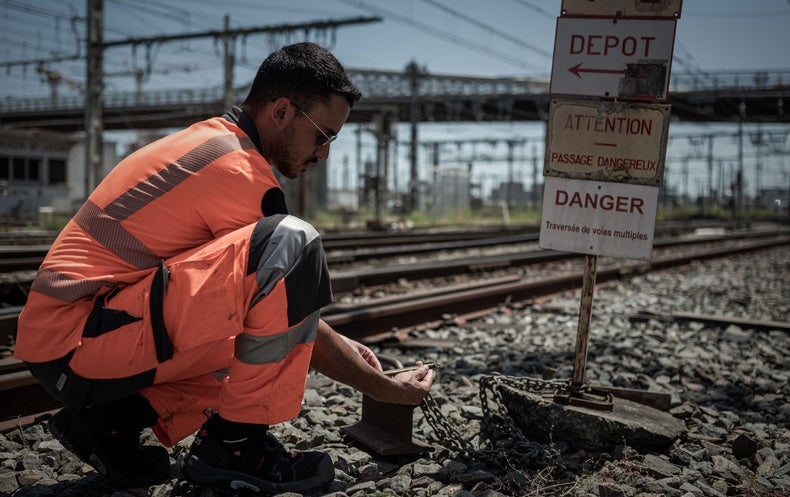
    As England, Spain and huge swaths of the U.S. deal with record-shattering high temperatures, the time has come to stop looking at heat and heat waves as temporary inconveniences. As the climate warms, heat waves have become longer, more frequent and more deadly, at their worst killing thousands of people. With warnings that people are unsafe in houses without cooling systems, or that train tracks will buckle, and power and water systems will be compromised, we need to examine how well our infrastructures—the systems we’ve built to deliver critical services such as mobility, energy, water, and access to cooled space—are prepared for these new conditions. A mountain of evidence is emerging indicating that they are not, and that our ability to adapt infrastructures on large scales lags far behind how quickly the climate is changing. Failures are inevitable, and we need to be smarter about how we prepare for them.

    As environmental extremes worsen, we must confront the reality that our infrastructures were designed for past conditions that no longer exist. With tremendous uncertainty about future climate, how do we engineer our way out of the challenge? Can the ways that we’ve been designing infrastructures over the past century keep our lights on, homes cooled, and our water running into the future? Designers and engineers intentionally design infrastructures to withstand pressure from water, cold, wind, fire and heat. But how much pressure should a given system be able to withstand? As a society we’ve generally codified how much risk we’re willing to accept when it comes to environmental hazards. When you hear about a 100-year event, an engineer has designed for a 1 percent chance per year of that event happening, versus a 10 percent chance for a 10-year event. Designing past this minimum can be much more expensive, but right now most standards for climate risks are still based on historical data from past climate conditions that appear increasingly obsolete.

    The failure of infrastructures can take many different forms. It’s easy to envision failure of infrastructure as catastrophic destruction, for example, a road washed away by a flood or a neighborhood razed to the ground by a wildfire. While it’s important to plan for and mitigate catastrophic failures, heat can have a much more subtle set of effects. In general, as temperatures rise, infrastructure failures increase. Roadways rut and crack; power lines sag, risking short circuits and fire if they come in contact with trees; buildings struggle to keep in cooled air; water pipe reliability decreases; and energy generation is pushed to its limit as demand for AC skyrockets, triggering rolling blackouts during extreme summer heat when households need power most. Lots of small failures quickly snowball into new and larger failures. While failure of any one asset—one buckled stretch of railroad, or a burst water main—is manageable, city- and state-wide failures exacerbated by climate change are beyond what we can handle.

    We don’t have a clear indication of how, when—or even if—we’ll curtail global greenhouse gas emissions. So, how do we engineer our way out of hotter days, longer streaks of heat, bigger and more powerful storms and whatever nature will throw at us next, when we are uncertain about our climate’s future? Combining this uncertainty with the limited resources available to refurbish, redesign and replace existing infrastructure, and ongoing political jockeying around climate, means that failures are inevitable. We need to design for the management of failed infrastructures. For centuries, infrastructure design has focused on fail-safe thinking, that is, we design for particular environmental extremes, and if exceeded failure is expected, with consequences (e.g., death, economic disruption) classified as “acts of god.” With increasing intensity and duration of climate hazards, failures will simply become too frequent and significant to dismiss.

    So, let’s design with failure in mind. In doing so we’ll open up new design opportunities that allow infrastructures to gracefully fail while mitigating death and economic disruption. Safe-to-fail design is the balancing of community, environment, and infrastructural capabilities towards failing gracefully. We’re seeing the success of safe-to-fail systems already. In the Netherlands, the Room for the River project decided against building and maintaining expensive levees to keep rivers from flooding and instead gave land back to the rivers, accepting and planning for a future of floods. Farmers were allowed to plant in flood-prone land and reimbursed for their crops, which is much cheaper than constructing new levees. We can apply these lessons to heat waves, too. Instead of trying to retrofit all buildings with AC, we can focus on a few strategic community centers to provide more people with a cool place to go without stressing the power supply. We can plan with microgrids as backup power for critical services. How we design our neighborhoods for heat also matters: Density can reduce daytime highs, and in low-rise neighborhoods we can plant and maintain native trees.

    In addition to safe-to-fail thinking, here are some ways to approach infrastructure design in the face of worsening climate change:

    1. Adapt and mitigate. Let’s not create an accelerating and increasingly uncertain moving goalpost. There’s an opportunity to adapt our critical services while also reducing greenhouse gas emissions. If it’s necessary to increase AC access, then let’s make sure we do so with renewable energy and efficient technologies. If we’re going to modernize our roads against heat and other hazards, let’s make sure we do so for autonomous and electric vehicles, reducing parking and deploying EV charging that is resilient to hazards.

       
    2. Armor assets for future climate. If we’re designing and adapting infrastructures for today’s heat, then by the time the systems go live they’re already obsolete. Instead, codes and regulations must be updated to account for climate change and its uncertainty. Governing bodies including professional societies and public agencies should provide guidance on how to make design decisions with deep uncertainty. For example, the American Society of Civil Engineers recently released a manual for designing for climate change. But recognize that resource constraints and time limit armoring as a singular strategy.

       
    3. Prioritize investment in the most vulnerable and critical systems. Even if there was complete buy-in on climate and a drive to react and save lives threatened by infrastructure outages, we simply will not be able to replace or upgrade all infrastructures fast enough. We need targeted investments that prioritize not only the most vulnerable assets but also the most critical. Two different roads may be equally vulnerable to heat, but if one is the main route into a city, or the road to a fire station or hospital, then it should be first in line for improvements.

       
    4. Design for heat mitigation. Any decision to modernize infrastructure to better withstand heat must also work to help reduce how hot it gets in urban environments. Too often infrastructure design is driven by legacy performance goals that don’t incorporate the complexities of a changing environment. Today’s climate change reality necessitates new performance goals that allow infrastructure to not only reduce worsening environmental conditions, but more importantly, give all people and the environment an opportunity to thrive.

    Infrastructures are the mediators between our society and the environment, and how we choose to design and use their services can affect both people and where they live. For too long, we have accepted that it’s okay for infrastructures to operate with designs and goals rooted in a bygone era, putting communities at risk as the climates we live in move into uncharted territory. Not only is it time for an intervention, we simply have no choice but to intervene. And as we steer infrastructures in new directions, we must make sure that the new goals we establish allow people, natural environments, and economies to thrive in our climate-impacted future.

    This is an opinion and analysis article, and the views expressed by the author or authors are not necessarily those of Scientific American.


    Original Source Link

    Share. Facebook Twitter Pinterest LinkedIn WhatsApp Email Reddit Telegram
    Previous ArticleBill Murray Dropped Out of Wes Anderson Asteroid City Due to COVID – The Hollywood Reporter
    Next Article Messaging app JusTalk is spilling millions of unencrypted messages – TechCrunch

    RELATED POSTS

    Quantum ‘Jamming’ Could Help Unlock the Mysteries of Causality

    May 23, 2026

    SpaceX launches Starship V3—the world’s most powerful and tallest rocket ever

    May 23, 2026

    Mercury may have gained all of its unexpected water in a single day

    May 22, 2026

    All the Fancy Measuring Devices Used in Science Rely on Two Stone-Age Techniques

    May 22, 2026

    Hidden structural features inside Egypt’s Great Pyramid may have helped it withstand earthquakes, new study finds

    May 21, 2026

    Women’s body temperature rises from age 18 to 42 but we don’t know why

    May 21, 2026
    latest posts

    Kaitlyn Aurelia Smith Launches Label With New Album Ruin: It’s Not Just Music

    Kaitlyn Aurelia Smith is readying a new album. The composer and synthesist will release Ruin:…

    Law enforcement authorities respond to reports of shots fired near White House as Trump was inside

    May 24, 2026

    Half Of GOP Senators Were Ready To Vote With Democrats To Kill Trump’s Slush Fund

    May 24, 2026

    Giants’ Abdul Carter and Jaxson Dart squash potential locker room rift over Trump event appearance

    May 24, 2026

    Memorial Day Dyson Vacuum Deals: V15 Detect, Gen5Detect, PencilVac On Sale

    May 24, 2026

    Quantum ‘Jamming’ Could Help Unlock the Mysteries of Causality

    May 23, 2026

    2026 Cannes Film Festival 5 Takeaways: AI, Queer Cinema

    May 23, 2026
    Categories
    • Books (1,261)
    • Business (6,165)
    • Events (54)
    • Film (6,102)
    • Lifestyle (4,199)
    • Music (6,219)
    • Politics (6,164)
    • Science (5,519)
    • Technology (6,097)
    • Television (5,784)
    • Uncategorized (7)
    • US News (6,153)
    popular posts

    Avatar 3 to Top Box Office With $20M-Plus Fourth Weekend

    Avatar: Fire and Ash is set to continue its box office streak over this sleepy…

    MD officer accused of excessive force after pepper-spraying cuffed suspect

    February 17, 2024

    Impeachment Report Lays Out President Biden’s Alleged Offenses

    August 25, 2024

    Interview with ‘The Mother of All Lies’ director Asmae El Moudir. – The Hollywood Reporter

    July 5, 2023
    Archives
    Browse By Category
    • Books (1,261)
    • Business (6,165)
    • Events (54)
    • Film (6,102)
    • Lifestyle (4,199)
    • Music (6,219)
    • Politics (6,164)
    • Science (5,519)
    • Technology (6,097)
    • Television (5,784)
    • Uncategorized (7)
    • US News (6,153)
    About Us

    We are a creativity led international team with a digital soul. Our work is a custom built by the storytellers and strategists with a flair for exploiting the latest advancements in media and technology.

    Most of all, we stand behind our ideas and believe in creativity as the most powerful force in business.

    What makes us Different

    We care. We collaborate. We do great work. And we do it with a smile, because we’re pretty damn excited to do what we do. If you would like details on what else we can do visit out Contact page.

    Our Picks

    Quantum ‘Jamming’ Could Help Unlock the Mysteries of Causality

    May 23, 2026

    2026 Cannes Film Festival 5 Takeaways: AI, Queer Cinema

    May 23, 2026

    Khloe Kardashian In New Romance With Oscar-Winning Actor?

    May 23, 2026
    © 2026 New York Examiner News. All rights reserved. All articles, images, product names, logos, and brands are property of their respective owners. All company, product and service names used in this website are for identification purposes only. Use of these names, logos, and brands does not imply endorsement unless specified. By using this site, you agree to the Terms & Conditions and Privacy Policy.

    Type above and press Enter to search. Press Esc to cancel.

    We use cookies on our website to give you the most relevant experience by remembering your preferences and repeat visits. By clicking “Accept All”, you consent to the use of ALL the cookies. However, you may visit "Cookie Settings" to provide a controlled consent.
    Cookie SettingsAccept All
    Manage consent

    Privacy Overview

    This website uses cookies to improve your experience while you navigate through the website. Out of these, the cookies that are categorized as necessary are stored on your browser as they are essential for the working of basic functionalities of the website. We also use third-party cookies that help us analyze and understand how you use this website. These cookies will be stored in your browser only with your consent. You also have the option to opt-out of these cookies. But opting out of some of these cookies may affect your browsing experience.
    Necessary
    Always Enabled
    Necessary cookies are absolutely essential for the website to function properly. These cookies ensure basic functionalities and security features of the website, anonymously.
    CookieDurationDescription
    cookielawinfo-checkbox-analytics11 monthsThis cookie is set by GDPR Cookie Consent plugin. The cookie is used to store the user consent for the cookies in the category "Analytics".
    cookielawinfo-checkbox-functional11 monthsThe cookie is set by GDPR cookie consent to record the user consent for the cookies in the category "Functional".
    cookielawinfo-checkbox-necessary11 monthsThis cookie is set by GDPR Cookie Consent plugin. The cookies is used to store the user consent for the cookies in the category "Necessary".
    cookielawinfo-checkbox-others11 monthsThis cookie is set by GDPR Cookie Consent plugin. The cookie is used to store the user consent for the cookies in the category "Other.
    cookielawinfo-checkbox-performance11 monthsThis cookie is set by GDPR Cookie Consent plugin. The cookie is used to store the user consent for the cookies in the category "Performance".
    viewed_cookie_policy11 monthsThe cookie is set by the GDPR Cookie Consent plugin and is used to store whether or not user has consented to the use of cookies. It does not store any personal data.
    Functional
    Functional cookies help to perform certain functionalities like sharing the content of the website on social media platforms, collect feedbacks, and other third-party features.
    Performance
    Performance cookies are used to understand and analyze the key performance indexes of the website which helps in delivering a better user experience for the visitors.
    Analytics
    Analytical cookies are used to understand how visitors interact with the website. These cookies help provide information on metrics the number of visitors, bounce rate, traffic source, etc.
    Advertisement
    Advertisement cookies are used to provide visitors with relevant ads and marketing campaigns. These cookies track visitors across websites and collect information to provide customized ads.
    Others
    Other uncategorized cookies are those that are being analyzed and have not been classified into a category as yet.
    SAVE & ACCEPT