
Close Menu
New York Examiner News

    Subscribe to Updates

    Get the latest creative news from FooBar about art, design and business.

    What's Hot

    FBI asks agents to voluntarily travel to Minneapolis

    January 18, 2026

    Trump’s Stupidity Is Destroying His Presidency

    January 18, 2026

    Trump plans executive order protecting Army-Navy game broadcast slot

    January 18, 2026
    Facebook X (Twitter) Instagram
    New York Examiner News
    • Home
    • US News
    • Politics
    • Business
    • Science
    • Technology
    • Lifestyle
    • Music
    • Television
    • Film
    • Books
    • Contact
      • About
      • Amazon Disclaimer
      • DMCA / Copyrights Disclaimer
      • Terms and Conditions
      • Privacy Policy
    New York Examiner News
    Home»Science»U.S. Military Continues mRNA Vaccine Research after RFK, Jr., Cuts Funding
    Science

    U.S. Military Continues mRNA Vaccine Research after RFK, Jr., Cuts Funding

    By AdminOctober 1, 2025
    Facebook Twitter Pinterest LinkedIn WhatsApp Email Reddit Telegram
    U.S. Military Continues mRNA Vaccine Research after RFK, Jr., Cuts Funding


    The abrupt termination last month of nearly half a billion dollars in US government contracts for mRNA vaccine research rattled scientists working inside and outside industry. The cuts raised alarm about the country’s commitment to the Nobel-prizewinning technology, which is credited with saving millions of lives during the COVID-19 pandemic and is regarded as essential for fighting viruses in the future.

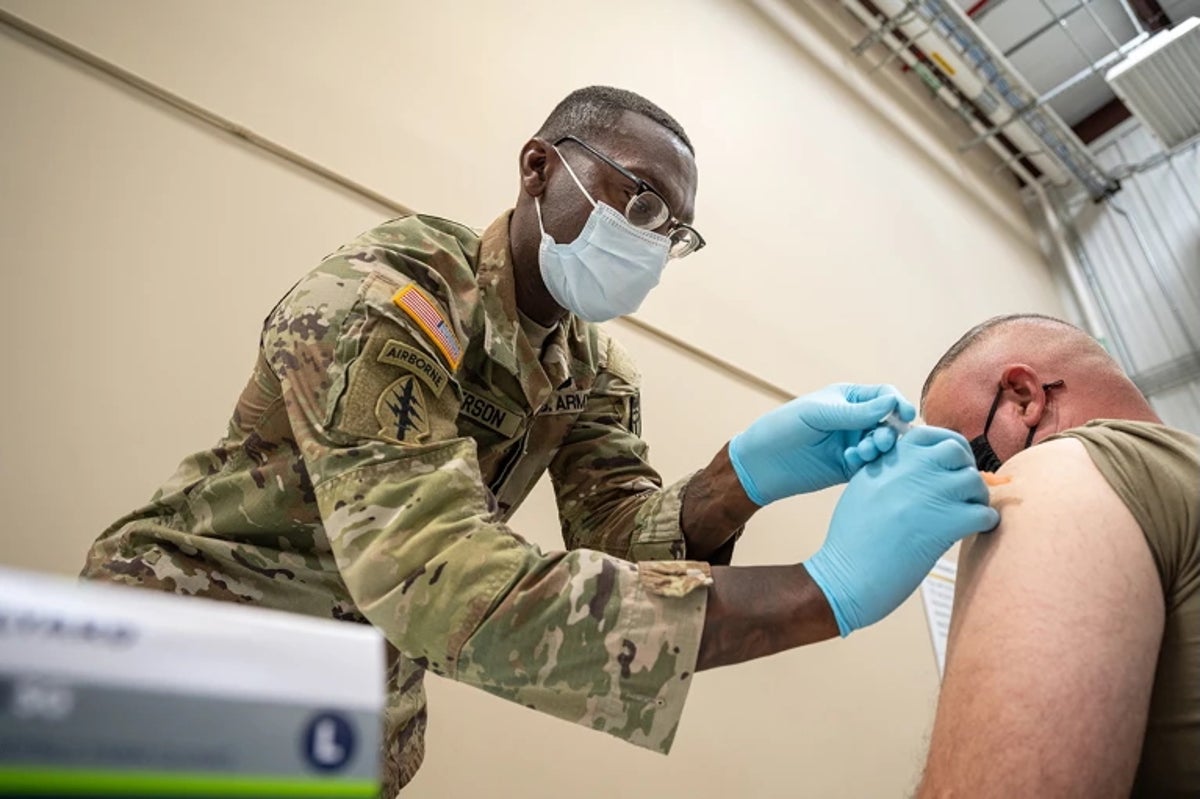
    Yet not all large-scale research into mRNA vaccines in the United States is being dismantled. Nature has learnt that, even as the US Department of Health and Human Services (HHS) — led by vaccine critic Robert F. Kennedy Jr — pulls back, the country’s military continues to bankroll parts of the same research.

    Among the beneficiaries are programmes developing vaccines against some of the world’s deadliest pathogens, including the virus that causes Crimean–Congo haemorrhagic fever (CCHF), a tick-borne disease that kills up to 40% of those infected. In the United States, the government considers such research crucial because these pathogens not only threaten soldiers deployed abroad, but could also ignite a global outbreak.


    On supporting science journalism

    If you’re enjoying this article, consider supporting our award-winning journalism by subscribing. By purchasing a subscription you are helping to ensure the future of impactful stories about the discoveries and ideas shaping our world today.


    “A lot of us are at least relieved the Department of Defense [DoD] is not abandoning mRNA research,” says Amesh Adalja, an infectious-disease specialist at the Johns Hopkins Center for Health Security in Baltimore, Maryland.

    Still, he cautions that the HHS’s rejection of the technology, combined with broader policy fractures across the government, threatens to hobble national — and global — readiness for emerging infectious threats.

    “The whole biodefence structure is completely derailed,” Adalja says. “I’ve never seen it be disconnected like this.”

    Turbulent times

    Peter Berglund learnt that his company’s federally backed vaccine programme was being cut the same way that many other affected firms did in a 5 August notice from the HHS’s Biomedical Advanced Research and Development Authority (BARDA), which ordered an immediate shutdown of ongoing studies. For Berglund, chief scientific officer at HDT Bio in Seattle, Washington, the news was a gut punch, as he told colleagues at a conference on RNA-based therapeutics in Boston, Massachusetts, this month.

    HDT had been developing a next-generation CCHF vaccine based on a form of RNA that can copy itself inside cells. The company had secured tens of millions of dollars in federal contracts, which it used first to test a shot in mice and monkeys, and then to begin a human trial in Texas this July. The BARDA memo brought everything to a halt the very next month.

    But “that was mommy”, Berglund says. “Then daddy calls.”

    Within days, HDT executives heard from project managers at the DoD’s Joint Program Executive Office (JPEO) for Chemical, Biological, Radiological and Nuclear Defense, which had been co-funding the CCHF vaccine research. HDT was told to restart its trial, with the JPEO pledging support through at least this first phase of clinical evaluation.

    “It’s been so turbulent,” Berglund says. The DoD funding, although substantial, is less than what had originally been pledged in conjunction with BARDA. “But, at least now we can advance it through phase I” and worry about the rest later, he adds.

    A ‘restructuring’ of resources

    Others with projects co-funded by the JPEO also learnt of funding cuts and a “restructuring of collaborations” in the 5 August notice. But their situation is less clear.

    Earlier this month, AstraZeneca, a pharmaceutical company headquartered in Cambridge, UK, began a human trial of two mRNA vaccines, despite the notice. Each is designed to protect against a different strain of avian influenza. Clinical-trial registries still list both BARDA and the JPEO as collaborators.

    An AstraZeneca spokesperson declined to comment on the US government’s role in funding the trial against bird flu — which has been infecting US poultry and dairy cattle and raising the spectre of a leap into humans. The JPEO did not respond to requests for comment.

    In a statement, HHS press secretary Emily Hilliard disputed suggestions that withdrawing from joint projects would weaken the nation’s pandemic preparedness, writing that “BARDA is prioritizing evidence-based, ethically grounded solutions.”

    The JPEO and BARDA had also been jointly funding a preclinical-stage vaccine programme for biotechnology firm Moderna in Cambridge, Massachusetts. The mRNA shot is aimed at Marburg virus — a close but even deadlier relative of Ebola — which caused an outbreak earlier this year in northwest Tanzania, resulting in ten deaths. Neither Moderna nor its collaborator, the University of Texas Medical Branch in Galveston, responded to e-mails from Nature seeking comment on the project’s funding status.

    Not every mRNA project has fared so well: those lacking joint DoD support have been brought to a standstill.

    At Emory University in Atlanta, Georgia, for instance, biomedical engineer Philip Santangelo had been using CRISPR gene editing to develop an inhalable flu therapy, delivered to the lungs through mRNA. The DoD, through its Defense Advanced Research Projects Agency (DARPA), had provided more than US$20 million to support early-stage development, but that funding ran out last year. A follow-on contract from BARDA was meant to underwrite the design and testing of a dry-powder formulation that would be easy to administer in emergency settings. With the BARDA money frozen, Santangelo says that he’s been forced to pursue funding from foundations, non-profit organizations and other non-governmental entities.

    Patchwork support

    Santangelo is hardly alone in seeking ways to keep mRNA research on track. Other academics, navigating a minefield of uncertainty over whether US funding agencies will continue to financially support such work, still submit grant proposals — but the term ‘mRNA’ is often scrubbed out, replaced by phrases such as ‘nucleic-acid-based medicines’ to sidestep scrutiny.

    A few glimmers of hope remain, however. A spending package advanced this month by a US House of Representatives committee directs BARDA to support mRNA-vaccine research. And the DoD’s Defense Threat Reduction Agency (DTRA) solicited applications this year for its Reimagining the Next Generation of Biodefense Vaccines programme. According to Karl Ruping, chief executive of Tiba Biotech in Cambridge, Massachusetts, DTRA programme managers told him that the agency is open to supporting mRNA vaccines so long as they advance the goal of more-resilient biodefence tools.

    Outside the defence establishment, the US Department of Agriculture is maintaining support for mRNA vaccine development as well, awarding grants for projects targeting respiratory viruses that affect pigs, chickens and cows.

    Taken together, these programmes reflect commitment — but only in pockets of government, exposing a troubling absence of coordination, says Michael Osterholm, an infectious-disease researcher and biosecurity specialist at the University of Minnesota in Minneapolis.

    For now, researchers can take comfort knowing that agencies outside Kennedy’s direct control are charting a different course. But the HHS leader’s influence remains strong, and many worry that he could soon shape policy across the entire federal agenda, including at the DoD. “I’m not sure that it’s the safe haven for mRNA research that some associate with it,” Osterholm says.

    This article is reproduced with permission and was first published on September 24, 2025.


    Original Source Link

    Share. Facebook Twitter Pinterest LinkedIn WhatsApp Email Reddit Telegram
    Previous ArticleSpecial Episode: Tilda Swinton – Ongoing at the…
    Next Article OpenAI’s new social app is filled with terrifying Sam Altman deepfakes

    RELATED POSTS

    First treaty to protect the high seas comes into force

    January 18, 2026

    How Does the Hive Mind Work in ‘Pluribus?

    January 17, 2026

    RFK, Jr., shifts focus to questioning whether cell phones are safe. Here’s what the science says

    January 17, 2026

    Meat may play an unexpected role in helping people reach 100

    January 16, 2026

    OpenAI Invests in Sam Altman’s New Brain-Tech Startup Merge Labs

    January 16, 2026

    Americans Overwhelmingly Support Science, but Some Think the U.S. Is Lagging Behind: Pew

    January 15, 2026
    latest posts

    FBI asks agents to voluntarily travel to Minneapolis

    The FBI is asking agents across the US to travel to Minneapolis for temporary duty,…

    Trump’s Stupidity Is Destroying His Presidency

    January 18, 2026

    Trump plans executive order protecting Army-Navy game broadcast slot

    January 18, 2026

    Why Silicon Valley is really talking about fleeing California (it’s not the 5%)

    January 18, 2026

    First treaty to protect the high seas comes into force

    January 18, 2026

    Matt Damon Says Netflix Wants Plots Reiterated for Distracted Viewers

    January 18, 2026

    Blake Shelton Shares Non-Filtered Thoughts On Dry January

    January 18, 2026
    Categories
    • Books (1,008)
    • Business (5,913)
    • Events (29)
    • Film (5,849)
    • Lifestyle (3,959)
    • Music (5,949)
    • Politics (5,914)
    • Science (5,264)
    • Technology (5,843)
    • Television (5,527)
    • Uncategorized (6)
    • US News (5,901)
    popular posts

    Disney shares fall after ‘Avatar’ opening weekend comes in soft

    Avatar: The Way of WaterCourtesy: Disney Co.Shares of Disney dropped on Monday following a weaker-than-expected…

    Digable Planets Announce Reachin’ 30th Anniversary Tour

    June 1, 2023

    “I’m Not Going to Define it From Here”

    July 25, 2022

    Trump Basically Tells Families To Suffer As He Refuses Tariff Exemptions

    May 7, 2025
    Archives
    Browse By Category
    • Books (1,008)
    • Business (5,913)
    • Events (29)
    • Film (5,849)
    • Lifestyle (3,959)
    • Music (5,949)
    • Politics (5,914)
    • Science (5,264)
    • Technology (5,843)
    • Television (5,527)
    • Uncategorized (6)
    • US News (5,901)
    About Us

    We are a creativity led international team with a digital soul. Our work is a custom built by the storytellers and strategists with a flair for exploiting the latest advancements in media and technology.

    Most of all, we stand behind our ideas and believe in creativity as the most powerful force in business.

    What makes us Different

    We care. We collaborate. We do great work. And we do it with a smile, because we’re pretty damn excited to do what we do. If you would like details on what else we can do visit out Contact page.

    Our Picks

    Matt Damon Says Netflix Wants Plots Reiterated for Distracted Viewers

    January 18, 2026

    Blake Shelton Shares Non-Filtered Thoughts On Dry January

    January 18, 2026

    8 Best Men’s Belts For Jeans That Elevate Your Denim In 2026

    January 18, 2026
    © 2026 New York Examiner News. All rights reserved. All articles, images, product names, logos, and brands are property of their respective owners. All company, product and service names used in this website are for identification purposes only. Use of these names, logos, and brands does not imply endorsement unless specified. By using this site, you agree to the Terms & Conditions and Privacy Policy.

    Type above and press Enter to search. Press Esc to cancel.

    We use cookies on our website to give you the most relevant experience by remembering your preferences and repeat visits. By clicking “Accept All”, you consent to the use of ALL the cookies. However, you may visit "Cookie Settings" to provide a controlled consent.
    Cookie SettingsAccept All
    Manage consent

    Privacy Overview

    This website uses cookies to improve your experience while you navigate through the website. Out of these, the cookies that are categorized as necessary are stored on your browser as they are essential for the working of basic functionalities of the website. We also use third-party cookies that help us analyze and understand how you use this website. These cookies will be stored in your browser only with your consent. You also have the option to opt-out of these cookies. But opting out of some of these cookies may affect your browsing experience.
    Necessary
    Always Enabled
    Necessary cookies are absolutely essential for the website to function properly. These cookies ensure basic functionalities and security features of the website, anonymously.
    CookieDurationDescription
    cookielawinfo-checkbox-analytics11 monthsThis cookie is set by GDPR Cookie Consent plugin. The cookie is used to store the user consent for the cookies in the category "Analytics".
    cookielawinfo-checkbox-functional11 monthsThe cookie is set by GDPR cookie consent to record the user consent for the cookies in the category "Functional".
    cookielawinfo-checkbox-necessary11 monthsThis cookie is set by GDPR Cookie Consent plugin. The cookies is used to store the user consent for the cookies in the category "Necessary".
    cookielawinfo-checkbox-others11 monthsThis cookie is set by GDPR Cookie Consent plugin. The cookie is used to store the user consent for the cookies in the category "Other.
    cookielawinfo-checkbox-performance11 monthsThis cookie is set by GDPR Cookie Consent plugin. The cookie is used to store the user consent for the cookies in the category "Performance".
    viewed_cookie_policy11 monthsThe cookie is set by the GDPR Cookie Consent plugin and is used to store whether or not user has consented to the use of cookies. It does not store any personal data.
    Functional
    Functional cookies help to perform certain functionalities like sharing the content of the website on social media platforms, collect feedbacks, and other third-party features.
    Performance
    Performance cookies are used to understand and analyze the key performance indexes of the website which helps in delivering a better user experience for the visitors.
    Analytics
    Analytical cookies are used to understand how visitors interact with the website. These cookies help provide information on metrics the number of visitors, bounce rate, traffic source, etc.
    Advertisement
    Advertisement cookies are used to provide visitors with relevant ads and marketing campaigns. These cookies track visitors across websites and collect information to provide customized ads.
    Others
    Other uncategorized cookies are those that are being analyzed and have not been classified into a category as yet.
    SAVE & ACCEPT