
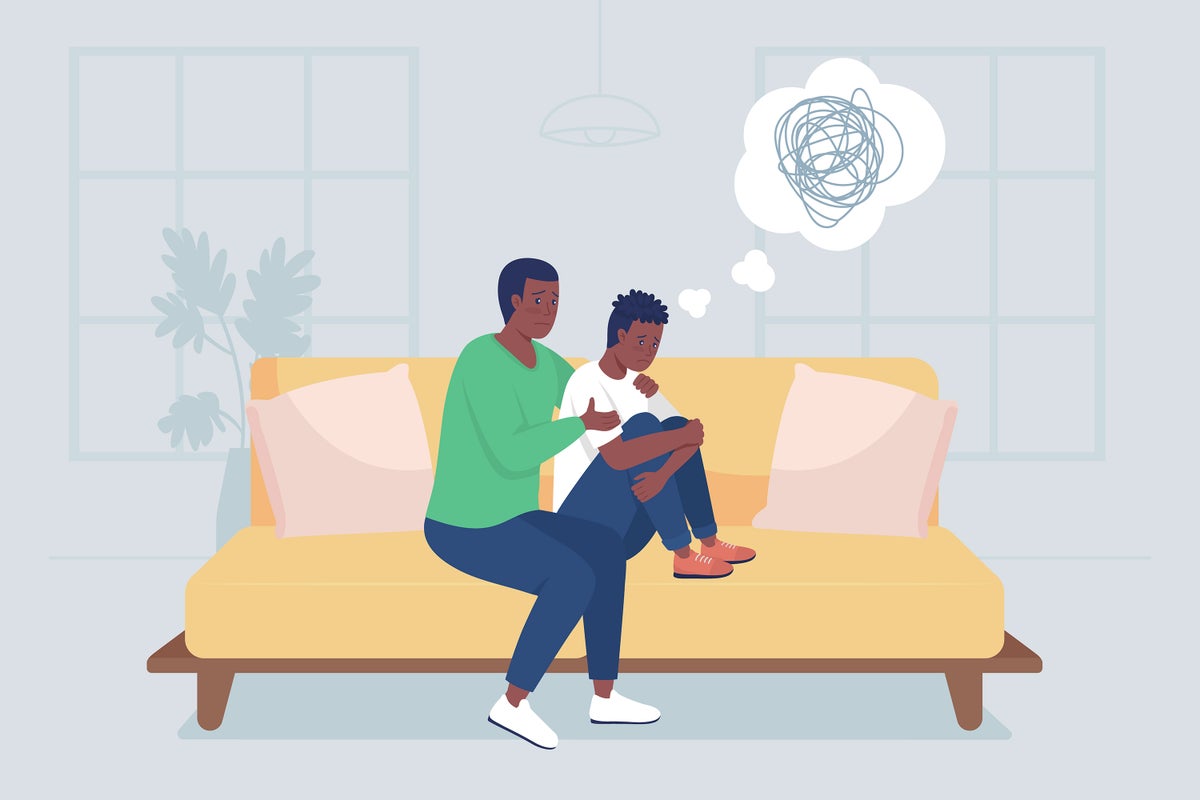
I have a patient named “Alex.” He is 15. He feels alone, down almost every day. He tells me he’s having trouble with schoolwork. He worries about his future. He struggles to make friends and keep the ones he has. He says it’s hard to get out of bed, to shower and brush his teeth. He doesn’t find joy in things he used to love, like painting. I met him in our emergency department; he was in the middle of a crisis and came to us for help.
Alex has depression and anxiety, and these feelings had been going on for about one year. Recently, he told me he’d been thinking about hurting himself or overdosing on medication. These thoughts were becoming more frequent. He talked a lot about wanting to die.
The teenage years are difficult. Our kids carry huge emotional burdens, and more youths than ever face anxiety, depression or have trouble regulating their emotions. Unfortunately, suicide is now the second leading cause of death in youth ages 10 to 24. Among this age group, suicide rates have risen more than 60 percent in the last 20 years. Chronic physical health issues, abuse or other traumatic events, substance use, bullying or negative experiences with social media, family history or past history of contemplating or attempting suicide are huge risk factors.
On supporting science journalism
If you’re enjoying this article, consider supporting our award-winning journalism by subscribing. By purchasing a subscription you are helping to ensure the future of impactful stories about the discoveries and ideas shaping our world today.
I’ve sat beside far too many children who’ve told me they don’t want to live anymore. Some whisper it. Others say it with tears streaming down their cheeks. It doesn’t have to come to this. And parents are key to prevention.
So why was I, a child psychiatrist, particularly concerned about Alex? He initially had a hard time opening up and minimized concerns his family had about him. His parents knew something was off but attributed it to teenage angst until the changes became more pronounced. His struggles and the progression of his symptoms were seriously concerning. We needed to act.
There are many things that I and others think has led to the rise in suicide risk. Our teens constantly question their self-worth, struggle to cope with distressing situations, or feel disconnected and unvalidated. Family, school and community can make these feelings worse, and the risks worsen alongside other mental or physical health problems.
Getting Alex treatment, establishing a clear safety plan, limiting access to things that could pose harm (like medications or firearms), finding friends and family to build a support network, and making sure he was getting support at school, home and within the community would be important in reducing his risk. But this goes for all children at increased risk of suicide.
Having a child at risk can be scary and uncertain. Even if everything looks okay on the outside, it may not be. It’s the last thing any parent ever expects to hear. But you’re in a powerful position. You can protect your child by knowing what leads to suicide, picking up on warning signs and getting help.
You are not alone in this. There is hope. Your child can get through it. Here’s how:
Warning signs vary and some are less obvious than others. Alex complained that he was tired on school days, that he had a stomachache and didn’t want to eat. Of course, these can be symptoms of physical health concerns or, if brief and transient, they may be related to typical teenage behavior. When it’s vague, persistent, impairing, however, and there is no clear medical cause, it could very well be a symptom of anxiety, depression, chronic stress or general emotional distress.
Recognizing when your child is acting differently and uncharacteristically may be a subtle sign that there is something wrong. For you, here’s the opportunity to be curious and check in. “I noticed you have been having more bellyaches before school, I wonder if there is something about school or something else that is bothering you. I am here to listen and want to understand how I can help.” Acting early can help reduce overall risk.
But there are some warning signs that are more obvious: Making statements about wanting to die or not be around, expressing intense guilt or shame, saying things like they feel like a constant burden to family or others, are all red flags. Others include talking about feeling empty, trapped or hopeless; or isolating themselves, or like Alex, no longer doing activities they enjoyed. Mood matters too. Some children are irritable, sad or constantly worried. Others talk about unbearable emotional or physical pain. You might see significant changes in eating or sleep patterns, and involvement in risky and uncharacteristic behaviors, including substance use.
Alex told his primary care doctor and his family how high his risk had gotten; he told his family how trapped he felt. A mental health screen affirmed concerns about worsening depression, anxiety and more frequent thoughts about hurting himself. The emergency visit confirmed he was in crisis.
More and more experts are recommending suicide risk prevention and screening, and your child’s primary care doctor, their school, mental health providers and the emergency department at your local hospital are all crucial partners. This screening is often shared in a confidential way on a handout or tablet, is brief, and reviewed by a health care professional. Sometimes the screen can be done verbally.
Kids often won’t tell you how they are feeling until you ask them directly. Sometimes they bury their emotions or conceal their thoughts, and asking them directly frees them to share their burdens. The direct ask, as well as the screening tool, is how we identify risk even if your child is at the doctor for something else entirely—an ear infection or a broken bone. Even if your child screens negative, the questions are an important opportunity to check in on your child’s emotional health, provide education, and to have a conversation.
What happens if risk becomes urgent? Call or text 988, a national crisis line. You may have a local number or website for crisis management. Trust your instincts—if something feels off, act.
At home, secure anything your child could use to hurt themselves, like guns, sharp objects, medication. Even items like pencil sharpeners, fishing hooks, scissors or paper clips may be a hazard to some youth at higher risk for self-injury or suicide. The only downside of being ‘too’ careful is letting your child know you care about them, which isn’t a downside at all. Create a safety plan that includes coping strategies when emotions are high and safe spaces and emergency contacts. These contacts can include parents, other family, other trusting adults at school or in the community. Keep handy what resources exist when the risk of self-harm or suicide increases.
When you can, ask your kid directly: “Have you ever felt so sad you didn’t want to be here?” and “Have you thought about hurting or killing yourself?” These questions don’t put ideas in their head—they show you care. Let your child know you love them and appreciate their honesty and courage.
Try to get them to a mental health provider as soon as is feasible and work with your local school and primary care office to keep your child safe. If there is a long wait, try your school or primary care office, as well as your local community mental health office and crisis services. They may have ways to expedite access to care or can provide bridging services and support until that care is available. Many states also have telepsychiatry programs where your local primary care office, emergency department or school can access child psychiatry and psychology expertise. If there is worsening or more serious concerns about suicide or self-harm, take them to the emergency department or other appropriate crisis service in your community.
While all of this may be daunting and the stress can be unimaginable, don’t forget to take care of you. The National Alliance on Mental Illness can help. Being a teen is just really hard. Remember that your child’s struggles do not make you a failure as a parent—being present, responsive, empathic and seeking help to keep them safe is a tremendous gift you can offer a teen who is at risk.
Alex’s family saw his quiet sadness, his mood and that he wasn’t doing the things he used to enjoy. After opening up to his parents and the emergency department mental health team, he said he felt empty in addition to feeling trapped. He told them how he had trouble making friends, how his difficulties academically were affecting him, and that he had had thoughts of killing himself. He told me that he felt immediate relief from admitting how bad things were. Although Alex indicated he had thoughts of killing himself, he said he had no desire or intent to act on these thoughts. He wanted help.
Alex worked with me, his care team and his parents to create a safety plan, got quick follow-up care and started psychotherapy within a week. He later started on medication to address his depression and anxiety. Within several weeks, his mood improved, old activities started to bring joy again, and after six months, he was thriving and painting again.
Every time I hear from a patient that they wish they weren’t alive, I feel the weight of their pain. I want to help. Staying connected, listening, acting on warning signs and using the resources around you that are here to help keep your child safe is how you can make an immense difference.
With the right support, most young people with suicidal thoughts recover and go on to lead fulfilling, happy lives. I’ve seen families come closer together through tough times. One conversation, one act of love, one connection at a time; this is how we—and you—save lives.
IF YOU NEED HELP
If you or someone you know is struggling or having thoughts of suicide, help is available. Call or text the 988 Suicide & Crisis Lifeline at 988 or use the online Lifeline Chat.