
Close Menu
New York Examiner News

    Subscribe to Updates

    Get the latest creative news from FooBar about art, design and business.

    What's Hot

    Charli XCX Releases New Song “Wall of Sound”

    January 18, 2026

    Democrats think a war-powers resolution for Greenland would get more GOP votes than one on Venezuela

    January 18, 2026

    Trump accuses Tim Walz and Ilhan Omar of using ICE protests to distract from

    January 18, 2026
    Facebook X (Twitter) Instagram
    New York Examiner News
    • Home
    • US News
    • Politics
    • Business
    • Science
    • Technology
    • Lifestyle
    • Music
    • Television
    • Film
    • Books
    • Contact
      • About
      • Amazon Disclaimer
      • DMCA / Copyrights Disclaimer
      • Terms and Conditions
      • Privacy Policy
    New York Examiner News
    Home»Science»What Stone-Wielding Macaques Can Tell Us about Early Human Tool Use
    Science

    What Stone-Wielding Macaques Can Tell Us about Early Human Tool Use

    By AdminMarch 12, 2023
    Facebook Twitter Pinterest LinkedIn WhatsApp Email Reddit Telegram
    What Stone-Wielding Macaques Can Tell Us about Early Human Tool Use


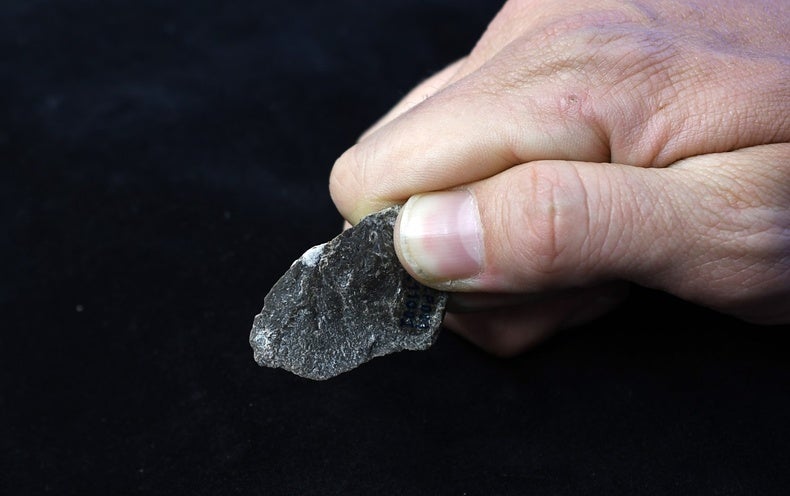
    Consider the possibility that all human technology started with a mistake—or at least a lack of hand-eye coordination. In pursuit of this idea, Lydia Luncz and Tomos Proffitt, both at the Max Planck Institute for Evolutionary Anthropology in Leipzig, Germany, traveled to an abandoned oil palm plantation near Thailand’s Phang Nga Bay and collected nut-cracking stones used by a resident troop of long-tailed macaques. Macaques bash open oil palm nuts by placing them on a flat stone and striking their shell with another stone. These monkeys often miss the nut and unintentionally break the stones, producing sharp flakes. In a new study, Luncz and Proffitt argue that such mistakenly created flakes may have been our ancient ancestors’ or other now extinct early human relatives’ first step toward creating the sharp-edged tools that they used to butcher animals and cut edible plants. In other words, these are the type of tools that set our species on its evolutionary course to become ever more productive hunter-gatherers and technological tinkerers.

    Macaques are one of three modern nonhuman primate species that use stone tools (the other two are chimpanzees and capuchin monkeys). Luncz and Proffitt have been studying the idea that sharp flakes accidentally produced from activities such as nut cracking might have led hominins—a group that includes humans and their extinct ancestors and close relatives—to intentionally make flakes for tools. “This is a completely wild behavior,” Proffitt says. “And it’s a behavior to get food. So in that sense, you can then start to say this could have been a mechanism for the emergence of flake technology.”

    For their study, which was published on Friday in Science Advances, the international team of researchers collected more than 1,100 pieces of stone the macaques in Thailand had used to break open oil palm nuts and compared them with archaeological collections from some of the earliest known stone tool sites in Tanzania, Kenya and Ethiopia. Their analysis revealed a surprising fact: The flakes that the macaques unintentionally produced looked a lot like the oldest stone tools that were intentionally made by hominins: Lomekwian and Oldowan stone tool assemblages, which were discovered at sites dating between 3.3 million and 1.5 million years ago. “If we would take the kind of assemblage that we find with the macaques and we would drop them somewhere in East Africa, everybody would think they were definitely made by early hominins,” Luncz says.
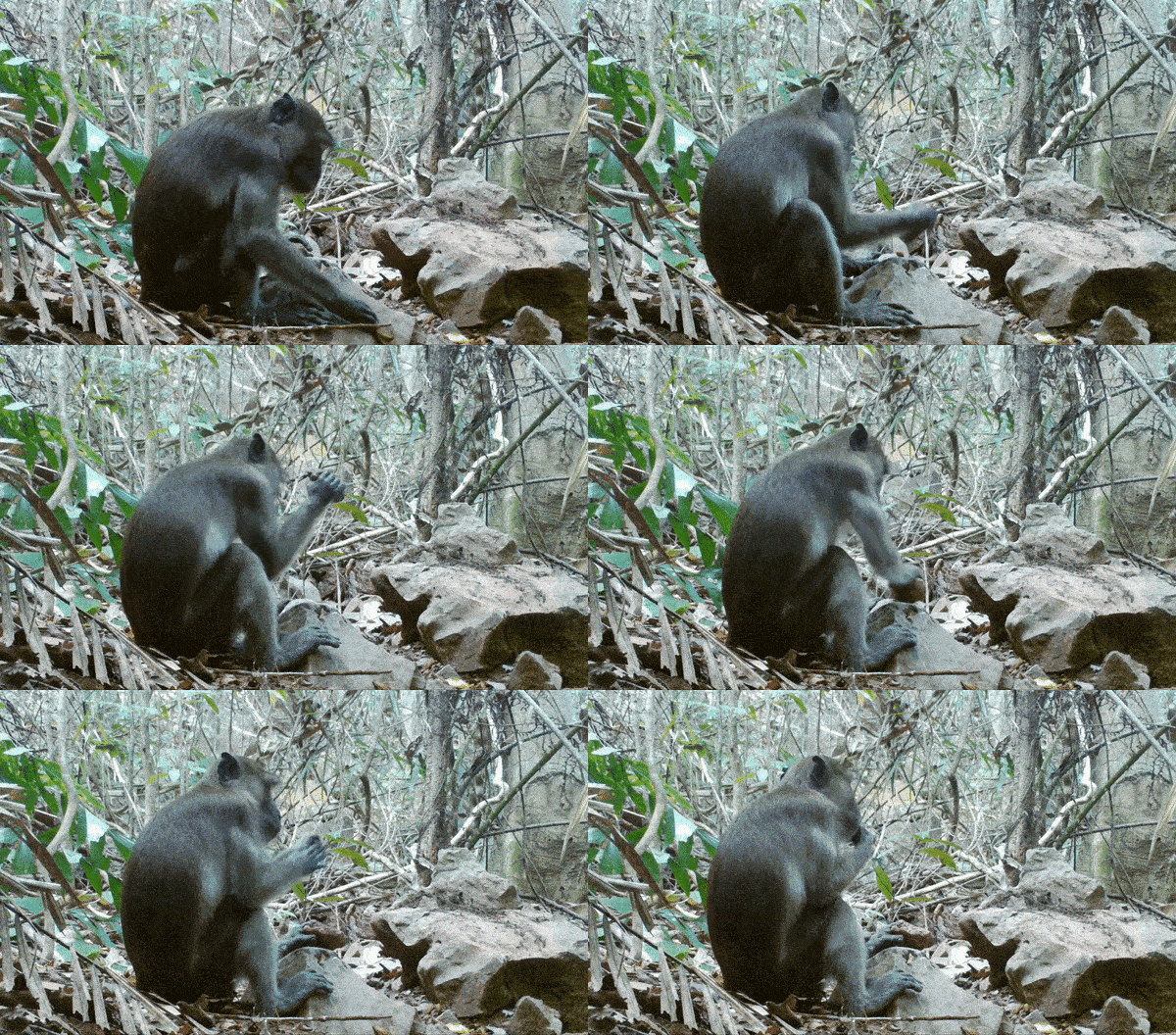
    Long-tailed macaques in the Ao Phang Nga National Park in Thailand cracking oil palm nuts using stone hammers and anvils.
    Long-tailed macaques in the Ao Phang Nga National Park in Thailand cracking oil palm nuts using stone hammers and anvils. Credit: Lydia V. Luncz

    Luncz and Proffitt have found similar results with stone flakes produced by capuchin monkeys in Brazil’s Serra da Capivara National Park. “What is super exciting is that we find another primate species on the other side of the world showing us exactly the same phenomenon,” Luncz says. “You don’t need a ginormous large brain to make sharp cutting tools. The challenge is in using the stone tools. I think that’s where the difference lies.” That difference shows up when the collection of macaque tools and flakes are compared with tools from Lomekwian or Oldowan sites. Macaques don’t use the sharp flakes they create for anything, Luncz says, noting that the monkeys have sharp teeth and don’t need cutting tools. The ancient stone tools, however, show evidence of being used for cutting tasks.

    “I think this study is useful because it really brings home the point that people need to do careful behavioral interpretation of their artifacts,” says Thomas Plummer, a paleoanthropologist at Queens College, City University of New York, who was not part of Luncz and Proffitt’s team. Plummer is part of a research group that is studying fossil sites in Nyayanga, Kenya. Excavations at those sites, dating to between three million and 2.6 million years ago, have turned up Oldowan tools, as well as two teeth from an extinct species of hominin. The researchers analyzed use-wear patterns on the tools and found that some were employed for pounding and processing plant foods. Some of the flakes also showed damage along their edges, indicating that they had been used for cutting. Cut marks on hippopotamus bones and a fossil of a species of bovine revealed that hominins had used stone tools for butchering the animals, making it clear that the sharp stone tools were anything but unintentional by-products of other pounding activities. That does not necessarily mean those tools were made by a human ancestor, though.

    The hominin teeth that were found with Oldowan tools in Nyayanga belonged to a member of the genus Paranthropus, which is on a different branch of the human family tree than the one leading to Homo sapiens. Oldowan tools had been found with Paranthropus at other sites, including the Frida Leakey Korongo Zinj (FLK Zinj) site in Tanzania’s Olduvai Gorge, where the first Paranthropus fossils were discovered. At the time paleoanthropologist Louis Leakey argued that a more direct relative of humans that was found nearby, the slightly larger-brained Homo habilis, must have made the Oldowan tools. And he proposed stone toolmaking as one of the criteria for separating humans from other apes. But evidence from sites such as Nyayanga is starting to point to both Paranthropus and H. habilis being a toolmaker. And the assemblages that macaques and capuchin monkeys create suggest that stone tool use may have begun much earlier in evolutionary history than previously thought. Humans last shared a common ancestor with capuchin monkeys about 35 million years ago and with macaques about 25 million years ago, Luncz says. “I would be surprised if stone tool use was a very new development in the hominin lineage,” she says.

    Luncz and Proffitt hope to ultimately learn how primates made the leap from accidentally producing sharp flakes to picking them up and using them. But for the time being, scientists can only speculate. Plummer suggests a scenario in which a group of hominins came across the carcass of an animal and used stones to break open its bones and get at the nutrient-rich marrow: During that process, a hominin missed the bone and knocked a sharp flake loose from the stone it was using. Then that hominin had the idea to use that flake to cut meat from the carcass. “It could be the hominins were just experimenting,” Plummer says.


    Original Source Link

    Share. Facebook Twitter Pinterest LinkedIn WhatsApp Email Reddit Telegram
    Previous ArticleGently Rousing Family-Friendly Drama – The Hollywood Reporter
    Next Article FDIC auction for SVB assets said to be underway

    RELATED POSTS

    NASA’s Artemis II mission to the moon is inching toward the launch pad

    January 18, 2026

    First treaty to protect the high seas comes into force

    January 18, 2026

    How Does the Hive Mind Work in ‘Pluribus?

    January 17, 2026

    RFK, Jr., shifts focus to questioning whether cell phones are safe. Here’s what the science says

    January 17, 2026

    Meat may play an unexpected role in helping people reach 100

    January 16, 2026

    OpenAI Invests in Sam Altman’s New Brain-Tech Startup Merge Labs

    January 16, 2026
    latest posts

    Charli XCX Releases New Song “Wall of Sound”

    Charli XCX has shared a new song from Wuthering Heights, her soundtrack and accompaniment to…

    Democrats think a war-powers resolution for Greenland would get more GOP votes than one on Venezuela

    January 18, 2026

    Trump accuses Tim Walz and Ilhan Omar of using ICE protests to distract from

    January 18, 2026

    Ukrainian drone strikes hit Russian energy infrastructure, Zelenskyy says

    January 18, 2026

    Jones Hovercraft 2.0 Snowboard Review: For Big Powder Days

    January 18, 2026

    NASA’s Artemis II mission to the moon is inching toward the launch pad

    January 18, 2026

    Chihiro Amano: ‘It was like I hit a wall in all…

    January 18, 2026
    Categories
    • Books (1,009)
    • Business (5,914)
    • Events (29)
    • Film (5,850)
    • Lifestyle (3,960)
    • Music (5,951)
    • Politics (5,915)
    • Science (5,265)
    • Technology (5,844)
    • Television (5,528)
    • Uncategorized (6)
    • US News (5,902)
    popular posts

    AOC Climate Change Documentary Absolutely BOMBS At The Box Office

    Did you know that far left New York Rep. Alexandria Ocasio-Cortez has a new documentary…

    What Is Holistic Gardening? Everything You Need to Know

    April 16, 2025

    Mother and Son review – a modern Stella Dallas

    June 30, 2023

    A Nose-Computer Interface Could Turn Dogs Into Super Detectors

    February 14, 2025
    Archives
    Browse By Category
    • Books (1,009)
    • Business (5,914)
    • Events (29)
    • Film (5,850)
    • Lifestyle (3,960)
    • Music (5,951)
    • Politics (5,915)
    • Science (5,265)
    • Technology (5,844)
    • Television (5,528)
    • Uncategorized (6)
    • US News (5,902)
    About Us

    We are a creativity led international team with a digital soul. Our work is a custom built by the storytellers and strategists with a flair for exploiting the latest advancements in media and technology.

    Most of all, we stand behind our ideas and believe in creativity as the most powerful force in business.

    What makes us Different

    We care. We collaborate. We do great work. And we do it with a smile, because we’re pretty damn excited to do what we do. If you would like details on what else we can do visit out Contact page.

    Our Picks

    NASA’s Artemis II mission to the moon is inching toward the launch pad

    January 18, 2026

    Chihiro Amano: ‘It was like I hit a wall in all…

    January 18, 2026

    Where We Left Off & What’s Ahead in Season 15

    January 18, 2026
    © 2026 New York Examiner News. All rights reserved. All articles, images, product names, logos, and brands are property of their respective owners. All company, product and service names used in this website are for identification purposes only. Use of these names, logos, and brands does not imply endorsement unless specified. By using this site, you agree to the Terms & Conditions and Privacy Policy.

    Type above and press Enter to search. Press Esc to cancel.

    We use cookies on our website to give you the most relevant experience by remembering your preferences and repeat visits. By clicking “Accept All”, you consent to the use of ALL the cookies. However, you may visit "Cookie Settings" to provide a controlled consent.
    Cookie SettingsAccept All
    Manage consent

    Privacy Overview

    This website uses cookies to improve your experience while you navigate through the website. Out of these, the cookies that are categorized as necessary are stored on your browser as they are essential for the working of basic functionalities of the website. We also use third-party cookies that help us analyze and understand how you use this website. These cookies will be stored in your browser only with your consent. You also have the option to opt-out of these cookies. But opting out of some of these cookies may affect your browsing experience.
    Necessary
    Always Enabled
    Necessary cookies are absolutely essential for the website to function properly. These cookies ensure basic functionalities and security features of the website, anonymously.
    CookieDurationDescription
    cookielawinfo-checkbox-analytics11 monthsThis cookie is set by GDPR Cookie Consent plugin. The cookie is used to store the user consent for the cookies in the category "Analytics".
    cookielawinfo-checkbox-functional11 monthsThe cookie is set by GDPR cookie consent to record the user consent for the cookies in the category "Functional".
    cookielawinfo-checkbox-necessary11 monthsThis cookie is set by GDPR Cookie Consent plugin. The cookies is used to store the user consent for the cookies in the category "Necessary".
    cookielawinfo-checkbox-others11 monthsThis cookie is set by GDPR Cookie Consent plugin. The cookie is used to store the user consent for the cookies in the category "Other.
    cookielawinfo-checkbox-performance11 monthsThis cookie is set by GDPR Cookie Consent plugin. The cookie is used to store the user consent for the cookies in the category "Performance".
    viewed_cookie_policy11 monthsThe cookie is set by the GDPR Cookie Consent plugin and is used to store whether or not user has consented to the use of cookies. It does not store any personal data.
    Functional
    Functional cookies help to perform certain functionalities like sharing the content of the website on social media platforms, collect feedbacks, and other third-party features.
    Performance
    Performance cookies are used to understand and analyze the key performance indexes of the website which helps in delivering a better user experience for the visitors.
    Analytics
    Analytical cookies are used to understand how visitors interact with the website. These cookies help provide information on metrics the number of visitors, bounce rate, traffic source, etc.
    Advertisement
    Advertisement cookies are used to provide visitors with relevant ads and marketing campaigns. These cookies track visitors across websites and collect information to provide customized ads.
    Others
    Other uncategorized cookies are those that are being analyzed and have not been classified into a category as yet.
    SAVE & ACCEPT