
Close Menu
New York Examiner News

    Subscribe to Updates

    Get the latest creative news from FooBar about art, design and business.

    What's Hot

    Geordie Greep Responds to Sexual Misconduct Allegation, Cancels Shows

    October 10, 2026

    Park service will remove over 500 trees from a historic golf course Trump is redesigning

    October 10, 2026

    Gene Roebuck and Quinton Kitt Shine at NBPA Top 100 Camp

    October 10, 2026
    Facebook X (Twitter) Instagram
    New York Examiner News
    • Home
    • US News
    • Politics
    • Business
    • Science
    • Technology
    • Lifestyle
    • Music
    • Television
    • Film
    • Books
    • Contact
      • About
      • Amazon Disclaimer
      • DMCA / Copyrights Disclaimer
      • Terms and Conditions
      • Privacy Policy
    New York Examiner News
    Home»Science»Who Is Liable When AI Kills?
    Science

    Who Is Liable When AI Kills?

    By AdminJune 29, 2022
    Facebook Twitter Pinterest LinkedIn WhatsApp Email Reddit Telegram
    Who Is Liable When AI Kills?


    Who is responsible when AI harms someone?

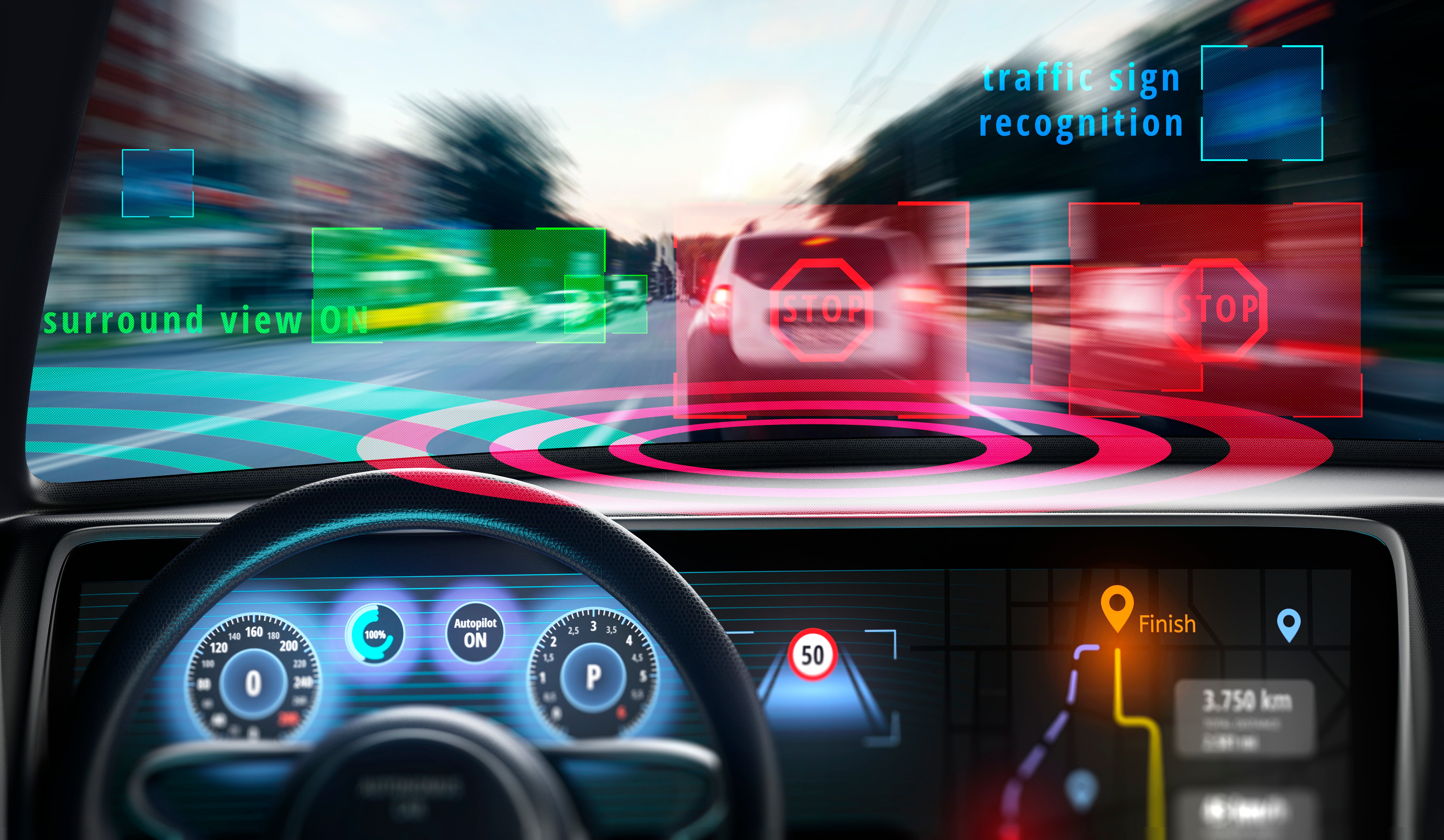
    A California jury may soon have to decide. In December 2019, a person driving a Tesla with an artificial intelligence driving system killed two people in Gardena in an accident. The Tesla driver faces several years in prison. In light of this and other incidents, both the National Highway Transportation Safety Administration (NHTSA) and National Transportation Safety Board are investigating Tesla crashes, and NHTSA has recently broadened its probe to explore how drivers interact with Tesla systems. On the state front, California is considering curtailing the use of Tesla autonomous driving features.

    Our current liability system—our system to determine responsibility and payment for injuries—is completely unprepared for AI. Liability rules were designed for a time when humans caused the majority of mistakes or injuries. Thus, most liability frameworks place punishments on the end-user doctor, driver or other human who caused an injury. But with AI, errors may occur without any human input at all. The liability system needs to adjust accordingly. Bad liability policy will harm patients, consumers and AI developers.

    The time to think about liability is now—right as AI becomes ubiquitous but remains underregulated. Already, AI-based systems have contributed to injury. In 2018, a pedestrian was killed by a self-driving Uber vehicle. Although driver error was at issue, the AI failed to detect the pedestrian. Recently, an AI-based mental health chatbot encouraged a simulated suicidal patient to take her own life. AI algorithms have discriminated against the resumes of female applicants. And, in one particularly dramatic case, an AI algorithm misidentified a suspect in an aggravated assault, leading to a mistaken arrest. Yet, despite missteps, AI promises to revolutionize all of these areas.

    Getting the liability landscape right is essential to unlocking AI’s potential. Uncertain rules and potentially costly litigation will discourage investment in, and development and adoption of, AI systems. The wider adoption of AI in health care, autonomous vehicles and in other industries depends on the framework that determines who, if anyone, ends up liable for an injury caused by artificial intelligence systems.

    AI challenges traditional liability. For example, how do we assign liability when a “black box” algorithm—where the identity and weighting of variables changes dynamically so no one knows what goes into the prediction—recommends a treatment that ultimately causes harm, or drives a car recklessly before its human driver can react? Is that really the doctor or driver’s fault? Is it the company that created the AI’s fault? And what accountability should everyone else—health systems, insurers, manufacturers, regulators—face if they encouraged adoption? These are unanswered questions, and critical to establishing the responsible use of AI in consumer products.

    Like all disruptive technologies, AI is powerful. AI algorithms, if properly created and tested, can aid in diagnosis, market research, predictive analytics and any application that requires analyzing large data sets. A recent McKinsey global survey showed that already over half of companies worldwide reported using AI in their routine operations.

    Yet, liability too often focuses on the easiest target: the end-user who uses the algorithm. Liability inquiries often start—and end—with the driver of the car that crashed or the physician that gave faulty treatment decision.

    Granted, if the end-user misuses an AI system or ignores its warnings, he or she should be liable. But AI errors are often not the fault of the end-user. Who can fault an emergency room physician for an AI algorithm that misses papilledema—a swelling of the retina? An AI’s failure to detect the condition could delay care and potentially cause a patient to go blind. Yet, papilledema is challenging to diagnose without an ophthalmologist’s examination because more clinical data, including imaging of the brain and visual acuity, are often necessary as part of the workup. Despite AI’s revolutionary potential across industries, end-users will avoid using AI if they bear sole liability for potentially fatal errors.

    Shifting the blame solely to AI designers or adopters doesn’t solve the issue either. Of course, the designers created the algorithm in question. But is every Tesla accident Tesla’s fault to be solved by more testing before product launch? Indeed, some AI algorithms constantly self-learn, taking their inputs and dynamically using them to change the outputs. No one can be sure of exactly how an AI algorithm arrived at a particular conclusion.

    The key is to ensure that all stakeholders—users, developers and everyone else along the chain from product development to use—bear enough liability to ensure AI safety and effectiveness—but not so much that they give up on AI.

    To protect people from faulty AI while still promoting innovation, we propose three ways to revamp traditional liability frameworks.

    First, insurers must protect policyholders from the excessive costs of being sued over an AI injury by testing and validating new AI algorithms prior to use, just as car insurers have been comparing and testing automobiles for years. An independent safety system can provide AI stakeholders with a predictable liability system that adjusts to new technologies and methods.

    Second, some AI errors should be litigated in special courts with expertise adjudicating AI cases. These specialized tribunals could develop an expertise in particular technologies or issues, such as dealing with the interaction of two AI systems (say, two autonomous vehicles that crash into each other). Such specialized courts are not new: for example, in the U.S., specialist courts have protected childhood vaccine manufacturers for decades by adjudicating vaccine injuries and developing a deep knowledge of the field.

    Third, regulatory standards from federal authorities like the U.S. Food and Drug Administration (FDA) or NHTSA could offset excess liability for developers and some end-users. For example, federal regulations and legislation have replaced certain forms of liability for medical devices or pesticides. Regulators should deem some AIs too risky to introduce into the market without standards for testing, retesting or validation. Federal regulators ought to proactively focus on standard processes for AI development. This would allow regulatory agencies to remain nimble and prevent AI-related injuries, rather than reacting to them too late. In contrast, although state and local consumer protection and health agencies could not erect a national regulatory system, they could help clarify industry standards and norms in a particular area.

    Hampering AI with an outdated liability system would be tragic: Self-driving cars will bring mobility to many people who lack transportation access. In health care, AI will help physicians choose more effective treatments, improve patient outcomes and even cut costs in an industry notorious for overspending. Industries ranging from finance to cybersecurity are on the cusp of AI revolutions that could benefit billions worldwide. But these benefits should not be undercut by poorly developed algorithms. Thus, 21st-century AI demands a 21st-century liability system.

    This is an opinion and analysis article, and the views expressed by the author or authors are not necessarily those of Scientific American.


    Original Source Link

    Share. Facebook Twitter Pinterest LinkedIn WhatsApp Email Reddit Telegram
    Previous Article“I’m Not a Religious Person” – The Hollywood Reporter
    Next Article Man in China Builds Joystick-Controlled Bed with Wheels That You Can Stay in All-Day

    RELATED POSTS

    Humans Watched This Supernova Explode Nearly a Millennium Ago. Now You Can See It in High Definition

    October 10, 2026

    Major earthquake strikes Panama—damage and injuries are expected

    October 10, 2026

    A New Mexico Community Was a Place to Build a Life. Then a Hypersonic Missile Factory Showed Up

    October 9, 2026

    The most exciting claims from OpenAI’s heap of new proofs

    October 9, 2026

    Life Is Asymmetric. The Scientists Who Figured Out Why Won the 2026 Nobel Prize in Chemistry

    October 8, 2026

    A suspected case of pneumonic plague is raising fears of an outbreak. Should you be worried?

    October 8, 2026
    latest posts

    Geordie Greep Responds to Sexual Misconduct Allegation, Cancels Shows

    Geordie Greep is responding to sexual misconduct allegations made against him. During his show in…

    Park service will remove over 500 trees from a historic golf course Trump is redesigning

    October 10, 2026

    Gene Roebuck and Quinton Kitt Shine at NBPA Top 100 Camp

    October 10, 2026

    Pat Sajak makes rare appearance at Air Supply’s Walk of Fame event

    October 10, 2026

    Petra Power looks to modernize energy for data centers and defense vehicles

    October 10, 2026

    Pick Up One of These Books & Protect the Freedom to Read

    October 10, 2026

    Humans Watched This Supernova Explode Nearly a Millennium Ago. Now You Can See It in High Definition

    October 10, 2026
    Categories
    • Books (1,542)
    • Business (6,446)
    • Events (80)
    • Film (6,381)
    • Lifestyle (4,446)
    • Music (6,511)
    • Politics (6,434)
    • Science (5,798)
    • Technology (6,379)
    • Television (6,072)
    • Uncategorized (9)
    • US News (6,433)
    popular posts

    BREAKING: Supreme Court Allows Trump to Fire Biden-Appointed FTC Commissioner | The Gateway Pundit

    The US Supreme Court on Monday allowed President Trump to fire Biden-appointed FTC Commissioner Rebecca…

    Weekly News Quiz: September 8, 2022

    September 11, 2022

    After Supreme Court loss, Trump tests a new tariff strategy on Brazil and other countries may follow

    July 18, 2026

    Neo-Nazi Founder Among 31 Patriot Front Members Arrested Near Idaho Pride Event

    June 13, 2022
    Archives
    Browse By Category
    • Books (1,542)
    • Business (6,446)
    • Events (80)
    • Film (6,381)
    • Lifestyle (4,446)
    • Music (6,511)
    • Politics (6,434)
    • Science (5,798)
    • Technology (6,379)
    • Television (6,072)
    • Uncategorized (9)
    • US News (6,433)
    About Us

    We are a creativity led international team with a digital soul. Our work is a custom built by the storytellers and strategists with a flair for exploiting the latest advancements in media and technology.

    Most of all, we stand behind our ideas and believe in creativity as the most powerful force in business.

    What makes us Different

    We care. We collaborate. We do great work. And we do it with a smile, because we’re pretty damn excited to do what we do. If you would like details on what else we can do visit out Contact page.

    Our Picks

    Pick Up One of These Books & Protect the Freedom to Read

    October 10, 2026

    Humans Watched This Supernova Explode Nearly a Millennium Ago. Now You Can See It in High Definition

    October 10, 2026

    ‘Other Mommy’ Box Office Wins Opening Weekend; ‘Social Reckoning’ Soft

    October 10, 2026
    © 2026 New York Examiner News. All rights reserved. All articles, images, product names, logos, and brands are property of their respective owners. All company, product and service names used in this website are for identification purposes only. Use of these names, logos, and brands does not imply endorsement unless specified. By using this site, you agree to the Terms & Conditions and Privacy Policy.

    Type above and press Enter to search. Press Esc to cancel.

    We use cookies on our website to give you the most relevant experience by remembering your preferences and repeat visits. By clicking “Accept All”, you consent to the use of ALL the cookies. However, you may visit "Cookie Settings" to provide a controlled consent.
    Cookie SettingsAccept All
    Manage consent

    Privacy Overview

    This website uses cookies to improve your experience while you navigate through the website. Out of these, the cookies that are categorized as necessary are stored on your browser as they are essential for the working of basic functionalities of the website. We also use third-party cookies that help us analyze and understand how you use this website. These cookies will be stored in your browser only with your consent. You also have the option to opt-out of these cookies. But opting out of some of these cookies may affect your browsing experience.
    Necessary
    Always Enabled
    Necessary cookies are absolutely essential for the website to function properly. These cookies ensure basic functionalities and security features of the website, anonymously.
    CookieDurationDescription
    cookielawinfo-checkbox-analytics11 monthsThis cookie is set by GDPR Cookie Consent plugin. The cookie is used to store the user consent for the cookies in the category "Analytics".
    cookielawinfo-checkbox-functional11 monthsThe cookie is set by GDPR cookie consent to record the user consent for the cookies in the category "Functional".
    cookielawinfo-checkbox-necessary11 monthsThis cookie is set by GDPR Cookie Consent plugin. The cookies is used to store the user consent for the cookies in the category "Necessary".
    cookielawinfo-checkbox-others11 monthsThis cookie is set by GDPR Cookie Consent plugin. The cookie is used to store the user consent for the cookies in the category "Other.
    cookielawinfo-checkbox-performance11 monthsThis cookie is set by GDPR Cookie Consent plugin. The cookie is used to store the user consent for the cookies in the category "Performance".
    viewed_cookie_policy11 monthsThe cookie is set by the GDPR Cookie Consent plugin and is used to store whether or not user has consented to the use of cookies. It does not store any personal data.
    Functional
    Functional cookies help to perform certain functionalities like sharing the content of the website on social media platforms, collect feedbacks, and other third-party features.
    Performance
    Performance cookies are used to understand and analyze the key performance indexes of the website which helps in delivering a better user experience for the visitors.
    Analytics
    Analytical cookies are used to understand how visitors interact with the website. These cookies help provide information on metrics the number of visitors, bounce rate, traffic source, etc.
    Advertisement
    Advertisement cookies are used to provide visitors with relevant ads and marketing campaigns. These cookies track visitors across websites and collect information to provide customized ads.
    Others
    Other uncategorized cookies are those that are being analyzed and have not been classified into a category as yet.
    SAVE & ACCEPT