
Close Menu
New York Examiner News

    Subscribe to Updates

    Get the latest creative news from FooBar about art, design and business.

    What's Hot

    Twisted Sister Cancel Reunion Tour Plans Due to Snider’s Health

    February 6, 2026

    Top analyst Tom Lee on gold’s black swan risk: Elon Musk becoming ‘the new central bank’

    February 6, 2026

    Trump Level Of Core Support Has Cratered To An Astonishing New Low

    February 6, 2026
    Facebook X (Twitter) Instagram
    New York Examiner News
    • Home
    • US News
    • Politics
    • Business
    • Science
    • Technology
    • Lifestyle
    • Music
    • Television
    • Film
    • Books
    • Contact
      • About
      • Amazon Disclaimer
      • DMCA / Copyrights Disclaimer
      • Terms and Conditions
      • Privacy Policy
    New York Examiner News
    Home»Science»Why Was Afghanistan’s Magnitude 5.9 Earthquake So Devastating?
    Science

    Why Was Afghanistan’s Magnitude 5.9 Earthquake So Devastating?

    By AdminJune 25, 2022
    Facebook Twitter Pinterest LinkedIn WhatsApp Email Reddit Telegram
    Why Was Afghanistan’s Magnitude 5.9 Earthquake So Devastating?


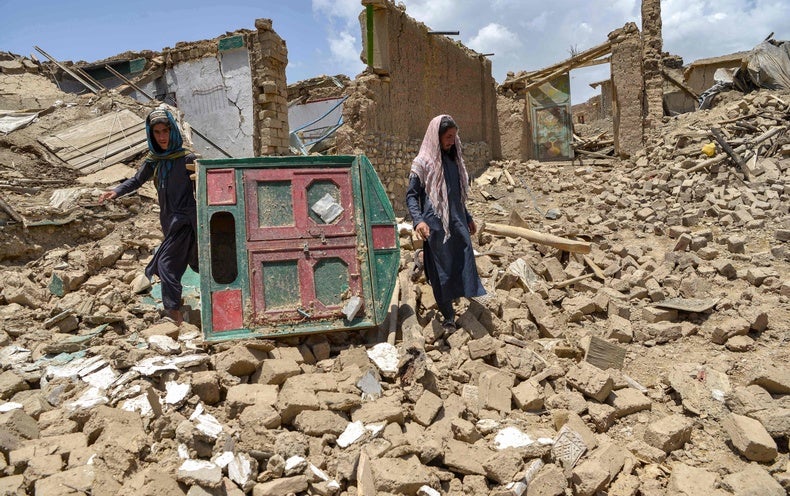
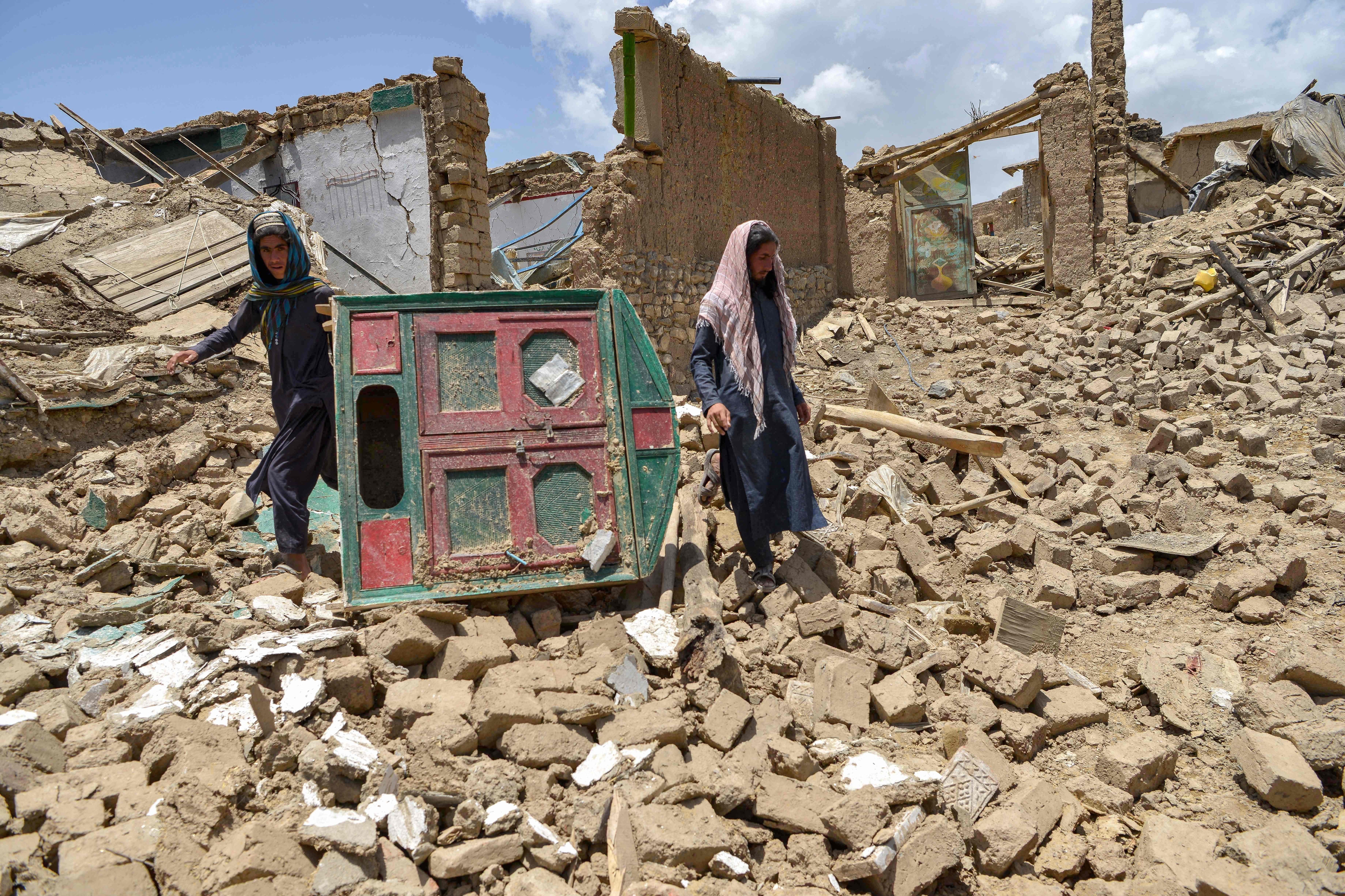
    This week eastern Afghanistan was struck by a middle-of-the night earthquake that became the country’s deadliest in two decades. The epicenter was in the province of Paktika, about 30 miles from the city of Khost. Hundreds of homes and buildings collapsed. Entire villages were knocked to the ground. At least 1,150 people were killed, and at least another were injured, according to official reports. And a subsequent aftershock on Friday added to the toll. But the initial quake had a relatively moderate magnitude of 5.9, and events like this are relatively common in geologically active places. So why was the devastation so intense in this case?

    The earthquake was related to the Indian tectonic plate’s ongoing collision with the Eurasian plate, an impact that also created the Himalayas. As it moves northward, the Indian plate grinds along a section of the Eurasian plate to the east and the movement of these enormous volumes of rock against each other sometimes ruptures one or more of the hundreds of cracks—known as faults—that cluster near the edges of the plates. Occasionally the rock masses on either side of these faults jolt against each other instead of sliding slowly, leading to what are called strike-slip earthquakes. These sudden movements radiate outward from the fault as seismic waves, which cause the ground to shake. And the closer it is to the fault, the more violently it shakes. Globally, more than 100 magnitude 5.9 earthquakes are expected to occur each year, and are more likely to happen in seismically active regions such as Afghanistan.

    To understand how the moderate earthquake in Afghanistan—which is not unusual for the area—resulted in so much death and devastation and how such tragedies could be mitigated in the future, Scientific American spoke with seismologist Lucy Jones, a visiting associate researcher at the California Institute of Technology and founder of the Dr. Lucy Jones Center for Science and Society. The latter organization focuses on making communities more resilient through the communication and application of science.

    [An edited transcript of the interview follows.]

    How does this earthquake compare to those in other areas where there are a lot of quakes, such as along the San Andreas fault in California?

    We had an equivalent 5.9 earthquake in Los Angeles in 1987, at 14 kilometers [about nine miles] depth, called the Whittier Narrows earthquake. It was on a small fault, relatively deep. We still had [eight] dead and more than $350 million worth of damage in 1987 dollars. You put an earthquake right under people, and there’s a lot of damage. This earthquake in Afghanistan may very well have been shallower than Whittier Narrows—we really don’t have enough data to be sure, but because it’s a strike-slip fault [which is vertical and so comes closer to the surface], people were closer to it.

    With Whittier Narrows, we probably had intensity 7 or 8 over a distance of 20 or 30 kilometers [about 12 or 19 miles]. Intensity 9 brings down older California buildings. [Editor’s Note: Magnitude measures the overall size of an earthquake, whereas intensity measures shaking at a particular location.] Those buildings [in Afghanistan] are built out of river rocks mortared together—those are going to fall down at intensity 6. That’s strong enough shaking to bring down any traditional Afghan structure.

    The houses tend to be up the hill because of flooding. If you have just unreinforced masonry construction uphill, then you have less stability, and it’ll be even easier to fall down. So my guess is it isn’t the geology—it’s just the type of construction.

    Is there anything about the region that contributed to the amount of death and destruction caused by the earthquake, compared with areas where we have earthquake-proof buildings?

    There are no quake-proof buildings. It’s an “engineered building.” In the U.S. West, we have a building code, and we have a hazard map. For every location on the map, you can say, “Here’s the sum of all the possible earthquakes that could be affecting the area.” For the once-every-2,500-year sort of earthquake, you’re supposed to design buildings to not kill people. You’re allowed partial collapse, but you shouldn’t have complete collapse. So even when we engineer buildings, we accept a certain level of collapse.

    Essentially, what you’re seeing in Afghanistan, especially out in a really rural area, is that there aren’t any engineered buildings. It’s mostly river stones held together with some sort of mortar—and mortar behaves awfully in earthquakes. You take a brick building and shake it, and the mortar dissolves. Then if the bricks or the stones are holding up the roof, the roof comes down. That kills a lot of people. Engineers call them URMs (unreinforced masonry buildings). Some of us are known to call them FPRs for “future piles of rubble.”

    URMs haven’t been allowed to be built in California since about 1935—but we didn’t make them disappear. Quite a few people died in URMs in 1971, and we got discussion going about retrofitting them. The City of Los Angeles passed a law mandating all URMs be retrofitted or torn down within 10 years. So by the time the 1994 Northridge earthquake happened, there were no unretrofitted URMs in the city. The retrofitting worked well enough to keep a lot of them from even being damaged, so we know retrofitting works.

    Are there any measures other than reinforcing structures that can be put in place to improve a community’s resilience to earthquakes?

    When you have buildings that are so bad? Then it’s just about luck: Will the earthquake be so nearby that they’re all wiped out? Iran is another place that historically has had a lot of earthquakes like this with buildings like this. You get really strong shaking, and you bring all the buildings down. The only way to not be killed in that situation is being able to do something about the buildings.

    The U.S. Agency for International Development was working with the Afghan government, trying to build safer hospitals and things like that and schools. But if you have the earthquake in the middle of the night? In California, an earthquake being in the middle of the night is a good thing because most of us live in wood-frame buildings. They’re quite flexible; they tend to do better. Whereas if it’s in the middle of the day, our commercial construction has a lot of nonductile concrete—concrete buildings from the 1950s and 1960s—before we figured out that was a really bad way of building buildings. So we expect an earthquake in the middle of the day to be quite a bit more deadly than one at night. It’s the reverse in places like Afghanistan because night is when people are at home in these bad buildings. In a rural area, you spend a lot of the day outside, and that’s a lot safer.

    How can countries that have more earthquake infrastructure, such as the U.S., help countries that may lack expertise and funding?

    There’s a group called GeoHazards International, which is a nonprofit based out of northern California. It sends engineers to different countries to help teach people how to build better houses cheaply. This isn’t coming in and doing engineered buildings. This is coming in and saying, “If you added this frame into the way you’re already building, you’re going to be much better off.” The first place they really got going was in Nepal, probably 20 years ago. When the 2015 Nepal earthquake happened, it was a time when you could go, “Wow, I think my work saved a lot of lives.”

    Their approach was started by a guy named Brian Tucker—he was the [acting state geologist] in California. He recognized how we aren’t perfect [in California]—we’re still killing people—but, you know, we’ve saved a lot of lives with our approach. And it’s not rocket science. It’s just basic knowledge about earthquakes and buildings. He felt that we should be sharing this information with other parts of the world so that people would live. It’s not building more expensively; it’s building smarter. This is what happens when that doesn’t get accomplished.


    Original Source Link

    Share. Facebook Twitter Pinterest LinkedIn WhatsApp Email Reddit Telegram
    Previous ArticleD&D Character Alignments Of Stranger Things Characters
    Next Article ETH Zurich Researchers Develop Myoshirt, a Wearable Exomuscle That Increases Upper Body Strength

    RELATED POSTS

    Two Titanic Structures Hidden Deep Within the Earth Have Altered the Magnetic Field for Millions of Years

    February 6, 2026

    Katharine Burr Blodgett’s brilliant career began at the ‘House of Magic’

    February 5, 2026

    Nasal spray could prevent infections from any flu strain

    February 5, 2026

    Why Are Some Women Training for Pregnancy Like It’s a Marathon?

    February 4, 2026

    NASA’s Artemis II moon mission engulfed by debate over its controversial heat shield

    February 4, 2026

    Dutch air force reads pilots’ brainwaves to make training harder

    February 3, 2026
    latest posts

    Twisted Sister Cancel Reunion Tour Plans Due to Snider’s Health

    Twisted Sister have canceled their plans for a 2026 50th anniversary reunion tour due to…

    Top analyst Tom Lee on gold’s black swan risk: Elon Musk becoming ‘the new central bank’

    February 6, 2026

    Trump Level Of Core Support Has Cratered To An Astonishing New Low

    February 6, 2026

    U.S. forces strike kills 2 suspected narco-terrorists in Eastern Pacific

    February 6, 2026

    Sapiom raises $15M to help AI agents buy their own tech tools

    February 6, 2026

    Two Titanic Structures Hidden Deep Within the Earth Have Altered the Magnetic Field for Millions of Years

    February 6, 2026

    Badlands Dan Trachtenberg First-Look Deal Paramount

    February 6, 2026
    Categories
    • Books (1,046)
    • Business (5,950)
    • Events (31)
    • Film (5,887)
    • Lifestyle (3,997)
    • Music (5,990)
    • Politics (5,952)
    • Science (5,302)
    • Technology (5,881)
    • Television (5,565)
    • Uncategorized (6)
    • US News (5,939)
    popular posts

    Amazon shuts down its personal file storage service to focus on photos – TechCrunch

    Amazon’s consumer-focused storage service, Amazon Drive, will wind down over the next year, Amazon announced…

    ‘The Artful Dodger’: Thomas Brodie-Sangster, Maia Mitchell Cast Disney+ Series

    November 30, 2022

    Enter to win 2 Away carry-on suitcases in the May Underscored Favs Sweepstakes

    May 24, 2022

    Gary Allan Leaving Longtime Label Home UMG Nashville – Billboard

    July 30, 2022
    Archives
    Browse By Category
    • Books (1,046)
    • Business (5,950)
    • Events (31)
    • Film (5,887)
    • Lifestyle (3,997)
    • Music (5,990)
    • Politics (5,952)
    • Science (5,302)
    • Technology (5,881)
    • Television (5,565)
    • Uncategorized (6)
    • US News (5,939)
    About Us

    We are a creativity led international team with a digital soul. Our work is a custom built by the storytellers and strategists with a flair for exploiting the latest advancements in media and technology.

    Most of all, we stand behind our ideas and believe in creativity as the most powerful force in business.

    What makes us Different

    We care. We collaborate. We do great work. And we do it with a smile, because we’re pretty damn excited to do what we do. If you would like details on what else we can do visit out Contact page.

    Our Picks

    Two Titanic Structures Hidden Deep Within the Earth Have Altered the Magnetic Field for Millions of Years

    February 6, 2026

    Badlands Dan Trachtenberg First-Look Deal Paramount

    February 6, 2026

    ‘Today’ Host Craig Melvin Loses Big Opportunity

    February 6, 2026
    © 2026 New York Examiner News. All rights reserved. All articles, images, product names, logos, and brands are property of their respective owners. All company, product and service names used in this website are for identification purposes only. Use of these names, logos, and brands does not imply endorsement unless specified. By using this site, you agree to the Terms & Conditions and Privacy Policy.

    Type above and press Enter to search. Press Esc to cancel.

    We use cookies on our website to give you the most relevant experience by remembering your preferences and repeat visits. By clicking “Accept All”, you consent to the use of ALL the cookies. However, you may visit "Cookie Settings" to provide a controlled consent.
    Cookie SettingsAccept All
    Manage consent

    Privacy Overview

    This website uses cookies to improve your experience while you navigate through the website. Out of these, the cookies that are categorized as necessary are stored on your browser as they are essential for the working of basic functionalities of the website. We also use third-party cookies that help us analyze and understand how you use this website. These cookies will be stored in your browser only with your consent. You also have the option to opt-out of these cookies. But opting out of some of these cookies may affect your browsing experience.
    Necessary
    Always Enabled
    Necessary cookies are absolutely essential for the website to function properly. These cookies ensure basic functionalities and security features of the website, anonymously.
    CookieDurationDescription
    cookielawinfo-checkbox-analytics11 monthsThis cookie is set by GDPR Cookie Consent plugin. The cookie is used to store the user consent for the cookies in the category "Analytics".
    cookielawinfo-checkbox-functional11 monthsThe cookie is set by GDPR cookie consent to record the user consent for the cookies in the category "Functional".
    cookielawinfo-checkbox-necessary11 monthsThis cookie is set by GDPR Cookie Consent plugin. The cookies is used to store the user consent for the cookies in the category "Necessary".
    cookielawinfo-checkbox-others11 monthsThis cookie is set by GDPR Cookie Consent plugin. The cookie is used to store the user consent for the cookies in the category "Other.
    cookielawinfo-checkbox-performance11 monthsThis cookie is set by GDPR Cookie Consent plugin. The cookie is used to store the user consent for the cookies in the category "Performance".
    viewed_cookie_policy11 monthsThe cookie is set by the GDPR Cookie Consent plugin and is used to store whether or not user has consented to the use of cookies. It does not store any personal data.
    Functional
    Functional cookies help to perform certain functionalities like sharing the content of the website on social media platforms, collect feedbacks, and other third-party features.
    Performance
    Performance cookies are used to understand and analyze the key performance indexes of the website which helps in delivering a better user experience for the visitors.
    Analytics
    Analytical cookies are used to understand how visitors interact with the website. These cookies help provide information on metrics the number of visitors, bounce rate, traffic source, etc.
    Advertisement
    Advertisement cookies are used to provide visitors with relevant ads and marketing campaigns. These cookies track visitors across websites and collect information to provide customized ads.
    Others
    Other uncategorized cookies are those that are being analyzed and have not been classified into a category as yet.
    SAVE & ACCEPT