
Close Menu
New York Examiner News

    Subscribe to Updates

    Get the latest creative news from FooBar about art, design and business.

    What's Hot

    Florence + The Machine call on crowd to “put your phones the fuck away” and “experience” set at Reading 2026

    August 31, 2026

    Shein CEO’s wealth slumps $15 billion after whittled-down IPO

    August 31, 2026

    College Football Player Dies After Medical Emergency

    August 31, 2026
    Facebook X (Twitter) Instagram
    New York Examiner News
    • Home
    • US News
    • Politics
    • Business
    • Science
    • Technology
    • Lifestyle
    • Music
    • Television
    • Film
    • Books
    • Contact
      • About
      • Amazon Disclaimer
      • DMCA / Copyrights Disclaimer
      • Terms and Conditions
      • Privacy Policy
    New York Examiner News
    Home»Technology»A USB standard for satellites? Slingshot 1 takes to orbit to test one – TechCrunch
    Technology

    A USB standard for satellites? Slingshot 1 takes to orbit to test one – TechCrunch

    By AdminJuly 3, 2022
    Facebook Twitter Pinterest LinkedIn WhatsApp Email Reddit Telegram
    A USB standard for satellites? Slingshot 1 takes to orbit to test one – TechCrunch


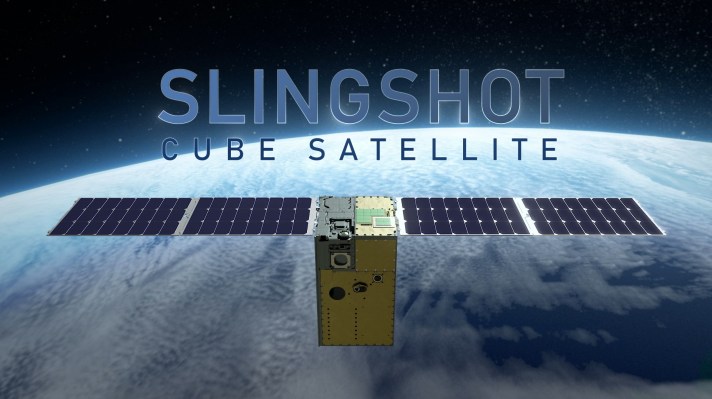
    Testing new satellites and space-based technologies has never been easy exactly, but it definitely could be easier. Slingshot 1, a 12U Cubesat mission just launched via Virgin Orbit, is an attempt to make building and testing a new satellite as easy as plugging a new keyboard into your computer.

    To say it’s “USB for space” is reductive… but not wrong. The team at the Aerospace Corporation that designed the new system makes the comparison itself, noting that the military has made several attempts to create just this with the Space Plug-and-Play Architecture (SPA), which became the Modular Open Network ARCHitecture (MONARCH), and the Common Payload Interface Standard (CoPaIS). But the approaches haven’t taken off the way, say, the Cubesat standard has — which, by the way, Aerospace also pioneered.

    The goal of Slingshot 1 is to create a standard satellite bus that’s as adaptable and easy to use as USB or ATX, using open standards but also meeting all the necessary requirements for security, power, and so on:

    [Slingshot] offers more agility and flexibility in satellite development through the use of modular, plug-and-play interfaces. These interfaces leverage open-sourced systems to avoid proprietary lock-ins that may stall development, as well as standardized interfaces for payloads that would not require a customized satellite bus. These interfaces set the power, command, control, telemetry, and mission data that may be required for payloads. Without a set of common standards, these payload-to-satellite bus requirements are driven by varying satellite bus manufacturers. Slingshot eliminates this uncertainty by reducing the number of requirements and complexity in the interface and creating an open payload interface standard called Handle.

    How will it avoid the common trap encountered by would-be standard-standardizers, immortalized by XKCD: now there are N+1 standards?

    Well, leaving aside the pretty deplorable state of standards in the satellite world, if there can be said to be any, the team decided to base the whole thing on Ethernet, which underpins a huge amount of networking in the world already.

    “Basing the Handle standard on Ethernet builds on the vast ecosystem of hardware and software tools developed for that very common interface, essentially taking the most common terrestrial system standard and migrating it for satellite use,” said Dan Mabry, senior engineer specialist at Aerospace. “We’ve tailored the network for low power, but still support gigabit per second communications between devices with no custom software development required to tailor the network for each new application.”

    And as he put it when Aerospace wrote up Slingshot for its own purposes last year: “When a payload plugs in it’ll instantly be recognized and work, and any broadcast data will get to the spacecraft downlink without any tuning or tweaking of the software onboard. Furthermore, because it’s an onboard network, that payload’s data is seen by all the other payloads as well. Payloads can easily collaborate in real-time, and distributed smart sensors and processors are coupled by the basic architecture.”

    Combine this with a power hub that can intelligently supply a variety of needs, and a modular enclosure that makes the whole thing look like the back of a well-organized gaming PC, and you’ve got a recipe for plug and play that really makes things easy on the prospective designer.
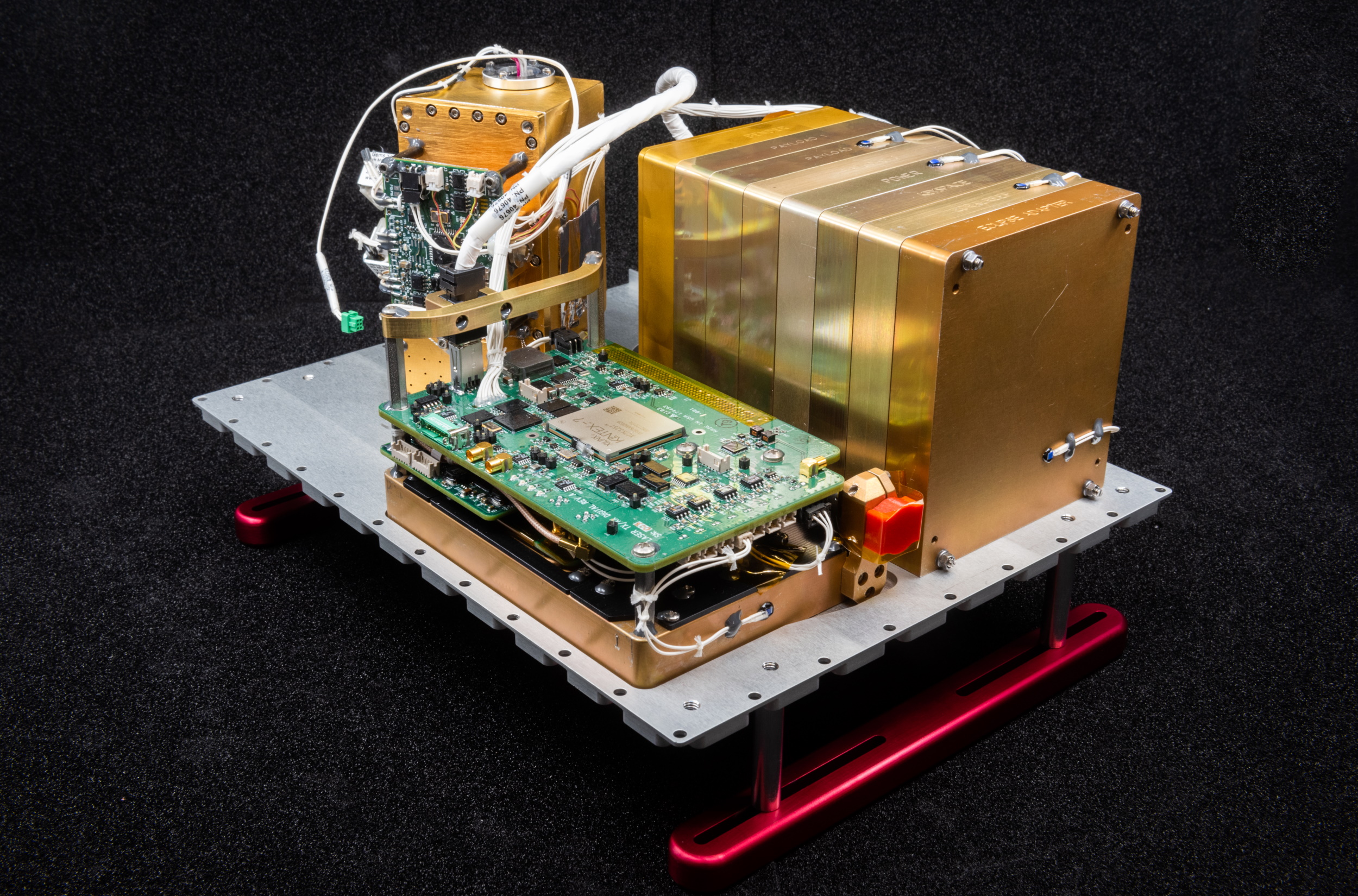
    The assembled Slingshot 1 setup without its outer enclosure.

    As Slingshot’s program manager, Hannah Weiher put it: “It’s working to reduce interface complexity and support different satellite buses and payloads with minimal to zero adaptation needed to the interface. Handle was key to a streamlined payload integration process on Slingshot 1 where we had a wide range of payloads with different requirements and it enabled us to be able to integrate the volume of payloads we did in a satellite about the size of a shoe box.”

    Of course it’s not enough to simply send up a barebones interface — imagine sending up a PC case with nothing in it. To see if it works, you need stuff attached, and fortunately there are a ton of experiments and capabilities Aerospace has been saving up since Slingshot’s genesis in 2019.

    • Handle – Plug-and-play payload electrical interface module
    • Bender – Onboard ethernet and network routing
    • t.Spoon – Modular mechanical interface
    • t.Spoon Camera – Plug-and-play camera module
    • t.Spoon Processor – Zynq Ultrascale+ onboard processing
    • Starshield – Onboard malware detection
    • CoralReef – Coral Tensor Processing Unit
    • STarfish – Secure ARM Cortex-M33 onboard processing
    • SDR – S-band Software-Defined Radio (SDR) downlink
    • Keyspace – Cryptographic services for SmallSats
    • Lasercom – Next-gen space/ground lasercom downlink
    • ROESA – Using Internet of Things protocols to connect payloads
    • Vertigo – Reconfigurable attitude control system
    • Blinker – GPS transponder for space traffic management
    • Hyper – SmallSat hydrogen peroxide thruster
    • ExoRomper – Artificial intelligence and machine learning testbed

    Some of these are more or less self-explanatory, like t.Spoon’s various components, making up the core mechanical elements tying the whole thing together. And of course you need a nice software-defined radio downlink. But a tensor processing unit and machine learning testbed on a satellite? Internet of Things protocols? Cryptographic services?
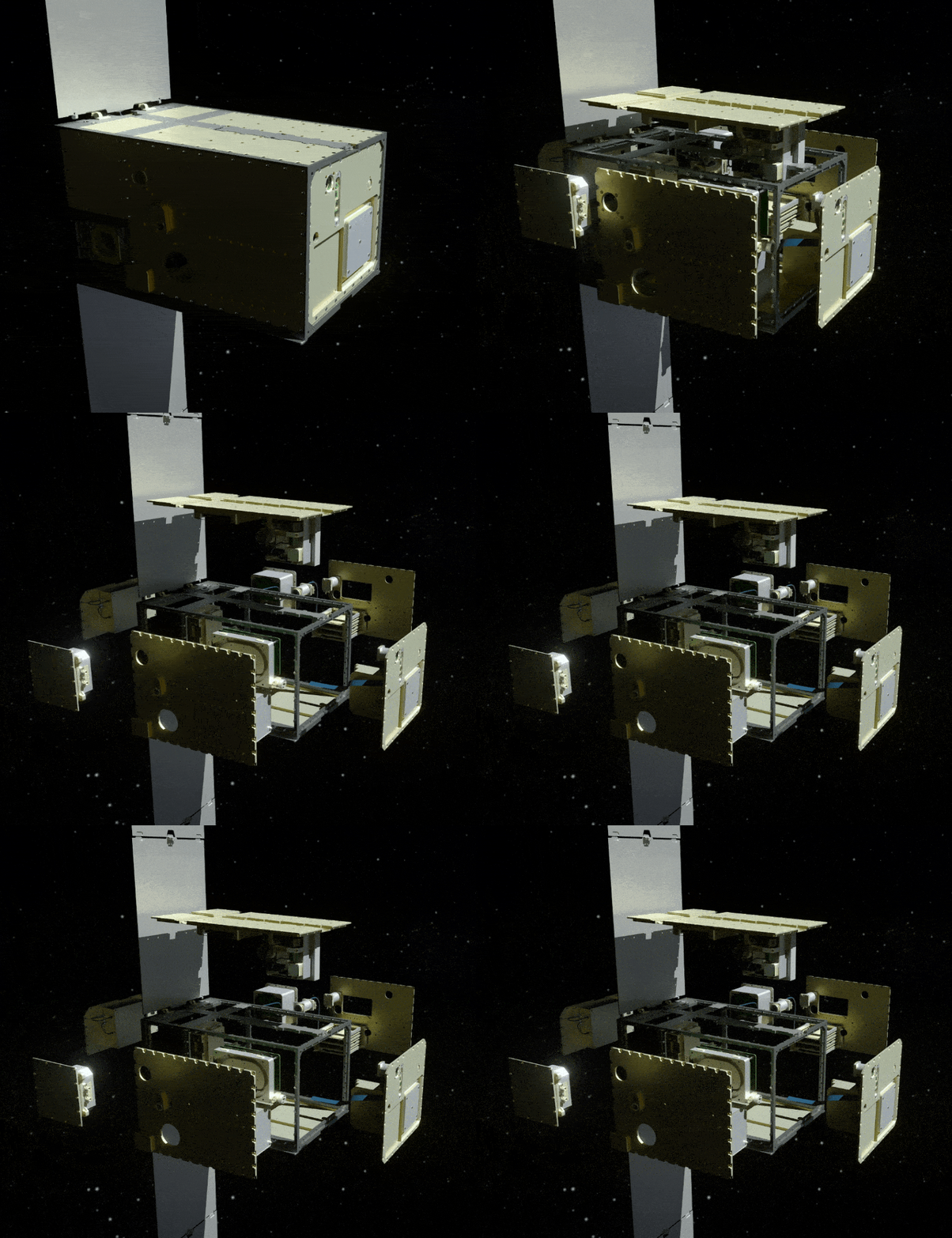
    CG view of Slingshot expanding to show its components.

    When I talked with the team during a visit to Aerospace’s labs a while back, they talked about how a lot of what’s on Slingshot is unprecedented in some ways, but is more about adapting common terrestrial tasks to the extremely formalized and limited context of a satellite’s hardware and software.

    Say you have three or four payloads sharing a processor and storage. How do you make sure their communications remain secure? The same way you would on the ground, but adapted to the lightweight processing, limited-power, unusual interface of a spacegoing craft. Sure, secure processing and communications in space have been done before — but it’s not like there’s a plug and play version where you can just click a check box and suddenly your payload is fully encrypted.

    Similar is ExoRomper, which has an externally mounted camera hooked into the TPU. There’s been a bit of AI in space already, but never a setup where you can say: oh sure you can add on cloud recognition to your satellite, it’ll take up 2 watts, 20 cubic centimeters and 275 grams. This one in particular is set up to watch the satellite itself, looking at lighting conditions — something that seriously affect thermal loads and power handling. Why shouldn’t your satellite have its own satellite, watching to make sure there’s no hot spots on the solar cells?

    Data will be coming in from Slingshot as it tests out its many components and experiments over the coming months. It could be the start of a new modular era for small satellites.


    Original Source Link

    Share. Facebook Twitter Pinterest LinkedIn WhatsApp Email Reddit Telegram
    Previous ArticleWordle 379: July 3, 2022 Hints & Answer
    Next Article North Korea says US seeking an excuse for an Asian NATO

    RELATED POSTS

    Google Maps Now Shows ‘Lake America’ Instead of Lake Ontario

    August 31, 2026

    TechCrunch Mobility: The hidden human cost of robotaxis

    August 30, 2026

    Soundcore Liberty 5 Pro Review: Master of Phone Calls

    August 30, 2026

    Hollywood celebs are getting into microdrama apps

    August 29, 2026

    Nvidia CEO Jensen Huang Took a Call From Donald Trump in the Middle of an All-Hands

    August 29, 2026

    More Americans oppose police license plate cameras than support them: survey

    August 28, 2026
    latest posts

    Florence + The Machine call on crowd to “put your phones the fuck away” and “experience” set at Reading 2026

    Florence + The Machine headlined Reading Festival for the first time tonight (August 30) – see the full…

    Shein CEO’s wealth slumps $15 billion after whittled-down IPO

    August 31, 2026

    College Football Player Dies After Medical Emergency

    August 31, 2026

    Lindsay Clancy verdict pending as NC mother raises insanity defense

    August 31, 2026

    Google Maps Now Shows ‘Lake America’ Instead of Lake Ontario

    August 31, 2026

    NASA’s Nancy Grace Roman Telescope launches to space

    August 31, 2026

    Naya Rivera & Ryan Dorsey’s 10-Year-Old Son Josey Lands 1st Film Role

    August 31, 2026
    Categories
    • Books (1,461)
    • Business (6,364)
    • Events (70)
    • Film (6,299)
    • Lifestyle (4,372)
    • Music (6,426)
    • Politics (6,349)
    • Science (5,716)
    • Technology (6,297)
    • Television (5,987)
    • Uncategorized (9)
    • US News (6,352)
    popular posts

    Chief Justice John Roberts lost the Supreme Court and the defining case of his generation

    Friday’s decision in Dobbs v. Jackson Women’s Health Organization, which overturned nearly a half-century of…

    Larissa Lima’s Weight Loss Transformation In Pictures

    May 15, 2022

    Arizona Warnings Continue Over Mexican Cartels Lacing Fentanyl With Animal Tranquilizer

    March 12, 2023

    Beau Mirchoff Talks Doing Double Duty on #HallmarkRide & #Good Trouble

    May 6, 2023
    Archives
    Browse By Category
    • Books (1,461)
    • Business (6,364)
    • Events (70)
    • Film (6,299)
    • Lifestyle (4,372)
    • Music (6,426)
    • Politics (6,349)
    • Science (5,716)
    • Technology (6,297)
    • Television (5,987)
    • Uncategorized (9)
    • US News (6,352)
    About Us

    We are a creativity led international team with a digital soul. Our work is a custom built by the storytellers and strategists with a flair for exploiting the latest advancements in media and technology.

    Most of all, we stand behind our ideas and believe in creativity as the most powerful force in business.

    What makes us Different

    We care. We collaborate. We do great work. And we do it with a smile, because we’re pretty damn excited to do what we do. If you would like details on what else we can do visit out Contact page.

    Our Picks

    NASA’s Nancy Grace Roman Telescope launches to space

    August 31, 2026

    Naya Rivera & Ryan Dorsey’s 10-Year-Old Son Josey Lands 1st Film Role

    August 31, 2026

    Shirley Ballas Gives Input On AJ & Rylee Drama, Defends Dancer

    August 31, 2026
    © 2026 New York Examiner News. All rights reserved. All articles, images, product names, logos, and brands are property of their respective owners. All company, product and service names used in this website are for identification purposes only. Use of these names, logos, and brands does not imply endorsement unless specified. By using this site, you agree to the Terms & Conditions and Privacy Policy.

    Type above and press Enter to search. Press Esc to cancel.

    We use cookies on our website to give you the most relevant experience by remembering your preferences and repeat visits. By clicking “Accept All”, you consent to the use of ALL the cookies. However, you may visit "Cookie Settings" to provide a controlled consent.
    Cookie SettingsAccept All
    Manage consent

    Privacy Overview

    This website uses cookies to improve your experience while you navigate through the website. Out of these, the cookies that are categorized as necessary are stored on your browser as they are essential for the working of basic functionalities of the website. We also use third-party cookies that help us analyze and understand how you use this website. These cookies will be stored in your browser only with your consent. You also have the option to opt-out of these cookies. But opting out of some of these cookies may affect your browsing experience.
    Necessary
    Always Enabled
    Necessary cookies are absolutely essential for the website to function properly. These cookies ensure basic functionalities and security features of the website, anonymously.
    CookieDurationDescription
    cookielawinfo-checkbox-analytics11 monthsThis cookie is set by GDPR Cookie Consent plugin. The cookie is used to store the user consent for the cookies in the category "Analytics".
    cookielawinfo-checkbox-functional11 monthsThe cookie is set by GDPR cookie consent to record the user consent for the cookies in the category "Functional".
    cookielawinfo-checkbox-necessary11 monthsThis cookie is set by GDPR Cookie Consent plugin. The cookies is used to store the user consent for the cookies in the category "Necessary".
    cookielawinfo-checkbox-others11 monthsThis cookie is set by GDPR Cookie Consent plugin. The cookie is used to store the user consent for the cookies in the category "Other.
    cookielawinfo-checkbox-performance11 monthsThis cookie is set by GDPR Cookie Consent plugin. The cookie is used to store the user consent for the cookies in the category "Performance".
    viewed_cookie_policy11 monthsThe cookie is set by the GDPR Cookie Consent plugin and is used to store whether or not user has consented to the use of cookies. It does not store any personal data.
    Functional
    Functional cookies help to perform certain functionalities like sharing the content of the website on social media platforms, collect feedbacks, and other third-party features.
    Performance
    Performance cookies are used to understand and analyze the key performance indexes of the website which helps in delivering a better user experience for the visitors.
    Analytics
    Analytical cookies are used to understand how visitors interact with the website. These cookies help provide information on metrics the number of visitors, bounce rate, traffic source, etc.
    Advertisement
    Advertisement cookies are used to provide visitors with relevant ads and marketing campaigns. These cookies track visitors across websites and collect information to provide customized ads.
    Others
    Other uncategorized cookies are those that are being analyzed and have not been classified into a category as yet.
    SAVE & ACCEPT