
Close Menu
New York Examiner News

    Subscribe to Updates

    Get the latest creative news from FooBar about art, design and business.

    What's Hot

    Watch Angine de Poitrine Perform “Fabienk” on Jools Holland

    June 23, 2026

    Meet a British businessman who doesn’t regret his Brexit vote. He says rejoining the EU would be ‘re-boarding the Titanic’ while giving up life vests

    June 23, 2026

    Trump’s Midterm Election Rigging Scheme Handed Big Loss

    June 23, 2026
    Facebook X (Twitter) Instagram
    New York Examiner News
    • Home
    • US News
    • Politics
    • Business
    • Science
    • Technology
    • Lifestyle
    • Music
    • Television
    • Film
    • Books
    • Contact
      • About
      • Amazon Disclaimer
      • DMCA / Copyrights Disclaimer
      • Terms and Conditions
      • Privacy Policy
    New York Examiner News
    Home»US News»Supreme Court Severely Limits Regulation Of Carbon Emissions
    US News

    Supreme Court Severely Limits Regulation Of Carbon Emissions

    By AdminJune 30, 2022
    Facebook Twitter Pinterest LinkedIn WhatsApp Email Reddit Telegram
    Supreme Court Severely Limits Regulation Of Carbon Emissions


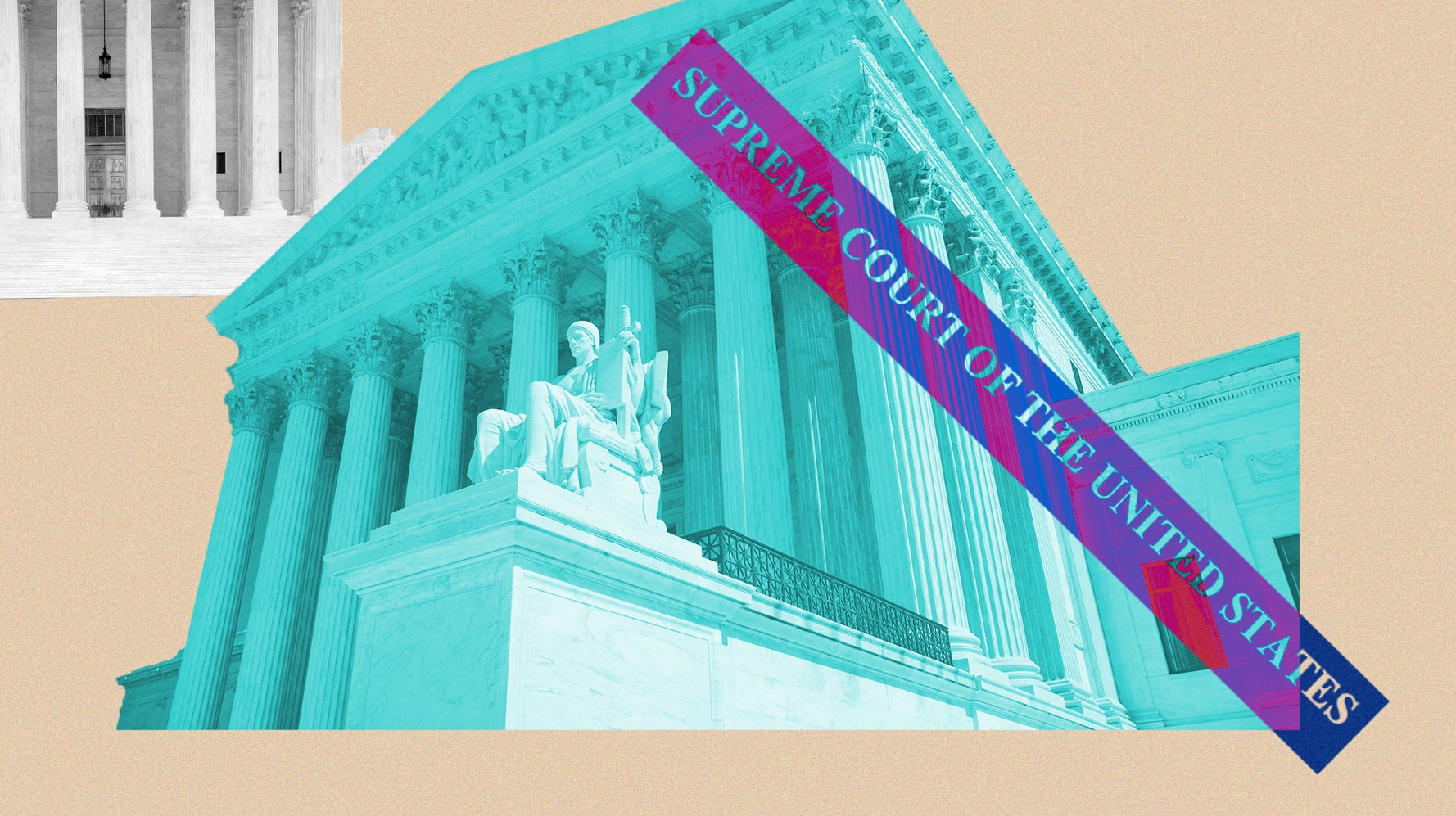
    The Supreme Court just made it much harder for the U.S. government to respond to climate change in a 6-3 decision in the case of West Virginia v. EPA.

    The Thursday decision, written by Chief Justice John Roberts and joined by the other five conservative justices, preemptively strikes down any regulations the Biden administration might consider issuing under a provision of the Clean Air Act to limit carbon emissions at power plants.

    The court ruled that EPA regulations aimed at reducing carbon emissions under a specific provision of the 1970 Clean Air Act are not permissible because Congress did not specifically authorize the EPA to regulate carbon emissions.

    According to the court, the EPA’s regulation of power plant emissions amounts to a large enough new regulatory proposal targeting a large enough segment of the economy to require specific congressional authorization.

    The court’s decision follows the expanding logic of its so-called “major questions doctrine.” The doctrine states that the Supreme Court can strike down regulatory action of “vast economic and political significance” if Congress did not specifically delegate a rule-issuing agency to issue that regulation.

    This expansive use of the major questions doctrine threatens to resurrect the court’s rarely invoked “nondelegation doctrine.” The nondelegation doctrine claims that executive branch agencies cannot update and write new regulations unless Congress specifically delegates that authority to them. The court most famously invoked this doctrine to strike down two New Deal programs in the 1930s. Since then, the court has long relied on other interpretations of law and its own precedents to let Congress delegate rule-writing authority to executive branch agencies without the kind of precise delegation that the doctrine would require.

    While not fully resurrecting nondelegation, the court will now no longer just assume that Congress has delegated authority to the agencies. This could have significant implications for many executive branch agency regulations, including any that further regulate carbon emissions.

    The Supreme Court sided with the state of West Virginia and coal companies to stop the EPA from issuing new rules to limit carbon emissions.
    The Supreme Court sided with the state of West Virginia and coal companies to stop the EPA from issuing new rules to limit carbon emissions.

    Leigh Vogel via Getty Images

    The Supreme Court decision results from years of litigation over the issue of carbon emission regulation across three different administrations, all centered on an obscure clause of the Clean Air Act.

    The Obama administration used the law’s Section 111D to justify rules in the Clean Power Plan, its signature plan to cut carbon from electricity-generating stations, spurring utilities to shift production from high-emitting plants to more efficient ones. But opponents of regulation accused the White House of misinterpreting legal language they said only gave the EPA the right to dictate what power station owners could do within the facility’s “fenceline.” The Clean Power Plan gave companies options “beyond the fenceline” to comply with the rule by building renewable energy farms or running lower-emitting plants to offset dirtier coal-fired stations.

    The Obama EPA’s interpretation was “a reach,” said Brendan Collins, a partner at the Philadelphia-based environmental law firm Ballard Spahr. But the policy was really meant to be a stopgap that would give utilities more flexibility until carbon capture technology — hardware that can be retrofitted onto the smokestacks of a plant to collect and store carbon gas before it enters the atmosphere — became feasible enough to mandate.

    “At the end of the day, if EPA isn’t ready to say carbon capture is a technology that’s sufficiently feasible from a technical and financial standpoint that it can impose that obligation, then the best thing you can do is use less coal to make the same amount of electricity,” said Collins, whose firm’s clients are not involved in the case.

    Whereas the Clean Power Plan gave multiple options for achieving that outcome, including by giving utilities the right to shift generation from dirtier to cleaner plants, the Trump administration’s Affordable Clean Energy, or ACE, rule narrowed the regulation’s scope, requiring power station operators to make coal-fired units more efficient. The rule actually gave plant owners an incentive to burn more coal, as long as the generators in use were more efficient.

    Had the Trump administration stopped at just withdrawing and replacing the Clean Power Plan, there might not be a case here today. But the Trump-era EPA specifically argued that its interpretation of Section 111D as limiting federal authority to the area “within the fenceline” was correct.

    “The political reason was to lock in the victory,” Collins said. “But the Trump administration did not hedge. They did not say, ‘We can only do this, and even if we could do more and had the discretion to make that choice, we exercise discretion to only do this because we think that’s the most technically feasible choice.’ No. They went for it all by saying, ‘We must do no more than this, and we cannot do more than this.’”

    The U.S. Court of Appeals for the District of Columbia Circuit struck down the ACE rule on those grounds, ruling that Section 111D does, in fact, grant the EPA authority beyond a facility’s fenceline.

    In disagreeing with the D.C. Circuit, the Supreme Court has largely left the EPA where it started. The Clean Power Plan was already rescinded, and the Biden administration has said it would not revive the regulation. The ACE rule was already struck down, and the Biden administration said it would not reinstate the regulation. And the EPA has yet to announce what it plans to propose in place of the ACE rule.

    Given how much legal doubt the Obama administration’s use of Section 111D caused, few policy observers expected rulemakers at Biden’s EPA to rely on that same statute this time around.

    “There isn’t going to be any effect on power plants from this case, win, lose or draw,” Collins said ahead of the decision.

    Coal-fired power plants won a victory at the Supreme Court as conservatives ruled the EPA did not have authority to regulate them under a provision of the Clean Air Act.
    Coal-fired power plants won a victory at the Supreme Court as conservatives ruled the EPA did not have authority to regulate them under a provision of the Clean Air Act.

    J. David Ake via Associated Press

    But Collins said to expect that the Biden administration’s forthcoming power plant plan will be far more aggressive as a result of West Virginia v. EPA. Stripped of its ability to offer a similar menu of compliance options, the agency will likely have to rely more heavily on emissions cuts directly at facilities. In other words, new solar panels or more use of a gas plant won’t bail out a coal-fired power station; the plant would have to either capture its emissions or shut down.

    That, he said, is why the plaintiffs in West Virginia v. EPA were primarily a coal-mining company and Republican states.

    “Westmoreland Coal? They’re in the business of selling coal. Red states? They’re in the business of getting elected. So you don’t have anybody who has to deal with the consequences of what this outcome will be,” Collins said. “And the consequences would be a more ironfisted approach. … It’ll be an uncomfortable world for power generators.”

    The EPA is required to regulate carbon emissions under the Clean Air Act as a result of a doctrine known as the “endangerment finding.” The finding, which took effect in 2010, officially designated planet-heating gases as pollutants that reach the Clean Air Act’s threshold for harming human health.

    Rescinding that finding would, experts say, require EPA lawyers to disprove the reality of climate science in court. The extreme unlikeliness of that outcome may be why the Trump administration resisted calls from allies to target the finding.

    Legal recognition of the danger that greenhouse gases pose does not dictate a prescription for how to reduce them. That ambiguity gave the Trump-era EPA the authority to enact a power plant regulation that, according to models, would fail to cut emissions at the rate U.S. government scientists said was necessary to avoid catastrophic warming.

    The systemic shifts in energy use required to keep global temperatures from rising to extreme levels under most mainstream climate models would already amount to an unprecedented economic overhaul. With each passing year, the degree of change that’s needed grows ever more drastic.

    But based on the court’s logic in the West Virginia case, it may well find that any other regulation issued by the EPA to limit carbon emissions without specific instruction from Congress violates its major question doctrine. With Congress polarized on whether or not to even respond to climate change, let alone how, the court may well have cut off major avenues for regulation.

    In the meantime, U.S. emissions are on pace to spike again this year.


    Original Source Link

    Share. Facebook Twitter Pinterest LinkedIn WhatsApp Email Reddit Telegram
    Previous ArticleChina’s Tianwen-1 Spacecraft Successfully Completes Mars Mission, Transmits 1040GB of Visual Data
    Next Article 1/6 Committee Member Suggests Trump Has Been Busted Illegally Funneling Donor Money To Witness Tampering

    RELATED POSTS

    George Pino found not guilty of manslaughter in fatal Florida boat crash trial

    June 23, 2026

    MLB sideline reporter gets drenched in wild post-game celebration, Shinnecock gaffe & MJ’s love letter sells

    June 22, 2026

    Tim Howard says it’s ‘impossible’ for USMNT to win 2026 World Cup

    June 22, 2026

    Dad jokes can slash stress hormones by 36% and boost brain health

    June 21, 2026

    Keir Starmer reportedly considering stepping down as UK prime minister

    June 21, 2026

    Conservative group tops $37 million in cost-of-living ads for midterms

    June 20, 2026
    latest posts

    Watch Angine de Poitrine Perform “Fabienk” on Jools Holland

    Canada’s Angine de Poitrine were among the guests on last night’s (June 21) episode of…

    Meet a British businessman who doesn’t regret his Brexit vote. He says rejoining the EU would be ‘re-boarding the Titanic’ while giving up life vests

    June 23, 2026

    Trump’s Midterm Election Rigging Scheme Handed Big Loss

    June 23, 2026

    George Pino found not guilty of manslaughter in fatal Florida boat crash trial

    June 23, 2026

    Meta Pauses Employee-Tracking Program Following Internal Data Leak

    June 23, 2026

    A Source of Mysterious Repeating Radio Signals From Space Has Been Identified

    June 23, 2026

    China Lion Takes Feng Xiaogang’s ‘I Know Who You Are’ for North America

    June 23, 2026
    Categories
    • Books (1,322)
    • Business (6,224)
    • Events (58)
    • Film (6,162)
    • Lifestyle (4,235)
    • Music (6,282)
    • Politics (6,216)
    • Science (5,579)
    • Technology (6,158)
    • Television (5,849)
    • Uncategorized (8)
    • US News (6,213)
    popular posts

    Europe is leaving a void in a multipolar world

    French President Emmanuel Macron (C-L), President of the European Commission, Ursula von der Leyenââ (Rear…

    40 Easy Dessert Recipe to Feed A Crowd

    August 10, 2024

    Pixies “Don’t Want to Be a Pixies Cover Band”

    August 18, 2024

    The First Pill for Postpartum Depression Is Almost Here

    August 1, 2023
    Archives
    Browse By Category
    • Books (1,322)
    • Business (6,224)
    • Events (58)
    • Film (6,162)
    • Lifestyle (4,235)
    • Music (6,282)
    • Politics (6,216)
    • Science (5,579)
    • Technology (6,158)
    • Television (5,849)
    • Uncategorized (8)
    • US News (6,213)
    About Us

    We are a creativity led international team with a digital soul. Our work is a custom built by the storytellers and strategists with a flair for exploiting the latest advancements in media and technology.

    Most of all, we stand behind our ideas and believe in creativity as the most powerful force in business.

    What makes us Different

    We care. We collaborate. We do great work. And we do it with a smile, because we’re pretty damn excited to do what we do. If you would like details on what else we can do visit out Contact page.

    Our Picks

    A Source of Mysterious Repeating Radio Signals From Space Has Been Identified

    June 23, 2026

    China Lion Takes Feng Xiaogang’s ‘I Know Who You Are’ for North America

    June 23, 2026

    Jim Curtis Reportedly Wants One Ex Out Of Jennifer Aniston’s Life

    June 23, 2026
    © 2026 New York Examiner News. All rights reserved. All articles, images, product names, logos, and brands are property of their respective owners. All company, product and service names used in this website are for identification purposes only. Use of these names, logos, and brands does not imply endorsement unless specified. By using this site, you agree to the Terms & Conditions and Privacy Policy.

    Type above and press Enter to search. Press Esc to cancel.

    We use cookies on our website to give you the most relevant experience by remembering your preferences and repeat visits. By clicking “Accept All”, you consent to the use of ALL the cookies. However, you may visit "Cookie Settings" to provide a controlled consent.
    Cookie SettingsAccept All
    Manage consent

    Privacy Overview

    This website uses cookies to improve your experience while you navigate through the website. Out of these, the cookies that are categorized as necessary are stored on your browser as they are essential for the working of basic functionalities of the website. We also use third-party cookies that help us analyze and understand how you use this website. These cookies will be stored in your browser only with your consent. You also have the option to opt-out of these cookies. But opting out of some of these cookies may affect your browsing experience.
    Necessary
    Always Enabled
    Necessary cookies are absolutely essential for the website to function properly. These cookies ensure basic functionalities and security features of the website, anonymously.
    CookieDurationDescription
    cookielawinfo-checkbox-analytics11 monthsThis cookie is set by GDPR Cookie Consent plugin. The cookie is used to store the user consent for the cookies in the category "Analytics".
    cookielawinfo-checkbox-functional11 monthsThe cookie is set by GDPR cookie consent to record the user consent for the cookies in the category "Functional".
    cookielawinfo-checkbox-necessary11 monthsThis cookie is set by GDPR Cookie Consent plugin. The cookies is used to store the user consent for the cookies in the category "Necessary".
    cookielawinfo-checkbox-others11 monthsThis cookie is set by GDPR Cookie Consent plugin. The cookie is used to store the user consent for the cookies in the category "Other.
    cookielawinfo-checkbox-performance11 monthsThis cookie is set by GDPR Cookie Consent plugin. The cookie is used to store the user consent for the cookies in the category "Performance".
    viewed_cookie_policy11 monthsThe cookie is set by the GDPR Cookie Consent plugin and is used to store whether or not user has consented to the use of cookies. It does not store any personal data.
    Functional
    Functional cookies help to perform certain functionalities like sharing the content of the website on social media platforms, collect feedbacks, and other third-party features.
    Performance
    Performance cookies are used to understand and analyze the key performance indexes of the website which helps in delivering a better user experience for the visitors.
    Analytics
    Analytical cookies are used to understand how visitors interact with the website. These cookies help provide information on metrics the number of visitors, bounce rate, traffic source, etc.
    Advertisement
    Advertisement cookies are used to provide visitors with relevant ads and marketing campaigns. These cookies track visitors across websites and collect information to provide customized ads.
    Others
    Other uncategorized cookies are those that are being analyzed and have not been classified into a category as yet.
    SAVE & ACCEPT