

Close Menu
New York Examiner News

    Subscribe to Updates

    Get the latest creative news from FooBar about art, design and business.

    What's Hot

    Simon O’Connor Dropped From Modest Mouse Tour

    August 2, 2026

    Trump backs off from new strikes on Iran, claiming Mideast allies have outlines of Hormuz deal

    August 2, 2026

    President Trump Announces Perimeters of Peace Deal with Iran Has Been Agreed To – Halts All Planned US Airstrikes on Iran

    August 2, 2026
    Facebook X (Twitter) Instagram
    New York Examiner News
    • Home
    • US News
    • Politics
    • Business
    • Science
    • Technology
    • Lifestyle
    • Music
    • Television
    • Film
    • Books
    • Contact
      • About
      • Amazon Disclaimer
      • DMCA / Copyrights Disclaimer
      • Terms and Conditions
      • Privacy Policy
    New York Examiner News
    Home»US News»Supreme Court Shies Away From Attacking Regulatory State In Medicare Case
    US News

    Supreme Court Shies Away From Attacking Regulatory State In Medicare Case

    By AdminJune 15, 2022
    Facebook Twitter Pinterest LinkedIn WhatsApp Email Reddit Telegram
    Supreme Court Shies Away From Attacking Regulatory State In Medicare Case


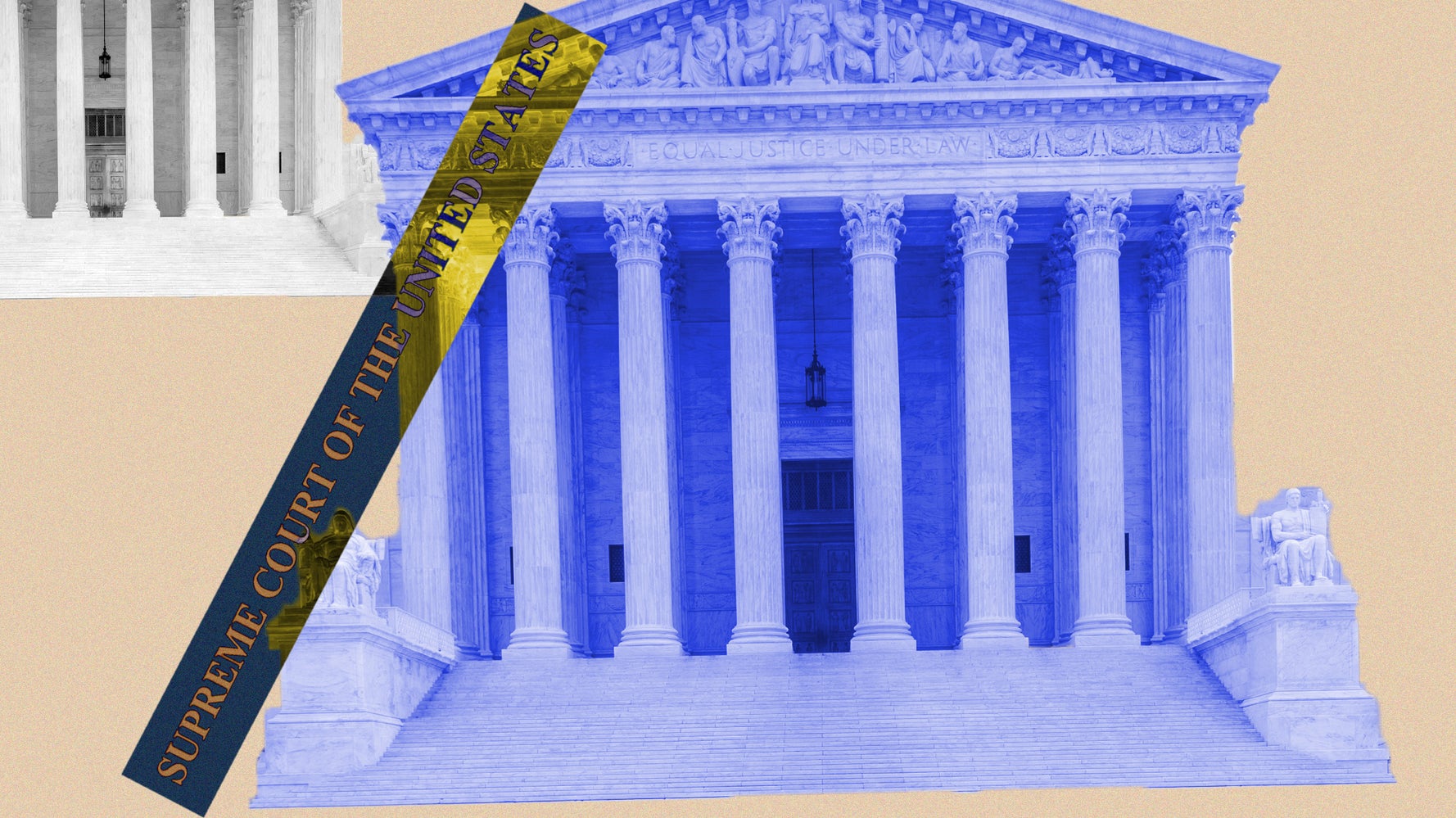
    The Supreme Court rejected a prescription drug reimbursement rule instituted by the Department of Health and Human Services in 2018 in a narrow decision unlikely to have broader implications for the regulatory state.

    Justice Brett Kavanaugh wrote the unanimous decision in American Hospital Association v. Becerra. While the case decreases the amount of discretion courts will give to agencies implementing new regulations, the case threatened to fully upend the federal regulatory state, as the justices were asked to overturn a nearly 40-year-old precedent providing that discretion.

    The court, however, did not take up the suggestion to overturn its precedents governing the regulatory state. Instead, it ruled that HHS simply did not have the authority under existing laws to change reimbursement rates for a specific type of hospital.

    The case originated from a decision by HHS in 2018 to update the prescription drug reimbursement payment total for certain hospitals after discovering that those hospitals were receiving reimbursements far in excess of the amounts they originally paid for drugs.

    In 2003, Congress passed legislation adding a prescription drug benefit to Medicare that provided two options for how to reimburse hospitals for their purchases of drugs for Medicare patients. One option allowed Medicare to survey hospitals for their prescription drug acquisition costs and then reimburse hospitals for “average acquisition costs,” with different payments allowed for different hospitals. The other option said Medicare could reimburse the “average price” for each drug with the “average price” set at 106% of a drug’s sale price.

    Medicare chose the second option due to the difficulty in surveying hospitals. But the second option increased costs by incentivizing hospitals to purchase more expensive drugs even when less expensive generics were available.

    “Because 6% of a large number is bigger than 6% of a small number, hospitals have an incentive to dispense more expensive drugs, even when there are cheaper and equally effective therapies,” Nicholas Bagley, professor at the University of Michigan Law School, wrote at SCOTUSblog ahead of court arguments.

    This payment structure created an even greater incentive for certain hospitals serving disadvantaged communities. Those hospitals receive substantial prescription drug discounts between 20% and 50% under Medicare’s 340B program. But the reimbursement program still pays these hospitals 106%, meaning these hospitals receive somewhere between a 26% and 56% subsidy on drug purchases.

    In 2018, Medicare sought to fix this unexpected subsidy for 340B hospitals by lowering its drug reimbursement percentage to them from 106% to 77.5%. These hospitals and a collection of hospital trade associations, including the American Hospital Association, challenged this rule change in court by arguing that Congress had not provided the agency with the specific authority to alter its drug reimbursement program.

    This is where the challenge ran into the 1984 precedent in Chevron v. Natural Resources Defense Council giving agencies broad deference to interpret statutes passed by Congress when setting rules and regulations. The Chevron deference has come under fire from conservative jurists in recent years as they seek to restrain federal regulatory authority.

    Lower courts found that Medicare should be provided deference under the Chevron precedent to set prescription drug reimbursement rates, but the Supreme Court did not address the Chevron claim. It instead simply ruled that the existing Medicare prescription drug law did not allow the change “absent a survey of hospitals’ acquisition costs.”

    “The text and structure of the statute make this a straightforward case,” Kavanaugh wrote. “Because HHS did not conduct a survey of hospitals’ acquisition costs, HHS acted unlawfully by reducing the reimbursement rates for 340B hospitals.”

    While the ruling here did not disrupt existing precedent on regulatory matters, the court is still set to rule on the issue again in June in the West Virginia v. Environmental Protection Agency case.

    Conservative justices have increasingly questioned the precedent in recent years with Justice Neil Gorsuch taking the lead since he joined the bench in 2017.

    But Gorsuch, and other opponents of agency regulatory deference, may have found another way to gut the federal regulatory state with their expansion of the so-called major questions doctrine. That doctrine supposedly states that any agency action of “vast economic and political significance” will not receive deference from the courts unless explicitly authorized by Congress in legislation. The court may expand its major questions doctrine when it rules in the West Virginia v. Environmental Protection Agency case over not-yet-written carbon emission regulations.


    Original Source Link

    Share. Facebook Twitter Pinterest LinkedIn WhatsApp Email Reddit Telegram
    Previous ArticleApple signs 10-year streaming deal with Major League Soccer – TechCrunch
    Next Article ‘Devoted Model Father’ Herschel Walker Has a Near Ignored and Hidden Second Son

    RELATED POSTS

    SummerSlam results: Oba Femi pins Brock Lesnar in a Hell in a Cell match

    August 2, 2026

    ‘American Idol’ winner says husband left law enforcement for tour life

    August 1, 2026

    SEC, Big Ten agree to support historic ‘Protect College Sports Act’ after intense negotiations

    August 1, 2026

    Monica Lewinsky calls out critics for making same White House scandal jokes

    July 31, 2026

    Mystery man hailed as hero after waking Las Vegas family in house fire

    July 31, 2026

    Sonny Gray leads Red Sox run line pick over the struggling Athletics

    July 30, 2026
    latest posts

    Simon O’Connor Dropped From Modest Mouse Tour

    Following his public apology over sending inappropriate messages to an underage fan, guitarist Simon O’Connor…

    Trump backs off from new strikes on Iran, claiming Mideast allies have outlines of Hormuz deal

    August 2, 2026

    President Trump Announces Perimeters of Peace Deal with Iran Has Been Agreed To – Halts All Planned US Airstrikes on Iran

    August 2, 2026

    SummerSlam results: Oba Femi pins Brock Lesnar in a Hell in a Cell match

    August 2, 2026

    Best Organic Mattresses (2026): Certified Nontoxic, Natural Sleep

    August 2, 2026

    AI helped produce two proofs for the same cryptography problem

    August 2, 2026

    Vin Diesel Calls it Best Script He’s Read in Years

    August 2, 2026
    Categories
    • Books (1,402)
    • Business (6,306)
    • Events (64)
    • Film (6,242)
    • Lifestyle (4,317)
    • Music (6,365)
    • Politics (6,288)
    • Science (5,659)
    • Technology (6,238)
    • Television (5,932)
    • Uncategorized (8)
    • US News (6,294)
    popular posts

    John Stamos Reacts to Bob Saget Being Left Out of Tony Awards Memorial

    John Stamos is speaking out after his friend, and former Full House co-star was…

    Sweet Potatoes With Dates Are a Satisfying Plant-Based Meal

    July 1, 2024

    6 Young Adult Stories That Shine Bright

    August 24, 2025

    Interview with Ben Tor, Author of Death in Driftless Hollow

    February 26, 2026
    Archives
    Browse By Category
    • Books (1,402)
    • Business (6,306)
    • Events (64)
    • Film (6,242)
    • Lifestyle (4,317)
    • Music (6,365)
    • Politics (6,288)
    • Science (5,659)
    • Technology (6,238)
    • Television (5,932)
    • Uncategorized (8)
    • US News (6,294)
    About Us

    We are a creativity led international team with a digital soul. Our work is a custom built by the storytellers and strategists with a flair for exploiting the latest advancements in media and technology.

    Most of all, we stand behind our ideas and believe in creativity as the most powerful force in business.

    What makes us Different

    We care. We collaborate. We do great work. And we do it with a smile, because we’re pretty damn excited to do what we do. If you would like details on what else we can do visit out Contact page.

    Our Picks

    AI helped produce two proofs for the same cryptography problem

    August 2, 2026

    Vin Diesel Calls it Best Script He’s Read in Years

    August 2, 2026

    MTV Turns 45: How Michael Jackson, Madonna and ‘The Real World’ Made TV History

    August 2, 2026
    © 2026 New York Examiner News. All rights reserved. All articles, images, product names, logos, and brands are property of their respective owners. All company, product and service names used in this website are for identification purposes only. Use of these names, logos, and brands does not imply endorsement unless specified. By using this site, you agree to the Terms & Conditions and Privacy Policy.

    Type above and press Enter to search. Press Esc to cancel.

    We use cookies on our website to give you the most relevant experience by remembering your preferences and repeat visits. By clicking “Accept All”, you consent to the use of ALL the cookies. However, you may visit "Cookie Settings" to provide a controlled consent.
    Cookie SettingsAccept All
    Manage consent

    Privacy Overview

    This website uses cookies to improve your experience while you navigate through the website. Out of these, the cookies that are categorized as necessary are stored on your browser as they are essential for the working of basic functionalities of the website. We also use third-party cookies that help us analyze and understand how you use this website. These cookies will be stored in your browser only with your consent. You also have the option to opt-out of these cookies. But opting out of some of these cookies may affect your browsing experience.
    Necessary
    Always Enabled
    Necessary cookies are absolutely essential for the website to function properly. These cookies ensure basic functionalities and security features of the website, anonymously.
    CookieDurationDescription
    cookielawinfo-checkbox-analytics11 monthsThis cookie is set by GDPR Cookie Consent plugin. The cookie is used to store the user consent for the cookies in the category "Analytics".
    cookielawinfo-checkbox-functional11 monthsThe cookie is set by GDPR cookie consent to record the user consent for the cookies in the category "Functional".
    cookielawinfo-checkbox-necessary11 monthsThis cookie is set by GDPR Cookie Consent plugin. The cookies is used to store the user consent for the cookies in the category "Necessary".
    cookielawinfo-checkbox-others11 monthsThis cookie is set by GDPR Cookie Consent plugin. The cookie is used to store the user consent for the cookies in the category "Other.
    cookielawinfo-checkbox-performance11 monthsThis cookie is set by GDPR Cookie Consent plugin. The cookie is used to store the user consent for the cookies in the category "Performance".
    viewed_cookie_policy11 monthsThe cookie is set by the GDPR Cookie Consent plugin and is used to store whether or not user has consented to the use of cookies. It does not store any personal data.
    Functional
    Functional cookies help to perform certain functionalities like sharing the content of the website on social media platforms, collect feedbacks, and other third-party features.
    Performance
    Performance cookies are used to understand and analyze the key performance indexes of the website which helps in delivering a better user experience for the visitors.
    Analytics
    Analytical cookies are used to understand how visitors interact with the website. These cookies help provide information on metrics the number of visitors, bounce rate, traffic source, etc.
    Advertisement
    Advertisement cookies are used to provide visitors with relevant ads and marketing campaigns. These cookies track visitors across websites and collect information to provide customized ads.
    Others
    Other uncategorized cookies are those that are being analyzed and have not been classified into a category as yet.
    SAVE & ACCEPT