
Close Menu
New York Examiner News

    Subscribe to Updates

    Get the latest creative news from FooBar about art, design and business.

    What's Hot

    My Chemical Romance Confirm Plans for New Album

    October 31, 2026

    Top 15 Best Jack Sparrow Quotes From Every Pirates of the Caribbean Movie

    October 31, 2026

    I took two iPhones on vacation. The Duo won me over. | TechCrunch

    October 31, 2026
    Facebook X (Twitter) Instagram
    New York Examiner News
    • Home
    • US News
    • Politics
    • Business
    • Science
    • Technology
    • Lifestyle
    • Music
    • Television
    • Film
    • Books
    • Contact
      • About
      • Amazon Disclaimer
      • DMCA / Copyrights Disclaimer
      • Terms and Conditions
      • Privacy Policy
    New York Examiner News
    Home»Science»AI Could Help Find a Solution for String Theory
    Science

    AI Could Help Find a Solution for String Theory

    By May 6, 2024
    Facebook Twitter Pinterest LinkedIn WhatsApp Email Reddit Telegram
    AI Could Help Find a Solution for String Theory

    [ad_1]

    AI Could Help Find a Solution for String Theory

    String theory could provide a theory of everything for our universe—but it entails 10500 (more than a centillion) possible solutions. AI models could help to find the right one
    By Manon Bischoff

    AI Could Help Find a Solution for String Theory

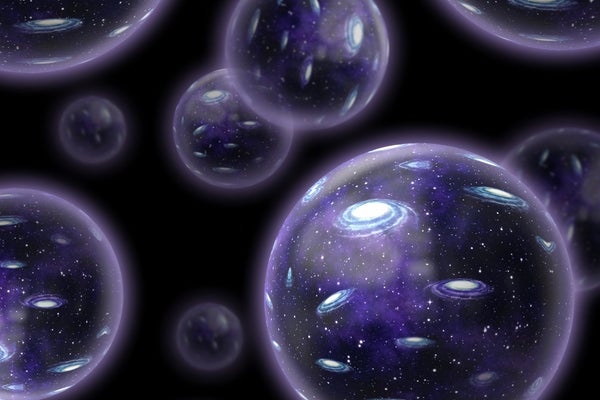
    String theory provides billions upon billions of possible solutions – and each of them describes its own universe. Is there a solution that corresponds to our world?

    Tiny little threads whizzing through spacetime and vibrating incessantly: this is roughly how you can imagine the universe, according to string theory. The various vibrations of the threads generate the elementary particles, such as electrons and quarks, and the forces acting among them.

    Over the years, however, string theorists have been confronted with increasing difficulties. For the theory to work, additional spatial dimensions are needed, as well as additional particles that have not yet been observed. One of the most serious setbacks, however, is the sheer number of possible solutions that string theory offers: more than 10500 possible universes tumble out of the equations. And among them, you would have to find the one that fits our world, describing the same elementary particles and forces. But it’s not just the enormous number of solutions that causes problems. From a mathematical point of view, it is also extremely difficult to deduce the observable particles and forces from a particular solution. This is why string theorists are now turning to certain artificial intelligence algorithms to help them with the task. In early 2024 researchers achieved impressive results, which they posted on the preprint server arXiv.org.

    When physicists worked out string theory in the 1980s, they quickly realized that the mathematical formalism did not fit into four spacetime dimensions. In order for the theory to work, a 10-dimensional spacetime would be required: one dimension of time and nine dimensions of space. Because we only perceive three spatial dimensions in our world, however, the remaining six would have to be rolled up in dimensions that were so tiny that we would not notice any of them. This means that at every point in space there would be a tiny folded-up entity that existed in six dimensions—so small that no microscope could ever resolve it.


    On supporting science journalism

    If you’re enjoying this article, consider supporting our award-winning journalism by subscribing. By purchasing a subscription you are helping to ensure the future of impactful stories about the discoveries and ideas shaping our world today.


    The way in which the six-dimensional space is rolled up plays an important part in string theory. This is because the exact geometry determines how the strings vibrate—and therefore which elementary particles and forces are created. The ultimate aim is to find the six-dimensional geometry of the coiled space that exactly describes our universe. String theorists formulated some requirements that the rolled-up geometries must fulfill but were still confronted with a huge number of possibilities: far more six dimensional geometries than there are particles in the universe.

    And then there was another problem: calculating the exact geometric details of the rolled-up dimensions turned out to be a mammoth task. Describing complicated six-dimensional shapes with mathematical precision is virtually impossible. And even if you had the solution, you would still have to calculate how the tiny threads interact with the six-dimensional rolled-up space. This is the only way to deduce which particles and forces could arise in the universe described. The experts were at an impasse.

    Advances in the field of artificial intelligence caught the attention of some string theorists, as they seemingly have for a large fraction of the Earth’s population. AI could make it possible to perform calculations that were previously out of reach. In particular, the string theorists turned their attention to neural networks: algorithms whose structure is based on the functioning of the neural cortex. These networks process information in several layers of artificial neurons, transforming an input (for example, the rough shape of the rolled-up dimensions) into a corresponding output (their detailed geometry). By training the networks with thousands and thousands of pieces of data, scientists can induce them to eventually uncover patterns that most people miss. And it is precisely this property that string theorists have now exploited.

    In 2017 researchers used neural networks to determine the exact geometries of six of the simplest ways to roll up the excess dimensions. Then Andrei Constantin of the University of Oxford led the team that posted a preprint paper in early 2024: The physicists used other neural networks to investigate how strings would interact with different rolled-up geometries and what elementary particles would result. In the end, they were able to derive the masses of three different quarks and thus provide a concrete prediction in their preprint.

    The results do not match the quark masses that we observe in our universe, however. This is not surprising: after all, the scientists picked out individual geometries from 10500 possible configurations and tested them. The correct geometry that describes our universe could therefore still be hidden among these 10500 variants. This is why some string theorists are now aiming to first reduce this monstrous number and only then examine the remaining geometries with neural networks.

    This article originally appeared in Spektrum der Wissenschaft and was reproduced with permission.

    [ad_2]

    Original Source Link

    Share. Facebook Twitter Pinterest LinkedIn WhatsApp Email Reddit Telegram
    Previous ArticleTarot Movie Has a Back to the Future Homage, Directors Confirm
    Next Article ‘Hades II,’ a Sequel to the Horniest Game of 2020, Just Dropped Early

    RELATED POSTS

    The Exotic Physics Behind a Mysterious 1,000-Mile Cloud on Mars

    October 23, 2026

    What to Know About Shamonda Virus Following the First Reported Human Infection

    October 22, 2026

    Inside the Exclusive Nathan Fielder Interview

    October 22, 2026

    A New Ice Age Was Beginning. Then Humans Started Burning Fossil Fuels

    October 22, 2026

    OpenAI Invests in Startup That Uses Brain Implants to Detect Cancer

    October 21, 2026

    How to See the Orionid Meteor Shower and Other Upcoming Astronomical Events

    October 20, 2026
    latest posts

    My Chemical Romance Confirm Plans for New Album

    My Chemical Romance have confirmed that they’ll spend 2027 working on a new album. Frontman…

    Top 15 Best Jack Sparrow Quotes From Every Pirates of the Caribbean Movie

    October 31, 2026

    I took two iPhones on vacation. The Duo won me over. | TechCrunch

    October 31, 2026

    Bill Maher Issues Blunt Takedown of Donald Trumps 1,300-Word Rant

    October 31, 2026

    Watch Harry Styles recreate his 2010 X Factor audition with Stevie Wonder cover at Harryween show

    October 31, 2026

    Just a moment

    October 31, 2026

    Billboards Music Industry Events Calendar

    October 31, 2026
    Categories
    • Books (1,572)
    • Business (6,481)
    • Events (82)
    • Film (6,420)
    • Lifestyle (4,479)
    • Music (6,549)
    • Politics (6,446)
    • Science (5,822)
    • Technology (6,412)
    • Television (6,115)
    • Uncategorized (9)
    • US News (6,464)
    popular posts

    Rejecting proposed sale of public lands, Ryan Zinke opposes reconciliation measure

    [ad_1] NEWYou can now listen to Fox News articles! Rep. Ryan Zinke, R-Mont., said in…

    Mammals’ Perseverance, Fast Radio Bursts and Health Justice

    May 18, 2022

    Kid Cudi in Disney+’s Tender Sci-Fi Adventure – The Hollywood Reporter

    May 12, 2023

    ‘Trumpcession’ fears spike after Trump refuses to promise economic growth will continue

    March 10, 2025
    Archives
    Browse By Category
    • Books (1,572)
    • Business (6,481)
    • Events (82)
    • Film (6,420)
    • Lifestyle (4,479)
    • Music (6,549)
    • Politics (6,446)
    • Science (5,822)
    • Technology (6,412)
    • Television (6,115)
    • Uncategorized (9)
    • US News (6,464)
    About Us

    We are a creativity led international team with a digital soul. Our work is a custom built by the storytellers and strategists with a flair for exploiting the latest advancements in media and technology.

    Most of all, we stand behind our ideas and believe in creativity as the most powerful force in business.

    What makes us Different

    We care. We collaborate. We do great work. And we do it with a smile, because we’re pretty damn excited to do what we do. If you would like details on what else we can do visit out Contact page.

    Our Picks

    Just a moment

    October 31, 2026

    Billboards Music Industry Events Calendar

    October 31, 2026

    Nvidia weighs playing the cosigner for Nscales AI data center in West Virginia | TechCrunch

    October 31, 2026
    © 2026 New York Examiner News. All rights reserved. All articles, images, product names, logos, and brands are property of their respective owners. All company, product and service names used in this website are for identification purposes only. Use of these names, logos, and brands does not imply endorsement unless specified. By using this site, you agree to the Terms & Conditions and Privacy Policy.

    Type above and press Enter to search. Press Esc to cancel.

    We use cookies on our website to give you the most relevant experience by remembering your preferences and repeat visits. By clicking “Accept All”, you consent to the use of ALL the cookies. However, you may visit "Cookie Settings" to provide a controlled consent.
    Cookie SettingsAccept All
    Manage consent

    Privacy Overview

    This website uses cookies to improve your experience while you navigate through the website. Out of these, the cookies that are categorized as necessary are stored on your browser as they are essential for the working of basic functionalities of the website. We also use third-party cookies that help us analyze and understand how you use this website. These cookies will be stored in your browser only with your consent. You also have the option to opt-out of these cookies. But opting out of some of these cookies may affect your browsing experience.
    Necessary
    Always Enabled
    Necessary cookies are absolutely essential for the website to function properly. These cookies ensure basic functionalities and security features of the website, anonymously.
    CookieDurationDescription
    cookielawinfo-checkbox-analytics11 monthsThis cookie is set by GDPR Cookie Consent plugin. The cookie is used to store the user consent for the cookies in the category "Analytics".
    cookielawinfo-checkbox-functional11 monthsThe cookie is set by GDPR cookie consent to record the user consent for the cookies in the category "Functional".
    cookielawinfo-checkbox-necessary11 monthsThis cookie is set by GDPR Cookie Consent plugin. The cookies is used to store the user consent for the cookies in the category "Necessary".
    cookielawinfo-checkbox-others11 monthsThis cookie is set by GDPR Cookie Consent plugin. The cookie is used to store the user consent for the cookies in the category "Other.
    cookielawinfo-checkbox-performance11 monthsThis cookie is set by GDPR Cookie Consent plugin. The cookie is used to store the user consent for the cookies in the category "Performance".
    viewed_cookie_policy11 monthsThe cookie is set by the GDPR Cookie Consent plugin and is used to store whether or not user has consented to the use of cookies. It does not store any personal data.
    Functional
    Functional cookies help to perform certain functionalities like sharing the content of the website on social media platforms, collect feedbacks, and other third-party features.
    Performance
    Performance cookies are used to understand and analyze the key performance indexes of the website which helps in delivering a better user experience for the visitors.
    Analytics
    Analytical cookies are used to understand how visitors interact with the website. These cookies help provide information on metrics the number of visitors, bounce rate, traffic source, etc.
    Advertisement
    Advertisement cookies are used to provide visitors with relevant ads and marketing campaigns. These cookies track visitors across websites and collect information to provide customized ads.
    Others
    Other uncategorized cookies are those that are being analyzed and have not been classified into a category as yet.
    SAVE & ACCEPT