
Close Menu
New York Examiner News

    Subscribe to Updates

    Get the latest creative news from FooBar about art, design and business.

    What's Hot

    Young Thug YSL Records Surprise-Drop ‘Slime Language 3’ Double Album

    August 29, 2026

    How the Strait of Hormuz crisis forced Asia to rewrite its oil and gas energy strategy

    August 29, 2026

    Treasury Sec. Scott Bessent Schools Elizabeth Warren – Offers Her ‘Foreign Exchange for Dummies’ * The Gateway Pundit * by Mike LaChance

    August 29, 2026
    Facebook X (Twitter) Instagram
    New York Examiner News
    • Home
    • US News
    • Politics
    • Business
    • Science
    • Technology
    • Lifestyle
    • Music
    • Television
    • Film
    • Books
    • Contact
      • About
      • Amazon Disclaimer
      • DMCA / Copyrights Disclaimer
      • Terms and Conditions
      • Privacy Policy
    New York Examiner News
    Home»Business»How the Strait of Hormuz crisis forced Asia to rewrite its oil and gas energy strategy
    Business

    How the Strait of Hormuz crisis forced Asia to rewrite its oil and gas energy strategy

    By AdminAugust 29, 2026
    Facebook Twitter Pinterest LinkedIn WhatsApp Email Reddit Telegram
    How the Strait of Hormuz crisis forced Asia to rewrite its oil and gas energy strategy


    The Iran war exposed just how much the world relied on a narrow 20-mile-wide waterway. Soon after the U.S. launched strikes on Iran, the latter threatened to strike ships trying to traverse the Strait of Hormuz, the channel for much of the Middle East’s oil and gas exports. The threat of shortages pushed countries across Asia to impose export bans, cut import duties, and start rationing fuel to maintain supplies. 

    Six months since the onset of the war, doomsday scenarios—price spikes, long lines at gas stations, power outages, and grounded flights—haven’t quite come to fruition, as increased production and hefty stockpiles blunted some of the damage. 

    It seems that normality, in some form, could be returning to the Strait. On Wednesday, Iran announced a new revenue-sharing agreement over the waterway, though a military spokesperson blamed the U.S. for “obstructing this process.” 

    Yet the revelation of how easy it was for Iran to block, and continue blocking, one of the world’s most important waterways is pushing governments to diversify their sources of energy.

    And now, with the prospect of a U.S.-Iran deal in the near-term on life support and Iranian control of Hormuz now looking secure for years to come, what previously saved the global oil market in the first half of the year might not work for a second time.

    “Global oil and gas supply is still a major point of geopolitical leverage,” says Saul Kavonic, head of energy research at MST Financial. “Notwithstanding the rise of alternative and green technologies over the past decade, the global economy is still very reliant on oil and gas.”

    “Hostile actors can threaten that for their geopolitical ends.”

    A ‘big wake up call’

    Before the war, roughly a fifth of the world’s oil trade passed through the Strait of Hormuz, which sits between Iran and Oman. More than 80% of that cargo was bound for Asia, primarily China, India, Japan, and South Korea.

    “Before this crisis many market observers would have told you it would be impossible to block or completely close the Strait of Hormuz, because a country like Iran did not have the capabilities. They tried in the 1980s, but they did not succeed,” says Carole Nakhle, CEO at Crystol Energy, an energy consultancy. 

    Yet the conflict has shown “how easy and inexpensive it has become to threaten very expensive energy infrastructure,” she added, with relatively cheap drones capable of putting refineries, pipelines, ports, and other multibillion-dollar facilities at risk.

    “This has been the big wake-up call for the entire global energy industry. It’s a fundamental paradigm shift of the last 50 years of the energy industry,” says Kavonic. “We’re moving from just-in-time supply chains to just-in-case supply chains.”

    Energy importers are starting to diversify. Before the war, the Middle East accounted for 90% of Japan’s crude oil imports, and roughly 11% of its liquefied natural gas. “Japan found it was more vulnerable than expected, particularly when it comes to LNG—it imports 100% of its energy,” says Kavonic.  “In Japan, if the LNG doesn’t arrive, the lights go off and the country shuts down.”

    Now, Tokyo is investing elsewhere to shore up future supplies. Japan’s Inpex, for example, formed a joint venture to expand its LNG investment in Australia’s Northern Territory. 

    “It’s boomtime for Woodside and Chevron, two big LNG players who aren’t too concentrated in the Middle East. The oil majors are now also rapidly ramping up their investment in LNG,” Kavonic says, spotting an opportunity for buyers to diversify their sources of gas away from the Middle East. 

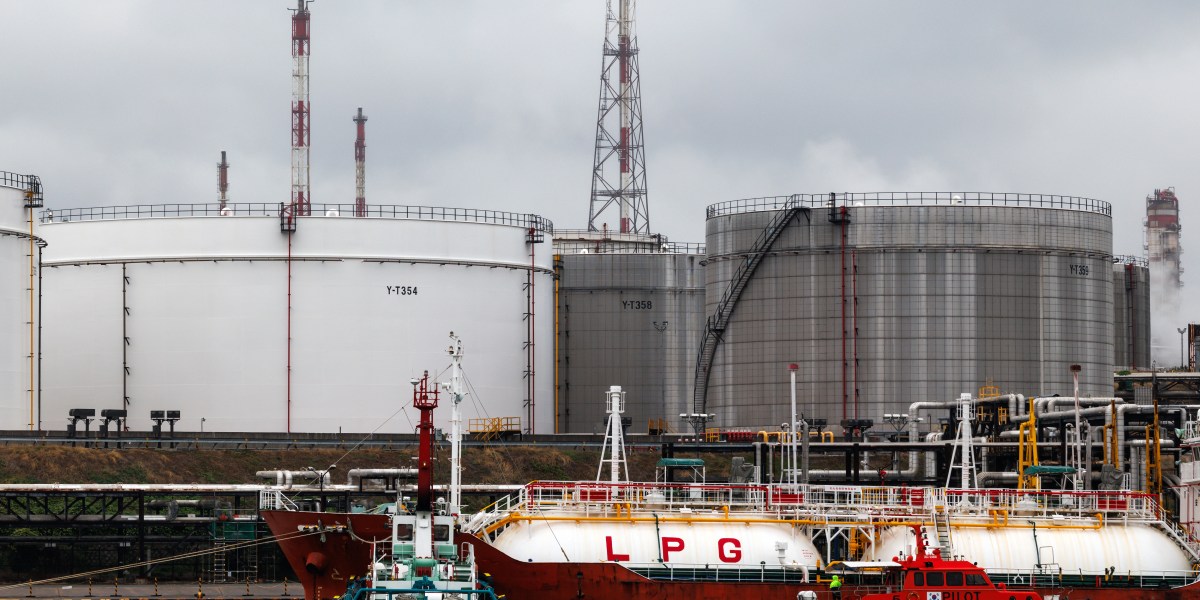
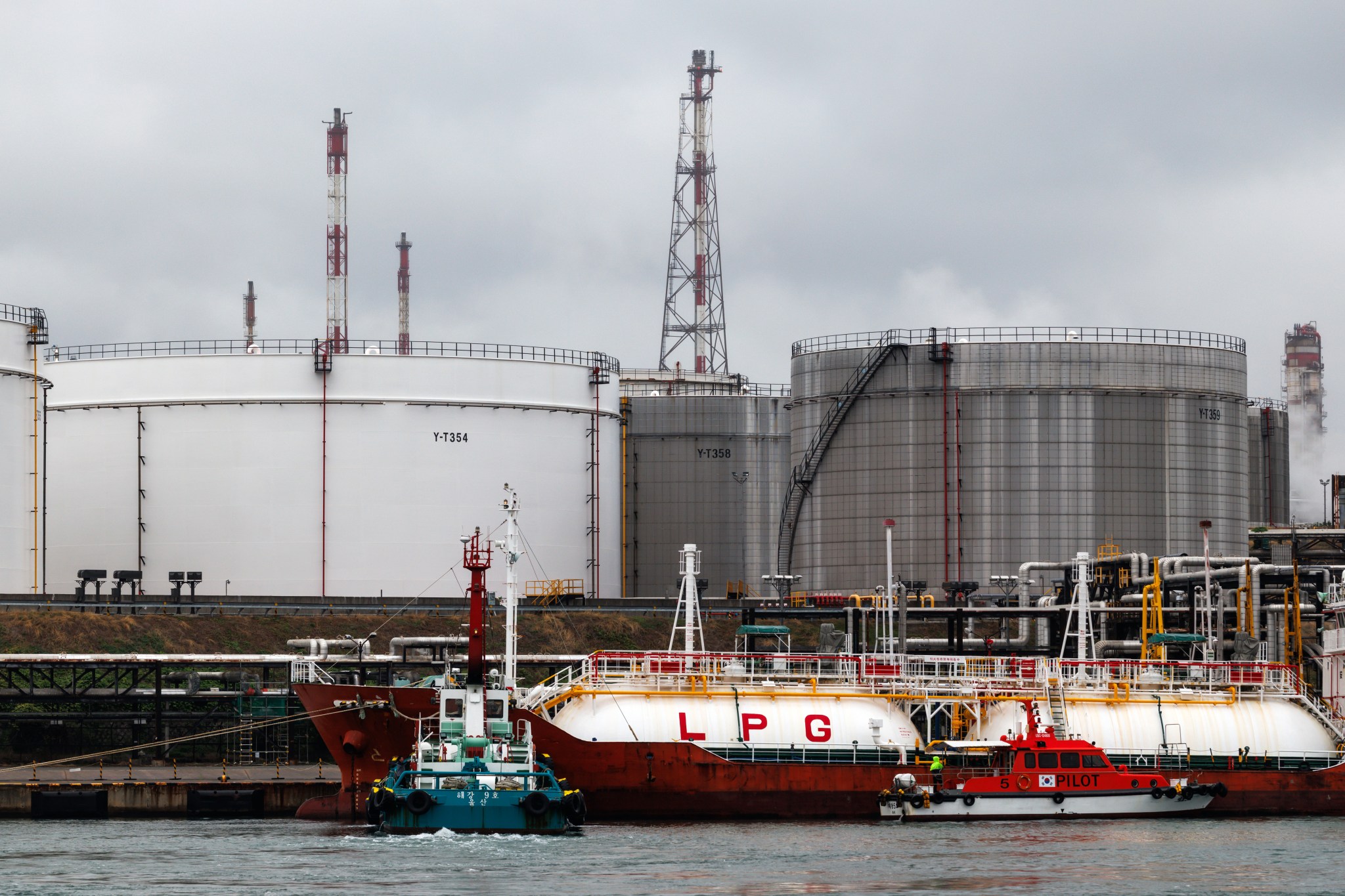
    Exporters, too, are diversifying. For oil exporters, the major lesson has been the need to invest in alternate supply routes. That includes ploughing billions into building out ports in ports on both the western side of Saudi Arabia and the Gulf of Oman, effectively bypassing the strait entirely. Oil producers are also investing in pipelines, like Saudi Arabia’s East-West pipeline. If all these additional investments pan out, only 10% of the world’s oil will need to travel through the Strait of Hormuz, down from 20% before the war. 

    Gas, far more than oil, could become the key energy commodity hurt by a prolonged closure of the Strait of Hormuz. While crude oil can be carried via pipeline–perhaps from oil producers in the Persian Gulf to ports on the western side of the Arabian Peninsula–gas can’t, meaning there are no alternative routes to get LNG to Asia if Hormuz is blocked.

    Qatar, one of the world’s leading producers of LNG, is trying to find some way to keep its export routes open, through diplomacy, finding new customers, and taking rare opportunities to get their product through Hormuz. It has also set up a fast recovery timeline so it can restart production once the strait reopens.

    Escaping an energy collapse

    Things didn’t collapse as analysts feared at the beginning of the conflict. In April, for example, the head of the International Energy Agency predicted that flights may soon need to be grounded in Europe due to jet fuel shortages.

    While oil prices did surge to as high as $126 per barrel, they didn’t hit the $150 to $200 a barrel level that some analysts feared. And while several Asian countries imposed emergency measures to conserve fuel, a lengthy and catastrophic shortage never materialized. “The global market is proving to be more resilient to major supply shocks than many thought,” Kavonic says.

    One reason was the sheer amount of oil sitting in reserve. The IEA mandates that its 32 member countries stockpile at least 90 days’ worth of oil; similar mandates for gas stockpiles were imposed after Russia’s invasion of Ukraine.

    In March, the agency coordinated the release of 400 million barrels from these emergency oil stockpiles, the largest such intervention in its history. 

    Oil producers like the U.S., Saudi Arabia and the UAE also increased their production and carrying capacity. Yet perhaps the unsung hero in the market was China, which drew on its huge stockpiles, leaving more oil in the market for other economies. 

    “OPEC has lost its primary role as global oil market manager,” Kavonic says, referring to the cartel that tries to maintain the global prices of oil. “It’s now moved to China.”

    He notes that China’s increased leverage in oil markets will have repercussions throughout the Pacific. “We can see how dependent Pacific Island nations are on diesel to keep the lights on. So we’ve seen countries in Asia not just have to manage their own imports but support the Pacific as well. Otherwise 30 years of Pacific policy could be undermined in a few months.”

    But how long this will last is unclear, particularly now that tensions between Iran and the U.S. have flared up again, and a prolonged closure of the Strait of Hormuz now looks likely.

    “We spent the last four months living on the oil market credit card. And if we continue at that rate, that credit card will be maxed out in a few months,” Kavonic says.

    Fortune will host several sessions on what a more complicated geopolitical world means for Asia’s businesses at the upcoming Fortune Leaders Forum, hosted in Macau on Sep. 8. Learn more here.


    Original Source Link

    Share. Facebook Twitter Pinterest LinkedIn WhatsApp Email Reddit Telegram
    Previous ArticleTreasury Sec. Scott Bessent Schools Elizabeth Warren – Offers Her ‘Foreign Exchange for Dummies’ * The Gateway Pundit * by Mike LaChance
    Next Article Young Thug YSL Records Surprise-Drop ‘Slime Language 3’ Double Album

    RELATED POSTS

    How buying the first Ferrari Luce for $40 million saved a billionaire $13 million in taxes

    August 28, 2026

    The $40 trillion national debt is growing and Boomers are getting $100k in Social Security benefits

    August 28, 2026

    Zohran Mamdani’s business council includes the CEOs of Chobani and Etsy. But Wall Street and Big Tech turned him down

    August 27, 2026

    Nvidia unleashes 70% growth bombshell and defends against ‘circular financing’ doomsayers

    August 27, 2026

    Cigna’s AI chief is investing in technology to cut costs and address healthcare’s biggest problems

    August 26, 2026

    How IHH Healthcare CEO Prem Kumar Nair is planning for a longer-lived Asia

    August 26, 2026
    latest posts

    Young Thug YSL Records Surprise-Drop ‘Slime Language 3’ Double Album

    Young Thug and his YSL Records surprise-dropped the Slime Language 3 double album late Friday…

    How the Strait of Hormuz crisis forced Asia to rewrite its oil and gas energy strategy

    August 29, 2026

    Treasury Sec. Scott Bessent Schools Elizabeth Warren – Offers Her ‘Foreign Exchange for Dummies’ * The Gateway Pundit * by Mike LaChance

    August 29, 2026

    Greg Abbott orders pause on Flock Safety funding amid privacy concerns

    August 29, 2026

    Nvidia CEO Jensen Huang Took a Call From Donald Trump in the Middle of an All-Hands

    August 29, 2026

    Where are all the aliens? A new book explores possible answers

    August 29, 2026

    4 Months Later, Oliver Queen’s Green Arrow Clone Is DC’s Biggest Summer Mystery

    August 29, 2026
    Categories
    • Books (1,457)
    • Business (6,360)
    • Events (70)
    • Film (6,295)
    • Lifestyle (4,368)
    • Music (6,422)
    • Politics (6,345)
    • Science (5,712)
    • Technology (6,293)
    • Television (5,983)
    • Uncategorized (9)
    • US News (6,348)
    popular posts

    Turkish President makes first official visit to Iraq in over a decade

    Turkish President Recep Tayyip Erdoğan arrived in Iraq on Monday for his first official visit…

    Brazil stocks enjoyed their best year since 2019. What to expect in the new year

    December 29, 2023

    Do Antioxidants Really Boost Glowing Skin?

    October 26, 2022

    Irritable bowel syndrome: Carbon monoxide foam in the rectum reduces symptoms in mice

    June 29, 2022
    Archives
    Browse By Category
    • Books (1,457)
    • Business (6,360)
    • Events (70)
    • Film (6,295)
    • Lifestyle (4,368)
    • Music (6,422)
    • Politics (6,345)
    • Science (5,712)
    • Technology (6,293)
    • Television (5,983)
    • Uncategorized (9)
    • US News (6,348)
    About Us

    We are a creativity led international team with a digital soul. Our work is a custom built by the storytellers and strategists with a flair for exploiting the latest advancements in media and technology.

    Most of all, we stand behind our ideas and believe in creativity as the most powerful force in business.

    What makes us Different

    We care. We collaborate. We do great work. And we do it with a smile, because we’re pretty damn excited to do what we do. If you would like details on what else we can do visit out Contact page.

    Our Picks

    Where are all the aliens? A new book explores possible answers

    August 29, 2026

    4 Months Later, Oliver Queen’s Green Arrow Clone Is DC’s Biggest Summer Mystery

    August 29, 2026

    Jelly Roll Shocks With Alleged Romance Bunnie Gets Groove Back

    August 29, 2026
    © 2026 New York Examiner News. All rights reserved. All articles, images, product names, logos, and brands are property of their respective owners. All company, product and service names used in this website are for identification purposes only. Use of these names, logos, and brands does not imply endorsement unless specified. By using this site, you agree to the Terms & Conditions and Privacy Policy.

    Type above and press Enter to search. Press Esc to cancel.

    We use cookies on our website to give you the most relevant experience by remembering your preferences and repeat visits. By clicking “Accept All”, you consent to the use of ALL the cookies. However, you may visit "Cookie Settings" to provide a controlled consent.
    Cookie SettingsAccept All
    Manage consent

    Privacy Overview

    This website uses cookies to improve your experience while you navigate through the website. Out of these, the cookies that are categorized as necessary are stored on your browser as they are essential for the working of basic functionalities of the website. We also use third-party cookies that help us analyze and understand how you use this website. These cookies will be stored in your browser only with your consent. You also have the option to opt-out of these cookies. But opting out of some of these cookies may affect your browsing experience.
    Necessary
    Always Enabled
    Necessary cookies are absolutely essential for the website to function properly. These cookies ensure basic functionalities and security features of the website, anonymously.
    CookieDurationDescription
    cookielawinfo-checkbox-analytics11 monthsThis cookie is set by GDPR Cookie Consent plugin. The cookie is used to store the user consent for the cookies in the category "Analytics".
    cookielawinfo-checkbox-functional11 monthsThe cookie is set by GDPR cookie consent to record the user consent for the cookies in the category "Functional".
    cookielawinfo-checkbox-necessary11 monthsThis cookie is set by GDPR Cookie Consent plugin. The cookies is used to store the user consent for the cookies in the category "Necessary".
    cookielawinfo-checkbox-others11 monthsThis cookie is set by GDPR Cookie Consent plugin. The cookie is used to store the user consent for the cookies in the category "Other.
    cookielawinfo-checkbox-performance11 monthsThis cookie is set by GDPR Cookie Consent plugin. The cookie is used to store the user consent for the cookies in the category "Performance".
    viewed_cookie_policy11 monthsThe cookie is set by the GDPR Cookie Consent plugin and is used to store whether or not user has consented to the use of cookies. It does not store any personal data.
    Functional
    Functional cookies help to perform certain functionalities like sharing the content of the website on social media platforms, collect feedbacks, and other third-party features.
    Performance
    Performance cookies are used to understand and analyze the key performance indexes of the website which helps in delivering a better user experience for the visitors.
    Analytics
    Analytical cookies are used to understand how visitors interact with the website. These cookies help provide information on metrics the number of visitors, bounce rate, traffic source, etc.
    Advertisement
    Advertisement cookies are used to provide visitors with relevant ads and marketing campaigns. These cookies track visitors across websites and collect information to provide customized ads.
    Others
    Other uncategorized cookies are those that are being analyzed and have not been classified into a category as yet.
    SAVE & ACCEPT