
Close Menu
New York Examiner News

    Subscribe to Updates

    Get the latest creative news from FooBar about art, design and business.

    What's Hot

    Watch Turnstile make ‘Saturday Night Live’ debut with ‘Birds’ and ‘I Care/Dull’ medley

    October 5, 2026

    Why the ‘China plus one’ supply chain shift is paying off less than Southeast Asia hoped

    October 5, 2026

    Todd Blanche Disastrously Admits Trump’s Supreme Court Shadow Docket Scam

    October 5, 2026
    Facebook X (Twitter) Instagram
    New York Examiner News
    • Home
    • US News
    • Politics
    • Business
    • Science
    • Technology
    • Lifestyle
    • Music
    • Television
    • Film
    • Books
    • Contact
      • About
      • Amazon Disclaimer
      • DMCA / Copyrights Disclaimer
      • Terms and Conditions
      • Privacy Policy
    New York Examiner News
    Home»Business»Why the ‘China plus one’ supply chain shift is paying off less than Southeast Asia hoped
    Business

    Why the ‘China plus one’ supply chain shift is paying off less than Southeast Asia hoped

    By AdminOctober 5, 2026
    Facebook Twitter Pinterest LinkedIn WhatsApp Email Reddit Telegram
    Why the ‘China plus one’ supply chain shift is paying off less than Southeast Asia hoped


    “China plus one” has been a winning strategy for Southeast Asia. The proposition was simple: Draw in global manufacturers pivoting away from China due to rising costs and geopolitical tensions, and win stronger growth, higher wages, and more jobs for local economies. 

    Yet despite winning billions of dollars of investment in new factories, the region is reaping fewer benefits than its leaders may have hoped. 

    “China plus one has been a net gain for Southeast Asia, but a conditional and uneven one,” says Meng-Chun Liu, the director of the Chung-Hua Institution for Economic Research (CIER), a Taiwan-based think tank. “It brought factories, exports and jobs to the region, but not the design, core components and process know-how that captures most of the value.”

    Vietnam, the star economy of Southeast Asia, focuses primarily on final assembly before export to developed markets, rather than manufacturing intermediate components. To make matters worse, companies like Target—frustrated by an underdeveloped Southeast Asian factory ecosystem—are moving supply chains back to China.

    And now Southeast Asia faces a bigger challenge: as Chinese firms increasingly view Southeast Asia as a region of consumers, not workers, a flood of cheap exports could end up undercutting the region’s manufacturing gains. 

    Flying geese returning home

    The “flying geese” model, formulated by Japanese economist Kaname Akamatsu in the 1930s, suggests that manufacturing automatically flows from economically advanced countries to less-advanced ones. Over time, these follower nations also become too expensive for manufacturing, and so factories shift to nations even further along the frontier.

    Yet, according to Liu, this model no longer holds. “The old ‘flying geese’ pattern, in which China passed lower-end manufacturing on to its neighbors, is breaking down: China now aims to keep the full supply chain at home and to sell into Asia, rather than hand production over to it,” he says.

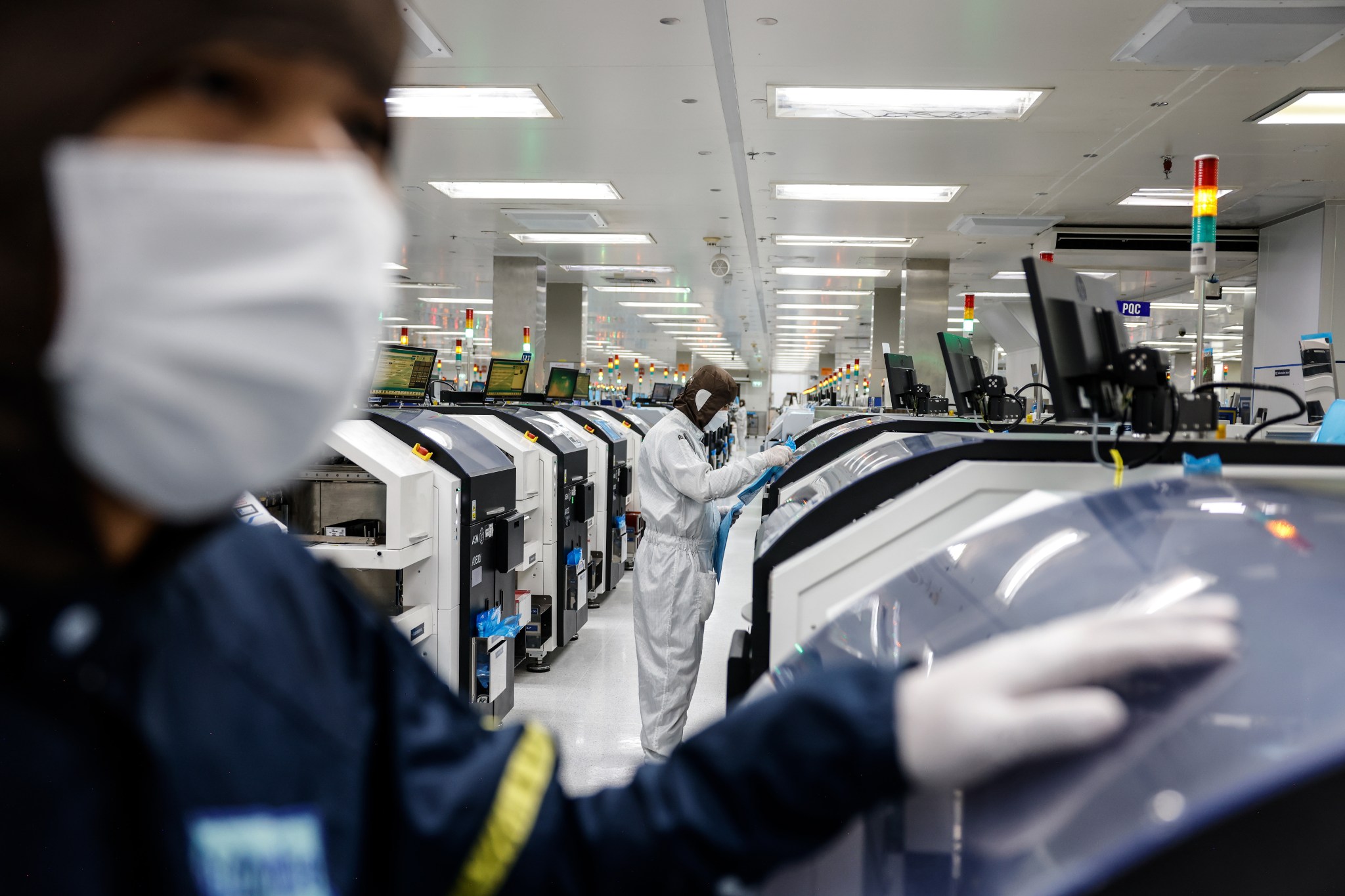
    A key factor holding Southeast Asia back is its fragmented manufacturing capabilities. Vietnam specializes in electronics assembly, Thailand in automotives, and Malaysia in chip packaging. 

    Yet without fully mature local ecosystems, Southeast Asian factories source inputs from China to keep production running. Apple, even as it shifts final assembly to Vietnam and India, still leans on Chinese suppliers for batteries, optics and enclosures. 

    “While jobs are created in Southeast Asia, they are largely low-skill assembly roles,” Christopher Tang, a supply chain management expert from UCLA’s Anderson School of Management, explains. “This caps the immediate creation of high-value industries.” 

    China, by contrast, has spent decades building a hyper-efficient manufacturing ecosystem that provides raw material processing, component manufacturing, advanced logistics and engineering support. 

    “Alternative manufacturing hubs struggle to replicate the massive, vertically integrated ‘factory ecosystem’ of Shenzhen,” Tang says. 

    Who’s winning from China plus one

    A handful of countries have captured most of the gains from the “China plus one” shift.

    Vietnam is clearly the largest beneficiary. Its GDP grew 8.0% in 2025, accelerating from 7.1% in 2024. Exports to the U.S. jumped 28.1% to $153.2 billion last year, from $119.6 billion in 2024. Yet imports from China climbed nearly 30% to roughly $183 billion.

    Malaysia, too, is carving its own niche in the semiconductor space. Data center investment currently amounts to nearly 18% of the country’s GDP—the highest share globally, according to HSBC analysts. Homegrown chip design firm SkyeChip also enjoyed a blockbuster IPO on the Bursa Malaysia stock exchange in May, surging 300% on its main market debut.

    Regional politicians, however, note the limits of Southeast Asia’s place in the global AI supply chain. “The Global South cannot simply become a destination for data centers, while decisions about AI are made elsewhere,” Malaysian Foreign Minister Datuk Seri Mohamad Hasan said during his Sept. 27 statement at the UN General Assembly.

    Some Southeast Asian countries are trying to leverage their strengths to capture more of the value chain. Indonesia imposed a ban on nickel ore exports to encourage smelters to move refining operations to the country; the country is now pushing to attract more of the EV value chain, including car and battery manufacturing. 

    Singapore is also benefitting from its role “as a regional hub for orchestrating the supply chain and investments in the region”, says Goh Puay Guan, an associate professor at the National University of Singapore (NUS).

    Undercut by the U.S.

    Southeast Asia is also at the mergy of U.S. trade policy, a big driver of the “China plus one” shift. As Washington placed more tariffs on Chinese goods, supply chains shifted to Southeast Asia to take advantage of lower import duties. 

    Yet Washington is increasingly scrutinizing that practice. Earlier this year, the White House released a report accusing 40 countries, including several in Southeast Asia, of engaging in a “transshipment scam,” or diverting Chinese-made goods through other locations to evade U.S. tariffs. 

    Experts say it’s still possible for Southeast Asia to survive in an increasingly multipolar world, as long as its countries ensure that trade flows are as transparent as possible.

    “Southeast Asian nations may have to explicitly divide their industrial parks: establishing one vertically integrated supply chain compliant with Western standards, and a separate one aligned with Chinese networks serving the Global South,” Tang says. 

    The tariff differential between China and Southeast Asia has also shrunk. After the Trump administration expanded Section 301 tariffs in July, goods from Singapore, Thailand, Vietnam and the Philippines are now subject to a higher tax rate of 12.5%, while Cambodia, Indonesia and Malaysia face a 10% duty. 

    China, by comparison, faces an average tariff rate of 21%—and after Xi’s recent visit to the U.S., both countries are now pursuing $30 billion worth of tariff reductions across an array of non-sensitive goods, including furniture and toys.

    “When the U.S. tariff gap between China and Vietnam narrowed for notebook computers, several major PC brands moved production from Vietnam and Thailand back to China,” Liu points out.

    Exporters turned consumers

    But the long-term threat to Southeast Asia may be that it turns from being the final stage in a Chinese supply chain to being a market for Chinese goods. 

    Exports have been a bright spot for China’s economy, which is otherwise struggling with slumping consumption and a years-long property market slump. In August, exports grew by 25% year-over-year, while retail sales rose by just 0.4%.

    Trade between China and ASEAN surpassed $1 trillion for the first time in 2025, according to official statistics. Yet for some Southeast Asian manufacturers, the influx of goods from China has taken a toll.

    “In the long term, this may lead to an acceleration of premature deindustrialisation in Southeast Asia, which brings serious implications for economic growth and social stability,” Lee Jones, a professor of international politics at Queen Mary University of London (QMUL), warns.

    Thailand, for instance, has seen national GDP growth slow to 2%, in part due to pressure from Chinese EVs and consumer goods. “The U.S. tariffs and China’s retaliatory tariffs cause an influx of Chinese goods into the Thai market, intensifying competition for Thai producers in the domestic market, especially in industries sensitive to price competition,” wrote Supasyn Itthiphatwong, an economist at Krungsri Research, in a research report.

    Then there’s what China presents to those Southeast Asian countries that are even further behind: Cambodia, Laos, and ASEAN’s newest member, Timor-Leste.

    In those cases, the risk isn’t that local manufacturers get outcompeted, but rather that they never get a chance to take flight. 


    Original Source Link

    Share. Facebook Twitter Pinterest LinkedIn WhatsApp Email Reddit Telegram
    Previous ArticleTodd Blanche Disastrously Admits Trump’s Supreme Court Shadow Docket Scam
    Next Article Watch Turnstile make ‘Saturday Night Live’ debut with ‘Birds’ and ‘I Care/Dull’ medley

    RELATED POSTS

    ‘Avengers: Endgame’ is the biggest movie ever again, 7 years later

    October 4, 2026

    I place the world’s top software engineers and interviewed over 10,000 job seekers. The difference on paper and in person is wider than ever

    October 4, 2026

    Zohran Mamdani says ‘you have to luck out in some big way’ to achieve the American Dream now

    October 3, 2026

    We need a Department of AI, or we risk pushing the U.S. economy over the brink

    October 3, 2026

    Meet the 32-year-old founder who raised $3.5 million to help Gen Z feel not so alone in the world

    October 2, 2026

    Billionaire George Soros donated $102 million ahead of the midterms—and now the Democrats are ahead

    October 2, 2026
    latest posts

    Watch Turnstile make ‘Saturday Night Live’ debut with ‘Birds’ and ‘I Care/Dull’ medley

    Turnstile made their debut on Saturday Night Live last night (October 3), performing ‘Birds’ and…

    Why the ‘China plus one’ supply chain shift is paying off less than Southeast Asia hoped

    October 5, 2026

    Todd Blanche Disastrously Admits Trump’s Supreme Court Shadow Docket Scam

    October 5, 2026

    Flawed midterm candidates expose both parties’ selective outrage problem

    October 5, 2026

    The Best Gifts Under $25 for Everyone on Your List (2026)

    October 5, 2026

    Book Riot’s Deals of the Day for October 4, 2026

    October 5, 2026

    How attachment theory can help us understand AI relationships

    October 5, 2026
    Categories
    • Books (1,531)
    • Business (6,435)
    • Events (79)
    • Film (6,369)
    • Lifestyle (4,435)
    • Music (6,500)
    • Politics (6,423)
    • Science (5,787)
    • Technology (6,368)
    • Television (6,061)
    • Uncategorized (9)
    • US News (6,422)
    popular posts

    16 Best Bluetooth Speakers (2022): Portable, Waterproof, and More

    The best Bluetooth speakers still have a place near and dear to our hearts, even…

    Pelosi *Accidentally* Trashes Democrat Governors For Their Lockdowns, Reveals What Dems Have in Store Next (VIDEO)

    July 15, 2022

    New Mystery and Thriller Books to Read | April 14

    April 15, 2026

    The 50 Best Original Songs

    May 29, 2022
    Archives
    Browse By Category
    • Books (1,531)
    • Business (6,435)
    • Events (79)
    • Film (6,369)
    • Lifestyle (4,435)
    • Music (6,500)
    • Politics (6,423)
    • Science (5,787)
    • Technology (6,368)
    • Television (6,061)
    • Uncategorized (9)
    • US News (6,422)
    About Us

    We are a creativity led international team with a digital soul. Our work is a custom built by the storytellers and strategists with a flair for exploiting the latest advancements in media and technology.

    Most of all, we stand behind our ideas and believe in creativity as the most powerful force in business.

    What makes us Different

    We care. We collaborate. We do great work. And we do it with a smile, because we’re pretty damn excited to do what we do. If you would like details on what else we can do visit out Contact page.

    Our Picks

    Book Riot’s Deals of the Day for October 4, 2026

    October 5, 2026

    How attachment theory can help us understand AI relationships

    October 5, 2026

    Extra Geography review – a delightfully…

    October 5, 2026
    © 2026 New York Examiner News. All rights reserved. All articles, images, product names, logos, and brands are property of their respective owners. All company, product and service names used in this website are for identification purposes only. Use of these names, logos, and brands does not imply endorsement unless specified. By using this site, you agree to the Terms & Conditions and Privacy Policy.

    Type above and press Enter to search. Press Esc to cancel.

    We use cookies on our website to give you the most relevant experience by remembering your preferences and repeat visits. By clicking “Accept All”, you consent to the use of ALL the cookies. However, you may visit "Cookie Settings" to provide a controlled consent.
    Cookie SettingsAccept All
    Manage consent

    Privacy Overview

    This website uses cookies to improve your experience while you navigate through the website. Out of these, the cookies that are categorized as necessary are stored on your browser as they are essential for the working of basic functionalities of the website. We also use third-party cookies that help us analyze and understand how you use this website. These cookies will be stored in your browser only with your consent. You also have the option to opt-out of these cookies. But opting out of some of these cookies may affect your browsing experience.
    Necessary
    Always Enabled
    Necessary cookies are absolutely essential for the website to function properly. These cookies ensure basic functionalities and security features of the website, anonymously.
    CookieDurationDescription
    cookielawinfo-checkbox-analytics11 monthsThis cookie is set by GDPR Cookie Consent plugin. The cookie is used to store the user consent for the cookies in the category "Analytics".
    cookielawinfo-checkbox-functional11 monthsThe cookie is set by GDPR cookie consent to record the user consent for the cookies in the category "Functional".
    cookielawinfo-checkbox-necessary11 monthsThis cookie is set by GDPR Cookie Consent plugin. The cookies is used to store the user consent for the cookies in the category "Necessary".
    cookielawinfo-checkbox-others11 monthsThis cookie is set by GDPR Cookie Consent plugin. The cookie is used to store the user consent for the cookies in the category "Other.
    cookielawinfo-checkbox-performance11 monthsThis cookie is set by GDPR Cookie Consent plugin. The cookie is used to store the user consent for the cookies in the category "Performance".
    viewed_cookie_policy11 monthsThe cookie is set by the GDPR Cookie Consent plugin and is used to store whether or not user has consented to the use of cookies. It does not store any personal data.
    Functional
    Functional cookies help to perform certain functionalities like sharing the content of the website on social media platforms, collect feedbacks, and other third-party features.
    Performance
    Performance cookies are used to understand and analyze the key performance indexes of the website which helps in delivering a better user experience for the visitors.
    Analytics
    Analytical cookies are used to understand how visitors interact with the website. These cookies help provide information on metrics the number of visitors, bounce rate, traffic source, etc.
    Advertisement
    Advertisement cookies are used to provide visitors with relevant ads and marketing campaigns. These cookies track visitors across websites and collect information to provide customized ads.
    Others
    Other uncategorized cookies are those that are being analyzed and have not been classified into a category as yet.
    SAVE & ACCEPT