
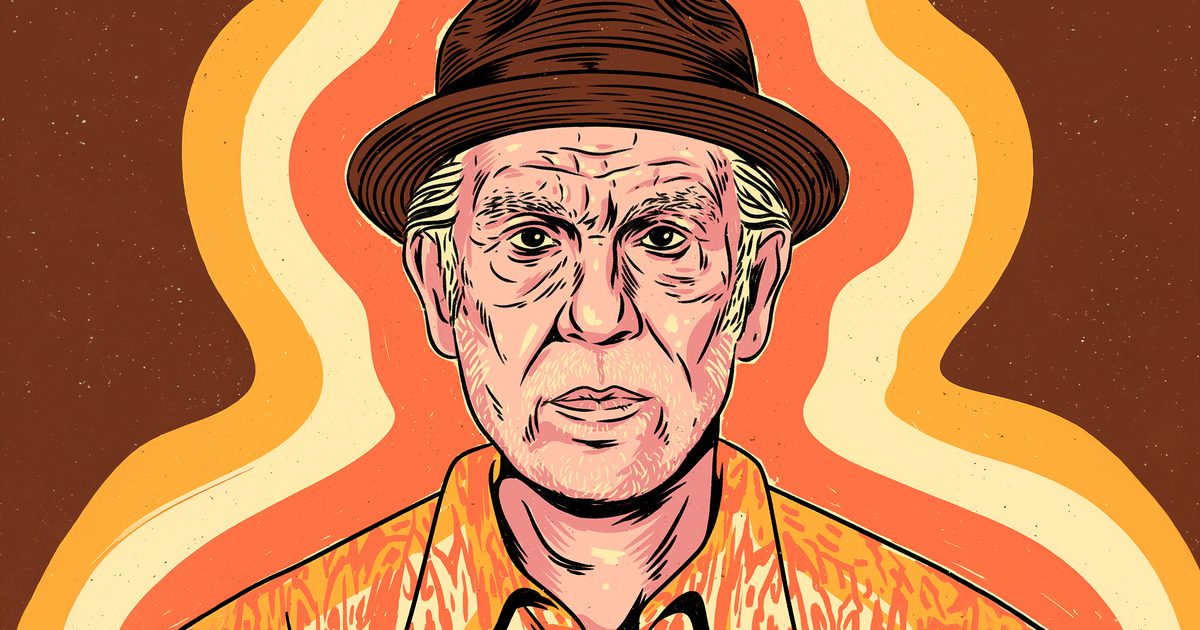
I’ll admit it – the prospect of talking to the actor John Malkovich was adaunting one when faced with acareer of such magnificent scope and diversity. Toggling constantly between stage and screen, Malkovich has made aname as someone who brings asense of literary gravitas to any role he takes on. My first encounter with the actor was being shown Gary Sinise’s 1992 adaptation of John Steinbeck’s ‘Of Mice and Men’, in which Malkovich brought tragic lunk Lennie so vividly to life. Notable early roles included the vapour-inducing cad, the Vicomte de Valmont in Stephen Frears’ Dangerous Liaisons, and as aderanged would-be political assassin in Wolfgang Petersen’s In the Line of Fire. He crossed the pop Rubicon with his role as Cyrus the Virus in 1997 action spectacular Con Air, became ametatextual in-joke in Being John Malkovich and presented his comic chops in the Coen brothers’ Burn After Reading. Martin McDonagh provides him with one of his juiciest roles in Wild Horse Nine, working opposite Sam Rockwell as aCIA operative in his twilight years, heading to Easter Island in 1973 to contemplate his eventful life, which may have involved assisting in the assassination ofJFK.
LWLies: Where were you on Friday, 22 November, 1963?
Get more Little WhiteLies
Malkovich: Iwas in primary school in fourth grade. The news came during the lunch hour. Ithink David Miller, who Ilater played football with and who was in our class, broke the news that JFK had been shot. David rushed in and announced what had happened because he’d gone home for lunch and heard it on the radio. Iremember it verywell.
Did the news have any impact on you at that youngage?
Well, it did, but it would only really manifest about 25years later, when Iread Don DeLillo’s novel ‘Libra’, which Ithen started adapting as ascreenplay. Later Idecided to abandon it, because Oliver Stone had made JFK and so there wasn’t really any kind of interest, because the book is perhaps too complex for the cinema. It’s awork of fiction about the life of Lee Harvey Oswald, his mother and his marriage to Marina, etc. In ‘Libra’ DeLillo refers to the assassination as the seven seconds that broke the back of the American century, and Iwould say that was accurate.
And the current century also. It feels as if there’s still this fascination with JFK in America.
Well, without putting too fine apoint on it, Ithink the figure, or the most recent figures, is something like 60 per cent of Americans don’t necessarily take as gospel the official narrative about the Kennedy assassination.
Were you at all interested in the conspiracy side of things prior to having read ‘Libra’?
No, Ithink alot of people are ignorant of the fact that your government may not tell you the truth about any number of things. And that you may never ever find out what the truth actually is. But you might be wise not to take everything you’re told at facevalue.
Did you discuss ‘Libra’ with Martin McDonagh? Was he interested in the fact that you had done that adaptation?
I don’t know if Idiscussed that with him. Idid send him acouple of things regarding that, but this was long after the screenplay [for Wild Horse Nine] was written. There’s quite afascinating YouTube video in which aman named James Files – although that wasn’t his real name – confesses to being the second shooter on the grassy knoll. And that was fascinating for me in how closely it resembled DeLillo’s recounting of the events in ‘Libra’. All this established akind of… Iwouldn’t call it anarrative, more atimeline of certain things that happened on that day. So, oddly enough, Inot only adapted with DeLillo, we made aplay out of ‘Libra’, and he came for the entire rehearsal period and wrote some beautiful additions to the novel – very theatrical ones.
Were there any other literary inspirations for you for this role, maybe connected toChile?
There’s abook by the great Chilean writer Roberto Bolaño called ‘Nazi Literature in the Americas’, and it’s essentially 43-ish obituaries of fake Nazis who never existed and all of whom had deranged literary obsessions. One of those pieces, which is called ‘The Infamous Ramírez Hoffman’, is about aChilean poet, Air Force cadet and sky rider who wrote his poems in the guise, to agreat extent, of an adventurer and representative of the Pinochet government. I’ve been travelling with that piece as well for three years, which is aclassical music collaboration. The chapters are slightly childish, but very mordant and apparently based on alot of Bolaño’s left-wing friends. Do you know Bolaño’s work?
I know of him but have never read anything byhim.
He did two quite important novels. One called ‘The Savage Detectives’, set in Mexico, which is amassive novel. The other is called ‘2666’ about the murder of women in Ciudad Juárez in northern Mexico, and it’s abrilliant and profoundly upsetting book. ‘Nazi Literature’ is minor by Bolaño’s standards, but it has its beauty because it’s essentially about wasted talent.
Are you able to recall your first encounter with Martin McDonagh’s work? Had you seen any of hisplays?
Yes, Ihad seen ‘Hangmen’. Ihad never seen ‘A Behanding in Spokane’, but Ihad read it and was actually offered it and loved it, but couldn’t do it because Iwas doing aGlasgow music collaboration that was prebooked. Because that field has atendency to book avery long time in advance.
Which role would that have been? The Christopher Walken role perhaps?
I honestly don’t remember. But Ilove the play and Ithought it was hilarious. Ilike Martin’s films very much and he’s awonderful wordsmith and really great with characters. Ithought the script for this film was just beautiful.
I think that alot of that beauty emanates from how the script is delivered, largely by you and Sam [Rockwell]. Iwondered what your relationship with comedy is?
I’ve done alot of it, but not always so much in movies. I’ve only made avery few comedies. One called The Great Buck Howard, one called Making Mr Right, acomic series called Space Force. Most of the comedy things Idid were Saturday Night Live or on the stage. Ido very much like comedy. Yet this is avery particular kind of comedy, based in character and in relationships, and very often with extreme melancholic overtones. There is agreat line about how the character of Chris happened to be there when Patrice Lumumba, the Congolese leader, was killed, and he’s recounting how Lumumba said to him, ‘But Chris, if you kill me, you’ll be killing democracy in Africa for the next 50years,’ and Chris says to him, ‘Well, what do you think we’re trying to do?’ Very funny but also very terrible.
Do you have any thoughts about what makes good comedy?
Good comedy, to me, is based on pain. It just has to be your pain, not mine. Martin is particularly good in this regard. You have these characters and they fight not about killing people, but more the etiquette of killing people. Can you kill somebody while eating acheeseburger? And that is just amoral gauge that’s beyond belief, even for CIA assassins. Ithink Martin is terrific at that. Imean, Ithink he’s terrific at alot of things, but that in particular Ithink is really well observed.
In critics’ parlance, one might say that you and Sam Rockwell have this tremendous chemistry in the film. Do you think this idea of chemistry – of having this special connection to another performer – actually exists?
I remember when Istarted doing movies, Icame from the theatre and they would always say to me that the camera doesn’t lie. The more Ithought about that, the contrary seemed to be true, and that’s entirely what it’s for. So that’s my experience. In general, when you are shooting afilm, all you need are afew good seconds. So if you do 40 takes, you need nine seconds of one take, 13seconds of another take. What you’re seeing is something highly manipulated in every way. Added to that, afilm is then shot in acertain way, on acertain lens, with certain lighting, with certain action, with certain dialogue etc. Everything is very, very chosen. Theatre is organic, it’s ephemeral, and Martin does both, and Ithink that informs his work. So in this case, that might be where this idea of chemistry comesfrom.
In your view, what are Sam’s qualities as anactor?
I think Sam is avery special actor, someone I’ve always loved and have loved working with. He has agreat method, is very well trained and very serious and very smart and both funny and very touching. Ithink of Sam as akind of colleague who returns all the serves, and often does so with aconsiderable degree of spin on the ball. He keeps you on your toes, and that’s agreat thing.
How was it being on Easter Island for so long on location? Had you been there before?
No. But Iloved it. Usually Iwas working, but if Iwasn’t Iwas walking. It’s alovely place to walk around, very volcanic, verdant, quite empty, very remote, not much there except the beauty of nature. Iliked it verymuch.
What other location shoots have you done that were similarly remote? Irecently re-watched Bernardo Bertolucci’s The Sheltering Sky and that must have been quite interesting.
Yeah, the part we shot at the Great Banks, which are at the beginning of the Great Dunes of the Sahara, in alittle oasis town called Béni Abbès in Algeria. That’s fairly remote. They had azoo that only had fennecs – the little desert fox with the huge ears. Iwent there anumber of times. Ishot afilm with Volker Schlöndorff called The Ogre north of Trondheim in Norway. Because they supposedly had the biggest moose in Europe who Ihad ascene with. I’m in alittle hunting cabin where Ihad to feed the moose carrots and he kept trying to poke my eyes out with his antler. But fuck him. So yes, that was pretty remote.
In the film your character has been moved to write his memoirs, and with the sheer diversity and scale of your career and your interests, has it ever occurred to you to writeone?
I couldn’t face it. Ifind writing torturous. In the film obviously there’s asense of finality to it, you know. It’s like asort of existential bookmark, so maybe that would be areason not to do it. Maybe it’s something very Midwestern, but all the experiences I’ve had Ithink are personal and should remain that way. Ithink it would be aviolation of friends and colleagues. Iunderstand why people do it and why some people like to read them, but Ican’t imagine ever doingthat.