

By day, Robert Cotnoir sits in an edit bay making other people’s stories sound right. By night, in a studio in Jersey City, he builds pulsing dance records under the name Grapefruit Sound Lab. Most people would call that two careers. Cotnoir has spent three decades proving it is really just one, a single restless ear that happens to work in two very different rooms.
The first room is the world of film and television, where a music editor’s work is felt far more often than it is noticed. Cotnoir came up under Academy Award-winning composer Howard Shore, first as his assistant on the film Seven and then as the programmer who built the electronic layers of Shore’s scores on a vintage Synclavier. His name runs through credits such as M. Butterfly, eXistenZ and The Cell, and on television through Ed, the Glenn Close series Damages, Tom Fontana’s Borgia and, more recently, the Netflix drama The Diplomat starring Keri Russell.
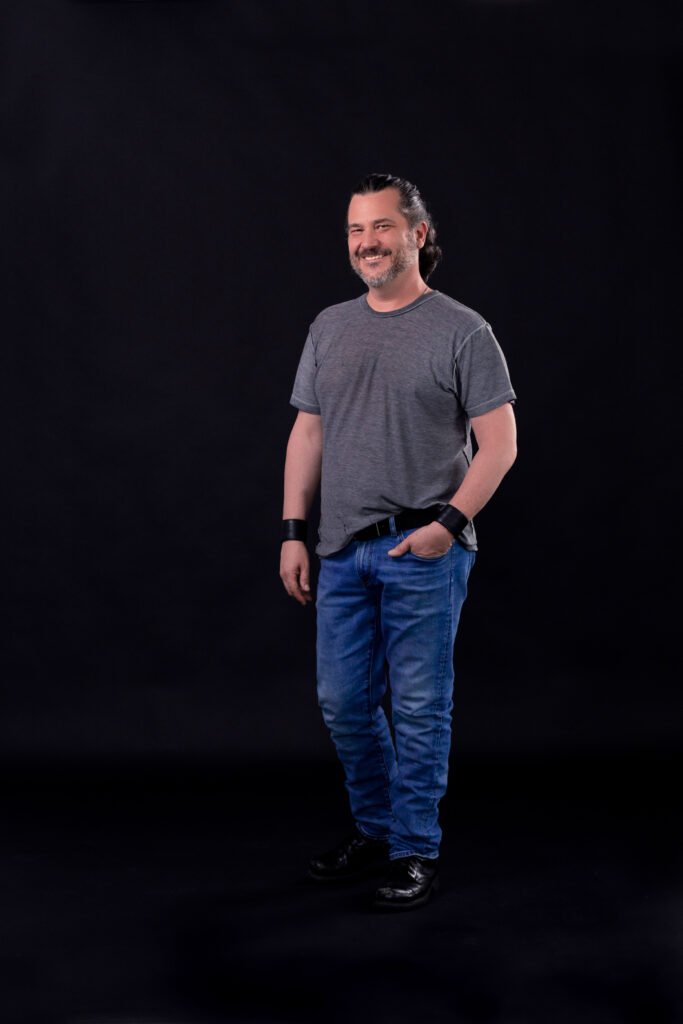
Inside that room, the job is a quiet kind of composing. On Borgia, Cotnoir built a temporary score for each episode, refined it with composer Éric Neveux and the music supervisor in Paris, brought it to Fontana for notes, rebuilt the approved cues as multitrack files and guided the final mix on the stage in New York. He has described reshaping broad orchestral recordings into new cues for new scenes, working side by side with the composer, as the heart of what a music editor does. It is precise, collaborative and invisible by design.
The second room is where Cotnoir gets to be seen. Long before he ever cut a cue, he was a teenager hooked on synthesizers, house, electro and synth pop, and those first loves never left. Grapefruit Sound Lab is where they live now, in a sound that draws on freestyle, electro, house, classic rock and the classical repertoire, and that nods to the golden age of the 1980s and the euphoric club music of the 1990s while still sounding entirely current.
What makes Cotnoir’s records unusual is how much of the first room travels into the second. A film music editor learns to serve a story, to hear where a moment needs lift and where it needs space, and to treat every sound as part of a larger whole. That sensibility is all over Grapefruit Sound Lab. “Dum Dum Gun,” released in June 2020 with actor and singer Sarah Naughton on vocals and a live string quartet behind her, plays almost like a scene from a film, a reflective folk-tinged piece written in memory of the lives lost to gun violence from Sandy Hook to Parkland. Cotnoir called it “Patriotic Music for the 21st Century.”
The same cinematic instinct shapes his collaborations with Amuka, the dance and funk powerhouse born Sheila Brody, a P-Funk alum and member of the Brides of Funkenstein who has worked with Public Enemy and John Mellencamp. Their 2019 single “Don’t Fall For It,” which Cotnoir co-wrote with her, was recorded at the legendary United Sound Systems in Detroit and arrived with a full slate of remixes. Their follow-up, “Love Cards,” took its story from the Major Arcana of the Tarot, tracing a journey toward becoming centered and whole. Amuka has called Cotnoir “a gem.”

Then there are the songs where Cotnoir steps out from behind the console entirely. On “To Make You Mine” and “The Flavors of Tears,” both from 2020, he sings lead himself, backed by Layonne Holmes and guitarist Andrew Synowiec. These tracks gathered on Eight Days Across America, the Grapefruit Sound Lab album released that September, followed by “Original Face” in 2022. Across all of them, the polish of his day job shows, with mixes by Mike Degen at Stimulant Sound in New York and mastering by Geoff Pesche at Abbey Road in London.
The traffic between the two rooms runs both ways. The electronic instincts that drew him to Binghamton’s MIDI lab as an undergraduate, and later to Yale School of Drama, are the same ones that made him valuable at Howard Shore’s Synclavier. Years ago, when asked where he hoped his career would lead, he said he wanted to keep working on top series while continuing to produce his own house, electro and techno music. He has done exactly that.
Cotnoir once offered a piece of advice for anyone hoping to follow in his footsteps: “Less talking and more listening.” It may be the simplest explanation of how one man has managed to live in two musical worlds at once. In the edit bay, listening is how he serves the story on screen. In the studio, it is how he finds his own. Either way, Robert Cotnoir is always listening, and the rest of us are better for hearing what he hears.