
Close Menu
New York Examiner News

    Subscribe to Updates

    Get the latest creative news from FooBar about art, design and business.

    What's Hot

    I Am a Proudly Gay Man

    May 24, 2026

    BofA says you’ll be 10x more productive with AI. Ignore the 0.1% result so far

    May 24, 2026

    Teen takeovers sweep US cities with fights, robberies and gunfire

    May 24, 2026
    Facebook X (Twitter) Instagram
    New York Examiner News
    • Home
    • US News
    • Politics
    • Business
    • Science
    • Technology
    • Lifestyle
    • Music
    • Television
    • Film
    • Books
    • Contact
      • About
      • Amazon Disclaimer
      • DMCA / Copyrights Disclaimer
      • Terms and Conditions
      • Privacy Policy
    New York Examiner News
    Home»Science»‘Arsenic Life’ Microbe Study Retracted after 15 Years of Controversy
    Science

    ‘Arsenic Life’ Microbe Study Retracted after 15 Years of Controversy

    By AdminJuly 24, 2025
    Facebook Twitter Pinterest LinkedIn WhatsApp Email Reddit Telegram
    ‘Arsenic Life’ Microbe Study Retracted after 15 Years of Controversy


    ‘Arsenic Life’ Microbe Study Retracted after 15 Years of Controversy

    A controversial arsenic microbe study unveiled 15 years ago has been retracted. The study’s authors are crying foul
    By Dan Vergano edited by Lee Billings

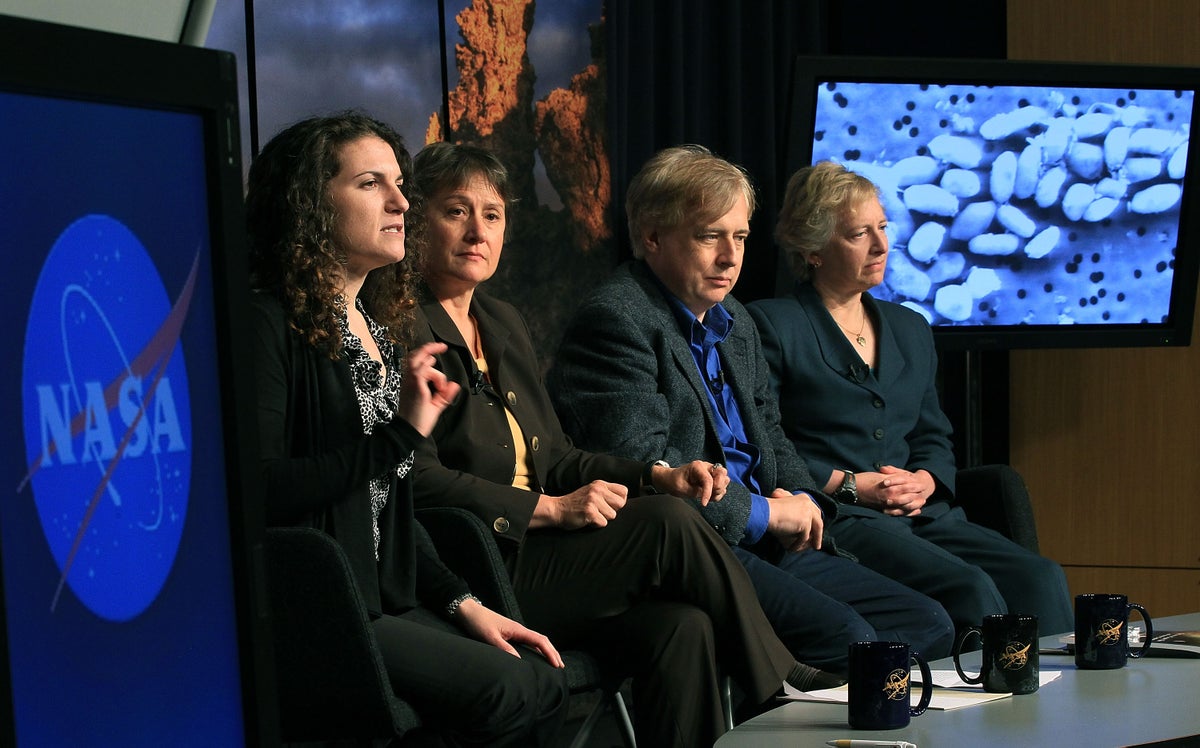
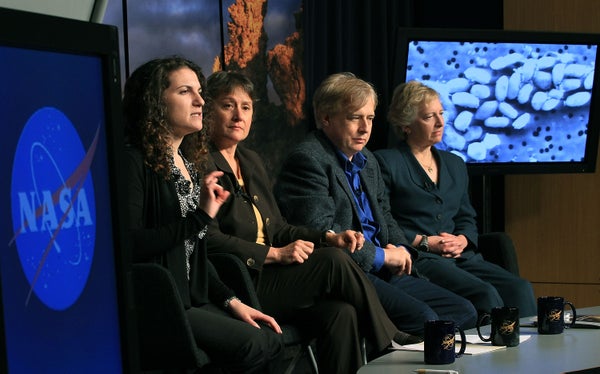
    Felisa Wolfe-Simon on NASA panel gestures mid-speech in 2010

    Felisa Wolfe-Simon speaks during a news conference at NASA Headquarters on December 2, 2010 in Washington, DC.

    “Can you imagine eating toxic waste for breakfast?” Science magazine asked in a 2010 press release touting a newly discovered microbe controversially claimed to “live and grow entirely off arsenic.”

    The claim was controversial because it flew in the face of well-established biochemistry. Of the many elements thought crucial for life, one of the most important is phosphorus, which serves as a building block for DNA and other biomolecules. But in samples from California’s Mono Lake, a research team had found evidence of a bacterium swapping out phosphorus for arsenic. If true, the result would’ve rewritten textbooks and led to radical revisions in our understanding of where and how life might crop up elsewhere in the cosmos. The trouble was: many experts weren’t convinced.

    Now, some 15 years later, the venerable scientific journal has retracted this “arsenic life” study, once the star of a NASA news conference because of its epochal astrobiological implications. First elevating an early-career U.S. Geological Survey researcher, Felisa Wolfe-Simon, to acclaim, then to controversy, the study convulsed the scientific community for two years, raising questions over how science is both conducted and publicized.


    On supporting science journalism

    If you’re enjoying this article, consider supporting our award-winning journalism by subscribing. By purchasing a subscription you are helping to ensure the future of impactful stories about the discoveries and ideas shaping our world today.


    “Science has decided that this Research Article meets the criteria for retraction by today’s standards,” said the journal’s editor-in-chief Holden Thorp in the July 24 retraction notice. While Science’s earlier standards only allowed for the retraction of a study because of fraud or misconduct, he explained, the journal now allows for removal if a paper’s experiments don’t support its key conclusions. He pointed to two 2012 studies, also published by Science, that suggested the Mono Lake microbe, dubbed GFAJ-1, merely sequestered arsenic extraordinarily well internally and didn’t rely on it for its metabolism or reproduction. “Given the evidence that the results were based on contamination, Science believes that the key conclusion of the paper is based on flawed data,” states a follow-up blog post co-authored by Thorp and Valda Vinson, executive editor for the Science journals. Ten Science studies have been retracted for unintended error since 2019, according to a spokesperson for the journal.

    The study’s authors, including Wolfe-Simon, protested the retraction in a letter to Science. “Claims should be made, tested, challenged, and ultimately judged on the scientific merits by the scientific community itself,” they wrote.

    One of the study’s authors, geochemist Ariel Anbar of Arizona State University, calls the retraction explanation “unbelievably misleading,” saying the evidence for contamination in the original study was weak and should be adjudicated by scientists, not the journal. “You would think that if Science wanted to retract this paper after nearly 15 years, they would be able to come up with a clear, convincing argument for the published record—developed transparently and presented coherently. You would be wrong.”

    A NASA official has also asked Science to reconsider the retraction, saying the journal has “singled out” the study and that the decision upends scientific standards.

    In some respects, the arsenic life saga is less about the disputed result itself and more about the zeitgeist in which it emerged. The study debuted at a seminal moment when the stately and slow tradition of scientific peer review was speeding up and moving online, opening up to the wider scientific community and closely coupling with the 24/7 churn of social media and digital news. With the benefit of hindsight, the ensuing furor was if nothing else a warning about “big, if true” research results rapidly rolled out to breathless fanfare—in this case the now notorious NASA news conference. Wolfe-Simon, then a 33-year-old NASA astrobiology fellow, became a scientific celebrity practically overnight—and also a lightning rod for controversy.

    The research team’s decision to engage minimally with online criticism while handling disagreements in the more formal, slow-moving world of scientific journals played badly in the burgeoning blogosphere era, with effects that linger clearly today. “Over the years, Science has continued to receive media inquiries about the Wolfe-Simon Research Article, highlighting the extent to which the paper is still part of scientific discussions,” Thorp noted in the retraction statement.

    In February questions of retracting the study were apparently revived by a New York Times profile of Wolfe-Simon that portrayed her and the search for arsenic life in sympathetic terms. Amid the profile’s publication, Anbar says, he and other study authors received queries about a retraction from the journal, followed by a notification of its decision to proceed with a plan to retract (against the authors’ stated disagreement). The authors eventually okayed a draft of the retraction that made it clear that there was no misconduct, but the stated basis for retraction was still vague, Anbar says.

    “My conclusion is that, yes, the paper should be retracted so that a statement of caution appears whenever it is accessed,” says Patricia Foster, an emerita professor of biology and research ethicist at Indiana University, noting that it was still generating fresh citations in peer-reviewed science papers. But, she adds, it’s important that the retraction notice makes clear that no research misconduct is suspected about the work.

    Leonid Kruglyak of the David Geffen School of Medicine at the University of California, Los Angeles, a co-author of one of the 2012 papers that found that GFAJ-1 merely sequestered arsenic, also agrees with Science’s retraction. It is now appropriate based on the new standards for retracting papers with seriously flawed conclusions such as the GFAJ-1 study, he says. “I don’t think this is really a dispute, except on the part of the authors themselves.”

    One critic of the retraction, however, is chemist Steven Benner of the Foundation for Applied Molecular Evolution, who sat on the 2010 NASA news conference as a skeptical voice. Science, he says, shouldn’t act as a “gatekeeper” by retracting a study that might be wrong but wasn’t fraudulent; doing so carries its own threat to open scientific research, in his view. “The paper should stay, and it has simply met the fate of many papers that were wrong,” he says. “It’s an object lesson on how wonky results get fixed.”


    Original Source Link

    Share. Facebook Twitter Pinterest LinkedIn WhatsApp Email Reddit Telegram
    Previous ArticleThe Fantastic Four: First Steps review – hard not…
    Next Article Intel continues to pull back on its manufacturing projects

    RELATED POSTS

    Experimental mRNA vaccine may protect against multiple Ebola viruses

    May 24, 2026

    Quantum ‘Jamming’ Could Help Unlock the Mysteries of Causality

    May 23, 2026

    SpaceX launches Starship V3—the world’s most powerful and tallest rocket ever

    May 23, 2026

    Mercury may have gained all of its unexpected water in a single day

    May 22, 2026

    All the Fancy Measuring Devices Used in Science Rely on Two Stone-Age Techniques

    May 22, 2026

    Hidden structural features inside Egypt’s Great Pyramid may have helped it withstand earthquakes, new study finds

    May 21, 2026
    latest posts

    I Am a Proudly Gay Man

    Beartooth singer Caleb Shomo has come out as a “proudly gay man” in a social…

    BofA says you’ll be 10x more productive with AI. Ignore the 0.1% result so far

    May 24, 2026

    Teen takeovers sweep US cities with fights, robberies and gunfire

    May 24, 2026

    SolarSquare in talks to raise up to $60M as India’s rooftop solar market draws major VC interest

    May 24, 2026

    Experimental mRNA vaccine may protect against multiple Ebola viruses

    May 24, 2026

    The Dreamed Adventure – first-look review

    May 24, 2026

    Do You Remember These ’80s Fads?

    May 24, 2026
    Categories
    • Books (1,262)
    • Business (6,166)
    • Events (54)
    • Film (6,103)
    • Lifestyle (4,200)
    • Music (6,220)
    • Politics (6,164)
    • Science (5,520)
    • Technology (6,098)
    • Television (5,785)
    • Uncategorized (7)
    • US News (6,154)
    popular posts

    The Long, Leguminous Quest to Give Crops Nitrogen Superpowers

    If crops could feel envy, it’d be for legumes. Bean plants have a superpower. Or…

    Individual Stories Are Lost in Fight for Abortion Rights – The Hollywood Reporter

    July 22, 2022

    ‘Mama June’ Pumpkin Lying To New Man, Headed For Heartbreak?

    June 23, 2025

    Why Do Mental Illnesses–From Depression to Schizophrenia–Raise the Risk of Dementia?

    July 10, 2022
    Archives
    Browse By Category
    • Books (1,262)
    • Business (6,166)
    • Events (54)
    • Film (6,103)
    • Lifestyle (4,200)
    • Music (6,220)
    • Politics (6,164)
    • Science (5,520)
    • Technology (6,098)
    • Television (5,785)
    • Uncategorized (7)
    • US News (6,154)
    About Us

    We are a creativity led international team with a digital soul. Our work is a custom built by the storytellers and strategists with a flair for exploiting the latest advancements in media and technology.

    Most of all, we stand behind our ideas and believe in creativity as the most powerful force in business.

    What makes us Different

    We care. We collaborate. We do great work. And we do it with a smile, because we’re pretty damn excited to do what we do. If you would like details on what else we can do visit out Contact page.

    Our Picks

    The Dreamed Adventure – first-look review

    May 24, 2026

    Do You Remember These ’80s Fads?

    May 24, 2026

    The Lookbook: 9 Classy Outfits for Every Occasion

    May 24, 2026
    © 2026 New York Examiner News. All rights reserved. All articles, images, product names, logos, and brands are property of their respective owners. All company, product and service names used in this website are for identification purposes only. Use of these names, logos, and brands does not imply endorsement unless specified. By using this site, you agree to the Terms & Conditions and Privacy Policy.

    Type above and press Enter to search. Press Esc to cancel.

    We use cookies on our website to give you the most relevant experience by remembering your preferences and repeat visits. By clicking “Accept All”, you consent to the use of ALL the cookies. However, you may visit "Cookie Settings" to provide a controlled consent.
    Cookie SettingsAccept All
    Manage consent

    Privacy Overview

    This website uses cookies to improve your experience while you navigate through the website. Out of these, the cookies that are categorized as necessary are stored on your browser as they are essential for the working of basic functionalities of the website. We also use third-party cookies that help us analyze and understand how you use this website. These cookies will be stored in your browser only with your consent. You also have the option to opt-out of these cookies. But opting out of some of these cookies may affect your browsing experience.
    Necessary
    Always Enabled
    Necessary cookies are absolutely essential for the website to function properly. These cookies ensure basic functionalities and security features of the website, anonymously.
    CookieDurationDescription
    cookielawinfo-checkbox-analytics11 monthsThis cookie is set by GDPR Cookie Consent plugin. The cookie is used to store the user consent for the cookies in the category "Analytics".
    cookielawinfo-checkbox-functional11 monthsThe cookie is set by GDPR cookie consent to record the user consent for the cookies in the category "Functional".
    cookielawinfo-checkbox-necessary11 monthsThis cookie is set by GDPR Cookie Consent plugin. The cookies is used to store the user consent for the cookies in the category "Necessary".
    cookielawinfo-checkbox-others11 monthsThis cookie is set by GDPR Cookie Consent plugin. The cookie is used to store the user consent for the cookies in the category "Other.
    cookielawinfo-checkbox-performance11 monthsThis cookie is set by GDPR Cookie Consent plugin. The cookie is used to store the user consent for the cookies in the category "Performance".
    viewed_cookie_policy11 monthsThe cookie is set by the GDPR Cookie Consent plugin and is used to store whether or not user has consented to the use of cookies. It does not store any personal data.
    Functional
    Functional cookies help to perform certain functionalities like sharing the content of the website on social media platforms, collect feedbacks, and other third-party features.
    Performance
    Performance cookies are used to understand and analyze the key performance indexes of the website which helps in delivering a better user experience for the visitors.
    Analytics
    Analytical cookies are used to understand how visitors interact with the website. These cookies help provide information on metrics the number of visitors, bounce rate, traffic source, etc.
    Advertisement
    Advertisement cookies are used to provide visitors with relevant ads and marketing campaigns. These cookies track visitors across websites and collect information to provide customized ads.
    Others
    Other uncategorized cookies are those that are being analyzed and have not been classified into a category as yet.
    SAVE & ACCEPT