
Close Menu
New York Examiner News

    Subscribe to Updates

    Get the latest creative news from FooBar about art, design and business.

    What's Hot

    Saved By the Bell’s Principal Belding Was 75

    September 29, 2026

    U.S.-China rivalry risks ‘over-securitization of almost everything,’ says Chinese strategist

    September 29, 2026

    Abdul El-Sayed Is Leading Mike Rogers As Republicans Could Be Cooked In Michigan

    September 29, 2026
    Facebook X (Twitter) Instagram
    New York Examiner News
    • Home
    • US News
    • Politics
    • Business
    • Science
    • Technology
    • Lifestyle
    • Music
    • Television
    • Film
    • Books
    • Contact
      • About
      • Amazon Disclaimer
      • DMCA / Copyrights Disclaimer
      • Terms and Conditions
      • Privacy Policy
    New York Examiner News
    Home»Science»Betelgeuse ‘Great Dimming’ Mystery Solved by Satellite Photobomb
    Science

    Betelgeuse ‘Great Dimming’ Mystery Solved by Satellite Photobomb

    By AdminJune 18, 2022
    Facebook Twitter Pinterest LinkedIn WhatsApp Email Reddit Telegram
    Betelgeuse ‘Great Dimming’ Mystery Solved by Satellite Photobomb


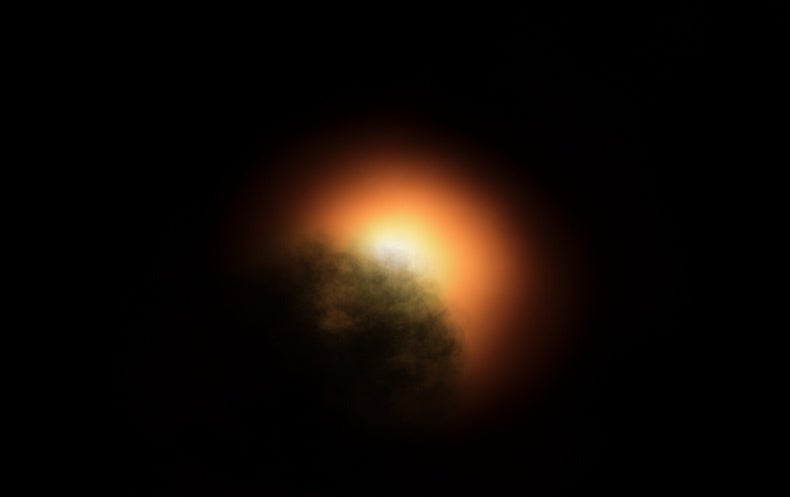
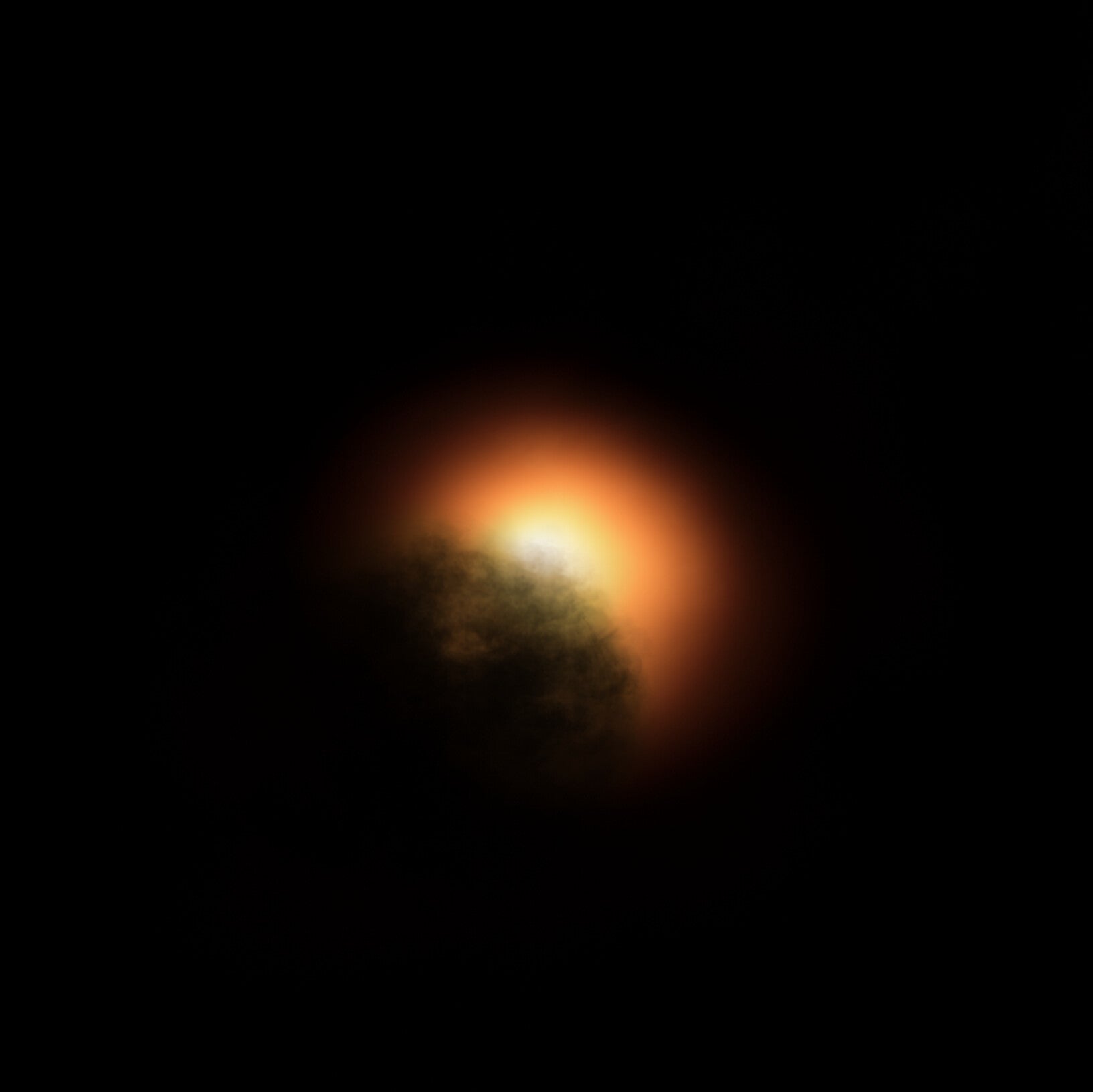
    In late 2019, mere months before the COVID-19 pandemic would engulf the globe, much of the world was instead concerned with a ruddy, fading point of light more than 500 light-years away. Betelgeuse, the red supergiant star easily recognizable as the right “shoulder” of the constellation Orion, had suddenly and mysteriously dimmed by more than a factor of two. Some astronomers speculated that it was on the verge of exploding as a supernova—an event otherwise predicted to occur within the next 100,000 years or so. By early February of 2020, however, the fading had stopped, and within weeks the star had returned to its regular brightness, which left researchers with lingering questions about this bizarre episode they called the “Great Dimming.”

    The answers emerged gradually from a host of observatories lavishing the star with attention. First, a team of researchers who had used the Hubble Space Telescope to observe Betelgeuse before, during and after the event reported that a massive ejection of hot material from the star’s surface had created an obscuring cloud of dust that led to the apparent fading. Then a different team using data from the Weihai Observatory in China found that Betelgeuse’s temperature had plummeted during the Great Dimming by at least 170 kelvins, and the researchers attributed the plunge not to a dust cloud but rather to a very large, relatively cool dark spot they concluded must have briefly formed on the star’s surface. Finally, yet another team used observations with the Very Large Telescope in Chile to conclude that both scenarios were correct. In this hybrid model, the emergence of a dark spot in the star’s southern hemisphere had lowered surrounding temperatures and spat out a bubble of hot gas. An enormous, starlight-blocking dust cloud then formed from this escaping material as it cooled, creating the Great Dimming.

    Now an unconventional telescope—a camera on a weather satellite—has entered the mix with another novel suite of observations. After realizing that Betelgeuse appears in the field of view of Japan’s Earth-observing satellite Himawari-8, three graduate students at the University of Tokyo decided to take a closer look at archival images captured by the satellite during the Great Dimming. Their results, published in Nature Astronomy, support the twofold hypothesis while also raising the exciting possibility that data from other meteorological satellites may be repurposed for a broad range of astronomical observations. The study of Himawari-8’s images has even inspired National Oceanic and Atmospheric Administration to explore whether one of its own satellites can replicate the findings.

    “It’s very clever what they’ve done,” says Andrea Dupree, an astrophysicist at the Harvard-Smithsonian Institute for Astrophysics, who is familiar with the research. “And of course, I love the result.” Dupree led the earlier study that used Hubble data to link the Great Dimming to Betelgeuse burping out a dust cloud—a conclusion that she notes was initially met with much debate.

    Dupree is no stranger to using unconventional methods to make tricky observations. From April to August, Earth’s orbit around the sun brings Betelgeuse so close in the sky to our star that the resulting glare scuttles observations from most telescopes on the ground or in low-Earth orbit. A telescope stationed elsewhere in the solar system or in certain special high orbits around Earth could still have an unimpeded view. Spurred by the Great Dimming, in early 2020 Dupree contacted officials at NASA’s Goddard Space Flight Center to ask to use the agency’s STEREO-A spacecraft, which orbits the sun rather than Earth, to get another look at Betelgeuse during the summer months. But despite her own creativity, Dupree says she would’ve never thought to use a meteorological satellite.

    The idea to employ Himawari-8 data started with a Tweet. While scrolling Twitter, lead author Daisuke Taniguchi saw a post about Earth’s moon photobombing some of Himawari-8’s images. He wondered if the weather satellite could be used to observe Betelgeuse, too. There were several benefits that made the idea intriguing. “Ground-based telescopes inevitably suffer from the Earth’s atmosphere and cannot observe many parts of the infrared wavelength ranges,” Taniguchi says. And while space-based telescopes do not have that barrier, the competition to obtain observation time on them is “very severe.”

    So Taniguchi got in touch with fellow graduate student and eventual study co-author Kazuya Yamazaki to see if they could circumvent the competition and make their own observations. At first, Yamazaki recalls, “I wasn’t fully confident because [in Himawari-8’s images] the stars are very dark, compared to the moon.” But together with Taniguchi and a third graduate student, study co-author Shinsuke Uno, Yamazaki decided to try.

    When it falls within Himawari-8’s field of view, Betelgeuse is not actually that hard to see—it appears as a dot hovering right at the edge of Earth’s disk. It also benefits from being bright at both optical and infrared wavelengths, boosting its chances of registering in meteorological satellite detectors, which are not designed for astronomical applications. But simply finding the star in satellite images is one thing—using the data to perform actual high-precision stellar measurements is another. Data-wrangling, Yamazaki says, was the most arduous, time-consuming part of the study.

    Inspired by the Himawari-8 result, Dupree has enlisted the aid of Jon Fulbright, a calibration scientist at the product quality team for NASA and NOAA’s Geostationary Operational Environmental Satellite-R (GOES-R) series of weather-monitoring satellites, to see if those spacecraft could help replicate it. As of this writing, Fulbright is still trying to extract insights on Betelgeuse from the GOES-R data and is grappling with burdensome unit conversions and pixel resizing required for the task. The benefits of using such an unconventional data source, he says, may not always outweigh the drawbacks.

    “I go back and forth on whether this is a one-time thing,” Fulbright says. Just like the Japanese team, he and his colleagues suspect that for this novel approach to reach its full potential, better methods must be developed to bridge the gaps between meteorological and astronomical data sets. But those possible synergies with astronomy may only emerge if new generations of Earth-observing satellites are designed with them in mind. “Maybe,” he says, “something like this will get people’s ideas going.”


    Original Source Link

    Share. Facebook Twitter Pinterest LinkedIn WhatsApp Email Reddit Telegram
    Previous ArticleIs Clarice Canceled? Season 2 Release Date, Story & Updates
    Next Article UK Approves WikiLeaks Chief Julian Assange’s Extradition to the US

    RELATED POSTS

    One in eight new cancers are likely caused by infections—there’s an easy way to protect yourself

    September 29, 2026

    Space Lasers Are About to Get Their First Real Test Generating Energy

    September 28, 2026

    The secret Cold War history of Tetris

    September 28, 2026

    The Data Center Backlash Should Also Be a Climate Reckoning. It Isn’t Yet

    September 27, 2026

    How a horse flu crisis fueled animals rights advocacy in the U.S.

    September 27, 2026

    A Gravitational Battle Within the Earth Is Changing the Length of Days

    September 26, 2026
    latest posts

    Saved By the Bell’s Principal Belding Was 75

    Dennis Haskins, who famously played Principal Richard Belding on the beloved ’90s TV sitcom Saved…

    U.S.-China rivalry risks ‘over-securitization of almost everything,’ says Chinese strategist

    September 29, 2026

    Abdul El-Sayed Is Leading Mike Rogers As Republicans Could Be Cooked In Michigan

    September 29, 2026

    At least 40 rescued after machete attack aboard boat near Puerto Rico

    September 29, 2026

    50% Off Blue Apron Promo Codes | October 2026

    September 29, 2026

    One in eight new cancers are likely caused by infections—there’s an easy way to protect yourself

    September 29, 2026

    Book Riot’s Deals of the Day for September 28, 2026

    September 29, 2026
    Categories
    • Books (1,519)
    • Business (6,423)
    • Events (77)
    • Film (6,357)
    • Lifestyle (4,422)
    • Music (6,487)
    • Politics (6,411)
    • Science (5,775)
    • Technology (6,356)
    • Television (6,048)
    • Uncategorized (9)
    • US News (6,410)
    popular posts

    Bad Bunny Reggaeton Copyright Lawsuit Can Move Forward, Judge Says

    A federal judge ruled Wednesday (May 29) that a sprawling copyright lawsuit can move forward…

    a16z partner Kofi Ampadu to leave firm after TxO program pause

    January 31, 2026

    Slipknot’s THE END, SO FAR Is One for the Maggots and Beyond: Review

    September 30, 2022

    Applicants are being asked to take personality tests to land a role—an expert says this is what 99% are looking for

    February 23, 2025
    Archives
    Browse By Category
    • Books (1,519)
    • Business (6,423)
    • Events (77)
    • Film (6,357)
    • Lifestyle (4,422)
    • Music (6,487)
    • Politics (6,411)
    • Science (5,775)
    • Technology (6,356)
    • Television (6,048)
    • Uncategorized (9)
    • US News (6,410)
    About Us

    We are a creativity led international team with a digital soul. Our work is a custom built by the storytellers and strategists with a flair for exploiting the latest advancements in media and technology.

    Most of all, we stand behind our ideas and believe in creativity as the most powerful force in business.

    What makes us Different

    We care. We collaborate. We do great work. And we do it with a smile, because we’re pretty damn excited to do what we do. If you would like details on what else we can do visit out Contact page.

    Our Picks

    One in eight new cancers are likely caused by infections—there’s an easy way to protect yourself

    September 29, 2026

    Book Riot’s Deals of the Day for September 28, 2026

    September 29, 2026

    Cotton Queen review – reclaims the crown for…

    September 29, 2026
    © 2026 New York Examiner News. All rights reserved. All articles, images, product names, logos, and brands are property of their respective owners. All company, product and service names used in this website are for identification purposes only. Use of these names, logos, and brands does not imply endorsement unless specified. By using this site, you agree to the Terms & Conditions and Privacy Policy.

    Type above and press Enter to search. Press Esc to cancel.

    We use cookies on our website to give you the most relevant experience by remembering your preferences and repeat visits. By clicking “Accept All”, you consent to the use of ALL the cookies. However, you may visit "Cookie Settings" to provide a controlled consent.
    Cookie SettingsAccept All
    Manage consent

    Privacy Overview

    This website uses cookies to improve your experience while you navigate through the website. Out of these, the cookies that are categorized as necessary are stored on your browser as they are essential for the working of basic functionalities of the website. We also use third-party cookies that help us analyze and understand how you use this website. These cookies will be stored in your browser only with your consent. You also have the option to opt-out of these cookies. But opting out of some of these cookies may affect your browsing experience.
    Necessary
    Always Enabled
    Necessary cookies are absolutely essential for the website to function properly. These cookies ensure basic functionalities and security features of the website, anonymously.
    CookieDurationDescription
    cookielawinfo-checkbox-analytics11 monthsThis cookie is set by GDPR Cookie Consent plugin. The cookie is used to store the user consent for the cookies in the category "Analytics".
    cookielawinfo-checkbox-functional11 monthsThe cookie is set by GDPR cookie consent to record the user consent for the cookies in the category "Functional".
    cookielawinfo-checkbox-necessary11 monthsThis cookie is set by GDPR Cookie Consent plugin. The cookies is used to store the user consent for the cookies in the category "Necessary".
    cookielawinfo-checkbox-others11 monthsThis cookie is set by GDPR Cookie Consent plugin. The cookie is used to store the user consent for the cookies in the category "Other.
    cookielawinfo-checkbox-performance11 monthsThis cookie is set by GDPR Cookie Consent plugin. The cookie is used to store the user consent for the cookies in the category "Performance".
    viewed_cookie_policy11 monthsThe cookie is set by the GDPR Cookie Consent plugin and is used to store whether or not user has consented to the use of cookies. It does not store any personal data.
    Functional
    Functional cookies help to perform certain functionalities like sharing the content of the website on social media platforms, collect feedbacks, and other third-party features.
    Performance
    Performance cookies are used to understand and analyze the key performance indexes of the website which helps in delivering a better user experience for the visitors.
    Analytics
    Analytical cookies are used to understand how visitors interact with the website. These cookies help provide information on metrics the number of visitors, bounce rate, traffic source, etc.
    Advertisement
    Advertisement cookies are used to provide visitors with relevant ads and marketing campaigns. These cookies track visitors across websites and collect information to provide customized ads.
    Others
    Other uncategorized cookies are those that are being analyzed and have not been classified into a category as yet.
    SAVE & ACCEPT