
Close Menu
New York Examiner News

    Subscribe to Updates

    Get the latest creative news from FooBar about art, design and business.

    What's Hot

    Noah Kahan Asks Fans in Philly to Go to the Bathroom If They Have to Poop

    June 28, 2026

    This CEO became 3x more productive with AI. Then she read what her daughter wrote about it at Dartmouth

    June 28, 2026

    Viral World Cup fan Freddy invited to TNA Slammiversary in Boston

    June 28, 2026
    Facebook X (Twitter) Instagram
    New York Examiner News
    • Home
    • US News
    • Politics
    • Business
    • Science
    • Technology
    • Lifestyle
    • Music
    • Television
    • Film
    • Books
    • Contact
      • About
      • Amazon Disclaimer
      • DMCA / Copyrights Disclaimer
      • Terms and Conditions
      • Privacy Policy
    New York Examiner News
    Home»Science»How to tell a comet from an asteroid and a meteor from a meteorite
    Science

    How to tell a comet from an asteroid and a meteor from a meteorite

    By AdminJune 28, 2026
    Facebook Twitter Pinterest LinkedIn WhatsApp Email Reddit Telegram
    How to tell a comet from an asteroid and a meteor from a meteorite


    The following essay is reprinted with permission from The Conversation, an online publication covering the latest research.

    Have you ever been out at night and seen a streak of light blast across the sky and disappear? Ever wonder where that shooting star came from, or how it got to be in your sky?

    As the director of the Peters Observatory at Hamilton College, I have seen many similar streaks across the sky, as I spend late nights at the observatory, and I am here to tell you that what you saw isn’t a star at all. You observed the end of a comet or asteroid’s 4.6-billion-year journey right before your eyes.


    On supporting science journalism

    If you’re enjoying this article, consider supporting our award-winning journalism by subscribing. By purchasing a subscription you are helping to ensure the future of impactful stories about the discoveries and ideas shaping our world today.


    Remnants from the early solar system

    Roughly 4.6 billion years ago, the solar system was in its infancy. A vast ball of gas and dust that would become our solar system was accumulating matter in its center, forming what would eventually become our Sun. It was also condensing dust in smaller patches farther from the center that would merge into the first chunks of materials, called planetesimals.

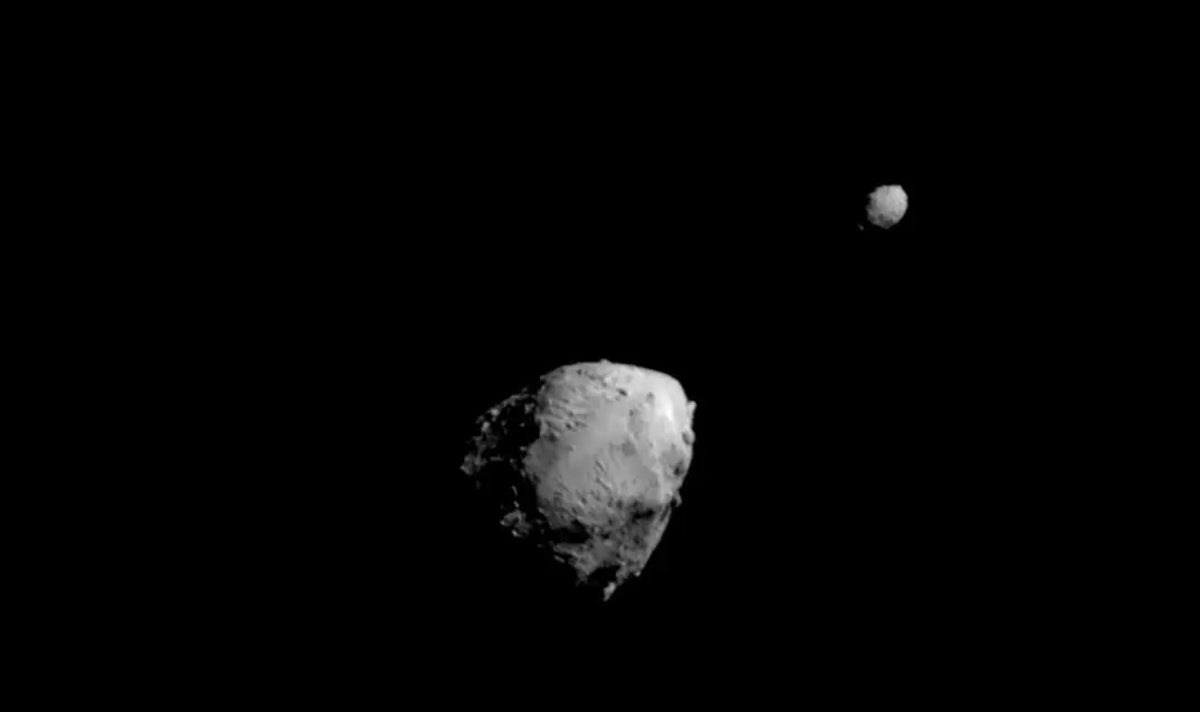
    Asteroids formed from planetesimals in the inner portions of the solar system, near the Sun. This location in the center of the solar system was warm, so the planetesimals were made mostly of the rocks and metals that could withstand the heat. The biggest of these chunks would congeal with others and form the terrestrial planets: Mercury, Venus, Earth and Mars. The remaining planetesimals that did not form into the terrestrial planets are the asteroids of today, left to orbit the inner portion of the solar system.

    Comets formed in the outer parts of the solar system, where it was cold enough that any water, or similar hydrogen-based compounds, took the form of ice. The planetesimals forming in this region were composed of not just rock and metal but these ices as well.

    Some of the planetesimals became big enough, fast enough, that they had enough gravitational pull to hold onto large atmospheres composed of the very abundant early solar system gases, such as hydrogen and helium. These planetesimals became the Jovian planets of today: Jupiter, Saturn, Uranus and Neptune. However, the planetesimals that did not form into the Jovian planets were left to travel through the solar system as comets.

    Origin of meteors

    Asteroids are still abundant in the inner solar system, so inevitably some will collide with Earth. When a chunk of rock enters Earth’s atmosphere, it’s traveling at dozens of miles per second. As it enters, it may create a thunderlike sonic boom in its wake. When it travels through the air faster than the speed of sound, the asteroid produces a shock wave, which can generate that boom.

    During its journey through the atmosphere over tens of miles, the asteroid collides with air molecules, and the incredible temperatures and pressure usually vaporize it. That trail of vaporizing particles breaking off the asteroid causes a bright streak of light across the sky called a meteor, or colloquially a shooting star.

    Comets, though typically found in the outer solar system, can also cause meteors, and even meteor showers. A few comets take long, elliptical paths through the inner solar system every year.

    These objects, sometimes called “dirty snowballs” because they are made of dust and ices, tend to slowly melt as they get too close to the Sun, causing the comet to develop a tail of gas and debris left in its wake.

    If the path of the comet intersects with Earth’s orbit, the Earth will collide with these debris fields in its yearly orbit around the Sun. As that debris enters the atmosphere, it vaporizes, causing numerous trails of light called meteor showers. Since this happens in the same part of our orbit every year, meteor showers are yearly events. If you find a dark sky, you can see dozens of meteors every hour during these annual meteor showers.

    Finding meteorites

    The meteors that are large enough to make it through the Earth’s atmosphere and crash into the surface are called meteorites. Meteorites tend to come from asteroids that were originally larger than a football field.

    It can be difficult to identify meteorites, because they look just like Earth rocks. Typically, people recover meteorites in geologically unchanging regions, such as deserts or ice fields, where the meteorites stand out against the landscape.

    They are often made of stone, nickel and iron and are likely magnetic. Many have irregular or pock-marked shapes, while others have a smooth crust from their time burning up in our atmosphere.

    Meteorites are quite rare and important to the study of the early solar system. If you believe you’ve found one, you should verify your rock’s features fit those of a meteorite and then contact local geologists.

    Next time you see a meteor in the night sky, remember that you are witnessing the end of its journey, spanning billions of years, as it burns up in the Earth’s atmosphere.

    This article was originally published on The Conversation. Read the original article.

    It’s Time to Stand Up for Science

    If you enjoyed this article, I’d like to ask for your support. Scientific American has served as an advocate for science and industry for 180 years, and right now may be the most critical moment in that two-century history.

    I’ve been a Scientific American subscriber since I was 12 years old, and it helped shape the way I look at the world. SciAm always educates and delights me, and inspires a sense of awe for our vast, beautiful universe. I hope it does that for you, too.

    If you subscribe to Scientific American, you help ensure that our coverage is centered on meaningful research and discovery; that we have the resources to report on the decisions that threaten labs across the U.S.; and that we support both budding and working scientists at a time when the value of science itself too often goes unrecognized.

    In return, you get essential news, captivating podcasts, brilliant infographics, can’t-miss newsletters, must-watch videos, challenging games, and the science world’s best writing and reporting. You can even gift someone a subscription.

    There has never been a more important time for us to stand up and show why science matters. I hope you’ll support us in that mission.


    Original Source Link

    Share. Facebook Twitter Pinterest LinkedIn WhatsApp Email Reddit Telegram
    Previous ArticleOne Actor Is Officially Playing A Spider-Man & Batman Movie Villain In 2026
    Next Article Indian payments chief thinks AI will be heavily involved in next era of digital payment growth

    RELATED POSTS

    I have a 100 per cent chance of getting cancer due to a rare gene

    June 28, 2026

    Why Venezuela’s Second Earthquake Was So Damaging to Buildings

    June 27, 2026

    Will humans one day talk to animals? This scientist is bringing us closer

    June 27, 2026

    New Scientist Book Club: Read an extract from Slow Gods by Claire North

    June 26, 2026

    Venezuela’s Powerful Earthquakes Were a Rare ‘Seismic Doublet’

    June 26, 2026

    Weight loss drugs don’t work for everyone—here’s why

    June 25, 2026
    latest posts

    Noah Kahan Asks Fans in Philly to Go to the Bathroom If They Have to Poop

    At least Olivia Rodrigo’s fans have the decency to wear diapers: Noah Kahan is reminding…

    This CEO became 3x more productive with AI. Then she read what her daughter wrote about it at Dartmouth

    June 28, 2026

    Viral World Cup fan Freddy invited to TNA Slammiversary in Boston

    June 28, 2026

    Indian payments chief thinks AI will be heavily involved in next era of digital payment growth

    June 28, 2026

    How to tell a comet from an asteroid and a meteor from a meteorite

    June 28, 2026

    One Actor Is Officially Playing A Spider-Man & Batman Movie Villain In 2026

    June 28, 2026

    See Photos of ‘Off Campus,’ ‘Love Hypothesis’ Stars and More

    June 28, 2026
    Categories
    • Books (1,333)
    • Business (6,235)
    • Events (58)
    • Film (6,173)
    • Lifestyle (4,246)
    • Music (6,293)
    • Politics (6,226)
    • Science (5,590)
    • Technology (6,169)
    • Television (5,860)
    • Uncategorized (8)
    • US News (6,224)
    popular posts

    Chris Rock Declined to Host 2023 Oscars – The Hollywood Reporter

    Chris Rock has declined an offer to host the 2023 Academy Awards, the comedian reportedly…

    Why Computer Scientists Need Magic 8 Ball-Like Oracles

    February 5, 2025

    Multi-Union Strike Fear Has Dealmakers on Edge – The Hollywood Reporter

    May 19, 2023

    Country’s Carter Faith Leaps Toward The Future With New Single ‘Already Crazy’

    November 16, 2022
    Archives
    Browse By Category
    • Books (1,333)
    • Business (6,235)
    • Events (58)
    • Film (6,173)
    • Lifestyle (4,246)
    • Music (6,293)
    • Politics (6,226)
    • Science (5,590)
    • Technology (6,169)
    • Television (5,860)
    • Uncategorized (8)
    • US News (6,224)
    About Us

    We are a creativity led international team with a digital soul. Our work is a custom built by the storytellers and strategists with a flair for exploiting the latest advancements in media and technology.

    Most of all, we stand behind our ideas and believe in creativity as the most powerful force in business.

    What makes us Different

    We care. We collaborate. We do great work. And we do it with a smile, because we’re pretty damn excited to do what we do. If you would like details on what else we can do visit out Contact page.

    Our Picks

    One Actor Is Officially Playing A Spider-Man & Batman Movie Villain In 2026

    June 28, 2026

    See Photos of ‘Off Campus,’ ‘Love Hypothesis’ Stars and More

    June 28, 2026

    6 Best Ferragamo Cologne For The Modern Man in 2026

    June 28, 2026
    © 2026 New York Examiner News. All rights reserved. All articles, images, product names, logos, and brands are property of their respective owners. All company, product and service names used in this website are for identification purposes only. Use of these names, logos, and brands does not imply endorsement unless specified. By using this site, you agree to the Terms & Conditions and Privacy Policy.

    Type above and press Enter to search. Press Esc to cancel.

    We use cookies on our website to give you the most relevant experience by remembering your preferences and repeat visits. By clicking “Accept All”, you consent to the use of ALL the cookies. However, you may visit "Cookie Settings" to provide a controlled consent.
    Cookie SettingsAccept All
    Manage consent

    Privacy Overview

    This website uses cookies to improve your experience while you navigate through the website. Out of these, the cookies that are categorized as necessary are stored on your browser as they are essential for the working of basic functionalities of the website. We also use third-party cookies that help us analyze and understand how you use this website. These cookies will be stored in your browser only with your consent. You also have the option to opt-out of these cookies. But opting out of some of these cookies may affect your browsing experience.
    Necessary
    Always Enabled
    Necessary cookies are absolutely essential for the website to function properly. These cookies ensure basic functionalities and security features of the website, anonymously.
    CookieDurationDescription
    cookielawinfo-checkbox-analytics11 monthsThis cookie is set by GDPR Cookie Consent plugin. The cookie is used to store the user consent for the cookies in the category "Analytics".
    cookielawinfo-checkbox-functional11 monthsThe cookie is set by GDPR cookie consent to record the user consent for the cookies in the category "Functional".
    cookielawinfo-checkbox-necessary11 monthsThis cookie is set by GDPR Cookie Consent plugin. The cookies is used to store the user consent for the cookies in the category "Necessary".
    cookielawinfo-checkbox-others11 monthsThis cookie is set by GDPR Cookie Consent plugin. The cookie is used to store the user consent for the cookies in the category "Other.
    cookielawinfo-checkbox-performance11 monthsThis cookie is set by GDPR Cookie Consent plugin. The cookie is used to store the user consent for the cookies in the category "Performance".
    viewed_cookie_policy11 monthsThe cookie is set by the GDPR Cookie Consent plugin and is used to store whether or not user has consented to the use of cookies. It does not store any personal data.
    Functional
    Functional cookies help to perform certain functionalities like sharing the content of the website on social media platforms, collect feedbacks, and other third-party features.
    Performance
    Performance cookies are used to understand and analyze the key performance indexes of the website which helps in delivering a better user experience for the visitors.
    Analytics
    Analytical cookies are used to understand how visitors interact with the website. These cookies help provide information on metrics the number of visitors, bounce rate, traffic source, etc.
    Advertisement
    Advertisement cookies are used to provide visitors with relevant ads and marketing campaigns. These cookies track visitors across websites and collect information to provide customized ads.
    Others
    Other uncategorized cookies are those that are being analyzed and have not been classified into a category as yet.
    SAVE & ACCEPT