
Close Menu
New York Examiner News

    Subscribe to Updates

    Get the latest creative news from FooBar about art, design and business.

    What's Hot

    Has Iran Won the War? It Thinks So Update By Howard Bloom

    May 29, 2026

    Bret Michaels Bails on Trump’s Great American State Fair

    May 29, 2026

    Girls Who Code CEO: 70% of teen girls want to work in cybersecurity. We’re losing them before they start

    May 29, 2026
    Facebook X (Twitter) Instagram
    New York Examiner News
    • Home
    • US News
    • Politics
    • Business
    • Science
    • Technology
    • Lifestyle
    • Music
    • Television
    • Film
    • Books
    • Contact
      • About
      • Amazon Disclaimer
      • DMCA / Copyrights Disclaimer
      • Terms and Conditions
      • Privacy Policy
    New York Examiner News
    Home»Science»Indigenous Groups Are Key to Reversing Amazon Destruction
    Science

    Indigenous Groups Are Key to Reversing Amazon Destruction

    By AdminNovember 14, 2022
    Facebook Twitter Pinterest LinkedIn WhatsApp Email Reddit Telegram
    Indigenous Groups Are Key to Reversing Amazon Destruction


    This time of year, global and social leaders gather at the United Nations’ Conference of the Parties (COP) to seek solutions and to confront the climate crisis that threatens society as a whole. In these meetings it is common to hear that the Amazon rainforest is the “lungs of the planet,” but this year, as COP’s 27th meeting comes to an end, if we want to make a more accurate analogy, we should refer to the Amazon as the “heart of the planet.”

    The Amazon River feeds a tropical forest of 2.86 million square miles, which is nearly the size of the land area of the contiguous U.S. This greenery covers about 5 percent of Earth’s land surface and critically modulates the global climate system. In addition, the Amazon is an unparalleled hotspot of biodiversity. It is home to about one third of all known terrestrial species of plants, animals, and insects, 10 percent of all biomass on the planet and 20 percent of the world’s fresh water. Most importantly, there are more than 500 distinct indigenous peoples in the Amazon rainforest. The Amazon is the lifeblood of a complex web of interconnected ecological systems.

    But this system is in danger of collapse, and the politicians and public officials in Amazon countries and beyond have done little to help.

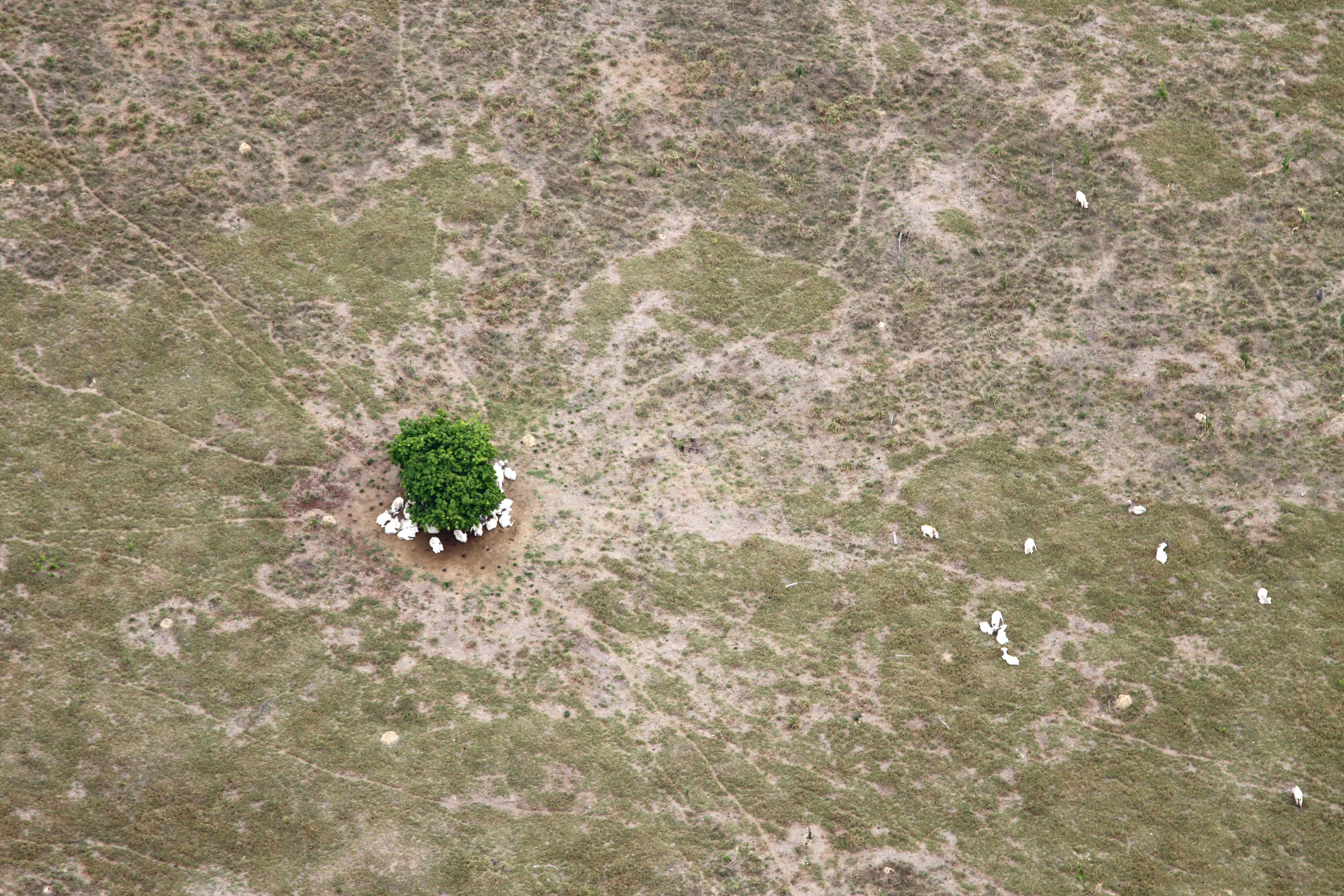
    Businesses that extract natural resources and commodities that have great value in the international market, such as oil, timber, minerals, agriculture and livestock, are destroying the land and water in the Amazon. According to the Monitoring of the Andean Amazon Project (MAAP) the Amazon will reach a point where restoration will be impossible in the next 30 years. Contrary to what many people think, protecting the Amazon is not a local issue for the nine countries that make up the Amazon region; it is, and should be recognized as, a global priority issue that affects us all. 

    It is imperative that governments, businesses, civil society and international organizations support Indigenous peoples in the urgent restoration of ecosystems. We believe that despite the Global North’s responsibility in causing this unparalleled catastrophe, it is Indigenous people in the Amazon basin who will lead the most lasting and bold solutions to the current crisis.

    In Ecuador and Peru, Indigenous groups, including the Interethnic Association for the Development of the Peruvian Rainforest (AIDESEP), the Confederation of Indigenous Nationalities of the Ecuadorian Amazon (CONFENIAE) and Coordinator of the Indigenous Organizations of the Amazon Basin (COICA) have organized in defense of their Pachamama, as they call Mother Nature. This alliance is called the Amazon Sacred Headwaters Initiative, and it covers 86 million acres bioregion and is home to more than 600,000 people from 30 Indigenous nationalities.

    This alliance is unique, because it is an initiative of Indigenous organizations, led by Indigenous people (27 of 29 members of the governing board are representatives of Indigenous organizations), and it is one of the largest standing forest conservation programs in the world, with a socioecological transition plan that has both territory- and global-level actions.

    The main vehicle to achieve the alliance’s goals is the Bioregional Plan 2030, developed over four years with support from leading elders, known as “sábios,” from the Amazonian communities, and world-class international scientists. The plan describes nine transition pathways, such as community-based renewable energy systems and regenerative entrepreneurship, that in turn create social and economic benefits that prioritize protecting nature and the people who live in the Amazon region. The plan will demonstrate that another vision of development is possible, one that doesn’t violate human rights or ecosystems. It will consolidate Amazonian well-being, ensure Indigenous self-determination and territorial governance, and stop the advance of extractive industries. The plan blends both the ancient knowledge of Indigenous peoples and the most rigorous of modern science, to create, for the first time, a comprehensive document on how to fix this crisis.

    The ancestral knowledge associated with the relationship of the Amazonian peoples with their territories and forests is also in danger. These Indigenous peoples are ancestral to the Amazon, and the companies and governments that support extraction regardless of environmental or human cost are destroying and displacing the native groups, mostly during the last 50 years. This is in addition to the lost species of plants and animals, many of which are rare and exist nowhere else on earth. The loss of these species means the loss of genetic information that could teach us about evolution, disease, immunity and adaptation to changes in environment, such as climate change. Beyond this, many studies have proven the linkage between biodiversity loss and new diseases, such as zoonotic diseases worldwide, which led to the COVID-19 pandemic. Specifically in the Amazon, there is a study that shows the impacts of diversity loss and climate change on infectious diseases and public health.

    Luckily, the Amazon Sacred Headwaters Initiative is not the only collaborative effort to restore the Amazon basin. The Science Panel for the Amazon, composed of over 240 scientists, is the first high-level science initiative dedicated to the Amazon. The panel was established to make clear the scientific, economic and moral case for conservation and to address widespread deforestation, forest degradation and wildfires that have intensified in recent years. Its 2021 Amazon Assessment Report, presented at COP 26, which has been called an “encyclopedia” of the Amazon region, is unprecedented for its scientific and geographic scope, its inclusion of Indigenous scientists, and its transparency, having undergone peer review and public consultation.

    The situation is dire but not hopeless. There is no longer room for small actions; it is time for systemic transformations. A study by researchers at Princeton University and elsewhere concluded that deforestation of the Amazon results in up to 20 percent less rainfall in the U.S. Northwest. The hundreds of billions of trees in the Amazon biome have absorbed over a billion metric tons of CO2 per year, equal to about 4 percent of world fossil-fuel emissions. But recent studies suggest that deforestation and degradation are converting the Amazon from a net carbon sink to a carbon source. This is why we say the Amazon is the heart of the planet, because its destruction is not just a “regional” problem; the large range of the consequences make it a global problem.

    This effort is a call to all humans, many of whom no longer trust the rhetoric of major global events, national governments, or traditional governance systems. Beyond the financial support that is undoubtedly necessary, this and other similar efforts are trying to avoid a path that will lead to destruction and death and promote a path that leads to regeneration. This path is where all living beings, Indigenous peoples and non-Indigenous, Amazonians and non-Amazonians, human beings and non–human beings alike, can live with dignity and in safety, while also avoiding climate collapse. We have to act boldly and faster. Why not start by protecting the heart of the planet?

    This is an opinion and analysis article, and the views expressed by the author or authors are not necessarily those of Scientific American.


    Original Source Link

    Share. Facebook Twitter Pinterest LinkedIn WhatsApp Email Reddit Telegram
    Previous ArticleEvery Main Character Who Knew Kara Danvers Was Supergirl (& What Episode They Found Out)
    Next Article The dilemma of Chinese startups going global • TechCrunch

    RELATED POSTS

    White House proposes new rules giving political appointees final approval on research grants

    May 29, 2026

    Mathematical AI helps researchers crack 50-year-old problem

    May 29, 2026

    These Ebola Researchers Are Stuck in US Due to Trump’s Funding Cuts

    May 28, 2026

    A quantum computing system’s perfect randomness could keep your secrets safe

    May 28, 2026

    We may finally know why gold stays so shiny

    May 27, 2026

    The Cookware Industry Has a Major Fight Brewing Over PFAS Claims

    May 27, 2026
    latest posts

    Has Iran Won the War? It Thinks So Update By Howard Bloom

    Our president believes we’ve won the Iran war. He might be surprised to discover that…

    Bret Michaels Bails on Trump’s Great American State Fair

    May 29, 2026

    Girls Who Code CEO: 70% of teen girls want to work in cybersecurity. We’re losing them before they start

    May 29, 2026

    Power To The People Protest Festival Will Be The Final Pre-Midterm Nail In Trump’s Coffin

    May 29, 2026

    Archaeologists discover 2,500-year-old Bronze Age neck rings in Swedish grave

    May 29, 2026

    This chip startup just raised $135M on a bet that AI’s biggest bottleneck isn’t compute — it’s memory

    May 29, 2026

    White House proposes new rules giving political appointees final approval on research grants

    May 29, 2026
    Categories
    • Books (1,272)
    • Business (6,176)
    • Events (55)
    • Film (6,113)
    • Lifestyle (4,210)
    • Music (6,231)
    • Politics (6,171)
    • Science (5,530)
    • Technology (6,109)
    • Television (5,796)
    • Uncategorized (7)
    • US News (6,164)
    popular posts

    DeSantis Slams Biden For Putting America Last, Begging Saudi Arabia For Oil

    Every other week, Americans get another little taste of why many people are talking about…

    How MediCinema brings the magic of movies to hospital patients

    December 6, 2024

    GOP In Chaos As Trump Refuses To Endorse Kevin McCarthy For Speaker

    June 19, 2022

    Texas crime victims liaison pleads guilty to human smuggling with county vehicle

    May 19, 2024
    Archives
    Browse By Category
    • Books (1,272)
    • Business (6,176)
    • Events (55)
    • Film (6,113)
    • Lifestyle (4,210)
    • Music (6,231)
    • Politics (6,171)
    • Science (5,530)
    • Technology (6,109)
    • Television (5,796)
    • Uncategorized (7)
    • US News (6,164)
    About Us

    We are a creativity led international team with a digital soul. Our work is a custom built by the storytellers and strategists with a flair for exploiting the latest advancements in media and technology.

    Most of all, we stand behind our ideas and believe in creativity as the most powerful force in business.

    What makes us Different

    We care. We collaborate. We do great work. And we do it with a smile, because we’re pretty damn excited to do what we do. If you would like details on what else we can do visit out Contact page.

    Our Picks

    This chip startup just raised $135M on a bet that AI’s biggest bottleneck isn’t compute — it’s memory

    May 29, 2026

    White House proposes new rules giving political appointees final approval on research grants

    May 29, 2026

    GTA 6 Unreal Loading Times Shown In Leaked Gameplay

    May 29, 2026
    © 2026 New York Examiner News. All rights reserved. All articles, images, product names, logos, and brands are property of their respective owners. All company, product and service names used in this website are for identification purposes only. Use of these names, logos, and brands does not imply endorsement unless specified. By using this site, you agree to the Terms & Conditions and Privacy Policy.

    Type above and press Enter to search. Press Esc to cancel.

    We use cookies on our website to give you the most relevant experience by remembering your preferences and repeat visits. By clicking “Accept All”, you consent to the use of ALL the cookies. However, you may visit "Cookie Settings" to provide a controlled consent.
    Cookie SettingsAccept All
    Manage consent

    Privacy Overview

    This website uses cookies to improve your experience while you navigate through the website. Out of these, the cookies that are categorized as necessary are stored on your browser as they are essential for the working of basic functionalities of the website. We also use third-party cookies that help us analyze and understand how you use this website. These cookies will be stored in your browser only with your consent. You also have the option to opt-out of these cookies. But opting out of some of these cookies may affect your browsing experience.
    Necessary
    Always Enabled
    Necessary cookies are absolutely essential for the website to function properly. These cookies ensure basic functionalities and security features of the website, anonymously.
    CookieDurationDescription
    cookielawinfo-checkbox-analytics11 monthsThis cookie is set by GDPR Cookie Consent plugin. The cookie is used to store the user consent for the cookies in the category "Analytics".
    cookielawinfo-checkbox-functional11 monthsThe cookie is set by GDPR cookie consent to record the user consent for the cookies in the category "Functional".
    cookielawinfo-checkbox-necessary11 monthsThis cookie is set by GDPR Cookie Consent plugin. The cookies is used to store the user consent for the cookies in the category "Necessary".
    cookielawinfo-checkbox-others11 monthsThis cookie is set by GDPR Cookie Consent plugin. The cookie is used to store the user consent for the cookies in the category "Other.
    cookielawinfo-checkbox-performance11 monthsThis cookie is set by GDPR Cookie Consent plugin. The cookie is used to store the user consent for the cookies in the category "Performance".
    viewed_cookie_policy11 monthsThe cookie is set by the GDPR Cookie Consent plugin and is used to store whether or not user has consented to the use of cookies. It does not store any personal data.
    Functional
    Functional cookies help to perform certain functionalities like sharing the content of the website on social media platforms, collect feedbacks, and other third-party features.
    Performance
    Performance cookies are used to understand and analyze the key performance indexes of the website which helps in delivering a better user experience for the visitors.
    Analytics
    Analytical cookies are used to understand how visitors interact with the website. These cookies help provide information on metrics the number of visitors, bounce rate, traffic source, etc.
    Advertisement
    Advertisement cookies are used to provide visitors with relevant ads and marketing campaigns. These cookies track visitors across websites and collect information to provide customized ads.
    Others
    Other uncategorized cookies are those that are being analyzed and have not been classified into a category as yet.
    SAVE & ACCEPT