
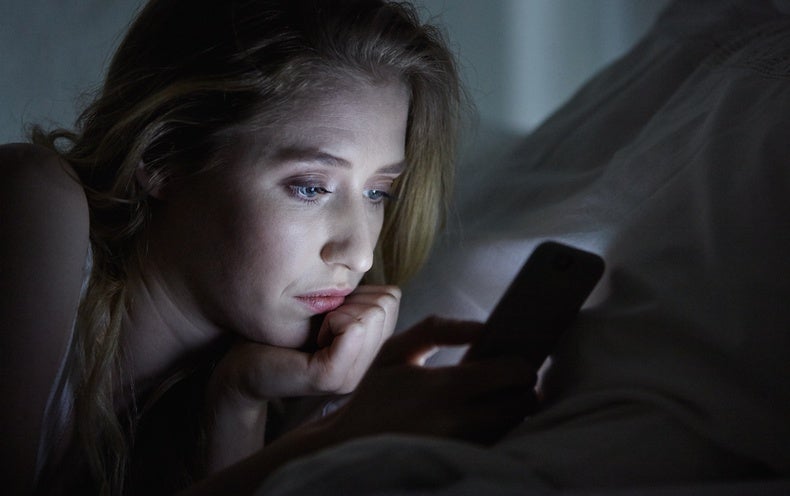
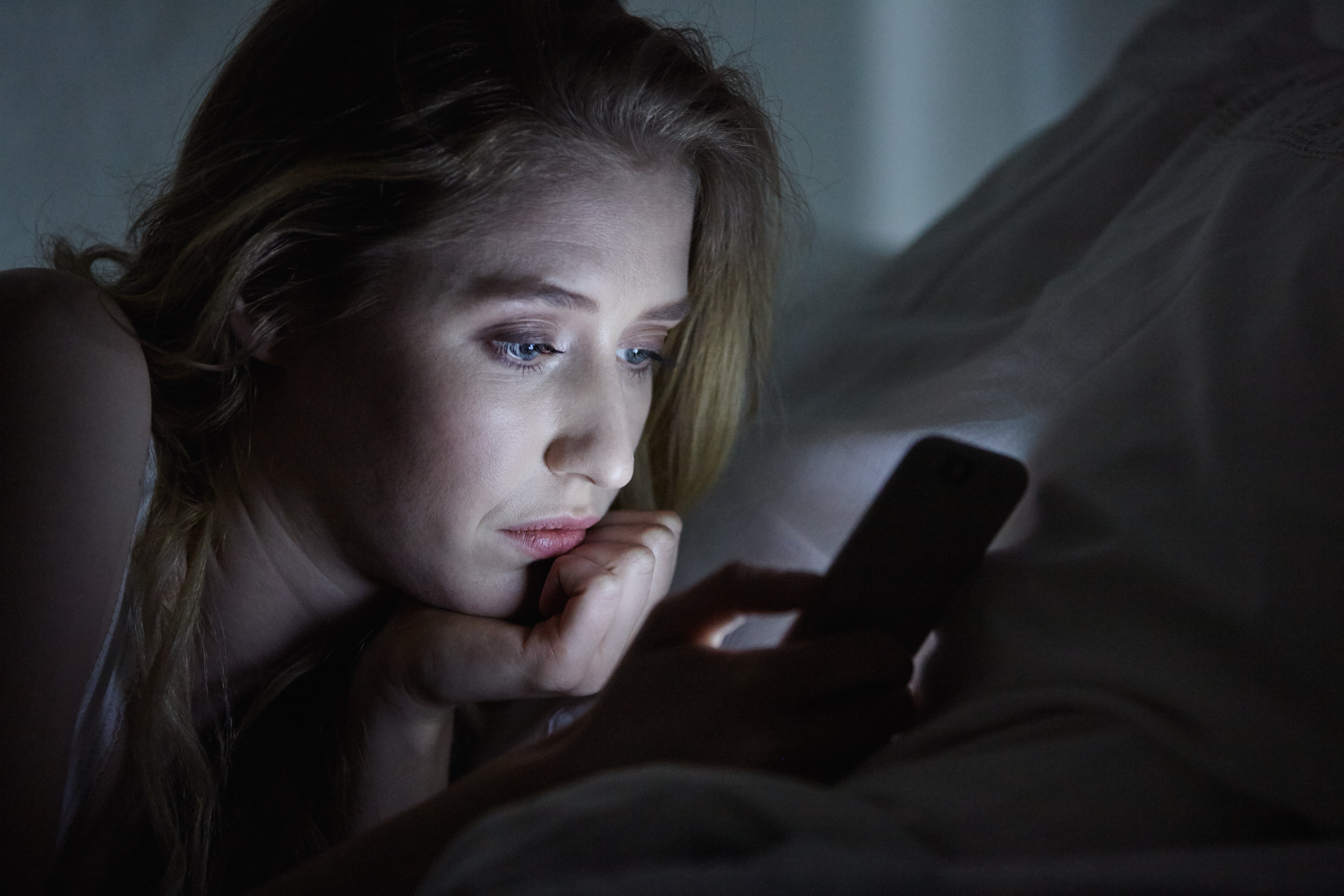
I’ll be asleep soon. I just have to write a quick WhatsApp message—and check Instagram, Facebook and Twitter. And because I already have my smartphone in my hand anyway, I can read a few messages right away. In no time at all, an hour has passed, maybe even two or three. And it’s actually past my bedtime.
Do you recognize this description? In fact, this phenomenon has had a name for some years now. It’s called bedtime procrastination, and it entails a postponement of bedtime that often leads to sleep deprivation. The term was first used in 2014 by Dutch social and behavioral scientist Floor M. Kroese. It was given the following formal definition: First, falling asleep is actively delayed. Second, there is a lack of a valid reason for staying up late. And third, there is an awareness that putting off bedtime could have negative consequences.
Of course, you don’t necessarily need a cell phone to avoid falling asleep. It’s equally possible to get stuck in front of the TV or computer—for example, because you’re watching one episode of a series after the next or can’t tear yourself away from a video game. Many other activities can also theoretically prevent people from going to bed, such as reading or exercising. The phenomenon has only risen to prominence since the advent of television, cell phones and computers, however. Experts therefore assume that electronic devices, with their many forms of entertainment, have contributed significantly to its emergence.
How often bedtime procrastination occurs is as yet unclear because there are no definitive studies on the subject. But one of the few studies, published online by Kroese and her colleagues in 2014, at least suggests that the behavior is widespread. Many of them felt tired during the day on two or more days as a result. A large number indicated going to bed later than they want to on one or more days rated their own behavior as problematic.
Data from the U.S. suggests that it’s not just people in the Netherlands who often procrastinate before going to bed. A 2018 study by psychologist Jana Kühnel of the University of Vienna and two of her colleagues, published in Frontiers in Psychology, suggests that bedtime procrastination is also widespread in Germany. According to the study, Germans put off going to bed as often as Dutch subjects. It is too early to make any conclusive statements, however: this survey was not a representative sample of the population, Kühnel explains.
Although the amount of sleep individuals need varies widely, sleep researchers recommend adults get seven to nine hours per night. Measured against this, the night’s rest of nearly half of Germans age 18 and older may be too short, as suggested by a 2021 survey of 1,000 participants conducted by the Statista Global Consumer Survey. About two thirds of respondents slept an average of five to seven hours per night on weekdays. Fifteen percent got seven to eight hours. Only 3 percent achieved more than eight hours of sleep on weekdays. Children and adolescents also don’t sleep enough, as the Child Health Foundation in Germany lamented in a statement issued in March. One in eight 12- to 17-year-olds, who are recommended to sleep between eight and 10 hours, suffer from a chronic lack of sleep, the foundation said.
The reasons for too little sleep can vary. According to the German Sleep Society (DGSM), 20 to 30 percent of Germans suffer from occasional sleep disorders and 6 percent suffer from chronic ones. For the rest, however, other factors are responsible, including those they can influence themselves. In one German survey in 2017, the most commonly cited reason for going to bed late was nightly media consumption. Insofar as its respondents actually wanted to go to sleep earlier, these individuals were thus engaging in bedtime procrastination.
Bedtime procrastination is sometimes referred to as “revenge bedtime procrastination,” a term that is supposed to have originated in China. But Kühnel recommends not using the two terms interchangeably. In her opinion, revenge bedtime procrastination has nothing to do with procrastination. In general, procrastination describes the behavior of putting off activities or tasks that are considered urgent and necessary—for example, cleaning or writing a paper—and instead doing something else that is lower-priority and less essential, such as playing computer games or watching television. Instead Kühnel considers revenge bedtime procrastination “an intentional postponement of going to bed,” which is why she doesn’t think the term procrastination makes sense in this context. Presumably, the word “revenge” was added in China because, with an intense work week—employees often work 72 hours per week—going to bed late is the only way to retain control over one’s life. Staying up late is, in a sense, “revenge” for not being able to do things during the day.
Lack of Self-Control
What factors make it difficult to go to bed early? Bedtime procrastination is also probably related to personality. For example, the 2014 paper by Kroese and her colleagues already suggested that there is a link between bedtime procrastination and self-control: individuals who had poorer self-regulation also reported more bedtime procrastination, the researchers wrote.
In addition, the researchers discovered that especially those people who procrastinate before going to bed also tend to put things off in other ways. The simplest explanation for this would be a common underlying personality trait, namely that of low self-control, Kroese and her colleagues noted in a chapter of the 2016 book Procrastination, Health, and Well-Being. This then presumably leads to putting off tedious tasks while failing to finish fun activities. Numerous other publications also address the concept of lack of self-control and cite it as a major reason for bedtime procrastination.
If self-regulation fails, an “intention-behavior gap”,—i.e., a gap between the intention and the actual behavior—can occur. This happens relatively often when it comes to health-promoting behavior—think of people who actually want to exercise more, eat healthier or quit smoking but fail to do so. In such contexts, researchers have already studied the “intention-behavior gap” many times.
Influence of the Chronotype
Not all scientists, however, are convinced that bedtime procrastination is merely a matter of self-control. In their 2018 Frontiers in Psychology study, Kühnel and her two colleagues investigated the influence of self-control on bedtime procrastination in a total of 108 employees from various industries. The three psychologists also took a closer look at another factor: the chronotype of the test subjects.
The results show that late chronotypes—also known as evening types, or “owls”—are more prone to bedtime procrastination on workdays than early types, or “larks.” Late chronotypes, who have to get up early in the morning to go to work, are forced to adapt to schedules that are actually more suitable for early chronotypes, Kühnel says. But because they get tired later in the evening, they find it harder to fall asleep earlier, Kühnel adds. That’s why they ultimately experienced bedtime procrastination more often. “Our finding contradicts the prevailing notion that bedtime procrastination is primarily the result of a lack of resources for self-regulation,” she explains.
In 2019 two Polish researchers looked for other possible influences that might promote bedtime procrastination. The researchers found no significant relationship between its occurrence and their study participants’ place of residence, level of education or domestic status, such as whether they lived with a partner or children. Women tended to postpone falling asleep slightly more often than men, however. The same was true for students, compared with study participants who were not studying.
Serious Consequences
From a clinical perspective, bedtime procrastination is not always problematic. Only when the person in question gets too little sleep on a regular basis as a result of their behavior can the phenomenon have health consequences. The effects of too little night’s rest are most directly obvious the next day: one feels listless and unfocused and is less able to perform both physically and mentally. Even more serious, however, are the long-term effects: chronic sleep deprivation can promote cardiovascular disease, obesity, diabetes or depression.
Studies also suggest that even a little sleep deprivation harms the immune system. Adolescents also need a long enough night’s rest for the brain to develop properly. Too little sleep can lead to long-term cognitive problems for them. In addition, lack of sleep worsens self-regulation, which can further increase the tendency to procrastinate—a vicious cycle.
Research from China provides evidence that the high proportion of depression symptoms among college students there may also be related to bedtime procrastination. According to a 2020 study, people with symptoms of depression in the country postponed sleep significantly more often than those without symptoms. In particular, severe depression symptoms showed a clear link to bedtime procrastination.
Another Chinese study from 2021 reveals that excessive smartphone use plays a significant role in this and correlates with sleep quality and depressive symptoms. And a study from the same year showed that female and male students with “smartphone addiction” were more likely to struggle with depression and anxiety and were more likely to put off going to bed. Those with low self-control were particularly affected by this.
Behavior in Line with Intentions
So what do you do when the next episode of a series beckons late at night or so many tempting messages roll in on your cell phone? The goal need not be to get at least eight hours of sleep a night or to always go to bed before midnight, Kroese and her colleagues wrote in their 2016 book chapter. Instead sensible interventions should help sufferers bring their behavior into line with their intentions. In doing so, it is first important to acknowledge that going to bed late can have negative effects. Kroese and her co-authors recommended raising awareness of the consequences of sleep deprivation for health and well-being. While many people report having too short a night’s rest and often being tired, they don’t usually see going to bed earlier as a solution. So they should be reminded that even such a relatively simple change in behavior would have a positive impact.
Kroese also recommended thinking about evening routines and sleep preferences. For example, you could ask yourself when you actually want to go to bed and what you plan to do. Based on this, concrete goals can be set for bedtime.
In addition, there is evidence that healthy sleep hygiene also helps prevent postponing a good night’s rest. This routine includes refraining from stimulating activities before going to bed and maintaining a regular sleep-wake rhythm—all things that also work for sleep disorders in which sufferers either find it difficult to fall asleep or wake up frequently and lie awake for long periods.
It also makes sense to impose clear rules on yourself. For example, you can adopt a rule of no cell phones in the bedroom or consistently switch off all electronic entertainment media and the light after a certain time. It also helps to generally design the environment in such a way that temptations are not always present—for example, by always leaving the computer in the study or only setting up a TV in the living room. Psychotherapists also recommend creating more free space during the day for enjoyable activities and relaxation so that you don’t have to wait until the evening to get it back through excessive screen time—because the very next day you pay a price for this form of entertainment that gets higher and higher in the long run. So turn off the TV, put away your cell phone, and close your eyes!
This article originally appeared in Spektrum der Wissenschaft and was reproduced with permission.